Medico-Legal Series – serie
Visar alla böcker i serien Medico-Legal Series. Handla med fri frakt och snabb leverans.
4 produkter
4 produkter
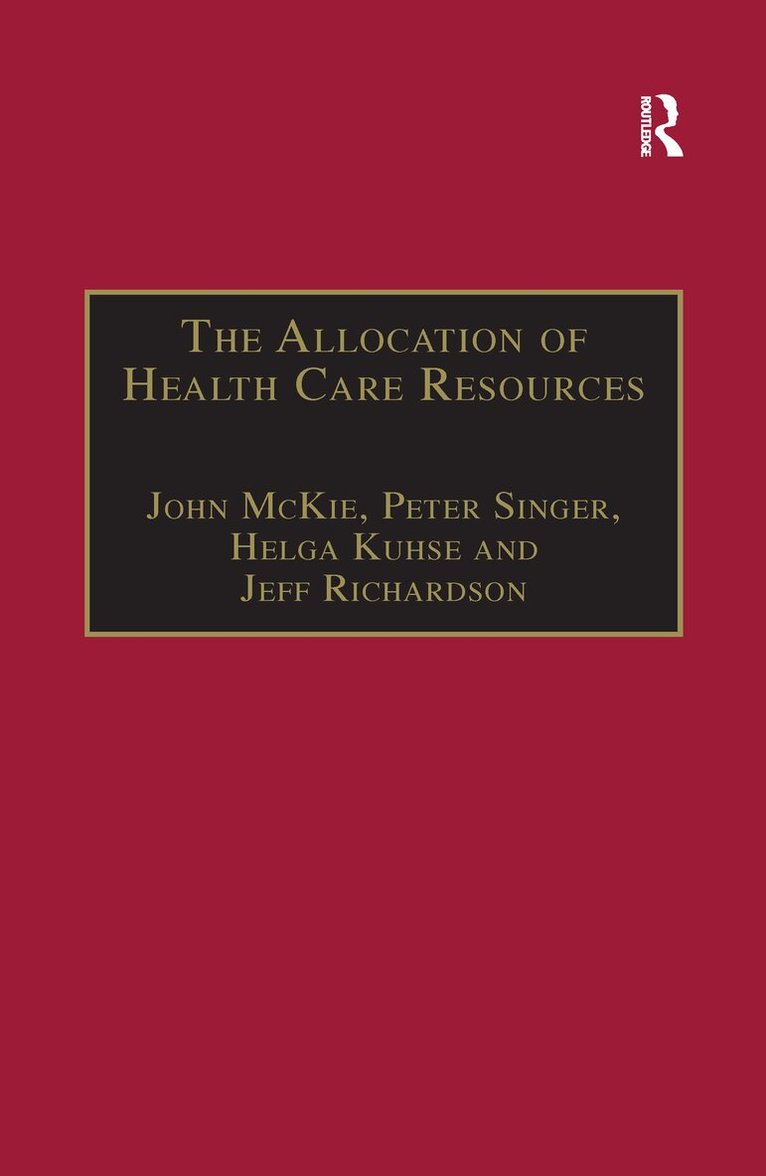
Allocation of Health Care Resources
An Ethical Evaluation of the 'QALY' Approach
Häftad, Engelska, 2020
569 kr
Skickas inom 10-15 vardagar
The competition for limited health care resources is intensifying. We urgently need an acceptable method for deciding how they should be allocated. But the goods that health care produces are of very different kinds. Health care can extend the lives of children and of older people. It can make it possible for a person to walk, when without health care that person would be permanently bedridden; and it can reduce the pain and distress of people who are terminally ill. How can we possibly decide which of these - and many more - diverse achievements of health care are more deserving than others? We need a common unit by which we might be able to measure these very different goods. The Quality-Adjusted Life Year, or QALY, is the most developed proposal for such a unit of measure. In this book a distinguished team of ethicists and economists defend the core of the QALY proposal: that health care resources should be used so as to produce more years of life, of the highest possible quality. This leads to a discussion of such fundamental questions as whether all lives are of equal value, whether health care should be allocated on the basis of need and whether the QALY approach incorporates an adequate account of fairness or justice. The result is the most thorough account yet of the ethical issues raised by the use of the QALY as a basis for allocating health care resources.
822 kr
Tillfälligt slut
An examination of the way people suffering from dementing disorders in old age are regarded by various legal systems. The dilemmas and responsibilities faced by professionals and relatives are also explored.
674 kr
Tillfälligt slut
Those involved in family and sexual relationships today face a bewildering variety of medico-legal dilemmas. These are encountered from as early as the preconception state of the embryo and continue throughout the period of child raising until the status of the mature minor is achieved. This book dissects a wide range of legal, medical and ethical issues surrounding reproduction and the parental relationship with the resultant child. Questions posed in the various sections include: what constitutes sexual intercourse, what are the implications of contraception and sterilization, is the abortion issues dead?. Is there a right to reproduce and, if so, how is this applied to the modern methods of assisted reproduction?. Is surrogate motherhood acceptable or workable?. The concept of fetal rights is explored and specific attention is given to the management of defective neonates in the light of recent judicial decisions. Other chapters look at the parent/child relationship in respect of medical treatment and the book concludes with a review of the interfamilial protection of young children under both the civil and the criminal law. Many of the views expressed are novel in that they represent those of a medical doctor exploring the legal field. It is neither a conventional book on family law nor one on medical law; rather, it draws on both to examine a specific area which affects both in a particularly significant way. Both statute and case law have been extensively updated since the publication of the first edition.
Allocation of Health Care Resources
An Ethical Evaluation of the 'QALY' Approach
Inbunden, Engelska, 1998
1 944 kr
Skickas inom 10-15 vardagar
The competition for limited health care resources is intensifying. We urgently need an acceptable method for deciding how they should be allocated. But the goods that health care produces are of very different kinds. Health care can extend the lives of children and of older people. It can make it possible for a person to walk, when without health care that person would be permanently bedridden; and it can reduce the pain and distress of people who are terminally ill. How can we possibly decide which of these - and many more - diverse achievements of health care are more deserving than others? We need a common unit by which we might be able to measure these very different goods. The Quality-Adjusted Life Year, or QALY, is the most developed proposal for such a unit of measure. In this book a distinguished team of ethicists and economists defend the core of the QALY proposal: that health care resources should be used so as to produce more years of life, of the highest possible quality. This leads to a discussion of such fundamental questions as whether all lives are of equal value, whether health care should be allocated on the basis of need and whether the QALY approach incorporates an adequate account of fairness or justice. The result is the most thorough account yet of the ethical issues raised by the use of the QALY as a basis for allocating health care resources.