Medieval Texts in Translation Series - Böcker
Visar alla böcker i serien Medieval Texts in Translation Series. Handla med fri frakt och snabb leverans.
7 produkter
7 produkter
237 kr
Skickas inom 10-15 vardagar
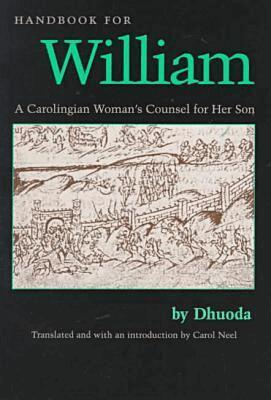
A book of moral and religious reflections written by a Carolingian noblewoman for her teenage son in the middle of the 9th century. Intended as a guide to right conduct, the book was to be shared in time with William's younger brother. Dhuoda's situation was poignant. Her husband, Bernard, the count of Septimania, was away and she was separated from her children. William was being held by Charles the Bald as a guarantee of his father's loyalty, and the younger son's whereabouts were unknown. As war raged in the crumbling Carolingian Empire, the grieving mother, fearing for the spiritual and physical welfare of her absent sons, began in 841 to write her loving counsel in a handbook. Two years later she sent it to William. The book memorably expresses Dhuoda's maternal feelings, religious fervor and learning. In teaching her children how they might flourish in God's eyes, as well as humanity's, Dhuoda reveals the authority of Carolingian women in aristocratic households. She dwells on family relations, social order, the connection between religious and military responsibility, and, always, the central place of Christian devotion in a noble life. One of the few surviving texts written by a woman in the Middle Ages, Dhuoda's ""Liber manualis"" was available in only two faulty Latin manuscripts until a third, superior one was discovered in the 1950s. This English translation is based on the 1975 critical edition and French translation by Pierre Riche. Now available for the first time in paperback, it includes an afterword written by Carol Neel that takes into account recent scholarship and the 1991 revised edition of Riche's text.
243 kr
Skickas inom 7-10 vardagar
Contemporaries hailed the preacher and reformer Robert of Arbrissel (c 1045-1116) as a thunderclap of holy eloquence that lit up the Church - or they castigated him as a sponsor of sexual license. Robert has remained a controversial figure ever since, seen as a missionary to all manner of Christians, a heretic, a feminist, a founder of the ideal of courtly love, or a libertine. His preaching was so renowned that he was invited to speak before Pope Urban II; many were inspired to take up religious life after exposure to his charismatic asceticism and evangelical gifts. Best known as the founder of Fontevraud, a monastery for women and men in Western France that became the prosperous head of an order of nearly 100 religious houses, Robert of Arbrissel never became a saint. Gathering the major medieval sources for the first time in any modern language, this book traces Robert of Arbrissel's multifaceted life from humble origins to dramatic death and burial. Two short biographies, Robert's one surviving letter, an account of Robert's preaching in a brothel, and two highly critical letters addressed to Robert together illustrate his activities, personality and impact. The documents explore themes of reform, preachers and preaching, monasticism, patronage, literary genre, gender and sexuality in a dynamic era of historical and cultural change. The translations are highly readable and the book is abundantly annotated with an introduction, thorough notes to each document, a map and a chronology. ""Robert of Arbrissel: A Medieval Religious Life"" invites students and teachers of the Middle Ages and general readers to draw their own conclusions about this fascinating medieval holy man.
365 kr
Skickas inom 10-15 vardagar
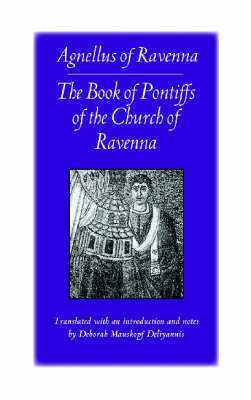
Agnellus' ""Book of Pontiffs of the Church of Ravenna"", written in the ninth century, is a source for the study of Italian history from the fourth to the ninth centuries. Agnellus seems to have been a well-born priest in the church of Ravenna, and his work is strongly coloured by his personal experiences. He wrote the book to demonstrate two strongly-held opinions. One was the apostolicity and independence of the Ravennate archbishopric; the other was the moral decline of recent bishops and their erosion of clerical rights. Using the framework of a series of biographies of the bishops of his see, Agnellus presents his highly idiosyncratic view of history. The work is filled with anecdotes, miracle stories and mini-sermons, as well as information about historical events and artistic and architectural patronage, all of which have made it a valuable source for those interested in early medieval Italy. Ravenna's heyday was in the fifth through eighth centuries, when it was the capital first of the western Roman empire, then of the kingdom of the Ostrogoths, and finally of the Byzantine exarchate of Italy. By the time Agnellus was writing, the city and its leaders were struggling to maintain power and prestige in the new Carolingian regime. Agnellus' work is usually used as a source of information about the more illustrious past, and it has been especially useful to art historians who investigate the remarkable monuments that still survive in Ravenna. However, it also provides crucial information about the Carolingian world in which Agnellus lived, a time when the marvels of Ravenna were being copied or literally carried off by emperors who sought to recreate Ravenna's imperial splendor. This translation makes this text accessible for the first time to an English-speaking audience. A substantial introduction to Agnellus and his composition of the text is included along with a full bibliography.
259 kr
Skickas inom 10-15 vardagar
When Innocent III became pope in 1198 he announced that he had been elevated to a position ""between God and man"". This audacious claim has often been quoted to characterize the papal monarchy over which he presided and the secular powers he wielded for the 18 years of his controversial tenure. The sermons presented in this collection cast a clearer light on Innocent's concept of what his duties were as priest and bishop. Innocent was renowned as a preacher, one who faithfully fulfilled that pastoral duty throughout his career. The group of sermons featured in this book represents only a small sample of his homiletic works. That they are almost exclusively devoted to spiritual concerns provides valuable insight into Innocent's papal priorities. The six sermons included are: the inaugural sermon of Innocent's consecration, the opening sermon of Lateran Council IV, an anniversary sermon, two Roman Synod sermons, and another on the constitution of the priesthood. The major theme throughout the sermons is the responsibility of clergy to function as intermediaries between divinity and humanity, particularly in preaching and in administering the sacraments. Also included in the book is a translation of Innocent's treatise on preaching. In it Innocent gives practical advice to the preachers, whose office he believes to be the most important function of the priesthood.
331 kr
Skickas inom 10-15 vardagar
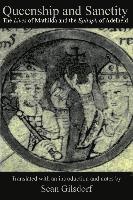
At the dawn of the second millennium, authors from monasteries in Burgundy and northern Germany recorded the lives and deaths of two powerful and pious women, Mathilda (d. 968) and Adelheid (d. 999). Both were extolled as saints, exemplary figures guided by God and witnessing to His grace. Unlike most other holy women, however, Mathilda and Adelheid were not ascetic nuns, but queens. They were deemed worthy of praise not only for their devotion to God and their lives of faith, but for integrating these traditional virtues with more ""worldly"" attributes: noble birth, royal marriage, political power and illustrious offspring. In turn, the saintly reputations of both women were used by their biographers to advance the interests not only of their own ecclesiastical communities, but of a new generation of secular rulers. This volume brings together in English the anonymous ""Lives of Mathilda"" and Odilo of Cluny's ""Epitaph of Adelheid"". With an introduction placing the texts and their subjects in historical and hagiographical context, it provides teachers and students with a crucial set of sources for the history of Europe (particularly Germany) in the 10th and 11th centuries, for the development of sacred biography and medieval notions of sanctity, and for the life of aristocratic and royal and royal women in the early Middle Ages. In addition, two appendices present contemporary accounts of Mathilda by the monk and historian Widukind of Corvey, and a survey of the evidence for Mathilda's ancestral ties to the legendary Saxon hero Widukind, whose defeat by Charlemagne in the late eighth century ultimately led to Saxony's assimilation into the Frankish church and kingdom.
354 kr
Skickas inom 7-10 vardagar
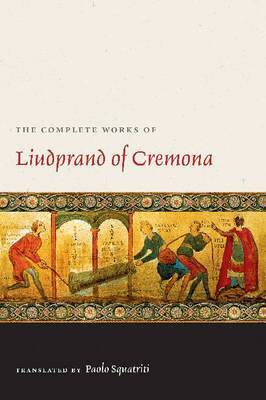
This modern English translation of all the surviving literary compositions ascribed to Liudprand, the bishop of Cremona from 962 to 972, offers unrivaled insight into society and culture in western Europe during the ""iron century."" Since Liudprand enjoyed the favor of the Saxon Roman emperor Otto the Great, and traveled to Constantinople more than once on official business, his narratives also reveal European attitudes toward the Byzantine Empire and the culture of its refined capital city. No other tenth-century writer had such privileged access to the high spheres of power, or such acerbic wit and willingness to articulate critiques of the doings of powerful people. Liudprand's historical texts (the ""Antapodosis"" on European events in the first half of the 900s, and his ""Historia Ottonis"" on the rise to power of Otto the Great) provide a unique view of the recent past against a genuinely European backdrop, unusual in a time of localized cultural horizons. Liudprand's famous satirical description of his misadventures as Ottonian legate at the Byzantine court in 968 is a vital source of information on Byzantine ritual and diplomatic process, as well as a classic of medieval intercultural encounter. This collection of Liudprand's works also includes his recently discovered Easter sermon, a rare early document of Jewish-Christian intellectual polemic. Readers interested in medieval European culture, the history of diplomacy, Italian and German medieval history, and the history of Byzantium will find this collection of translated texts rewarding. A full introduction and extensive notes help readers to place Liudprand's writings in context.
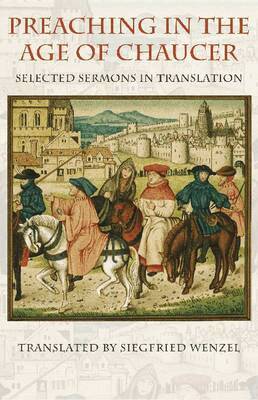
Preaching in the Age of Chaucer
Selected Sermons in Translation
Häftad, Engelska, 2008
420 kr
Skickas inom 10-15 vardagar
Introducing modern readers to the riches of preaching in later medieval England, distinguished scholar Siegfried Wenzel offers translations of twenty-five Latin sermons written between 1350 and 1450. These carefully selected and previously untranslated sermons demonstrate how preachers constructed them and shaped them to their own purposes. The sermons provide representative examples of preaching through the Church year from Advent to the Sundays after Easter; also included are sermons for saints and pieces preached on such special occasions as funerals, convocations, visitations, professions, and academic lectures.Taken together, the sermons provide a view of the wide variety of styles and rhetorical appeals that were used by well-known medieval preachers, such as FitzRalph, Brinton, Wyclif, Repingdon, Felton, Mirk, Philip, and Dygon; a number of anonymous sermons are included as well. All but one (Mirk) have been preserved in Latin and are translated here for the first time into modern English.The book also contains a general introduction and short historical notes on the individual selections. Besides attracting the attention of students of preaching and of Western Church history, the material will be of great interest to medieval historians and to students of Middle-English literature, especially of Chaucer, the Pearl-Poet, Langland, fifteenth-century drama, and the lyric.