MODERN SOUTH ASIA SERIES - Böcker
Visar alla böcker i serien MODERN SOUTH ASIA SERIES. Handla med fri frakt och snabb leverans.
10 produkter
10 produkter
1 010 kr
Skickas inom 5-8 vardagar
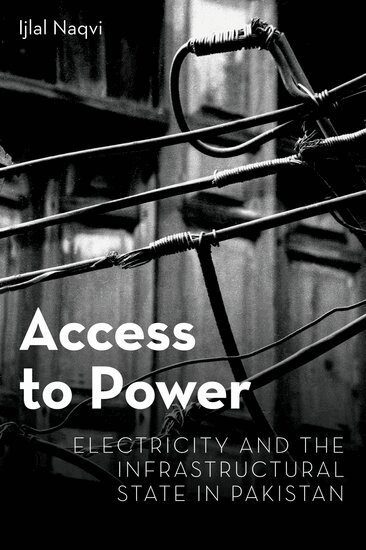
This is an open access title available under the terms of a CC BY-NC-ND 4.0 International license. It is free to read at Oxford Scholarship Online and offered as a free PDF download from OUP and selected open access locations.Pakistan would desperately like to produce enough electricity, but it usually doesn't. Despite prioritization by successive governments, targeted reforms shaped by international development actors, and featuring prominently in Chinese Belt and Road investments, the Pakistani power sector continues to stifle economic and social life across the country. Why?In Access to Power, Ijlal Naqvi explores state capacity in Pakistan by following the material infrastructure of electricity across the provinces and down into cities and homes. Naqvi argues that the national-level challenges of crippling budgetary constraints and power shortages directly result from conscious strategic decisions that are integral to Pakistan's infrastructural state. As he shows, electricity governance in Pakistan reinforces unequal relations of power between provinces and the federal center, contributes to the marginalization of subordinate groups in the city, and cements the patronage-based relationships between Pakistani citizens and the state that have been so detrimental to development progress. Looking through the lens of the electrical power sector, Access to Power reveals how Pakistan actually works, and to whose benefit.
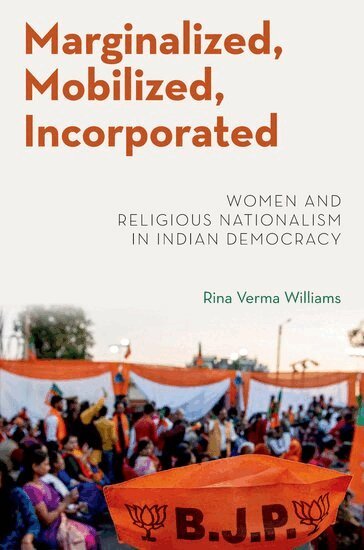
Marginalized, Mobilized, Incorporated
Women and Religious Nationalism in Indian Democracy
Inbunden, Engelska, 2023
929 kr
Skickas inom 5-8 vardagar
How has the participation of women in Hindu nationalist politics in India changed over time? More broadly, what has their changing participation meant for women, Hindu nationalism, and Indian democracy?In Marginalized, Mobilized, Incorporated, Rina Verma Williams places women's participation in religious politics in India into historical and comparative perspective through a focus on the most important Hindu nationalist political parties in modern Indian history: the All-India Hindu Mahasabha (HMS) and the Bharatiya Janata Party (BJP). She compares three critical periods to show the increasing involvement of women in Hindu nationalist politics over time. In its formative years in the early 1900s, the HMS marginalized women; in the 1980s, the BJP began to mobilize them; and in the contemporary period, as the BJP returned to power in 2014, it has incorporated women into its structures and activities. Williams contends that the incorporation of women into Hindu nationalist politics has significantly advanced the BJP's electoral success compared to prior periods when women were either marginalized or mobilized in more limited ways. For the BJP, women's incorporation works to normalize religious nationalism in Indian democracy; however, incorporation has not been emancipatory for women, whose participation in BJP politics is still predicated on traditional gender ideologies that tether women to their social roles in the home and family. Drawing on significant new data sources, Williams includes interviews with key BJP leaders, visual campaign materials, and an examination of major campaign events to construct an unmatched before-and-after view of India's watershed 2014 elections. Given that the BJP is one of the most dynamic religious/ethno-nationalist parties in the world at present, Williams' account of how it incorporated masses of women into its coalition is essential reading for scholars and students interested not just in India, but in the relationship between gender and right-wing populist politics globally.
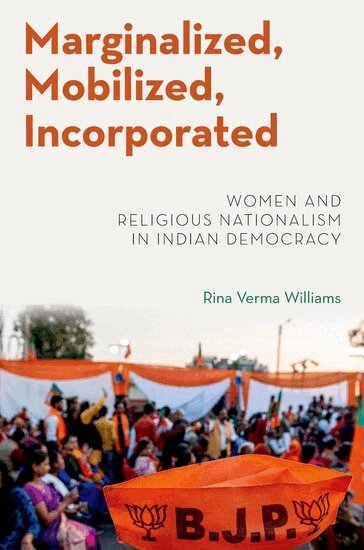
Marginalized, Mobilized, Incorporated
Women and Religious Nationalism in Indian Democracy
Häftad, Engelska, 2022
255 kr
Kommande
How has the participation of women in Hindu nationalist politics in India changed over time? More broadly, what has their changing participation meant for women, Hindu nationalism, and Indian democracy?In Marginalized, Mobilized, Incorporated, Rina Verma Williams places women's participation in religious politics in India into historical and comparative perspective through a focus on the most important Hindu nationalist political parties in modern Indian history: the All-India Hindu Mahasabha (HMS) and the Bharatiya Janata Party (BJP). She compares three critical periods to show the increasing involvement of women in Hindu nationalist politics over time. In its formative years in the early 1900s, the HMS marginalized women; in the 1980s, the BJP began to mobilize them; and in the contemporary period, as the BJP returned to power in 2014, it has incorporated women into its structures and activities. Williams contends that the incorporation of women into Hindu nationalist politics has significantly advanced the BJP's electoral success compared to prior periods when women were either marginalized or mobilized in more limited ways. For the BJP, women's incorporation works to normalize religious nationalism in Indian democracy; however, incorporation has not been emancipatory for women, whose participation in BJP politics is still predicated on traditional gender ideologies that tether women to their social roles in the home and family. Drawing on significant new data sources, Williams includes interviews with key BJP leaders, visual campaign materials, and an examination of major campaign events to construct an unmatched before-and-after view of India's watershed 2014 elections. Given that the BJP is one of the most dynamic religious/ethno-nationalist parties in the world at present, Williams' account of how it incorporated masses of women into its coalition is essential reading for scholars and students interested not just in India, but in the relationship between gender and right-wing populist politics globally.
1 264 kr
Skickas
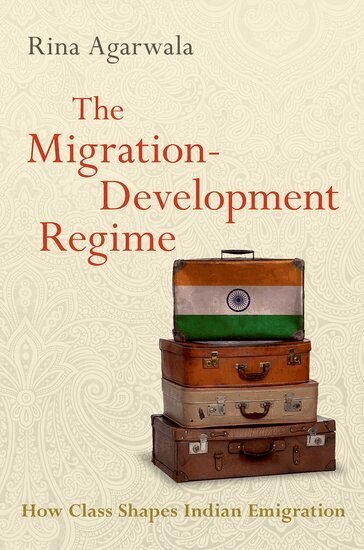
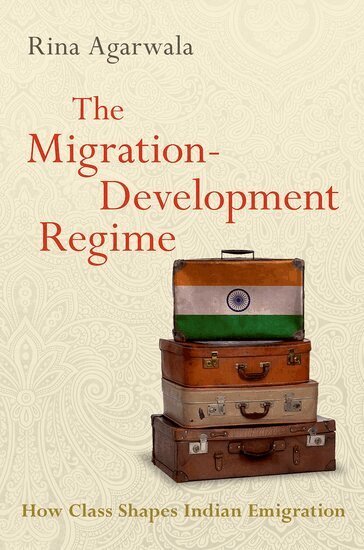
A sweeping history of how India has used its poor and elite emigrants to further Indian development and how Indian emigrants have reacted, resisted, and re-shaped India's development in response. How can states and migrants themselves explain the causes and effects of global migration? The Migration-Development Regime introduces a novel analytical framework to help answer this question in India, the world's largest emigrant exporter and the world's largest remittance-receiving country. Drawing on an archival analysis of Indian government documents, an original data base of Indian migrants' transnational organizations, and over 200 interviews with poor and elite Indian emigrants, recruiters, and government officials, this book exposes the vital role the Indian state (from the colonial era to the present day) has long played in forging and legitimizing class inequalities within India through the management of international emigration. It also exposes how poor and elite emigrants have differentially resisted and re-shaped state emigration practices over time. By taking a long and class-based view, this book recasts contemporary migration not simply as a problematic function of neoliberalism or as a development panacea for sending countries, but as a dynamic historical process that sending states and migrants have long used to shape local development. In doing so, it re-defines the primary problems of global migration, exposes the material and ideological impact that migration has on sending state development, and isolates what is truly novel about contemporary migration.
357 kr
Skickas inom 5-8 vardagar
A sweeping history of how India has used its poor and elite emigrants to further Indian development and how Indian emigrants have reacted, resisted, and re-shaped India's development in response. How can states and migrants themselves explain the causes and effects of global migration? The Migration-Development Regime introduces a novel analytical framework to help answer this question in India, the world's largest emigrant exporter and the world's largest remittance-receiving country. Drawing on an archival analysis of Indian government documents, an original data base of Indian migrants' transnational organizations, and over 200 interviews with poor and elite Indian emigrants, recruiters, and government officials, this book exposes the vital role the Indian state (from the colonial era to the present day) has long played in forging and legitimizing class inequalities within India through the management of international emigration. It also exposes how poor and elite emigrants have differentially resisted and re-shaped state emigration practices over time. By taking a long and class-based view, this book recasts contemporary migration not simply as a problematic function of neoliberalism or as a development panacea for sending countries, but as a dynamic historical process that sending states and migrants have long used to shape local development. In doing so, it re-defines the primary problems of global migration, exposes the material and ideological impact that migration has on sending state development, and isolates what is truly novel about contemporary migration.
1 335 kr
Skickas inom 5-8 vardagar
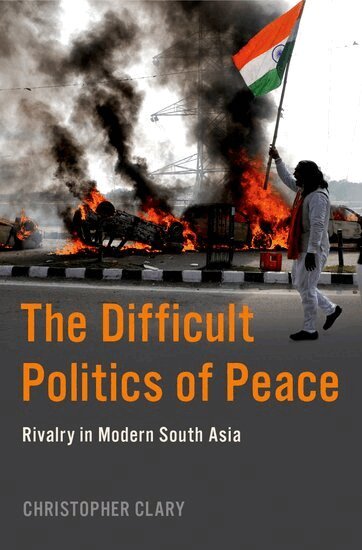
A sweeping and theoretically original analysis of the India-Pakistan rivalry from 1947 to the present.Since their mutual independence in 1947, India and Pakistan have been engaged in a fierce rivalry. Even today, both rivals continue to devote enormous resources to their military competition even as they face other pressing challenges at home and abroad. Why and when do rival states pursue conflict or cooperation? In The Difficult Politics of Peace, Christopher Clary provides a systematic examination of war-making and peace-building in the India-Pakistan rivalry from 1947 to the present. Drawing upon new evidence from recently declassified documents and policymaker interviews, the book traces India and Pakistan's complex history to explain patterns in their enduring rivalry and argues that domestic politics have often overshadowed strategic interests. It shows that Pakistan's dangerous civil-military relationship and India's fractious coalition politics have frequently stymied leaders that attempted to build a more durable peace between the South Asian rivals. In so doing, Clary offers a revised understanding of the causes of war and peace that brings difficult and sometimes dangerous domestic politics to the forefront.
347 kr
Skickas inom 5-8 vardagar
A sweeping and theoretically original analysis of the India-Pakistan rivalry from 1947 to the present.Since their mutual independence in 1947, India and Pakistan have been engaged in a fierce rivalry. Even today, both rivals continue to devote enormous resources to their military competition even as they face other pressing challenges at home and abroad. Why and when do rival states pursue conflict or cooperation? In The Difficult Politics of Peace, Christopher Clary provides a systematic examination of war-making and peace-building in the India-Pakistan rivalry from 1947 to the present. Drawing upon new evidence from recently declassified documents and policymaker interviews, the book traces India and Pakistan's complex history to explain patterns in their enduring rivalry and argues that domestic politics have often overshadowed strategic interests. It shows that Pakistan's dangerous civil-military relationship and India's fractious coalition politics have frequently stymied leaders that attempted to build a more durable peace between the South Asian rivals. In so doing, Clary offers a revised understanding of the causes of war and peace that brings difficult and sometimes dangerous domestic politics to the forefront.
1 146 kr
Skickas inom 5-8 vardagar
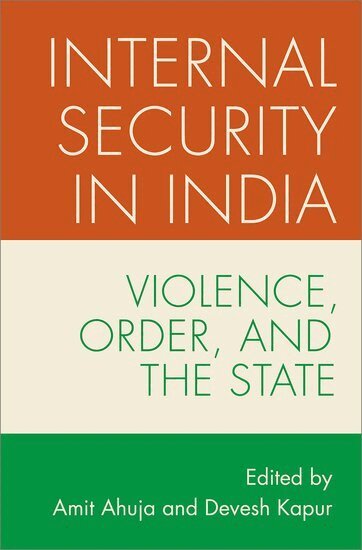
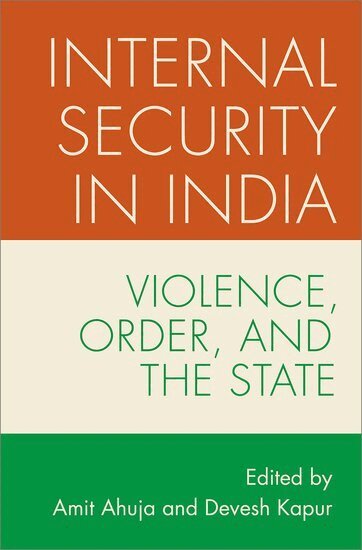
An overarching exploration of the Indian state's approaches, laws, and organizations that maintain order and contain violence. Maintaining order and containing violence-the core constituents of internal security-are fundamental responsibilities of any government. Yet, developing countries find this task especially challenging. In Internal Security in India, Amit Ahuja, Devesh Kapur, and a cast of leading scholars on the subject focus on India's security and the threats it faces. Since Independence, the Indian state has grappled with a variety of internal security challenges, including insurgencies, terrorist attacks, caste and communal violence, riots, and electoral violence. Their toll has claimed more lives than all of India's five external wars put together. As the contributors in this volume analyze how the Indian State has managed the core concern of internal security over time, they address three broad questions: How well has India contained violence and preserved order? How have the approaches and capacity of the State evolved to attain these twin objectives? And what implications do the State's approach towards internal security have for civil liberties and the quality of democracy? A major reinterpretation of order and internal security in India, this book sheds light on an underanalyzed issue of global import given the changing nature of threats that states face.
347 kr
Skickas inom 5-8 vardagar
An overarching exploration of the Indian state's approaches, laws, and organizations that maintain order and contain violence. Maintaining order and containing violence-the core constituents of internal security-are fundamental responsibilities of any government. Yet, developing countries find this task especially challenging. In Internal Security in India, Amit Ahuja, Devesh Kapur, and a cast of leading scholars on the subject focus on India's security and the threats it faces. Since Independence, the Indian state has grappled with a variety of internal security challenges, including insurgencies, terrorist attacks, caste and communal violence, riots, and electoral violence. Their toll has claimed more lives than all of India's five external wars put together. As the contributors in this volume analyze how the Indian State has managed the core concern of internal security over time, they address three broad questions: How well has India contained violence and preserved order? How have the approaches and capacity of the State evolved to attain these twin objectives? And what implications do the State's approach towards internal security have for civil liberties and the quality of democracy? A major reinterpretation of order and internal security in India, this book sheds light on an underanalyzed issue of global import given the changing nature of threats that states face.
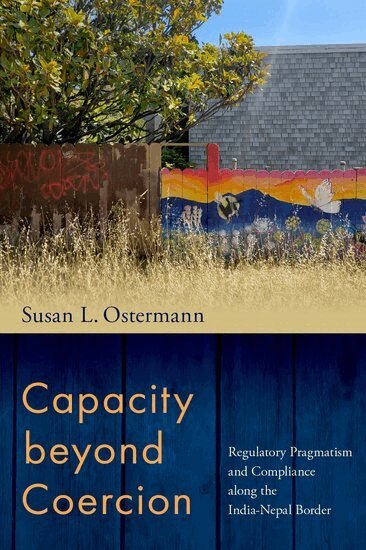
Capacity beyond Coercion
Regulatory Pragmatism and Compliance along the India-Nepal Border
Inbunden, Engelska, 2022
983 kr
Skickas inom 5-8 vardagar
State capacity is often equated with coercion. However, history has shown that it is extremely difficult for states with weak capacity to ensure compliance with their laws.In Capacity beyond Coercion, Susan L. Ostermann examines the largely unexplored capacities that allow coercively weak states to promote law-following behavior. Utilizing extensive data collected in adjacent districts in India and Nepal, she demonstrates how coercively weak states can significantly increase compliance by behaving pragmatically and designing implementation strategies around known barriers to compliance. In particular, she examines variation in compliance with conservation, education, and child labor regulations, investigating the mechanisms by which the Indian and Nepali states have, despite limited enforcement capacity, secured compliance with regulations that run counter to customary norms and to the self-interest of target populations. She argues that one such barrier is imperfect legal knowledge and shows how states that have engaged in what she terms "regulatory pragmatism" may circumvent this compliance barrier. They do so by designing implementation strategies for on-the-ground realities. Exploring two such efforts--delegated enforcement and information dissemination through local leaders, Ostermann demonstrates that states that suffer from limited coercive capacity but behave pragmatically can still bring about large-scale compliance. Given that many states have weak enforcement capacity, the findings in Capacity beyond Coercion point a way forward for more effective and responsive governance throughout the developing world.