Music Scholarship and Performance - Böcker
Visar alla böcker i serien Music Scholarship and Performance. Handla med fri frakt och snabb leverans.
8 produkter
8 produkter
Continuo Playing on the Lute, Archlute and Theorbo
A Comprehensive Guide for Performers
Inbunden, Engelska, 1987
558 kr
Skickas inom 10-15 vardagar
" . . . a valuable book. It is an important link between the unknown of the Renaissance and the present." —The Triangle of Mu Phi Epsilon"Straightforward practicality is the most outstanding characteristic of this book." —Continuo" . . . a fine and very welcome book that is likely to remain the high standard of lute continuo instruction for some time to come." —Sixteenth Century JournalIn this extraordinarily broad survey, Nigel North discusses the history of the lute, the archlute, and the theorbo and gives practical advice on technique, the choice of instrument for particular music, and the preparation of scores.
357 kr
Skickas
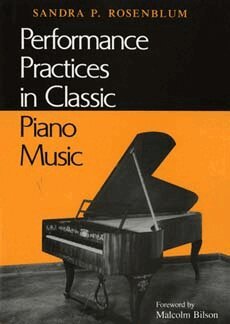
Performance today on either the pianoforte or the fortepiano can be at once joyful, musicianly, expressive, and historically informed. From this point of view, Sandra P. Rosenblum examines the principles of performing the music of Haydn, Mozart, Beethoven, and their contemporaries as revealed in a variety of historical sources: their autographs and letters, early editions of their music, original instruments, and contemporary tutors and journals. She applies these findings to such elements of performance as dynamics, accentuation, pedaling, articulation and touch, technique and fingering, ornaments and embellishments, choice of tempo, and tempo flexibility.Familiarity with the Classic conventions provides a framework for interpretation and an understanding of the choices available within the style, the amount of freedom a performer has, and which areas are ambiguous. Rosenblum's detailed study, copiously illustrated with musical examples, is invaluable for professional and amateur performers, serious piano students and their teachers and students of performance practices by Scarlatti and Clementi. " . . . is and will remain unsurpassed as the study dealing with performance practice as it pertains to keyboard music of the Classical period." —American Music Teacher"Rosenblum's monumental achievement is thorough, objective, balanced, and imaginative, a compelling blend of love and respect for the solo, chamber, and concerto literature she addresses." —Journal of Musicological Research"The extent and quality of her research, the depth of her perception, and her musicianship together break new ground in the study of historic performance practice." —Early Keyboard Journal"Her attention to details is absolutely scrupulous; no stone unturned, no argument unquestioned or unstated." —The Musical Times"Its importance to thoughtful musicians cannot be overstated." —Choice" . . . thoroughly musicological." —Performance Practice Review" . . . indispensable . . . " —New York Times
Singing Early Music
The Pronunciation of European Languages in the Late Middle Ages and Renaissance
Häftad, Engelska, 2004
409 kr
Skickas
Praise for the cloth edition:"Commendable in its scholarship . . . should prove of interest to linguists, medievalists, and Renaissance academicians, as well as to fastidious performers of early music." —Choice"Singing Early Music is a pioneering work of surpassing quality that cannot be too highly recommended." —Journal of Singing"Addresses the needs of the performer directly, giving historical pronunciations for a range of languages [and] sample texts. . . . The CD that comes with the book will prove invaluable. . . . David Klausner's recording is admirably consistent and convincing across the wide range of languages." —Early Music
269 kr
Skickas inom 10-15 vardagar
"[I]nvaluable for musicologists and troubadour scholars interested in knowing about the 'whole song', and it also provides an excellent introduction to troubadour music for the historian, philologist or, indeed, anyone with a passing interest." —David Cashman, Parergon "It is a down-to-earth treatment of the discernible facts, ordered according to the type of evidence that survives. It is a book to sober up the discipline." —Daniel Leech-Wilkinson,Times Literary Supplement"[A] welcome guide for the growing number of performers wishing to recreate these magical treaures from the medieval Midi." —Donna Mayer-Martin, NotesThe Music of the Troubadours is the first comprehensive critical study of the 315 extant melodies of the troubadours of Occitania. It begins with an overview of their social and political milieu in the 12th and 13th centuries, then provides brief biographies of the 42 troubadours whose music survives. The four manuscripts that transmit this music are described in detail, with attention to their genesis in the overlapping roles of composers, singers, and scribes.To examine the poetic traditions within which the troubadours composed, Aubrey discusses genre, versification, and poetic style. An in-depth analysis of melodic forms and styles reveals traits of individual composers and offers a broad view of the chronological development of the music of the troubadours. Performance practice issues such as rhythm, ornamentation, chromatic inflections, and the use of instruments are explored, thus helping modern performers to bring these ancient treasures to life again.
241 kr
Skickas inom 10-15 vardagar
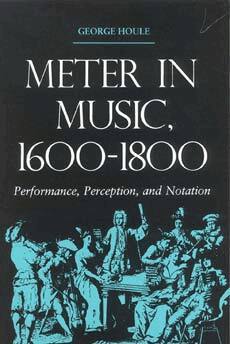
"All practising musicians with an interest in the baroque owe it to themselves to be exposed to the ideas contained in this book." —Continuo"This is a book from an excellent musician in the early field who turns out also to be a most persistent scholar . . . " —Early Music" . . . the book offers a vast quantity of data from a wide range of sources. . . . George Houle is to be congratulated for his honest presentation of the entire spectrum." —Music Educators JournalThe treatment of meter in performance has evolved dramatically since 1600. Here is a practical guide for the performer, with many quotations from early manuals and treatises, and abundant examples.
310 kr
Skickas inom 10-15 vardagar
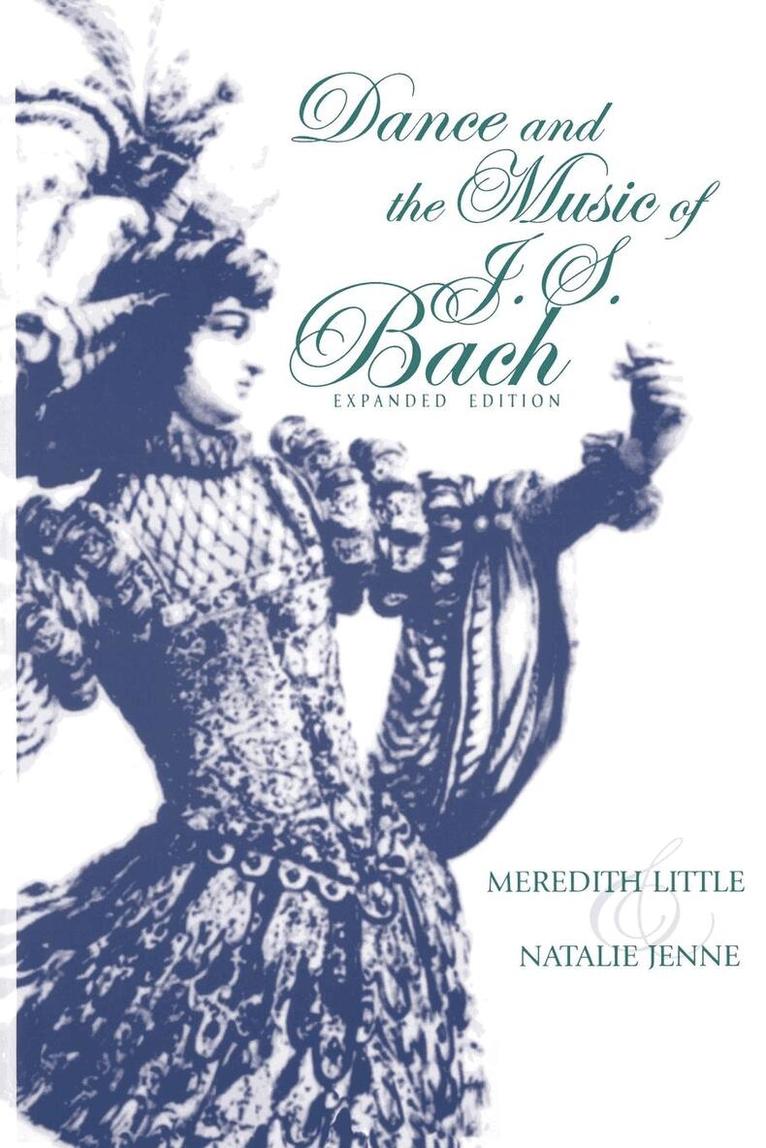
Stylized dance music and music based on dance rhythms pervade Bach's compositions. Although the music of this very special genre has long been a part of every serious musician's repertoire, little has been written about it.The original edition of this addressed works that bore the names of dances—a considerable corpus. In this expanded version of their practical and insightful study, Meredith Little and Natalie Jenne apply the same principals to the study of a great number of Bach's works that use identifiable dance rhythms but do not bear dance-specific titles.Part I describes French dance practices in the cities and courts most familiar to Bach. The terminology and analytical tools necessary for discussing dance music of Bach's time are laid out. Part II presents the dance forms that Bach used, annotating all of his named dances. Little and Jenne draw on choreographies, harmony, theorists' writings, and the music of many seventeenth- and eighteenth-centurycomposers in order to arrive at a model for each dance type.In Appendix A all of Bach's named dances are listed in convenient tabular form; included are the BWV number for each piece, the date of composition, the larger work in which it appears, the instrumentation, and the meter.Appendix B supplies the same data for pieces recognizable as dance types but not named as such.More than ever, this book will stimulate both the musical scholar and the performer with a new perspective at the rhythmic workings of Bach's remarkable repertoire of dance-based music.
434 kr
Skickas inom 10-15 vardagar
This is an excellent reference volume including essays on all aspects of medieval music performance. With forty essays written by experts in the field on everything from repertoire, voices and instruments to basic theory, all aspects of recreation are treated. This guide has already proven indispensable to performers and scholars of medieval music. Chapters on vocal and choral music; various types of ensembles; profiles of specific instruments; instrumentation; performance practice issues; theory; dance; regional profiles of Renaissance music, and guidelines for directors are all treated. It is a comprehensive and authoritative reference by leading performers in the field for a variety of enthusiasts.
310 kr
Skickas inom 10-15 vardagar
The concept of affinities, or pitch relationships, was fundamental to modal theory in the Middle Ages and the early Renaissance. For the first time, Dolores Pesce brings together theoretical perspectives on this subject from the end of the ninth century to the middle of the sixteenth, spanning the ideas of Hucbald through Guido of Arezzo, Jacques de Liege, Marchetta of Padua,Tinctoris, and Aaron to those of Glareanus. Pesce provides a comprehensive survey of problematic chants and of medieval solutions for them. She also traces the arguments that led to the rejection of the affinities and the acceptance of transposition in the modern sense. Scholars will find this volume invaluable for addressing issues related to modal classification and notational practices, in both chant and polyphony.