Elizabeth Aubrey - Böcker
Visar alla böcker från författaren Elizabeth Aubrey. Handla med fri frakt och snabb leverans.
4 produkter
4 produkter
267 kr
Skickas inom 10-15 vardagar
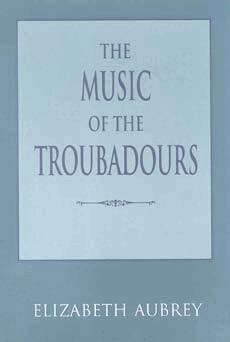
"[I]nvaluable for musicologists and troubadour scholars interested in knowing about the 'whole song', and it also provides an excellent introduction to troubadour music for the historian, philologist or, indeed, anyone with a passing interest." —David Cashman, Parergon "It is a down-to-earth treatment of the discernible facts, ordered according to the type of evidence that survives. It is a book to sober up the discipline." —Daniel Leech-Wilkinson,Times Literary Supplement"[A] welcome guide for the growing number of performers wishing to recreate these magical treaures from the medieval Midi." —Donna Mayer-Martin, NotesThe Music of the Troubadours is the first comprehensive critical study of the 315 extant melodies of the troubadours of Occitania. It begins with an overview of their social and political milieu in the 12th and 13th centuries, then provides brief biographies of the 42 troubadours whose music survives. The four manuscripts that transmit this music are described in detail, with attention to their genesis in the overlapping roles of composers, singers, and scribes.To examine the poetic traditions within which the troubadours composed, Aubrey discusses genre, versification, and poetic style. An in-depth analysis of melodic forms and styles reveals traits of individual composers and offers a broad view of the chronological development of the music of the troubadours. Performance practice issues such as rhythm, ornamentation, chromatic inflections, and the use of instruments are explored, thus helping modern performers to bring these ancient treasures to life again.
778 kr
Skickas inom 5-8 vardagar
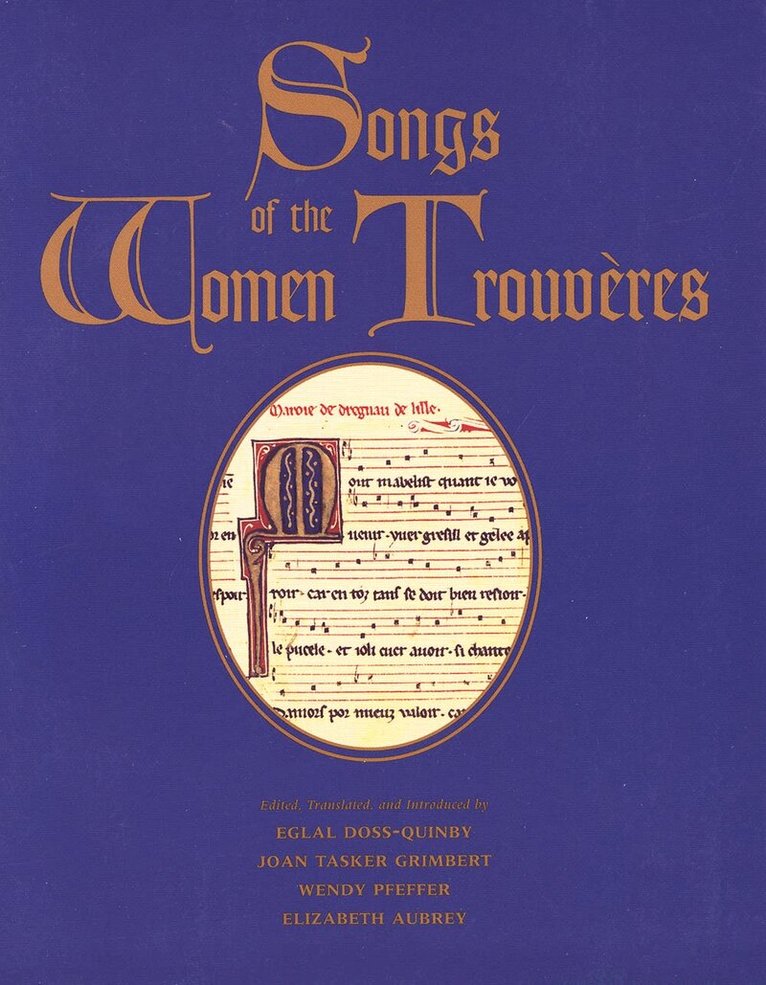
This groundbreaking anthology brings together for the first time the works of women poet-composers, or trouvères, in northern France in the twelfth and thirteenth centuries. Refuting the long-held notion that there are no extant Old French lyrics by women from this period, the editors of the volume present songs attributed to eight named female trouvères along with a varied selection of anonymous compositions in the feminine voice that may have been composed by women. The book includes the Old French texts of seventy-five compositions, extant music for eighteen monophonic songs and nineteen polyphonic motets, English translations, and a substantial introduction.
4 387 kr
Skickas inom 10-15 vardagar
Extant manuscripts are the principal medieval testimony to the art of monophonic song. Literary texts and archival materials, a few theoretical works, and numerous visual representations provide helpful perspective, but our path to the poets and singers lies through the efforts of scribes, and the myriad problems in interpreting what they tell us cast a long shadow over all research on monophonic song. The essays gathered here represent the principal themes and issues that have occupied scholars of late medieval monophonic songs over the last half century: their place in history and society, the role of women as composers and performers, poetic and musical structures, styles, and genres, relationships between poems and melodies, written and oral transmission, and performance practices. Studying how each of these themes is played out across repertoires, cultures, decades, and locations offers a rich and variegated panorama of the practice of song in late medieval Europe.
702 kr
Skickas inom 10-15 vardagar
Extant manuscripts are the principal medieval testimony to the art of monophonic song. Literary texts and archival materials, a few theoretical works, and numerous visual representations provide helpful perspective, but our path to the poets and singers lies through the efforts of scribes, and the myriad problems in interpreting what they tell us cast a long shadow over all research on monophonic song. The essays gathered here represent the principal themes and issues that have occupied scholars of late medieval monophonic songs over the last half century: their place in history and society, the role of women as composers and performers, poetic and musical structures, styles, and genres, relationships between poems and melodies, written and oral transmission, and performance practices. Studying how each of these themes is played out across repertoires, cultures, decades, and locations offers a rich and variegated panorama of the practice of song in late medieval Europe.