Naval History Special Editions – serie
Visar alla böcker i serien Naval History Special Editions. Handla med fri frakt och snabb leverans.
5 produkter
5 produkter
Häftad, Engelska, 2022
183 kr
Skickas inom 5-8 vardagar
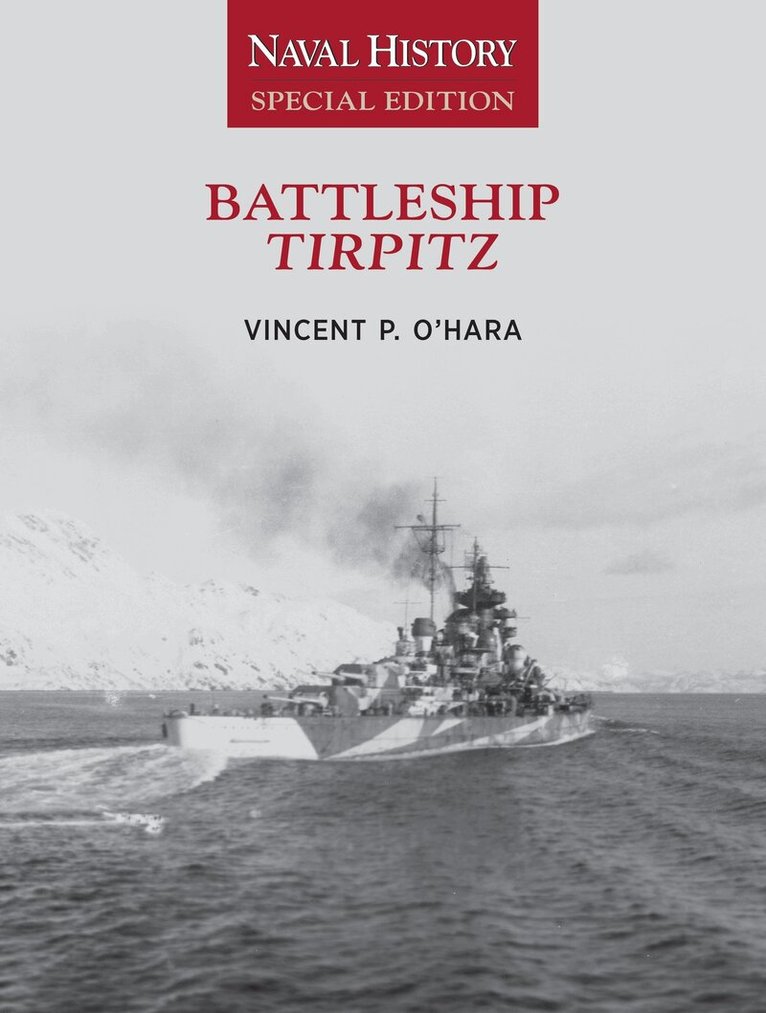
Building upon the expertise of the authors and historians of the Naval Institute Press, the Naval History Special Editions are designed to offer studies of the key vessels, battles, and events of armed conflict. Using an image-heavy, magazine-style format, these Special Editions should appeal to scholars, enthusiasts, and general readers alike. In 1939 the battleship was the queen of the seas. Battleships were designed to project power. They were the biggest and most powerful ships afloat, and the yardsticks by which the world judged naval strength. Within this context, the German battleship Tirpitz (sister ship of Bismarck) was one of the most effective instruments of naval power ever deployed. The British called her "The Beast". She spent the greater part of the Second World War tucked away in isolated fjords north of the Arctic Circle--where she became known as, "The Lonely Queen of the North." She sortied only three times and never fired her guns at an enemy warship. Yet, against this menace the British exerted unequaled effort. At all times they kept a pair of modern battleships standing by to face her should she sail; they built mini-submarines that could operate in the waters of the fjords; they repeatedly massed aircraft carrier strike forces in futile efforts to knock her from the war. At last, they invented massive ordnance--the Tallboy bomb, the largest non-nuclear explosive device of the war. Sending their heaviest bombers against her, and after three years of sustained effort, the Beast was sunk. The remarkable career of this remarkable ship is the subject of this authoritative and heavily illustrated Special Edition. It considers Tirpitz's design, her construction, her historical context and all of her operations. The power of this individual ship and the influence she exerted on the entire course of the war makes for an enlightening demonstration of the sometimes very unexpected way sea power can be expressed.
Häftad, Engelska, 2021
215 kr
Skickas inom 11-20 vardagar
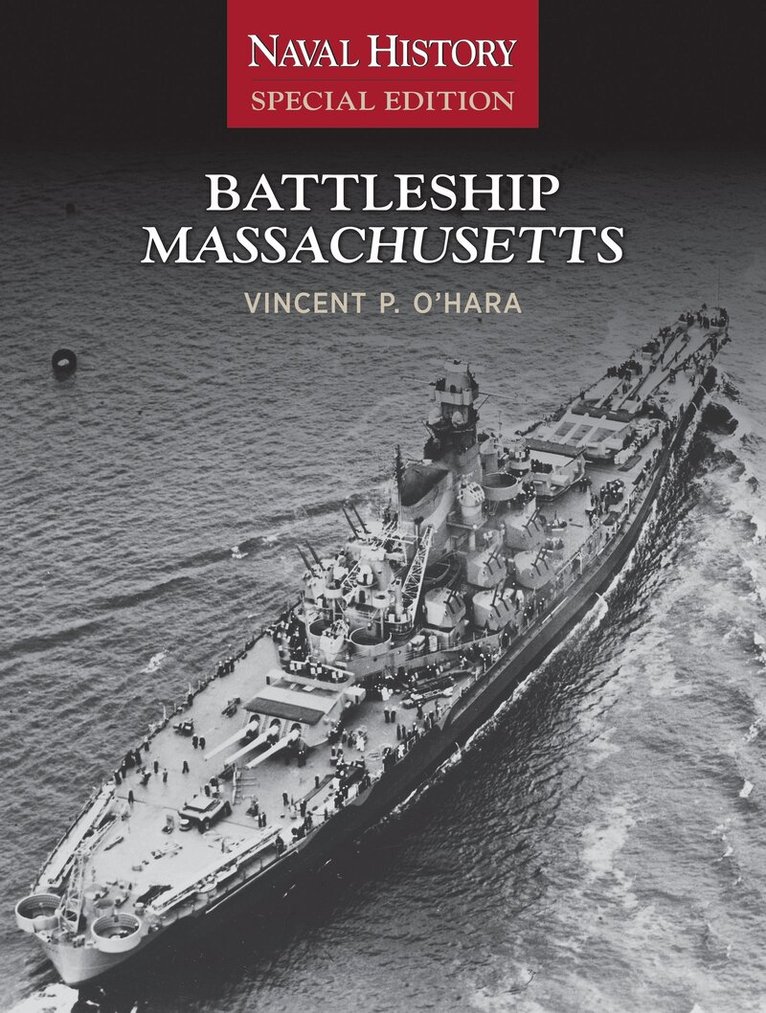
Building upon the expertise of the authors and historians of the Naval Institute Press, the Naval History Special Editions are designed to offer studies of the key vessels, battles, and events of armed conflict. Using an image-heavy, magazine-style format, these Special Editions should appeal to scholars, enthusiasts, and general readers alike. USS Massachusetts (BB-59) is the third ship of the South Dakota-class, whose short but intense career encapsulates the story of the U.S. Navy in World War II. Laid down in July 1939. She was launched three months before Pearl Harbor. Her massive 16-inch/45 caliber Mark 6 guns were the first of their type to fire on an enemy in combat during World War II, and they also held the distinction of discharging the last 16-inch salvos of the war. Her shells fell on targets from Casablanca to the suburbs of Tokyo. She engaged an enemy battleship and protected one of the most important American amphibious operations of the war. She scored several of the longest-range gunfire hits against a moving target in the history of naval warfare, and this during her shakedown cruise with a crew that was 80 percent straight from the recruiting center. After this remarkable beginning, Massachusetts served in the Pacific, in the Gilberts, Marshalls, Philippines, and in the Okinawa and Japanese campaigns. This Naval History Special Edition tells how she was constructed, manned, and was equipped. This work is richly illustrated with an outstanding collection of photographs covering her entire career. The content draws upon her war diaries, her action reports, and the oral histories of the men who served aboard her. This book tells the story of each of the eleven battle starts earned by Massachusetts. It is the story of the U.S. Navy's unprecedented triumph in World War II.
Häftad, Engelska, 2025
191 kr
Skickas inom 11-20 vardagar
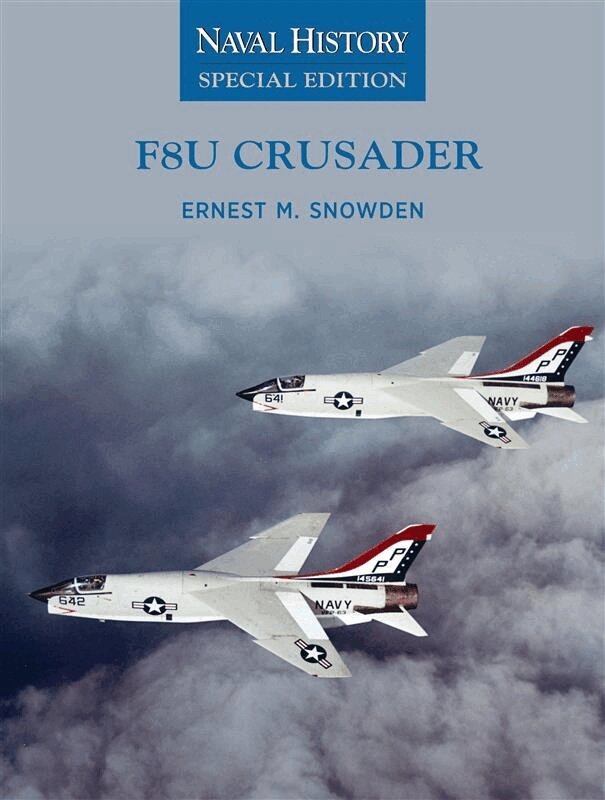
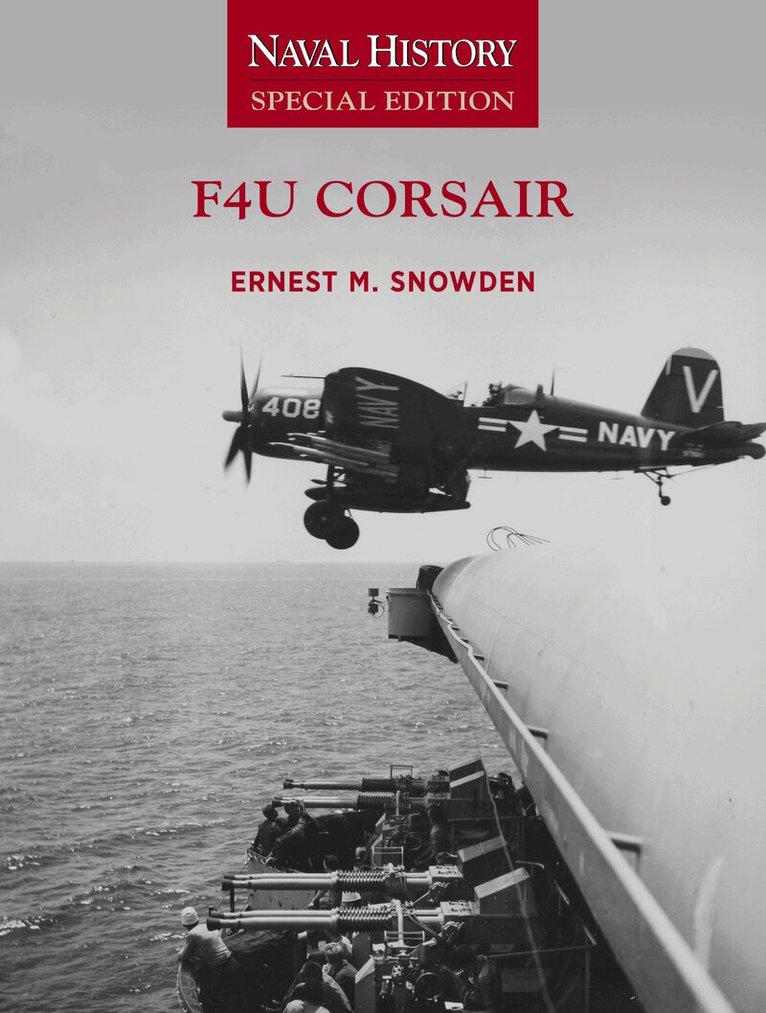
Building upon the expertise of the authors and historians of the Naval Institute Press, the Naval History Special Editions are designed to offer studies of the key vessels, battles, and events of armed conflict. Using an image-heavy, magazine-style format, these special editions should appeal to scholars, enthusiasts, and general readers alike. Rarely is an aircraft design so inspired that it brings forth near-universal recognition and acclaim. In more than 110 years of naval aviation history and more than 50 years of Vought Corsairs in active-duty squadrons, one Corsair model, the F4U, stands alone. In that time, only a few naval aircraft have been acknowledged as game changers that singularly tipped the balance in air combat. The Vought F4U Corsair heads a short list of such aircraft by dint of its supremely efficient lines—a melding of the highly developed Double Wasp powerplant, the outsized Hydromatic propeller that it drove, and the finely tuned airframe that wrapped it. Navy and Marine Corps aviators held the Corsair in high esteem for its ruggedness, speed, and adaptability as a fighter and a bomber, long after its first appearance in the South Pacific during World War II, through the closing weeks of the Korean War. The Corsair’s potency made it sought after by allied air forces long after its final days in U.S. inventory, rendering vital service in French livery at Dien Bien Phu and, finally, with South American air forces in the so-called “Soccer War” of the late 1960s. Here is the complete history of this storied aircraft, from early design through the legendary dogfights of Maj. Gregory “Pappy” Boyington’s Black Sheep Squadron over the Pacific, and in operations in Korea.
Häftad, Engelska, 2026
215 kr
Kommande
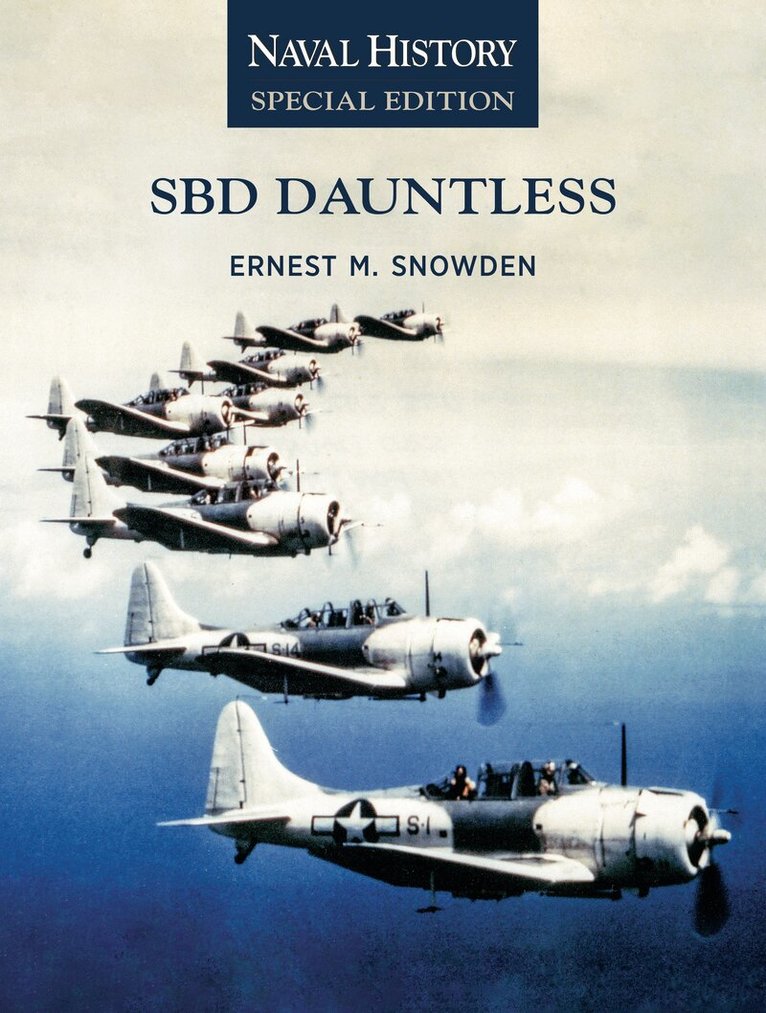
Building on the expertise of the authors and historians of the Naval Institute Press, the Naval History Special Editions are designed to offer studies of the key vessels, battles, and events of armed conflict.In 1942, half the aircraft spotted on an American carrier were SBD Dauntless dive bombers. From Coral Sea to Midway, they tipped over into near-vertical dives and released 1,000-pound bombs at close range against Japanese flight decks. Within minutes at Midway, three enemy carriers were burning, and by day’s end a fourth carrier was rendered a burning hulk. Across five carrier battles, SBD squadrons helped sink six Japanese flattops and more than 300,000 tons of shipping.“The naval dive-bomber was to prove the hammerhead of the naval war,” wrote Naval Academy historian E. B. Potter. The tactic required an airplane built to dive steeply, hold steady as perforated brakes tore at the air, and survive the violent pullout. Ed Heinemann’s Douglas design did exactly that. Armor plates, self-sealing tanks, and more powerful Wright engines followed as combat exposed weaknesses and range limits.Dauntless crews searched hundreds of miles of open ocean with little margin for error. Navy squadrons flew in every major carrier engagement of the Pacific War. Marine SBDs launched at Midway, then operated from Henderson Field during the struggle for Guadalcanal, striking ships and troop concentrations around the Solomons. The Army Air Forces’ A-24 Banshee saw combat in Java, New Guinea, and the Gilberts.From its Gamma ancestry in the mid-1930s to its final carrier missions in 1944, the SBD stood at the center of the Navy’s early offensive—an aircraft built to dive hard, hit precisely, and change the course of an entire battle with a single attack.
Häftad, Engelska, 2023
183 kr
Tillfälligt slut
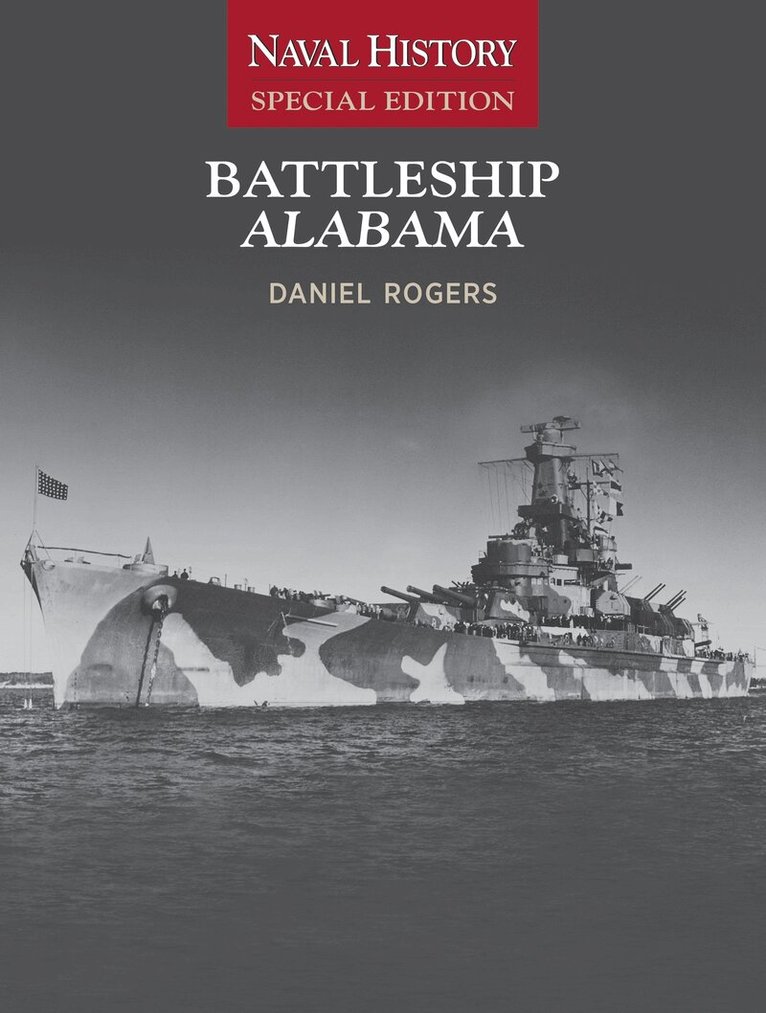
Building upon the expertise of the authors and historians of the Naval Institute Press, the Naval History Special Editions are designed to offer studies of the key vessels, battles, and events of armed conflict. Using an image-heavy, magazine-style format, these Special Editions should appeal to scholars, enthusiasts, and general readers alike.USS Alabama (BB-60) was the fourth and final South Dakota-class battleship completed for the United States Navy. Entering service in 1942, she became one of ten new fast battleships the United States commissioned from 1941 to 1944. This volume narrates the story of Alabama’s construction, design, functioning, deployments during World War II, crew experiences, commanding officers, and second life as a museum ship.During the war, her nine 16-inch/45 caliber main guns fired 1,252 rounds at enemy targets. Her secondary batteries, twenty 5-inch/38 caliber guns, were part of the most effective anti-aircraft screening actions of any navy during the war. They combined with Alabama’s 40 mm and 20 mm cannons to down 22 Japanese warplanes in the central and western Pacific. Alabama earned nine battle stars for her participation in such battles as the Gilbert Islands, the Marshall Islands, the Philippine Sea, Leyte Gulf, and Okinawa. She finished the war by bombarding the Japanese Home Islands, deploying a contingent of Marines to Japan, and transporting home U.S. service members from the western Pacific. All the while, her crew adjusted to the varying demands of patrols through frigid seas above the Arctic Circle, amid the heat and humidity of equatorial latitudes, and during two deadly western Pacific typhoons.She returned to the United States to form part of the reserve fleet until the early 1960s, when “the Mighty A” was transferred to the state of Alabama to serve as the centerpiece of a memorial park on the shores of Mobile Bay.