Daniel E. Rogers - Böcker
Visar alla böcker från författaren Daniel E. Rogers. Handla med fri frakt och snabb leverans.
4 produkter
4 produkter
262 kr
Skickas inom 10-15 vardagar
The consequences of Germany's twelve-year Nazi regime continue to reverberate and to spark debate among scholars and the general public. In this volume leading scholars present provocative essays probing the nature, history, and aftermath of the Nazi regime, including its connections to the Federal Republic of Germany after the war. The essays address the nature of Nazism as reflected in contemporary perceptions of Nazi Germany in the United States; the origins and character of fascism; the many forms of antisemitism; German scholars' efforts to promote persecution in the Third Reich; the role of ethnic Germans in the anti-Jewish and anti-Slavic policies of the Reich; the actions of German police in the occupation of eastern Europe and in the Holocaust; Hitler's style of leadership; the nazification of the German military high command; and the politics surrounding the memory of Nazism and the Holocaust after 1945. The Impact of Nazism employs diverse approaches, exploits a variety of new and long-available sources, and asks new questions, making clear the profound connections between the Nazis and the world that survived them.
1 451 kr
Skickas inom 5-8 vardagar
How does a political system rebuild after a cataclysmic military defeat? How can a society, and its political infrastructure, resurrects itself or, in the case of Germany after World War II, be resurrected in such a way as to ensure long-term political stability? Politics After Hitler is the first book to demonstrate the importance of America, Britain, and France in the development of party politics in Germany after 1945. In the wake of the war, rightists of all descriptions, Communists, nationalists, and founders of small splinter parties all came under intense and deliberate pressure from the Western occupying forces. The occupiers arrived in Germany in 1945 without firm plans for reviving German politics and were forced to improvise by hastily constructing a licensing system for new parties. The Allies then used their licensing powers to limit and steer party politics in desirable directions, disempowering reactionary and hypernationalist forces, diluting fears of a Communist revolution, and preventing the political fragmentation that led to the collapse of the Weimar Republic a generation earlier.Based on extensive archival research, Politics After Hitler concludes that interference by the occupying forces made a stable and moderate party system in the FRG much more likely than has previously been assumed. The Allied occupation of Germany was therefore a resounding success in helping move the German political system toward the stability it enjoys to the present day.
180 kr
Tillfälligt slut
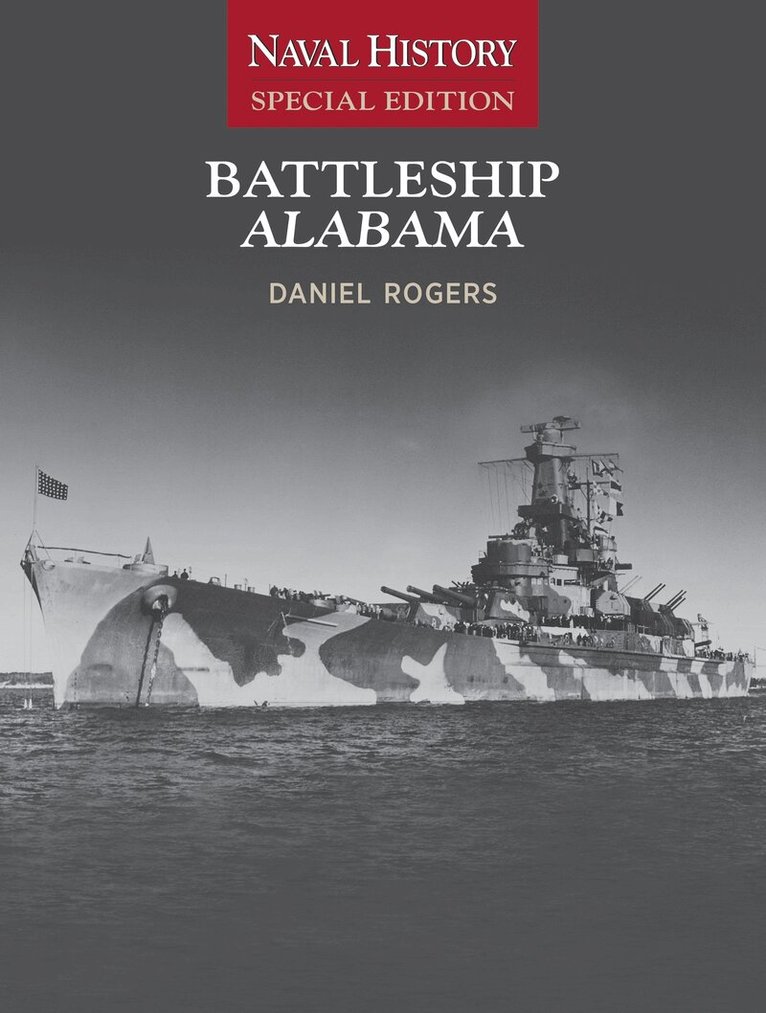
Building upon the expertise of the authors and historians of the Naval Institute Press, the Naval History Special Editions are designed to offer studies of the key vessels, battles, and events of armed conflict. Using an image-heavy, magazine-style format, these Special Editions should appeal to scholars, enthusiasts, and general readers alike.USS Alabama (BB-60) was the fourth and final South Dakota-class battleship completed for the United States Navy. Entering service in 1942, she became one of ten new fast battleships the United States commissioned from 1941 to 1944. This volume narrates the story of Alabama’s construction, design, functioning, deployments during World War II, crew experiences, commanding officers, and second life as a museum ship.During the war, her nine 16-inch/45 caliber main guns fired 1,252 rounds at enemy targets. Her secondary batteries, twenty 5-inch/38 caliber guns, were part of the most effective anti-aircraft screening actions of any navy during the war. They combined with Alabama’s 40 mm and 20 mm cannons to down 22 Japanese warplanes in the central and western Pacific. Alabama earned nine battle stars for her participation in such battles as the Gilbert Islands, the Marshall Islands, the Philippine Sea, Leyte Gulf, and Okinawa. She finished the war by bombarding the Japanese Home Islands, deploying a contingent of Marines to Japan, and transporting home U.S. service members from the western Pacific. All the while, her crew adjusted to the varying demands of patrols through frigid seas above the Arctic Circle, amid the heat and humidity of equatorial latitudes, and during two deadly western Pacific typhoons.She returned to the United States to form part of the reserve fleet until the early 1960s, when “the Mighty A” was transferred to the state of Alabama to serve as the centerpiece of a memorial park on the shores of Mobile Bay.
204 kr
Tillfälligt slut
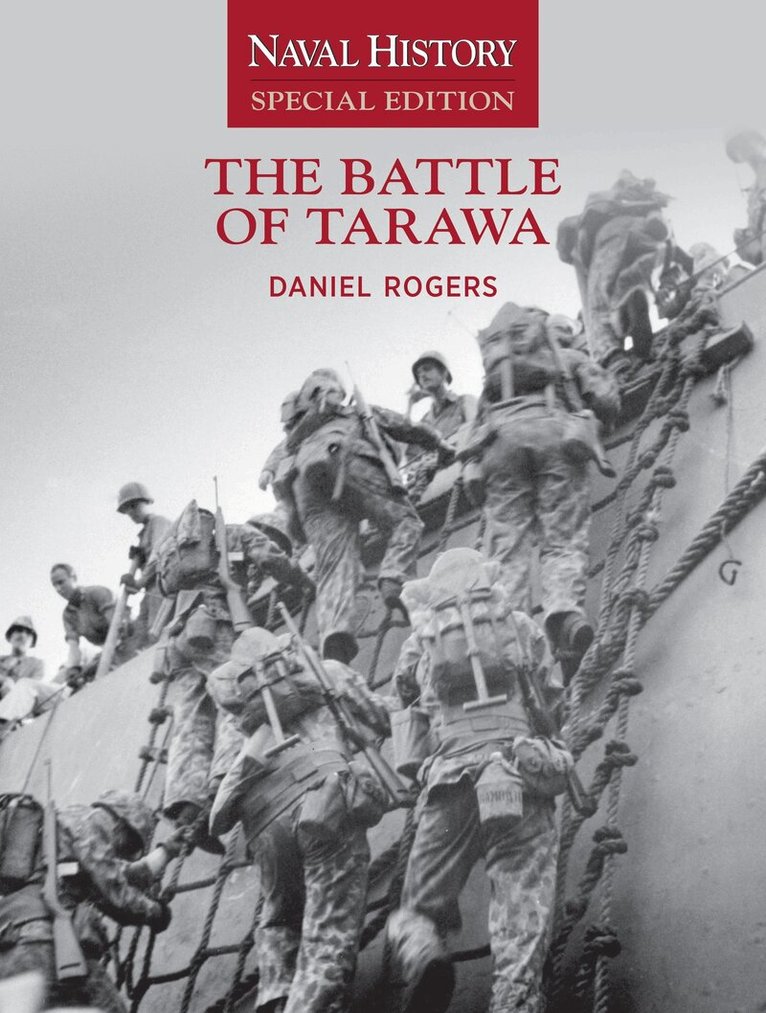
Building upon the expertise of the authors and historians of the Naval Institute Press, the Naval History Special Editions are designed to offer studies of the key vessels, battles, and events of armed conflict. Using an image-heavy, magazine-style format, these Special Editions should appeal to scholars, enthusiasts, and general readers alike. The Battle of Tarawa was one of the most transformative engagements of World War II and for the future of the U.S. Marine Corps. Fought on a speck of coral sand in the middle of the Pacific, in just three days the battle and associated actions of Operation Galvanic killed over 1,700 U.S. service members and 5,000 Japanese defenders. Searing images of dead and wounded Marines quickly appeared in U.S. newspapers, magazines, and movie theaters, providing the public with a dismaying sense of the high cost of the upcoming Central Pacific campaign aimed at bringing the war quickly to Japan itself. From the pre-dawn of 20 November 1943, when U.S. battleships' guns first blazed away at Japanese positions, to the landings of men over a coral reef blocking the passage of most boats, to the brutal fighting necessary to overcome well-prepared and mutually supporting Japanese firing positions, the ferocity and brutality of the battle are carefully and fully narrated. This volume also covers the background of the battle; weaponry; naval actions; Japanese defensive fortifications; specialized U.S. forces such as armor, physicians, and chaplains; the media; and the long-term consequences of the battle. When it was over after 76 hours, lessons had been learned about amphibious landings and subsequent combat that would help the United States move quickly into the Marshall and Mariana Islands and then to the vicinity of Japan itself at Iwo Jima and Okinawa. Rarely has one brief but horrific battle meant so much, for so many, for so long.