New Classical Canon - Böcker
Visar alla böcker i serien New Classical Canon. Handla med fri frakt och snabb leverans.
4 produkter
4 produkter
646 kr
Skickas inom 10-15 vardagar
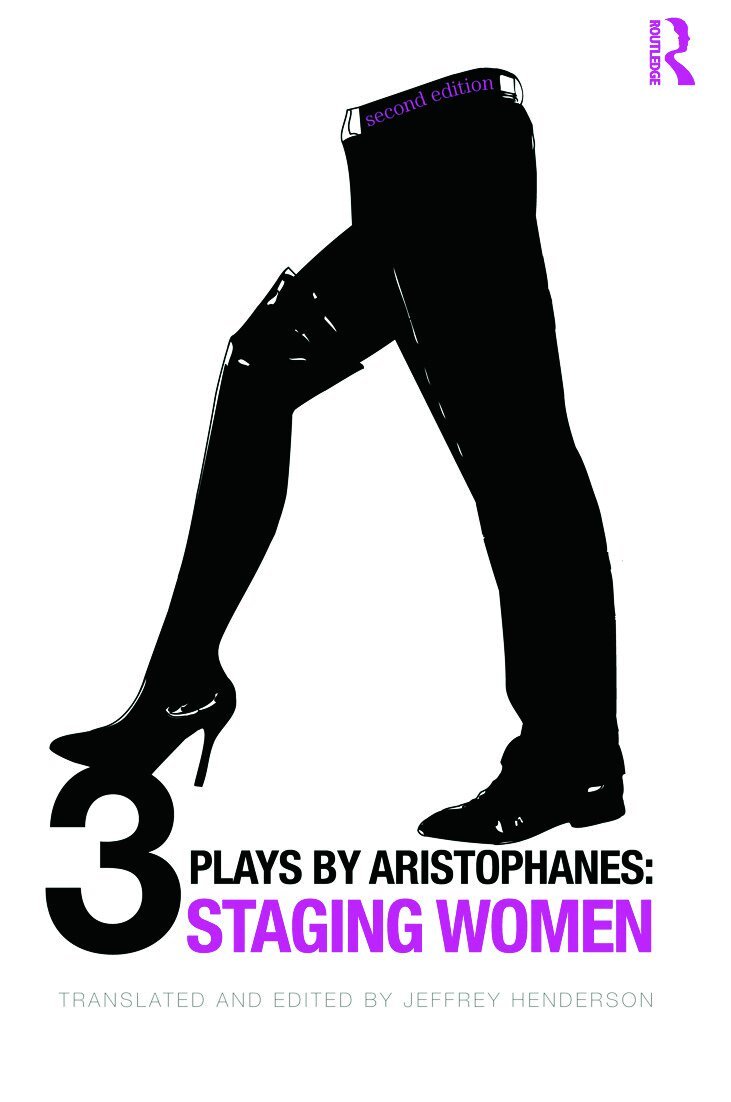
These three plays by the great comic playwright Aristophanes (c. 446-386 BCE), the well-known Lysistrata, and the less familiar Women at the Thesmophoria and Assemblywomen, are the earliest surviving portrayals of contemporary women in the European literary tradition. These plays provide a unique glimpse of women not only in their familiar domestic roles but also in relation to household and city, religion and government, war and peace, theater and festival, and, of course, to men.This freshly revised edition presents, for the first time in a single volume, all three plays in faithful modern translations that preserve intact Aristophanes’ blunt and often obscene language, sparkling satire, political provocation, and beguiling fantasy. Alongside the translations are ample introductions and notes covering the politically engaged genre of Aristophanic comedy in general and issues of sex and gender in particular, which have been fully updated since the first edition in light of recent scholarship. An appendix contains fragments of lost plays of Aristophanes that also featured women, and an up-to-date bibliography provides guidance for further exploration.In addition to their timeless humor and biting satire, the plays are unique and invaluable documents in the history of western sexuality and gender, and they offer strikingly prescient speculations about the social and political future of the female sex.
2 420 kr
Skickas inom 10-15 vardagar
These three plays by the great comic playwright Aristophanes (c. 446-386 BCE), the well-known Lysistrata, and the less familiar Women at the Thesmophoria and Assemblywomen, are the earliest surviving portrayals of contemporary women in the European literary tradition. These plays provide a unique glimpse of women not only in their familiar domestic roles but also in relation to household and city, religion and government, war and peace, theater and festival, and, of course, to men.This freshly revised edition presents, for the first time in a single volume, all three plays in faithful modern translations that preserve intact Aristophanes’ blunt and often obscene language, sparkling satire, political provocation, and beguiling fantasy. Alongside the translations are ample introductions and notes covering the politically engaged genre of Aristophanic comedy in general and issues of sex and gender in particular, which have been fully updated since the first edition in light of recent scholarship. An appendix contains fragments of lost plays of Aristophanes that also featured women, and an up-to-date bibliography provides guidance for further exploration.In addition to their timeless humor and biting satire, the plays are unique and invaluable documents in the history of western sexuality and gender, and they offer strikingly prescient speculations about the social and political future of the female sex.
2 420 kr
Skickas inom 10-15 vardagar
Women on the Edge, a collection of Alcestis, Medea, Helen, and Iphegenia at Aulis, provides a broad sample of Euripides' plays focusing on women, and spans the chronology of his surviving works, from the earliest, to his last, incomplete, and posthumously produced masterpiece. Each play shows women in various roles--slave, unmarried girl, devoted wife, alienated wife, mother, daughter--providing a range of evidence about the kinds of meaning and effects the category woman conveyed in ancient Athens. The female protagonists in these plays test the boundaries--literal and conceptual--of their lives.Although women are often represented in tragedy as powerful and free in their thoughts, speech and actions, real Athenian women were apparently expected to live unseen and silent, under control of fathers and husbands, with little political or economic power. Women in tragedy often disrupt "normal" life by their words and actions: they speak out boldly, tell lies, cause public unrest, violate custom, defy orders, even kill. Female characters in tragedy take actions, and raise issues central to the plays in which they appear, sometimes in strong opposition to male characters. The four plays in this collection offer examples of women who support the status quo and women who oppose and disrupt it; sometimes these are the same characters.
770 kr
Skickas inom 10-15 vardagar
Women on the Edge, a collection of Alcestis, Medea, Helen, and Iphegenia at Aulis, provides a broad sample of Euripides' plays focusing on women, and spans the chronology of his surviving works, from the earliest, to his last, incomplete, and posthumously produced masterpiece. Each play shows women in various roles--slave, unmarried girl, devoted wife, alienated wife, mother, daughter--providing a range of evidence about the kinds of meaning and effects the category woman conveyed in ancient Athens. The female protagonists in these plays test the boundaries--literal and conceptual--of their lives.Although women are often represented in tragedy as powerful and free in their thoughts, speech and actions, real Athenian women were apparently expected to live unseen and silent, under control of fathers and husbands, with little political or economic power. Women in tragedy often disrupt "normal" life by their words and actions: they speak out boldly, tell lies, cause public unrest, violate custom, defy orders, even kill. Female characters in tragedy take actions, and raise issues central to the plays in which they appear, sometimes in strong opposition to male characters. The four plays in this collection offer examples of women who support the status quo and women who oppose and disrupt it; sometimes these are the same characters.