New Directions in Scandinavian Studies – serie
Visar alla böcker i serien New Directions in Scandinavian Studies. Handla med fri frakt och snabb leverans.
12 produkter
12 produkter
1 830 kr
Skickas inom 5-8 vardagar
Digital media–GIFs, films, TED Talks, tweets, and more–have become integral to daily life and, unsurprisingly, to Indigenous people’s strategies for addressing the historical and ongoing effects of colonization. In Sámi Media and Indigenous Agency in the Arctic North, Thomas DuBois and Coppélie Cocq examine how Sámi people of Norway, Finland, and Sweden use media to advance a social, cultural, and political agenda anchored in notions of cultural continuity and self-determination. Beginning in the 1970s, Sámi have used Sámi-language media—including commercially produced musical recordings, feature and documentary films, books of literature and poetry, and magazines—to communicate a sense of identity both within the Sámi community and within broader Nordic and international arenas.In more contemporary contexts—from YouTube music videos that combine rock and joik (a traditional Sámi musical genre) to Twitter hashtags that publicize protests against mining projects in Sámi lands—Sámi activists, artists, and cultural workers have used the media to undo layers of ignorance surrounding Sámi livelihoods and rights to self-determination. Downloadable songs, music festivals, films, videos, social media posts, images, and tweets are just some of the diverse media through which Sámi activists transform how Nordic majority populations view and understand Sámi minority communities and, more globally, how modern states regard and treat Indigenous populations.
1 895 kr
Skickas inom 3-6 vardagar
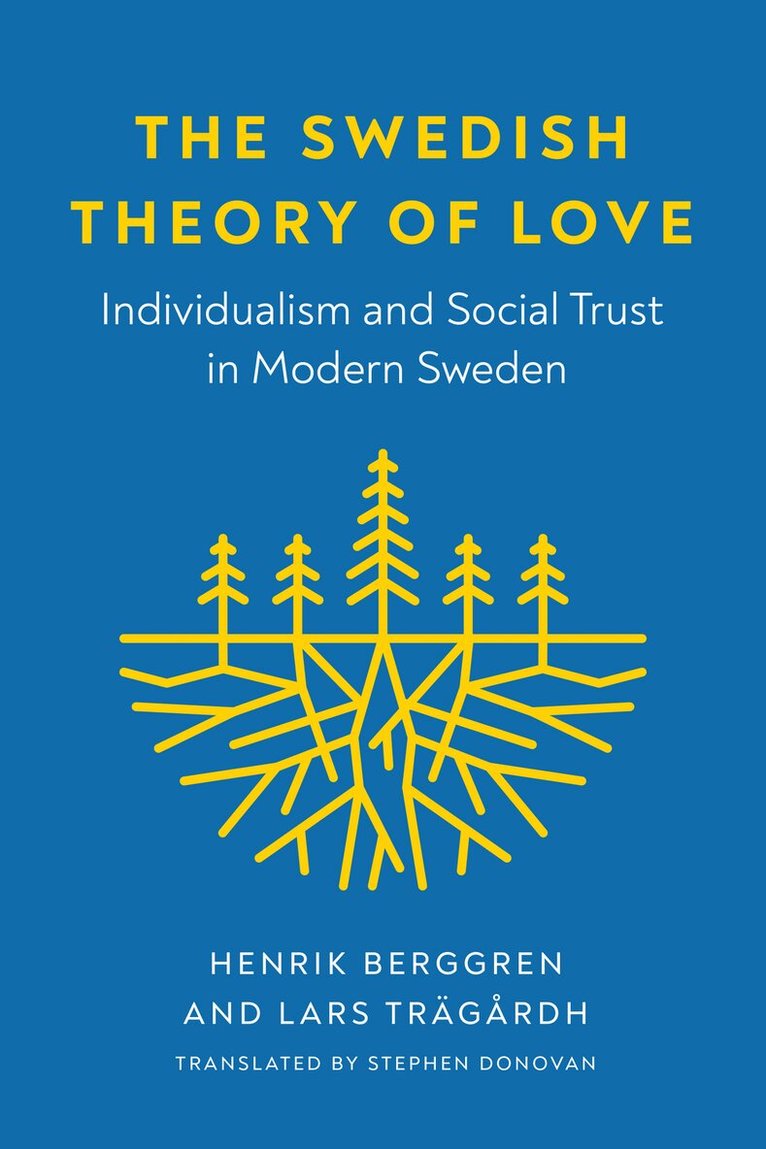
In 2020 Sweden's response to COVID-19 drew renewed attention to the Nordic nation in a way that put the finger on a seeming paradox. Long celebrated for its commitment to social solidarity, Sweden suddenly emerged as the last country in the West to resist lockdown while defending individual rights and responsibilities. To explain these contradictions, Henrik Berggren and Lars Trägårdh argue that the long-standing view of Sweden's welfare state as the result of socialist collectivism is flawed. While social values have been and remain strong, they have co-existed with a radical form of individualism.The English edition of the Swedish bestseller Är svensken människa?, The Swedish Theory of Love examines a political culture that stresses individual autonomy on the one hand and trust in the state on the other. Delving into Swedish philosophy, cultural studies, sociology, literary criticism, and political science, the book moves beyond the perspective of rational social engineering to uncover the moral logic behind Sweden's welfare state: the notion that human relationships based on dependency and subordination lead to inauthenticity and that equality and autonomy are preconditions for genuine love and affection.
469 kr
Skickas
In 2020 Sweden's response to COVID-19 drew renewed attention to the Nordic nation in a way that put the finger on a seeming paradox. Long celebrated for its commitment to social solidarity, Sweden suddenly emerged as the last country in the West to resist lockdown while defending individual rights and responsibilities. To explain these contradictions, Henrik Berggren and Lars Trägårdh argue that the long-standing view of Sweden's welfare state as the result of socialist collectivism is flawed. While social values have been and remain strong, they have co-existed with a radical form of individualism.The English edition of the Swedish bestseller Är svensken människa?, The Swedish Theory of Love examines a political culture that stresses individual autonomy on the one hand and trust in the state on the other. Delving into Swedish philosophy, cultural studies, sociology, literary criticism, and political science, the book moves beyond the perspective of rational social engineering to uncover the moral logic behind Sweden's welfare state: the notion that human relationships based on dependency and subordination lead to inauthenticity and that equality and autonomy are preconditions for genuine love and affection.
1 648 kr
Skickas inom 3-6 vardagar
Analyzes a film genre's confrontation of a regional identityKnown for their progressive environmental policies and nature-loving citizens, Nordic countries also produce what may seem a counterintuitive film genre: ecohorror, where distinctions between humans and nature are blurred in unsettling ways. From slashers to arthouse thrillers, transnational Nordic ecohorror films such as Antichrist (dir. Lars von Trier, 2009) and Midsommar (dir. Ari Aster, 2019) have garnered commercial and critical attention, revealing an undercurrent of ecophobia in Nordic culture that belies the region's reputation for environmental friendliness.In Menacing Environments, Benjamin Bigelow examines how ecohorror rings some of the same alarm bells that climate activists have sounded, suggesting that the proper response to the ongoing climate catastrophe is not optimism and a market-friendly focus on sustainable development, but rather fear and dread. Bigelow argues that ecohorror destabilizes the two pillars of Nordic society—the autonomous individual and the sovereign state. He illustrates how doing away with any clean separation of the domains of human culture from a wild, untamed realm of nature reminds viewers of the complex and often threatening material entanglements between humans and their environments. Through Bigelow's analysis, ecohorror proves to be a potent vehicle not only for generating a strong affective response in audiences but also for taking on the revered institutions, unquestioned ideological orthodoxies, and claims of cultural exceptionalism in contemporary Nordic societies.Menacing Environments is freely available in an open access edition thanks to TOME (Toward an Open Monograph Ecosystem) and the generous support of the University of Minnesota.DOI 10.6069/9780295751658
466 kr
Skickas inom 5-8 vardagar
Analyzes a film genre's confrontation of a regional identityKnown for their progressive environmental policies and nature-loving citizens, Nordic countries also produce what may seem a counterintuitive film genre: ecohorror, where distinctions between humans and nature are blurred in unsettling ways. From slashers to arthouse thrillers, transnational Nordic ecohorror films such as Antichrist (dir. Lars von Trier, 2009) and Midsommar (dir. Ari Aster, 2019) have garnered commercial and critical attention, revealing an undercurrent of ecophobia in Nordic culture that belies the region's reputation for environmental friendliness.In Menacing Environments, Benjamin Bigelow examines how ecohorror rings some of the same alarm bells that climate activists have sounded, suggesting that the proper response to the ongoing climate catastrophe is not optimism and a market-friendly focus on sustainable development, but rather fear and dread. Bigelow argues that ecohorror destabilizes the two pillars of Nordic society—the autonomous individual and the sovereign state. He illustrates how doing away with any clean separation of the domains of human culture from a wild, untamed realm of nature reminds viewers of the complex and often threatening material entanglements between humans and their environments. Through Bigelow's analysis, ecohorror proves to be a potent vehicle not only for generating a strong affective response in audiences but also for taking on the revered institutions, unquestioned ideological orthodoxies, and claims of cultural exceptionalism in contemporary Nordic societies.Menacing Environments is freely available in an open access edition thanks to TOME (Toward an Open Monograph Ecosystem) and the generous support of the University of Minnesota.DOI 10.6069/9780295751658
Not-Quite Child
Colonial Histories, Racialization, and Swedish Exceptionalism
Inbunden, Engelska, 2025
1 665 kr
Skickas
Examines Swedish depictions of childhood that expose the country's colonial past and racial hierarchiesFigures like Pippi Longstocking and Greta Thunberg exemplify an ideal mainstream Swedish childhood: they are autonomous, competent, and the voices of moral truths. In this innovative work, Liina-Ly Roos analyzes the figure of the “not-quite child”—children who, while appearing white, have been marginalized due to historical racialization and colonialism—to challenge this established ideal. Through analyses of films and literature that portray Indigenous Sámi, Tornedalian, and Finnish-speaking children, The Not-Quite Child reveals how these figures disrupt the normative understanding of growing up in Sweden. These cultural texts are filled with tensions of assimilation, invisibility, and the struggle to grow in a society that demands conformity to a specific “Swedishness.”The children in these stories are both minoritized and, at the same time, have the privilege of passing, and share a long cultural history with and within the dominant culture. Through nuanced attention to these important narratives, The Not-Quite Child contributes to dialogue on the complexities of identity, race, and the hidden colonial legacies that continue to shape understandings of childhood in Sweden.Open access edition: DOI 10.6069/9780295753836
479 kr
Skickas inom 5-8 vardagar
Examines Swedish depictions of childhood that expose the country's colonial past and racial hierarchiesFigures like Pippi Longstocking and Greta Thunberg exemplify an ideal mainstream Swedish childhood: they are autonomous, competent, and the voices of moral truths. In this innovative work, Liina-Ly Roos analyzes the figure of the “not-quite child”—children who, while appearing white, have been marginalized due to historical racialization and colonialism—to challenge this established ideal. Through analyses of films and literature that portray Indigenous Sámi, Tornedalian, and Finnish-speaking children, The Not-Quite Child reveals how these figures disrupt the normative understanding of growing up in Sweden. These cultural texts are filled with tensions of assimilation, invisibility, and the struggle to grow in a society that demands conformity to a specific “Swedishness.”The children in these stories are both minoritized and, at the same time, have the privilege of passing, and share a long cultural history with and within the dominant culture. Through nuanced attention to these important narratives, The Not-Quite Child contributes to dialogue on the complexities of identity, race, and the hidden colonial legacies that continue to shape understandings of childhood in Sweden.Open access edition: DOI 10.6069/9780295753836
Predicament of Privilege
Inequality and Ambivalence in Contemporary Scandinavian Culture
Inbunden, Engelska, 2026
1 777 kr
Skickas inom 5-8 vardagar
Is privilege a problem? Scandinavians ask, Is this okay?—and wrestle with the answerA twenty-first century paradox has emerged in contemporary Scandinavian societies: the region’s deeply ingrained egalitarian ideals exist uneasily alongside its undeniable global privilege. In The Predicament of Privilege, Devika Sharma examines this tension, exploring how a well-intentioned desire to “do good” collides with an unsettling realization: the very structures that enable ethical consumption, charitable donations, and humanitarian action are themselves embedded in a system of exploitation.Through an incisive analysis of contemporary Scandinavian cultural texts, The Predicament of Privilege introduces the concept of skeptimentality—a pervasive moral ambivalence about virtuous emotions like compassion and generosity. As Sharma demonstrates, this sentiment does not necessarily lead to action but creates a vacuum, leaving privilege-sensitive publics with a crisis of conscience but no clear path forward. Sharma’s book challenges both the self-image of Nordic societies and the broader assumptions of humanitarian ethics. A necessary read for scholars, cultural critics, and anyone engaging with the politics of privilege, this book offers a bold new perspective on the unfinished business of equality.
Predicament of Privilege
Inequality and Ambivalence in Contemporary Scandinavian Culture
Häftad, Engelska, 2026
509 kr
Skickas inom 5-8 vardagar
Is privilege a problem? Scandinavians ask, Is this okay?—and wrestle with the answerA twenty-first century paradox has emerged in contemporary Scandinavian societies: the region’s deeply ingrained egalitarian ideals exist uneasily alongside its undeniable global privilege. In The Predicament of Privilege, Devika Sharma examines this tension, exploring how a well-intentioned desire to “do good” collides with an unsettling realization: the very structures that enable ethical consumption, charitable donations, and humanitarian action are themselves embedded in a system of exploitation.Through an incisive analysis of contemporary Scandinavian cultural texts, The Predicament of Privilege introduces the concept of skeptimentality—a pervasive moral ambivalence about virtuous emotions like compassion and generosity. As Sharma demonstrates, this sentiment does not necessarily lead to action but creates a vacuum, leaving privilege-sensitive publics with a crisis of conscience but no clear path forward. Sharma’s book challenges both the self-image of Nordic societies and the broader assumptions of humanitarian ethics. A necessary read for scholars, cultural critics, and anyone engaging with the politics of privilege, this book offers a bold new perspective on the unfinished business of equality.
Knut Hamsun
The Dark Side of Literary Brilliance (New Directions in Scandinavian Studies)
Inbunden, Engelska, 2009
1 895 kr
Skickas inom 3-6 vardagar
Awarded the Nobel Prize for Literature in 1920, Knut Hamsun (1859–1952) was a towering figure of Norwegian letters. He was also a Nazi sympathizer and supporter of the German occupation of Norway during the Second World War. In 1943, Hamsun sent his Nobel medal to Third-Reich propaganda minister Joseph Goebbels as a token of his admiration and authored a reverential obituary for Hitler in May 1945. For decades, scholars have wrestled with the dichotomy between Hamsun’s merits as a writer and his infamous ties to Nazism.In her incisive study of Hamsun, Monika Zagar refuses to separate his political and cultural ideas from an analysis of his highly regarded writing. Her analysis reveals the ways in which messages of racism and sexism appear in plays, fiction, and none-too-subtle nonfiction produced by a prolific author over the course of his long career. In the process, Zagar illuminates Norway’s changing social relations and long history of interaction with other peoples.Focusing on selected masterpieces as well as writings hitherto largely ignored, Zagar demonstrates that Hamsun did not arrive at his notions of race and gender late in life. Rather, his ideas were rooted in a mindset that idealized Norwegian rural life, embraced racial hierarchy, and tightly defined the acceptable notion of women in society. Making the case that Hamsun’s support of Nazi political ideals was a natural outgrowth of his reactionary aversion to modernity, Knut Hamsun serves as a corrective to scholarship treating Hamsun’s Nazi ties as unpleasant but peripheral details in a life of literary achievement.
494 kr
Skickas inom 5-8 vardagar
Nordic Exposures explores how Scandinavian whiteness and ethnicity functioned in classical Hollywood cinema between and during the two world wars. Scandinavian identities could seem mutable and constructed at moments, while at other times they were deployed as representatives of an essential, biological, and natural category. As Northern European Protestants, Scandinavian immigrants and emigres assimilated into the mainstream rights and benefits of white American identity with comparatively few barriers or obstacles. Yet Arne Lunde demonstrates that far from simply manifesting a normative unmarked whiteness, Scandinavianness in mass-immigration America and in Hollywood cinema of the twentieth century could be hyperwhite, provisionally off-white, or not even white at all.Lunde investigates key silent films, such as Technicolor's The Viking (1928), Victor Sjostrom's He Who Gets Slapped (1924), and Mauritz Stiller's Hotel Imperial (1927). The crises of Scandinavian foreign voice and the talkie revolution are explored in Greta Garbo's first sound film, Anna Christie (1930). The author also examines Warner Oland's long career of Asian racial masquerade (most famously as Chinese detective Charlie Chan), as well as Hollywood's and Third Reich Cinema's war over assimilating the Nordic female star in the personae of Garbo, Sonja Henie, Ingrid Bergman, Kristina Soderbaum, and Zarah Leander.
466 kr
Skickas inom 5-8 vardagar
Church Resistance to Nazism in Norway, 1940-1945 examines the evolution of the Lutheran state Church of Norway in response to the German occupation. While German Protestant churches generally accepted Nazism and state incorporation, Norway’s churches rejected both Nazism and ideological alignment. Arne Hassing moves through the history of the Church of Norway’s relationship to the Nazi state, from its initial confused complicities to its open resistance and separation. He writes engagingly of the people at the center of this struggle and reflects on how the resistance affected the postwar church and state.