New French Thought Series - Böcker
Visar alla böcker i serien New French Thought Series. Handla med fri frakt och snabb leverans.
11 produkter
11 produkter
775 kr
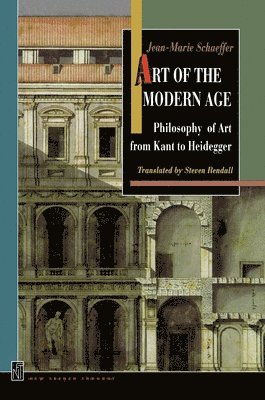
This is a sweeping and provocative work of aesthetic theory: a trenchant critique of the philosophy of art as it developed from the eighteenth century to the early twentieth century, combined with a carefully reasoned plea for a new and more flexible approach to art. Jean-Marie Schaeffer, one of France's leading aestheticians, explores the writings of Kant, Schlegel, Novalis, Hegel, Schopenhauer, Nietzsche, and Heidegger to show that these diverse thinkers shared a common approach to art, which he calls the "speculative theory." According to this theory, art offers a special kind of intuitive, quasi-mystical knowledge, radically different from the rational knowledge acquired by science. This view encouraged theorists to consider artistic geniuses the high-priests of humanity, creators of works that reveal the invisible essence of the world. Philosophers came to regard inexpressibility as the aim of art, refused to consider second-tier creations genuine art, and helped to create conditions in which the genius was expected to shock, puzzle, and mystify the public.Schaeffer shows that this speculative theory helped give birth to romanticism, modernism, and the avant-garde, and paved the way for an unfortunate divorce between art and enjoyment, between "high art" and popular art, and between artists and their public. Rejecting the speculative approach, Schaeffer concludes by defending a more tolerant theory of art that gives pleasure its due, includes popular art, tolerates less successful works, and accounts for personal tastes. "[A] remarkable work...[Schaeffer's] writing is governed by ...the ideals of clarity and consequence, the ideas of logic, truth, and evidence...Schaeffer is so precise and unrelenting a philosophical critic that one wonders how some of the philosophies he anatomizes here can possibly survive the operation."--From the foreword by Arthur C. Danto
377 kr
Skickas inom 7-10 vardagar
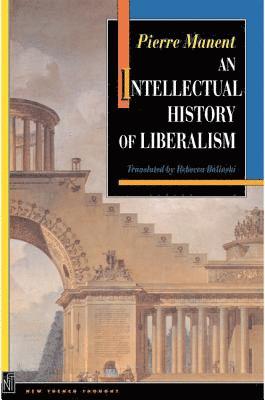
Highlighting the social tensions that confront the liberal tradition, Pierre Manent draws a portrait of what we, citizens of modern liberal democracies, have become. For Manent, a discussion of liberalism encompasses the foundations of modern society, its secularism, its individualism, and its conception of rights. The frequent incapacity of the morally neutral, democratic state to further social causes, he argues, derives from the liberal stance that political life does not serve a higher purpose. Through quick-moving, highly synthetic essays, he explores the development of liberal thinking in terms of a single theme: the decline of theological politics. The author traces the liberal stance to Machiavelli, who, in seeking to divorce everyday life from the pervasive influence of the Catholic church, separated politics from all notions of a cosmological order. What followed, as Manent demonstrates in his analyses of Locke, Hobbes, Rousseau, Guizot, and Constant, was the evolving concept of an individual with no goals outside the confines of the self and a state with no purpose but to prevent individuals from dominating one another.Weighing both the positive and negative effects of such a political arrangement, Manent raises important questions about the fundamental political issues of the day, among them the possibility of individual rights being reconciled with the necessary demands of political organization, and the desirability of a government system neutral about religion but not about public morals.
425 kr
Skickas inom 7-10 vardagar
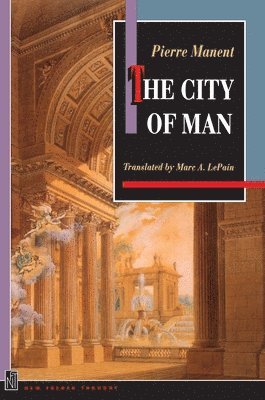
The "City of God" or the "City of Man"? This is the choice St. Augustine offered 1500 years ago--and according to Pierre Manent the modern West has decisively and irreversibly chosen the latter. In this subtle and wide-ranging book on the Western intellectual and political condition, Manent argues that the West has rejected the laws of God and of nature in a quest for human autonomy. But in declaring ourselves free and autonomous, he contends, we have, paradoxically, lost a sense of what it means to be human. In the first part of the book, Manent explores the development of the social sciences since the seventeenth century, portraying their growth as a sign of increasing human "self-consciousness." But as social scientists have sought to free us from the intellectual confines of the ancient world, he writes, they have embraced modes of analysis--economic, sociological, and historical--that treat only narrow aspects of the human condition and portray individuals as helpless victims of impersonal forces. As a result, we have lost all sense of human agency and of the unified human subject at the center of intellectual study.Politics and culture have come to be seen as mere foam on the tides of historical and social necessity. In the second half of the book, titled "Self-Affirmation," Manent examines how the West, having discovered freedom, then discovered arbitrary will and its dangers. With no shared touchstones or conceptions of virtue, for example, we have found it increasingly hard to communicate with each other. This is a striking contrast to the past, he writes, when even traditions as different as the Classical and the Christian held many of these conceptions in common. The result of these discoveries, according to Manent, is the disturbing rootlessness that characterizes our time. By gaining autonomy from external authority, we have lost a sense of what we are. In "giving birth" to ourselves, we have abandoned that which alone can nurture and sustain us. With penetrating insight and remarkable erudition, Manent offers a profound analysis of the confusions and contradictions at the heart of the modern condition.
796 kr
Skickas inom 7-10 vardagar
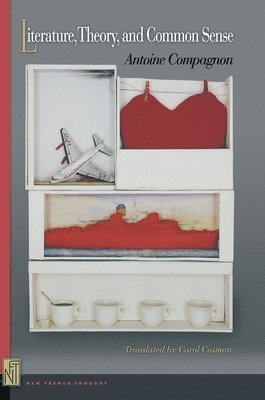
In the late twentieth century, the common sense approach to literature was deemed naive. Roland Barthes proclaimed the death of the author, and Hillis Miller declared that all interpretation is theoretical. In many a literature department, graduate students spent far more time on Derrida and Foucault than on Shakespeare and Milton. Despite this, common sense approaches to literature--including the belief that literature represents reality and authorial intentions matter--have resisted theory with tenacity. As a result, argues Antoine Compagnon, theorists have gone to extremes, boxed themselves into paradoxes, and distanced others from their ideas. Eloquently assessing the accomplishments and failings of literary theory, Compagnon ultimately defends the methods and goals of a theoretical commitment tempered by the wisdom of common sense. While it constitutes an engaging introduction to recent theoretical debates, the book is organized not by school of thought but around seven central questions: literariness, the author, the world, the reader, style, history, and value. What makes a work literature? Does fiction imitate reality? Is the reader present in the text?What constitutes style? Is the context in which a work is written important to its apprehension? Are literary values universal? As he examines how theory has wrestled these themes, Compagnon establishes not a simple middle-ground but a state of productive tension between high theory and common sense. The result is a book that will be met with both controversy and sighs of relief.
377 kr
Skickas inom 7-10 vardagar
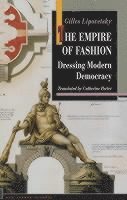
In a book full of playful irony and striking insights, the controversial social philosopher Gilles Lipovetsky draws on the history of fashion to demonstrate that the modern cult of appearance and superficiality actually serves the common good. Focusing on clothing, bodily deportment, sex roles, sexual practices, and political rhetoric as forms of "fashion," Lipovetsky bounds across two thousand years of history, showing how the evolution of fashion from an upper-class privilege into a vehicle of popular expression closely follows the rise of democratic values. Whereas Tocqueville feared that mass culture would create passive citizens incapable of political reasoning, Lipovetsky argues that today's mass-produced fashion offers many choices, which in turn enable consumers to become complex individuals within a consolidated, democratically educated society. Superficiality fosters tolerance among different groups within a society, claims Lipovetsky. To analyze fashion's role in smoothing over social conflict, he abandons class analysis in favor of an inquiry into the symbolism of everyday life and the creation of ephemeral desire.Lipovetsky examines the malaise experienced by people who, because they can fulfill so many desires, lose their sense of identity. His conclusions raise disturbing questions about personal joy and anguish in modern democracy.
598 kr
Skickas inom 7-10 vardagar
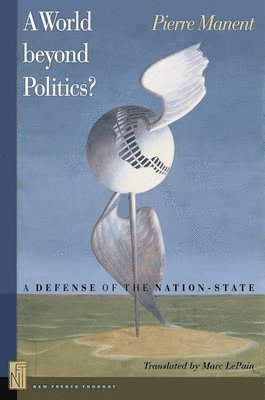
We live in the grip of a great illusion about politics, Pierre Manent argues in A World beyond Politics? It's the illusion that we would be better off without politics--at least national politics, and perhaps all politics. It is a fantasy that if democratic values could somehow detach themselves from their traditional national context, we could enter a world of pure democracy, where human society would be ruled solely according to law and morality. Borders would dissolve in unconditional internationalism and nations would collapse into supranational organizations such as the European Union. Free of the limits and sins of politics, we could finally attain the true life. In contrast to these beliefs, which are especially widespread in Europe, Manent reasons that the political order is the key to the human order. Human life, in order to have force and meaning, must be concentrated in a particular political community, in which decisions are made through collective, creative debate. The best such community for democratic life, he argues, is still the nation-state.Following the example of nineteenth-century political philosophers such as Alexis de Tocqueville and John Stuart Mill, Manent first describes a few essential features of democracy and the nation-state, and then shows how these characteristics illuminate many aspects of our present political circumstances. He ends by arguing that both democracy and the nation-state are under threat--from apolitical tendencies such as the cult of international commerce and attempts to replace democratic decisions with judicial procedures.
275 kr
Skickas inom 7-10 vardagar
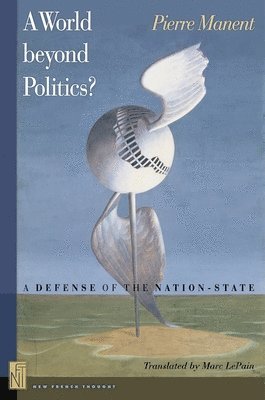
We live in the grip of a great illusion about politics, Pierre Manent argues in A World beyond Politics? It's the illusion that we would be better off without politics--at least national politics, and perhaps all politics. It is a fantasy that if democratic values could somehow detach themselves from their traditional national context, we could enter a world of pure democracy, where human society would be ruled solely according to law and morality. Borders would dissolve in unconditional internationalism and nations would collapse into supranational organizations such as the European Union. Free of the limits and sins of politics, we could finally attain the true life. In contrast to these beliefs, which are especially widespread in Europe, Manent reasons that the political order is the key to the human order. Human life, in order to have force and meaning, must be concentrated in a particular political community, in which decisions are made through collective, creative debate. The best such community for democratic life, he argues, is still the nation-state.Following the example of nineteenth-century political philosophers such as Alexis de Tocqueville and John Stuart Mill, Manent first describes a few essential features of democracy and the nation-state, and then shows how these characteristics illuminate many aspects of our present political circumstances. He ends by arguing that both democracy and the nation-state are under threat--from apolitical tendencies such as the cult of international commerce and attempts to replace democratic decisions with judicial procedures.
582 kr
Skickas inom 7-10 vardagar
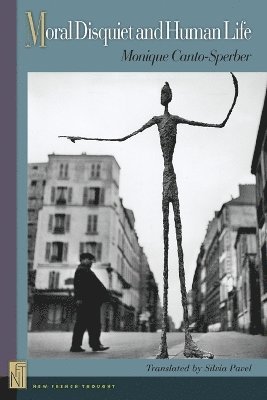
Attempting to steer moral philosophy away from abstract theorizing, Moral Disquiet and Human Life argues that moral philosophy should be a practical, rational, and argumentative engagement with reality, and that moral reflection should have direct effects on our lives and the world in which we live. Illustrating her discussion with vivid examples from literature, music, drama, and current events, the noted French philosopher Monique Canto-Sperber resumes the most ancient pursuit of philosophy: the examination of human life itself. What did Socrates mean when he said that the unexamined life is not worth living? How can reflecting on one's existence incorporate human singularity, the contingency of events, the certainty of death, the presence of the past, or the irreversibility of time? Carefully analyzing and proposing answers to such questions, Moral Disquiet and Human Life eloquently calls for a redefinition of the task of moral philosophy and of its limits.
377 kr
Skickas inom 7-10 vardagar
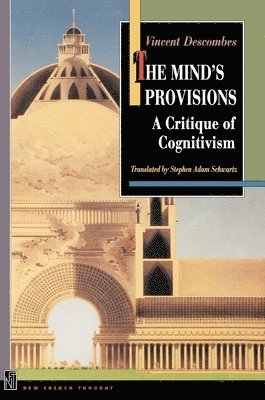
Vincent Descombes brings together an astonishingly large body of philosophical and anthropological thought to present a thoroughgoing critique of contemporary cognitivism and to develop a powerful new philosophy of the mind. Beginning with a critical examination of American cognitivism and French structuralism, Descombes launches a more general critique of all philosophies that view the mind in strictly causal terms and suppose that the brain--and not the person--thinks. Providing a broad historical perspective, Descombes draws surprising links between cognitivism and earlier anthropological projects, such as Levi-Strauss's work on the symbolic status of myths. He identifies as incoherent both the belief that mental states are detached from the world and the idea that states of mind are brain states; these assumptions beg the question of the relation between mind and brain. In place of cognitivism, Descombes offers an anthropologically based theory of mind that emphasizes the mind's collective nature.Drawing on Wittgenstein, he maintains that mental acts are properly attributed to the person, not the brain, and that states of mind, far from being detached from the world, require a historical and cultural context for their very intelligibility. Available in English for the first time, this is the most outstanding work of one of France's finest contemporary philosophers. It provides a much-needed link between the continental and Anglo-American traditions, and its impact will extend beyond philosophy to anthropology, psychology, critical theory, and French studies.
219 kr
Skickas inom 7-10 vardagar
Attempting to steer moral philosophy away from abstract theorizing, Moral Disquiet and Human Life argues that moral philosophy should be a practical, rational, and argumentative engagement with reality, and that moral reflection should have direct effects on our lives and the world in which we live. Illustrating her discussion with vivid examples from literature, music, drama, and current events, the noted French philosopher Monique Canto-Sperber resumes the most ancient pursuit of philosophy: the examination of human life itself. What did Socrates mean when he said that the unexamined life is not worth living? How can reflecting on one's existence incorporate human singularity, the contingency of events, the certainty of death, the presence of the past, or the irreversibility of time? Carefully analyzing and proposing answers to such questions, Moral Disquiet and Human Life eloquently calls for a redefinition of the task of moral philosophy and of its limits.
204 kr
Skickas inom 7-10 vardagar
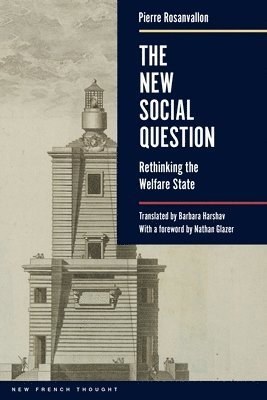
How social and intellectual changes undermine our justifications for the welfare state The welfare state has come under severe pressure internationally, partly for the well-known reasons of slowing economic growth and declining confidence in the public sector. According to the influential social theorist Pierre Rosanvallon, however, there is also a deeper and less familiar reason for the crisis of the welfare state. He shows here that a fundamental practical and philosophical justification for traditional welfare policies—that all citizens share equal risks—has been undermined by social and intellectual change. If we wish to achieve the goals of social solidarity and civic equality for which the welfare state was founded, Rosanvallon argues, we must radically rethink social programs.Rosanvallon begins by tracing the history of the welfare state and its founding premise that risks, especially the risks of illness and unemployment, are equally distributed and unpredictable. He shows that this idea has become untenable because of economic diversification and advances in statistical and risk analysis. It is truer than ever before—and far more susceptible to analysis—that some individuals will face much greater risks than others because of their jobs and lifestyle choices. Rosanvallon argues that social policies must be more narrowly targeted. And he draws on evidence from around the world, in particular France and the United States, to show that such programs as unemployment insurance and workfare could better reflect individual needs by, for example, making more explicit use of contracts between the providers and receivers of benefits. His arguments have broad implications for welfare programs everywhere and for our understanding of citizenship in modern democracies and economies.