New Media World - Böcker
Visar alla böcker i serien New Media World. Handla med fri frakt och snabb leverans.
8 produkter
8 produkter
361 kr
Skickas inom 7-10 vardagar
Making News at The New York Times is the first in-depth portrait of the nation’s, if not the world's, premier newspaper in the digital age. It presents a lively chronicle of months spent in the newsroom observing daily conversations, meetings, and journalists at work. We see Page One meetings, articles developed for online and print from start to finish, the creation of ambitious multimedia projects, and the ethical dilemmas posed by social media in the newsroom. Here, the reality of creating news in a 24/7 instant information environment clashes with the storied history of print journalism, and the tensions present a dramatic portrait of news in the online world.This news ethnography brings to bear the overarching value clashes at play in a digital news world. The book argues that emergent news values are reordering the fundamental processes of news production. Immediacy, interactivity, and participation now play a role unlike any time before, creating clashes between old and new. These values emerge from the social practices, pressures, and norms at play inside the newsroom as journalists attempt to negotiate the new demands of their work. Immediacy forces journalists to work in a constant deadline environment, an ASAP world, but one where the vaunted traditions of yesterday's news still appear in the next day's print paper. Interactivity, inspired by the new user-computer directed capacities online and the immersive Web environment, brings new kinds of specialists into the newsroom, but exacts new demands upon the already taxed workflow of traditional journalists. And at time where social media presents the opportunity for new kinds of engagement between the audience and media, business executives hope for branding opportunities while journalists fail to truly interact with their readers.
361 kr
Skickas inom 7-10 vardagar
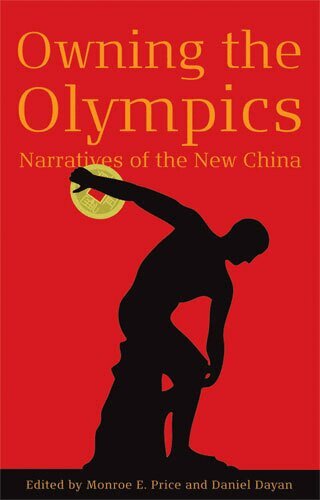
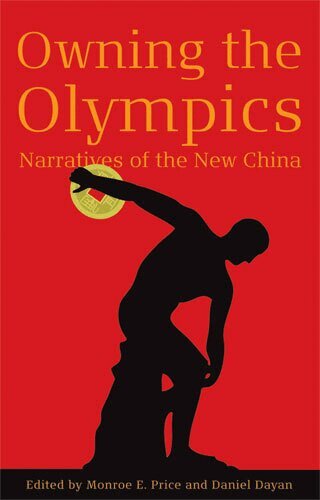
"A major contribution to the study of global events in times of global media. Owning the Olympics tests the possibilities and limits of the concept of 'media events' by analyzing the mega-event of the information age: the Beijing Olympics. . . . A good read from cover to cover."—Guobin Yang, Associate Professor, Asian/Middle Eastern Cultures & Sociology, Barnard College, Columbia UniversityFrom the moment they were announced, the Beijing Games were a major media event and the focus of intense scrutiny and speculation. In contrast to earlier such events, however, the Beijing Games are also unfolding in a newly volatile global media environment that is no longer monopolized by broadcast media. The dramatic expansion of media outlets and the growth of mobile communications technology have changed the nature of media events, making it significantly more difficult to regulate them or control their meaning. This volatility is reflected in the multiple, well-publicized controversies characterizing the run-up to Beijing 2008. According to many Western commentators, the People's Republic of China seized the Olympics as an opportunity to reinvent itself as the "New China"---a global leader in economics, technology, and environmental issues, with an improving human-rights record. But China's maneuverings have also been hotly contested by diverse global voices, including prominent human-rights advocates, all seeking to displace the official story of the Games.Bringing together a distinguished group of scholars from Chinese studies, human rights, media studies, law, and other fields, Owning the Olympics reveals how multiple entities---including the Chinese Communist Party itself---seek to influence and control the narratives through which the Beijing Games will be understood. digitalculturebooks is an imprint of the University of Michigan Press and the Scholarly Publishing Office of the University of Michigan Library dedicated to publishing innovative and accessible work exploring new media and their impact on society, culture, and scholarly communication. Visit the website at www.digitalculture.org.
361 kr
Skickas inom 7-10 vardagar
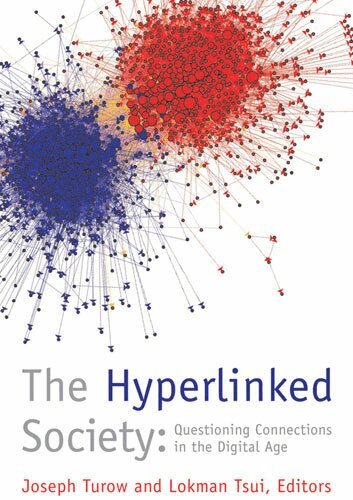
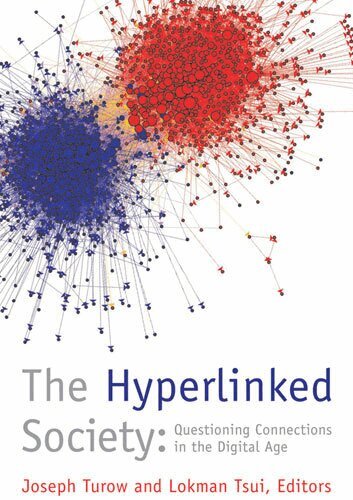
"Links" are among the most basic---and most unexamined---features of online life. Bringing together a prominent array of thinkers from industry and the academy, The Hyperlinked Society addresses a provocative series of questions about the ways in which hyperlinks organize behavior online. How do media producers' considerations of links change the way they approach their work, and how do these considerations in turn affect the ways that audiences consume news and entertainment? What role do economic and political considerations play in information producers' creation of links? How do links shape the size and scope of the public sphere in the digital age? Are hyperlinks "bridging" mechanisms that encourage people to see beyond their personal beliefs to a broader and more diverse world? Or do they simply reinforce existing bonds by encouraging people to ignore social and political perspectives that conflict with their existing interests and beliefs?This pathbreaking collection of essays will be valuable to anyone interested in the now taken for granted connections that structure communication, commerce, and civic discourse in the world of digital media."This collection provides a broad and deep examination of the social, political, and economic implications of the evolving, web-based media environment. The Hyperlinked Society will be a very useful contribution to the scholarly debate about the role of the internet in modern society, and especially about the interaction between the internet and other media systems in modern society." ---Charles Steinfield, Professor and Chairperson, Department of Telecommunication, Information Studies, and Media, Michigan State University Joseph Turow is Robert Lewis Shayon Professor at the Annenberg School for Communication, University of Pennsylvania. He was named a Distinguished Scholar by the National Communication Association and a Fellow of the International Communication Association in 2010. He has authored eight books, edited five, and written more than 100 articles on mass media industries. His books include Niche Envy: Marketing Discrimination in the Digital Age and Breaking up America: Advertisers and the New Media World. Lokman Tsui is a doctoral candidate at the Annenberg School for Communication, University of Pennsylvania. His research interests center on new media and global communication.Cover image: This graph from Lada Adamic's chapter depicts the link structure of political blogs in the United States. The shapes reflect the blogs, and the colors of the shapes reflect political orientation---red for conservative blogs, blue for liberal ones. The size of each blog reflects the number of blogs that link to it.digitalculturebooks is an imprint of the University of Michigan Press and the Scholarly Publishing Office of the University of Michigan Library dedicated to publishing innovative and accessible work exploring new media and their impact on society, culture, and scholarly communication. Visit the website at www.digitalculture.org.
574 kr
Skickas inom 7-10 vardagar
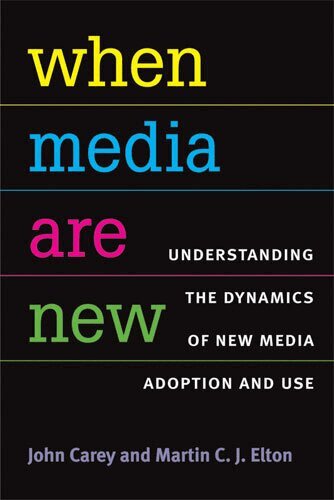
"John Carey and Martin Elton are among the most skilled and insightful researchers studying the dynamic changes in technology and the impacts on consumer attitudes and behaviors. Their comprehensive and actionable observations make this a must read for anyone interested in understanding the current (and future) media environment."---Alan Wurtzel, President, Research and Media Development, NBC Universal"When Media Are New should be read by every media manager faced with disruptive change brought on by new technology. The book transcends the fashionable topics and themes that are here today and gone tomorrow and instead places emphasis on those areas of research and implementation where fatal mistakes are made. They capture something universal, and therefore highly useful, by stripping away the hype and focusing relentlessly on consumers and the ways they adopt or fail to adopt new media products and technologies into their lives."---Martin Nisenholtz, Senior Vice President, Digital Operations, The New York Times Company"The burgeoning development of the Internet has deflected attention from a wider history of new media innovations that has shaped its success. John Carey and Martin Elton demonstrate that earlier initiatives to launch videophones, two-way interactive cable systems, videotext and other media innovations can teach us much about the present state and future course of information and communication technologies. This is a key reference on the new media, and must reading for students of the Internet---the platform for continuing the new media revolution."---Professor William H. Dutton, Director, Oxford Internet Institute, University of OxfordThe world of communication media has undergone massive changes since the mid-1980s. Along with the extraordinary progress in technological capability, it has experienced stunning decreases in costs; a revolutionary opening up of markets (a phenomenon exemplified by but not limited to the rise of the Internet); the advent of new business models; and a striking acceleration in the rate of change. These technological, regulatory, and economic changes have attracted the attention of a large number of researchers, from industry and academe, and given rise to a substantial body of research and data. Significantly less attention has been paid to the actual and intended users of new media. When Media Are New addresses this research and publishing gap by investigating the human side of the technological changes of the last 50 years and the implications for current and future media. It will find a broad audience ranging from media scholars to policymakers to industry professionals.John Carey is Professor of Communications and Media Management at Fordham Business School and has extensive experience in conducting research about new media for companies such as AT&T, Cablevision, NBC Universal, and the New York Times (among many others) as well as foundations and government agencies. His extensive publications have focused on user adoption of new media and how consumers actually use new technologies. Martin C. J. Elton was Director of the Communication Studies Group in the UK, which pioneered in the study of user behavior with new media technologies, and founded the Interactive Telecommunication Program at New York University. He has published widely on user research, forecasting, and public policy and has conducted extensive research for many prominent foundations, companies, and government agencies in the USA and Europe.
361 kr
Skickas inom 7-10 vardagar
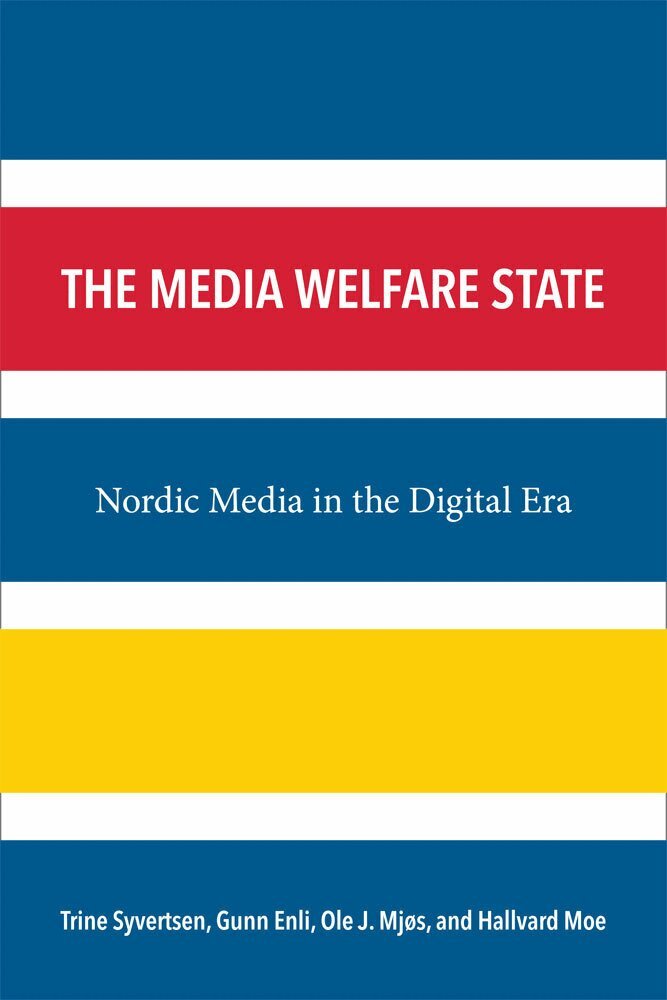
The Media Welfare State: Nordic Media in the Digital Era comprehensively addresses the central dynamics of the digitalization of the media industry in the Nordic countries—Sweden, Norway, Denmark, Finland, and Iceland—and the ways media organizations there are transforming to address the new digital environment. Taking a comparative approach, the authors provide an overview of media institutions, content, use, and policy throughout the region, focusing on the impact of information and communication technology/internet and digitalization on the Nordic media sector. Illustrating the shifting media landscape the authors draw on a wide range of cases, including developments in the press, television, the public service media institutions, and telecommunication.
Imagining the Global
Transnational Media and Popular Culture Beyond East and West
Häftad, Engelska, 2014
361 kr
Skickas inom 7-10 vardagar
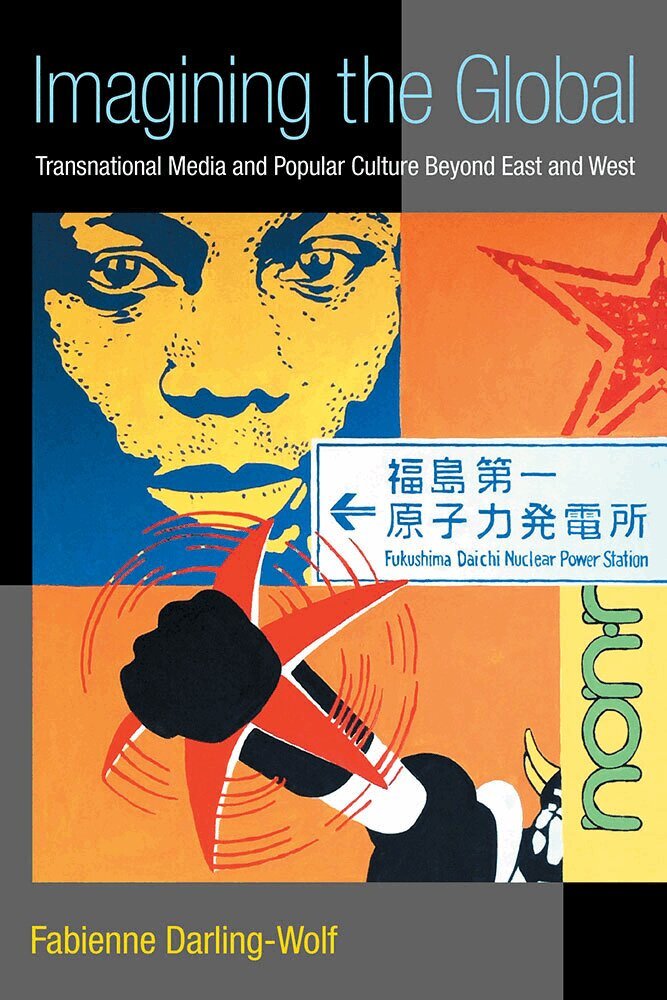
Based on a series of case studies of globally distributed media and their reception in different parts of the world, Imagining the Global reflects on what contemporary global culture can teach us about transnational cultural dynamics in the 21st century. A focused multisited cultural analysis that reflects on the symbiotic relationship between the local, the national, and the global, it also explores how individuals’ consumption of global media shapes their imagination of both faraway places and their own local lives. Chosen for their continuing influence, historical relationships, and different geopolitical positions, the case sites of France, Japan, and the United States provide opportunities to move beyond common dichotomies between East and West, or United States and “the rest.” From a theoretical point of view, Imagining the Global endeavors to answer the question of how one locale can help us understand another locale. Drawing from a wealth of primary sources—several years of fieldwork; extensive participant observation; more than 80 formal interviews with some 160 media consumers (and occasionally producers) in France, Japan, and the United States; and analyses of media in different languages—author Fabienne Darling-Wolf considers how global culture intersects with other significant identity factors, including gender, race, class, and geography. Imagining the Global investigates who gets to participate in and who gets excluded from global media representation, as well as how and why the distinction matters.
356 kr
Skickas inom 7-10 vardagar
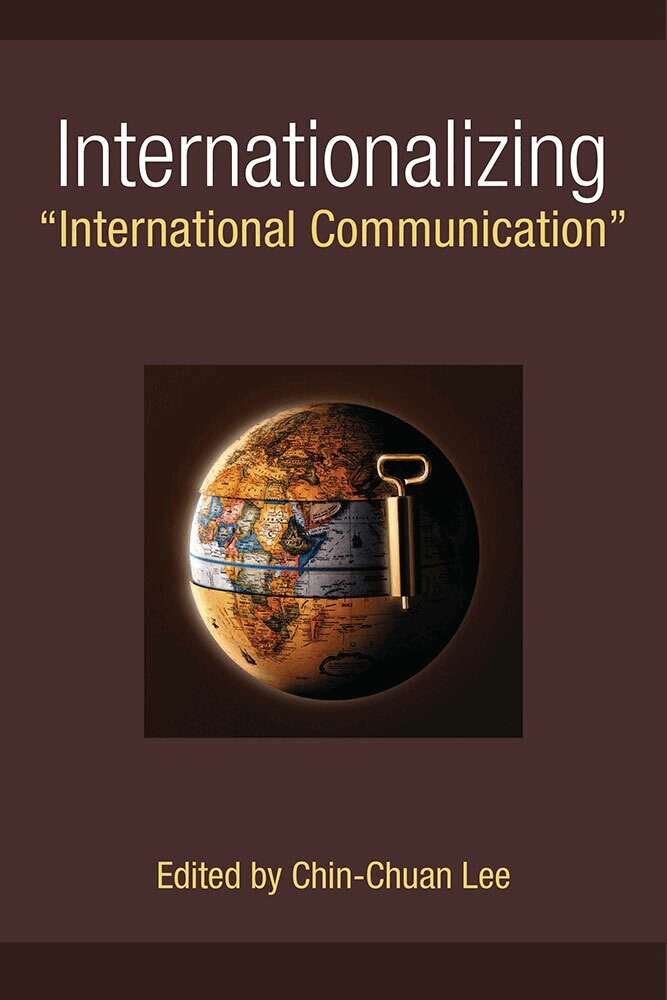
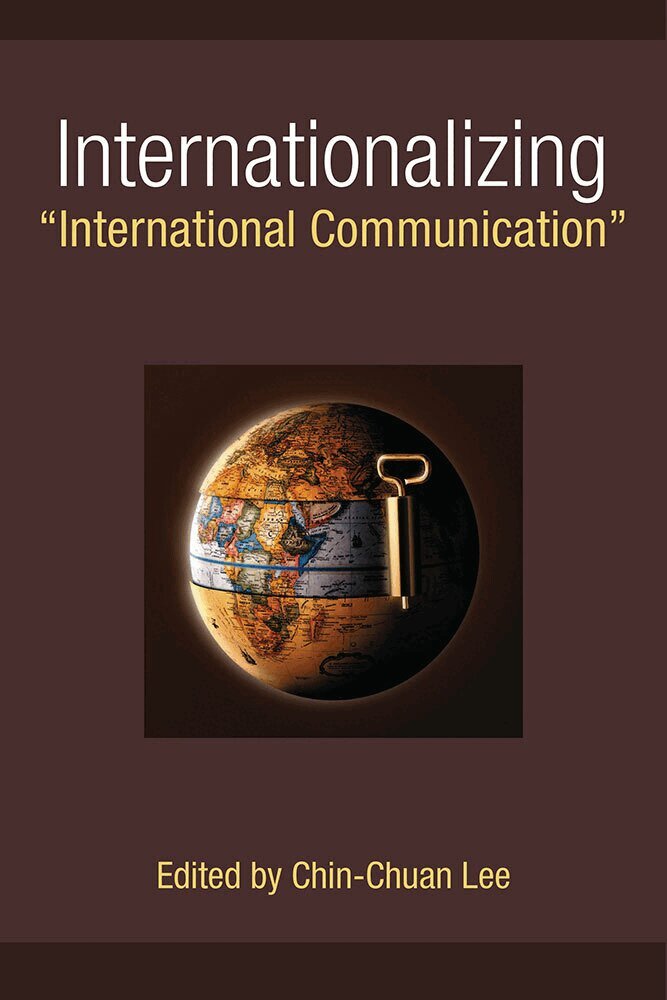
International communication as a field of inquiry is, in fact, not very “internationalized.” Rather, it has been taken as a conceptual extension or empirical application of U.S. communication, and much of the world outside the West has been socialized to adopt truncated versions of Pax Americana’s notion of international communication. At stake is the “subject position” of academic and cultural inquirers: Who gets to ask what kind of questions? It is important to note that the quest to establish universally valid “laws” of human society with little regard for cultural values and variations seems to be running out of steam. Many lines of intellectual development are reckoning with the important dimensions of empathetic understanding and subjective consciousness.In Internationalizing "International Communication," Lee and others argue that we must reject both America-writ-large views of the world and self-defeating mirror images that reject anything American or Western on the grounds of cultural incompatibility or even cultural superiority. The point of departure for internationalizing “international communication” must be precisely the opposite of parochialism – namely, a spirit of cosmopolitanism. Scholars worldwide have a moral responsibility to foster global visions and mutual understanding, which forms, metaphorically, symphonic harmony made of cacophonic sounds.
Imagining the Global
Transnational Media and Popular Culture Beyond East and West
Inbunden, Engelska, 2014
800 kr
Skickas inom 7-10 vardagar
Based on a series of case studies of globally distributed media and their reception in different parts of the world, Imagining the Global reflects on what contemporary global culture can teach us about transnational cultural dynamics in the 21st century. A focused multisited cultural analysis that reflects on the symbiotic relationship between the local, the national, and the global, it also explores how individuals’ consumption of global media shapes their imagination of both faraway places and their own local lives. Chosen for their continuing influence, historical relationships, and different geopolitical positions, the case sites of France, Japan, and the United States provide opportunities to move beyond common dichotomies between East and West, or United States and “the rest.” From a theoretical point of view, Imagining the Global endeavors to answer the question of how one locale can help us understand another locale. Drawing from a wealth of primary sources—several years of fieldwork; extensive participant observation; more than 80 formal interviews with some 160 media consumers (and occasionally producers) in France, Japan, and the United States; and analyses of media in different languages—author Fabienne Darling-Wolf considers how global culture intersects with other significant identity factors, including gender, race, class, and geography. Imagining the Global investigates who gets to participate in and who gets excluded from global media representation, as well as how and why the distinction matters.