New Perspectives in SE Asian Studies - Böcker
Visar alla böcker i serien New Perspectives in SE Asian Studies. Handla med fri frakt och snabb leverans.
12 produkter
12 produkter
321 kr
Skickas inom 10-15 vardagar
Reforms in Myanmar (formerly Burma) have eased restrictions on citizens' political activities. Yet for most Burmese, Ardeth Maung Thawnghmung shows, eking out a living from day to day leaves little time for civic engagement. Citizens have coped with extreme hardship through great resourcefulness. But by making bad situations more tolerable in the short term, these coping strategies may hinder the emergence of the democratic values needed to sustain the country's transition to a more open political environment.Thawnghmung conducted in-depth interviews and surveys of 372 individuals from all walks of life and across geographical locations in Myanmar between 2008 and 2015. To frame her analysis, she provides context from countries with comparable political and economic situations. Her findings will be welcomed by political scientists and policy analysts, as well by journalists and humanitarian activists looking for substantive, reliable information about everyday life in a country that remains largely in the shadows.
308 kr
Skickas inom 10-15 vardagar
When costly efforts to cement a strategic partnership with the Soviet Union failed, the combined political pressure of economic crisis at home and imminent external threats posed by a Sino-Cambodian alliance compelled Hanoi to reverse course. Moving away from the Marxist-Leninist ideology that had prevailed during the last decade of the Cold War era, the Vietnamese government implemented broad doi moi ("renovation") reforms intended to create a peaceful regional environment for the country's integration into the global economy.In contrast to earlier studies, Path traces the moving target of these changing policy priorities, providing a vital addition to existing scholarship on asymmetric wartime decision-making and alliance formation among small states. The result uncovers how this critical period had lasting implications for the ways Vietnam continues to conduct itself on the global stage.
267 kr
Skickas inom 10-15 vardagar
During World War II, the United States government and many Western democracies limited or closed themselves off entirely to Jewish refugees. By contrast, a Pacific island nation decided to keep its doors open. Between 1938 and 1941, the Philippine Commonwealth provided safe asylum to more than 1,300 German Jews. In highlighting the efforts by Philippine president Manual Quezon and High Commissioner Paul V. McNutt, Bonnie M. Harris offers fuller implications for our understanding of the Roosevelt administration's response to the Holocaust.This untold history is brought to life by focusing on the incredible journey of synagogue cantor Joseph Cysner. Drawing from oral histories, memoirs, and personal papers, Harris documents Cysner's harrowing escape from the Nazis and his heroic rescue by the American-led Jewish community of the Philippines in 1939. Moving and rich in historical detail, Philippine Sanctuary reveals new insights for an overlooked period in our recent history, and emphasizes the continued importance of humanitarian efforts to aid those being persecuted.
280 kr
Skickas inom 10-15 vardagar
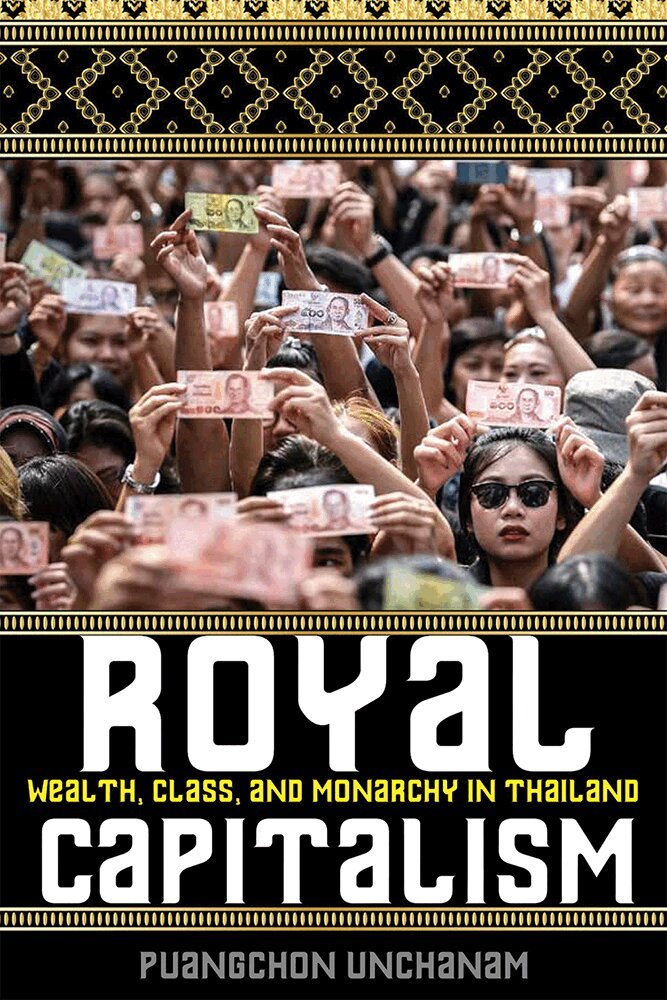
Thanks to its active role in national politics, the market economy, and popular culture, the Thai crown remains both the country's dominant institution and one of the world's wealthiest monarchies. Puangchon Unchanam examines the reign of Thailand's King Bhumibol Adulyadej or Rama IX (1946–2016) and how the crown thrived by transforming itself into a distinctly "bourgeois" monarchy that co-opted middle-class values of hard work, frugality, and self-sufficiency.The kingdom positioned itself to connect business elites, patronize local industries, and form strategic partnerships with global corporations. Instead of restraining or regulating royal power, white-collar workers joined with the crown to form a dynamic, symbiotic force that has left the lower classes to struggle in their wake. Unchanam presents a surprising case study that kings and queens live long and large in cooperation with the bourgeoisie's interests and ideology.
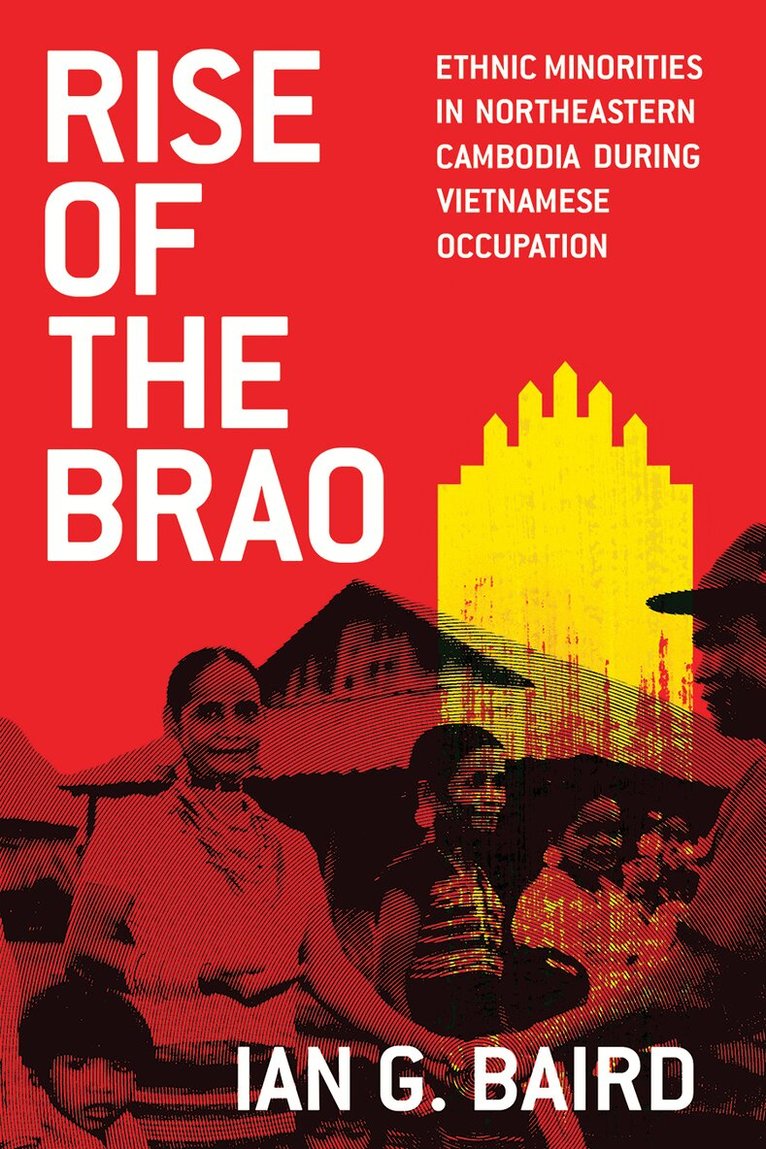
Rise of the Brao
Ethnic Minorities in Northeastern Cambodia During Vietnamese Occupation
Häftad, Engelska, 2022
280 kr
Skickas inom 10-15 vardagar
In the early 1970s, the Khmer Rouge had become suspicious of communist Vietnam and began to persecute Cambodian ethnic groups who had ties to the country, including the Brao Amba in the northeast. Many fled north as political refugees, and some joined the Vietnamese effort to depose the Khmer Rouge a few years later. The subsequent ten-year occupation is remembered by many Cambodians as a time of further oppression, but this volume reveals an unexpected dimension of this troubled past. Trusted by the Vietnamese, the Brao were installed in positions of great authority in the new government only to gradually lose their influence when Vietnam withdrew from Cambodia.Based on detailed research and interviews, Ian G. Baird documents this golden age of the Brao, including the voices of those who are too frequently omitted from official records. Rise of the Brao challenges scholars to look beyond the prevailing historical narratives to consider the nuanced perspectives of peripheral or marginal regions.
881 kr
Skickas inom 10-15 vardagar
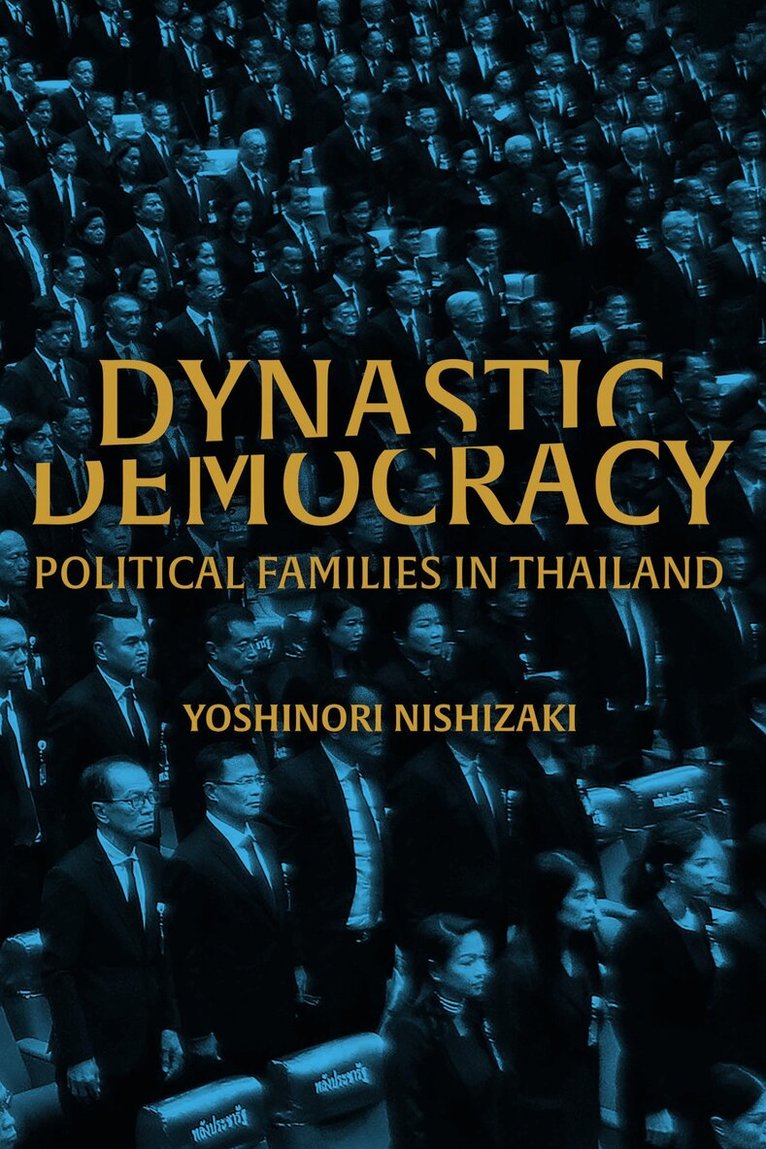
The political history of Thailand since the overthrow of absolute monarchy in 1932 has conventionally been interpreted as a long series of popular struggles for representative democracy and against military authoritarian rule. Yoshinori Nishizaki argues that this history can be better understood as one of struggles by elite political families for and against “dynastic democracy”—a form of democracy that is characterized by the patrimonial transmission of power between members of select ruling families. Dynastic Democracy suggests it is these familial-based contestations for political ascendancy that underlie the tumultuous politics of Thailand, a country that has experienced no fewer than twenty-two coups over the course of the past century. Drawing extensively on Thai-language primary sources, including assets documents and cremation volumes for deceased politicians and their kin, Nishizaki traces the intricate blood and marriage connections among Thailand’s political families. These families may fall into two categories: influential commoner families that have held parliamentary seats since 1932 and form the core of Thailand’s dynastic democracy; and upper-class families that are kin to or aligned ideologically with the royal family and have repeatedly challenged dynastic democracy through coups, constitutional changes, and other political maneuvers. Nishizaki’s exploration of dynastic democracy illustrates how democratic pluralism in Thailand has been consistently stifled, to the detriment of ordinary citizens. Dynastic Democracy fleshes out a widely acknowledged yet heretofore empirically unsubstantiated facet of Thai political history—that in Thai politics, family matters.
349 kr
Skickas inom 10-15 vardagar
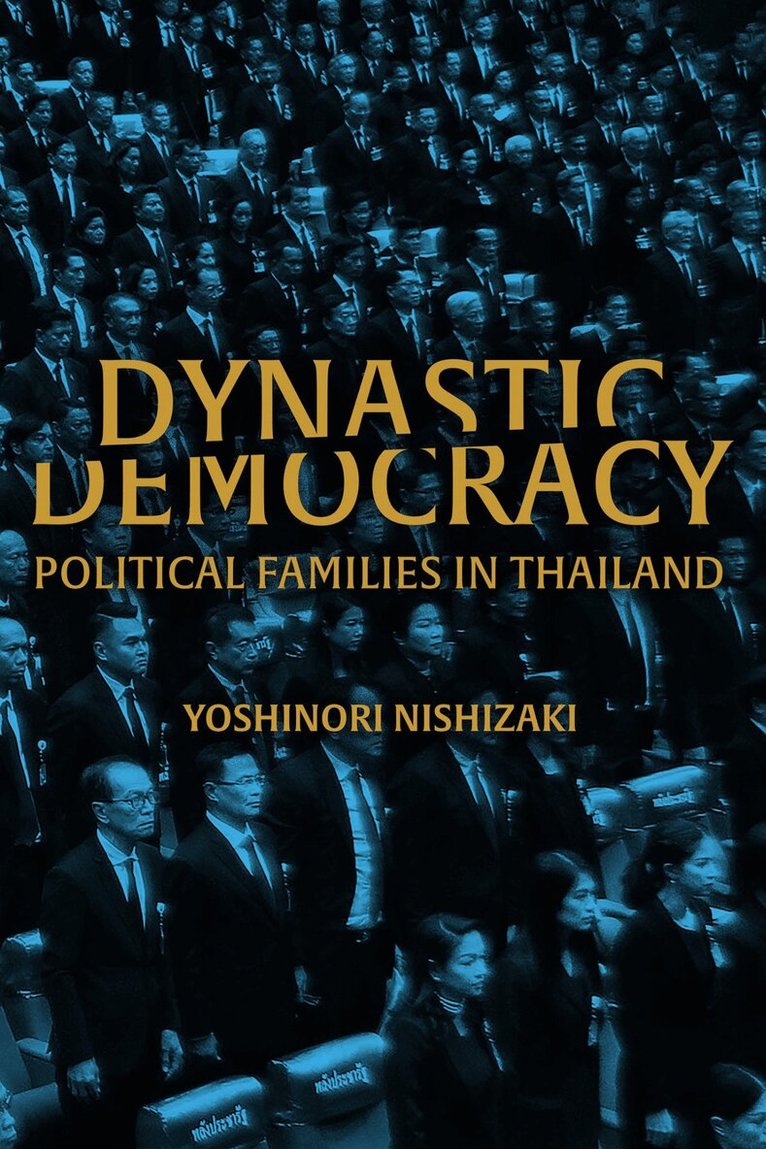
Since the overthrow of absolute monarchy in 1932, Thailand’s political history has conventionally been interpreted as a long series of popular struggles for representative democracy and against authoritarian military rule. Yoshinori Nishizaki proposes that this history be understood as a continual struggle by elite political families for and against “dynastic democracy”—characterized by the transmission of power between members of select ruling families. Thailand has experienced no fewer than twenty-two coups over the past century, and Nishizaki shows that family-based contests for power underlie that tumultuous politics.Drawing extensively on Thai-language primary sources, Nishizaki traces the intricate blood and marriage connections among Thailand’s political families. These families fall into two categories: influential commoners who have held parliamentary seats since 1932 and form the core of Thailand’s dynastic democracy; and upper-class citizens who are related to the royal family either by kin or by ideological alignment, and who have repeatedly challenged political transitions with coups and constitutional changes, among other maneuvers. Nishizaki illustrates how a broader democracy in Thailand has been consistently stifled, to the detriment of ordinary citizens. Dynastic Democracy fleshes out a widely acknowledged yet heretofore empirically unsubstantiated facet of Thai political history—that in Thai politics, family matters.
881 kr
Skickas inom 10-15 vardagar
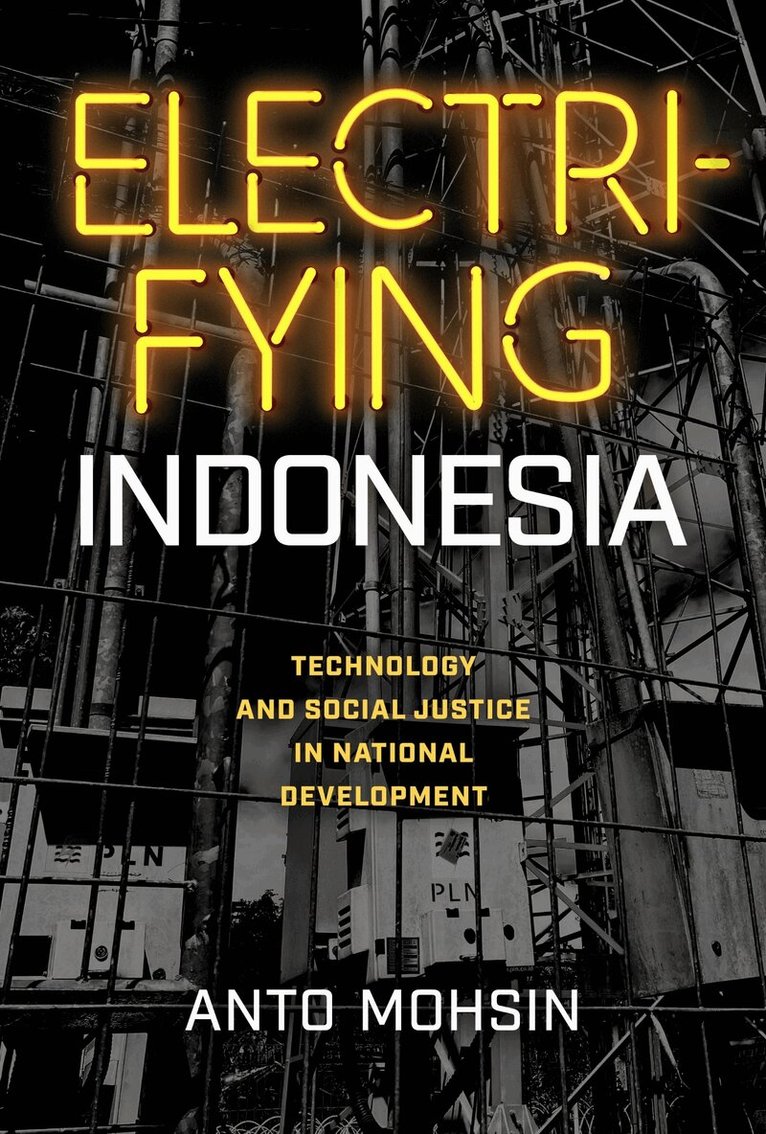
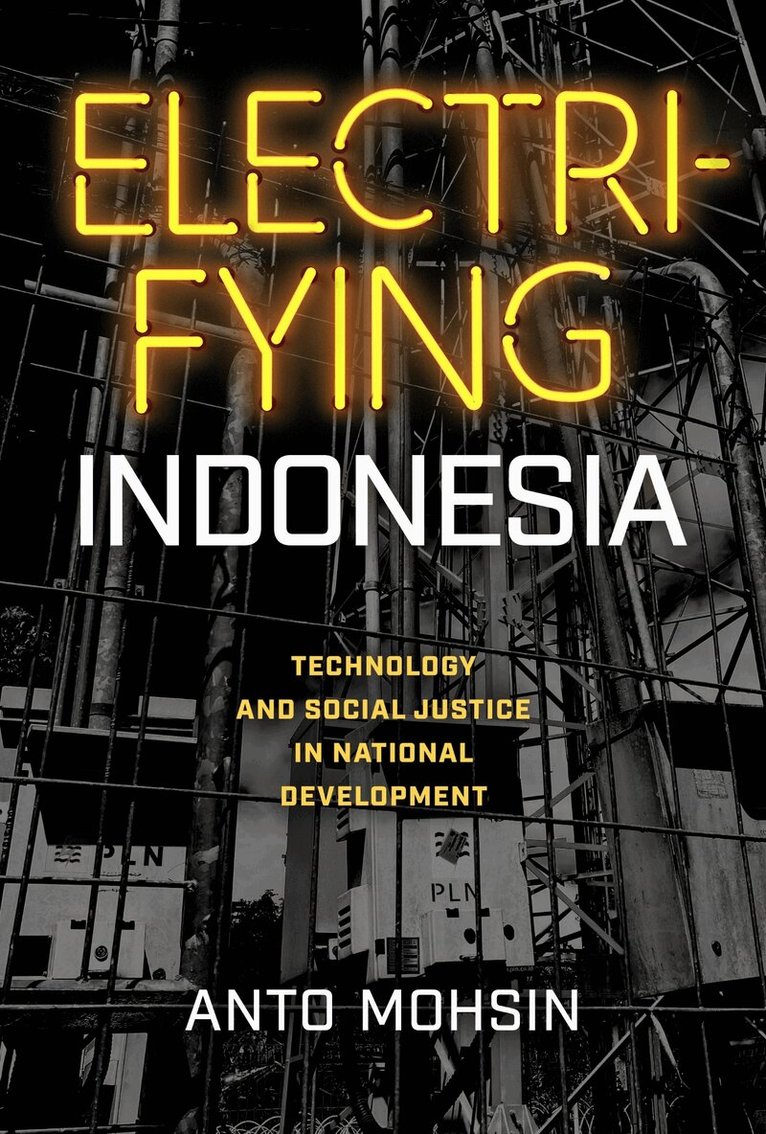
Electrifying Indonesia tells the story of the entanglement of politics and technology during Indonesia’s rapid post–World War II development. As a central part of its nation-building project, the Indonesian state sought to supply electricity to the entire country, bringing transformative socioeconomic benefits across its heterogeneous territories and populations. While this project was driven by nationalistic impulses, it was also motivated by a genuine interest in social justice. The entanglement of these two ideologies—nation-building and equity—shaped how electrification was carried out, including how the state chose the technologies it did. Private companies and electric cooperatives vied with the hegemonic state power company to participate in a monumental undertaking that would transform daily life for all Indonesians, especially rural citizens.In this innovative volume, Anto Mohsin brings Indonesian studies together with science and technology studies to understand a crucial period in modern Indonesian history. He shows that attempts to illuminate the country were inseparable from the effort to maintain the new nation-state, chart its path to independence, and legitimize ruling regimes. In exchange for an often dramatically improved standard of living, people gave their votes, and their acquiescence, to the ruling government.
294 kr
Skickas inom 10-15 vardagar
Electrifying Indonesia tells the story of the entanglement of politics and technology during Indonesia’s rapid post–World War II development. As a central part of its nation-building project, the Indonesian state sought to supply electricity to the entire country, bringing transformative socioeconomic benefits across its heterogeneous territories and populations. While this project was driven by nationalistic impulses, it was also motivated by a genuine interest in social justice. The entanglement of these two ideologies—nation-building and equity—shaped how electrification was carried out, including how the state chose the technologies it did. Private companies and electric cooperatives vied with the hegemonic state power company to participate in a monumental undertaking that would transform daily life for all Indonesians, especially rural citizens. In this innovative volume, Anto Mohsin brings Indonesian studies together with science and technology studies to understand a crucial period in modern Indonesian history. He shows that attempts to illuminate the country were inseparable from the effort to maintain the new nation-state, chart its path to independence, and legitimize ruling regimes. In exchange for an often dramatically improved standard of living, people gave their votes, and their acquiescence, to the ruling government.
991 kr
Skickas inom 10-15 vardagar
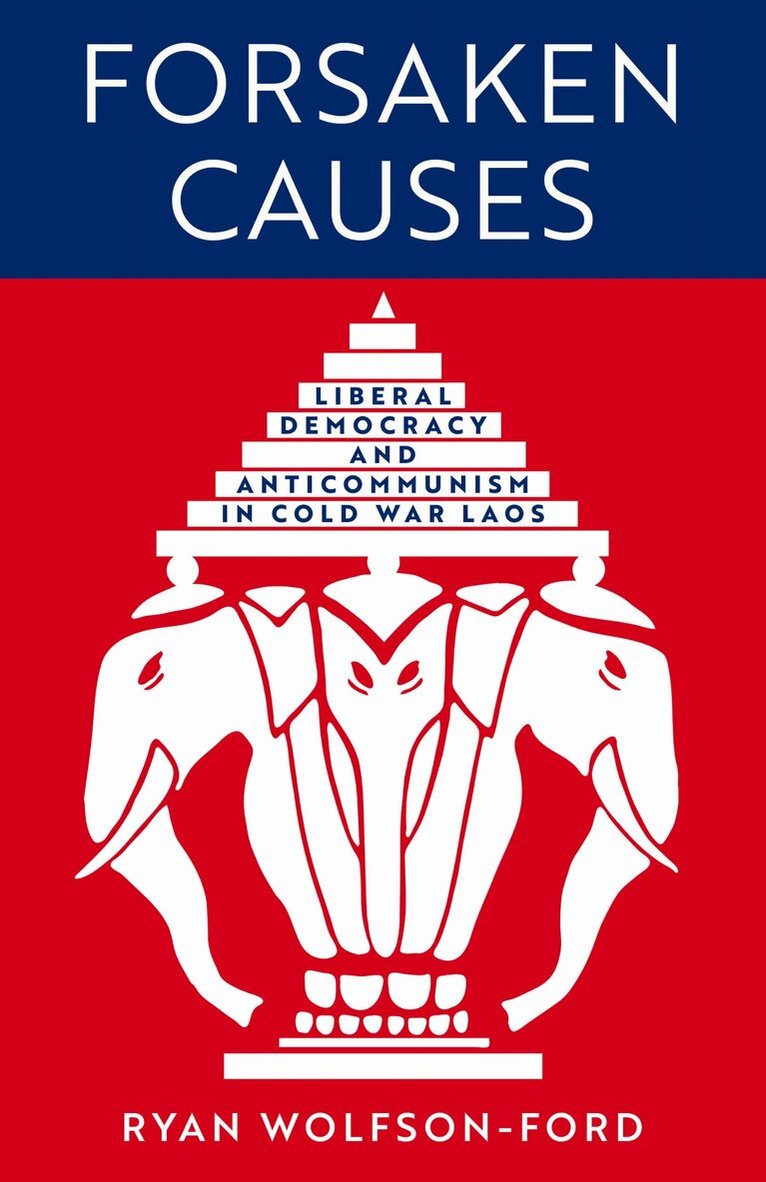
Postcolonial and post–World War II Southeast Asia churned with new political, social, and cultural realities and possibilities. Liberal democracies flourished briefly, only to be discarded in favor of dictatorships and other authoritarian regimes, as the disorder and slow response times inherent to democracy proved unsavory or unequal to the challenges of the Cold War. Uniquely, Laos maintained a stable democracy into the 1970s, but its history has often been flattened into the global tug-of-war between the superpowers.Forsaken Causes offers the groundbreaking intellectual history of the Royal Lao Government (RLG) from 1945 to 1975. Ryan Wolfson-Ford’s account firmly centers the Lao people as not pawns of the superpowers but agents of their own history, with the Lao elite as the authors of the nation’s trajectory. The prevailing ideologies of liberal democracy and anticommunism were not imposed from the outside, as is usually assumed in Western accounts; rather, they were rooted in the specific culture of Laos, which prized its traditional monarchy, its Buddhist faith, and a powerful nationalistic concept of Lao race. Contrary to histories that dismiss the Lao elite as mere instruments of foreign powers, the RLG charted its own course during the Cold War, guided by complex motivations, rationales, and beliefs. By recentering the Lao in their own history, Wolfson-Ford restores our understanding of this robust, multiparty political system and enhances our understanding of postcolonial and Cold War Southeast Asia as a whole.
Champassak Royalty and Sovereignty
Within and Between Nation-States in Mainland Southeast Asia
Inbunden, Engelska, 2024
881 kr
Skickas inom 10-15 vardagar
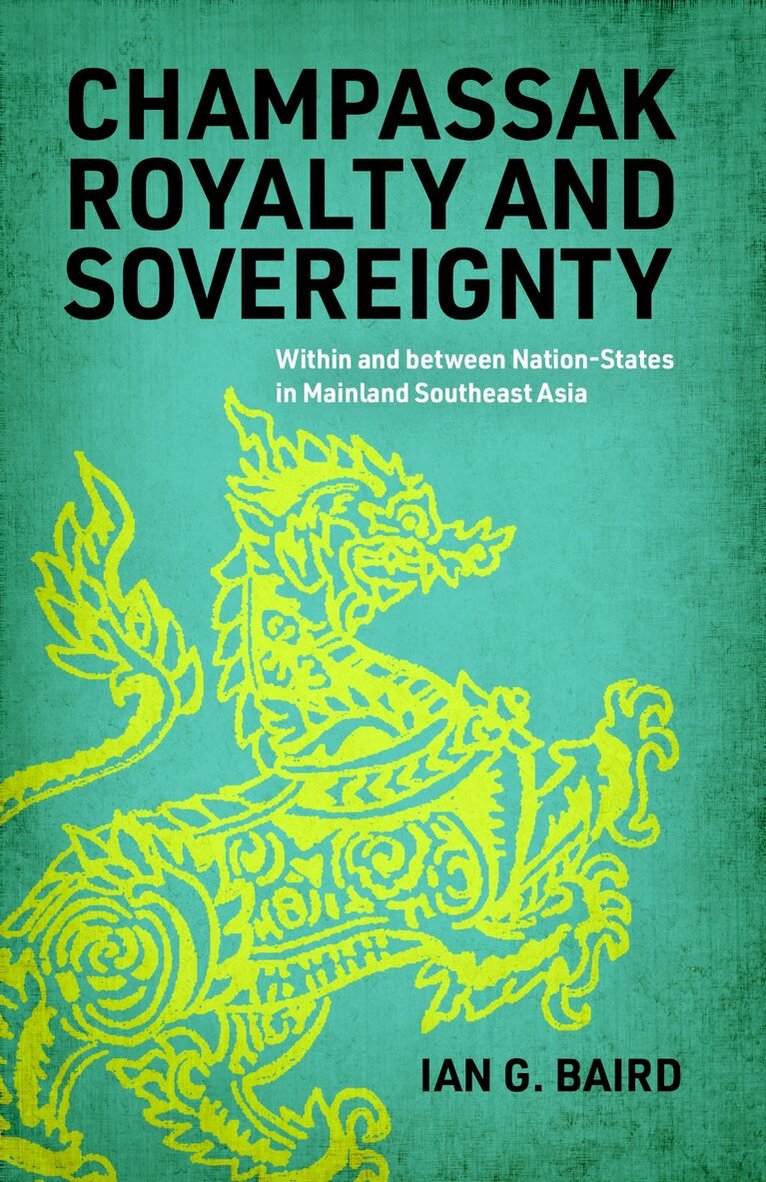
The Kingdom of Champassak was founded in 1713 in what is now southern Laos, and its royal lineage, the House of Champassak, continues to the present. In this first historical study of Champassak, Ian Baird explores the ways it has asserted its sovereignty across time and through monumental historical shifts, including the delineation of national boundaries for Laos, Thailand, and Cambodia in the nineteenth and twentieth centuries.In re-creating this story, Baird draws not only on a dazzling variety of primary sources in English, French, Lao, and Thai but also on many years spent in conversation with members of the Na Champassak family, who are now spread across a wide geographical area, from Laos and Thailand to France and the United States. Each chapter treats one historical period, identifying the Champassak approach to sovereignty during that time. Through this deep history, Baird shows how sovereign power, even within one case, takes a wide range of forms, always contingent, contested, and uneven across space and time.
909 kr
Skickas inom 10-15 vardagar
Deeper Ground, Darker Shadows is the memoir of Eddie L. Quitoriano, who grew up in a rural part of the Philippine island of Mindanao and eventually became one of the top organizers of the Communist Party of the Philippines (CPP) and commander of the party’s New People’s Army (NPA). Coming to political consciousness as a university student, Quitoriano chooses revolution over the priesthood and embarks on a life of unforeseen danger. Sent abroad as an envoy to seek military assistance from sympathetic governments and other radical factions, he travels from the Sandinistas in Nicaragua to Syria, Libya, North Korea, Peru, Brazil, and Yugoslavia. Quitioriano finds revolutionary life thrilling but dangerous, with secretly arranged meetings and drops, doctored passports, and hastily planned plastic surgery. He wrestles with the global implications of his work, experiences daily struggles to survive in always-changing political circumstances, and is profoundly human in his love and concern for the family he has left behind in the Philippines. What emerges is a view of international revolutionary movements that only an insider could write. Quitoriano provides an essential and unique missing piece of twentieth-century Philippine and leftist history. The book includes a critical introduction by Patricio N. Abinales and Francisco J. Lara Jr., situating Quitoriano’s story within the larger context of Southeast Asian political history, as well as a foreword by Patricia G. Steinhoff.