New Perspectives on Jewish Studies - Böcker
Visar alla böcker i serien New Perspectives on Jewish Studies. Handla med fri frakt och snabb leverans.
13 produkter
13 produkter
936 kr
Skickas inom 10-15 vardagar
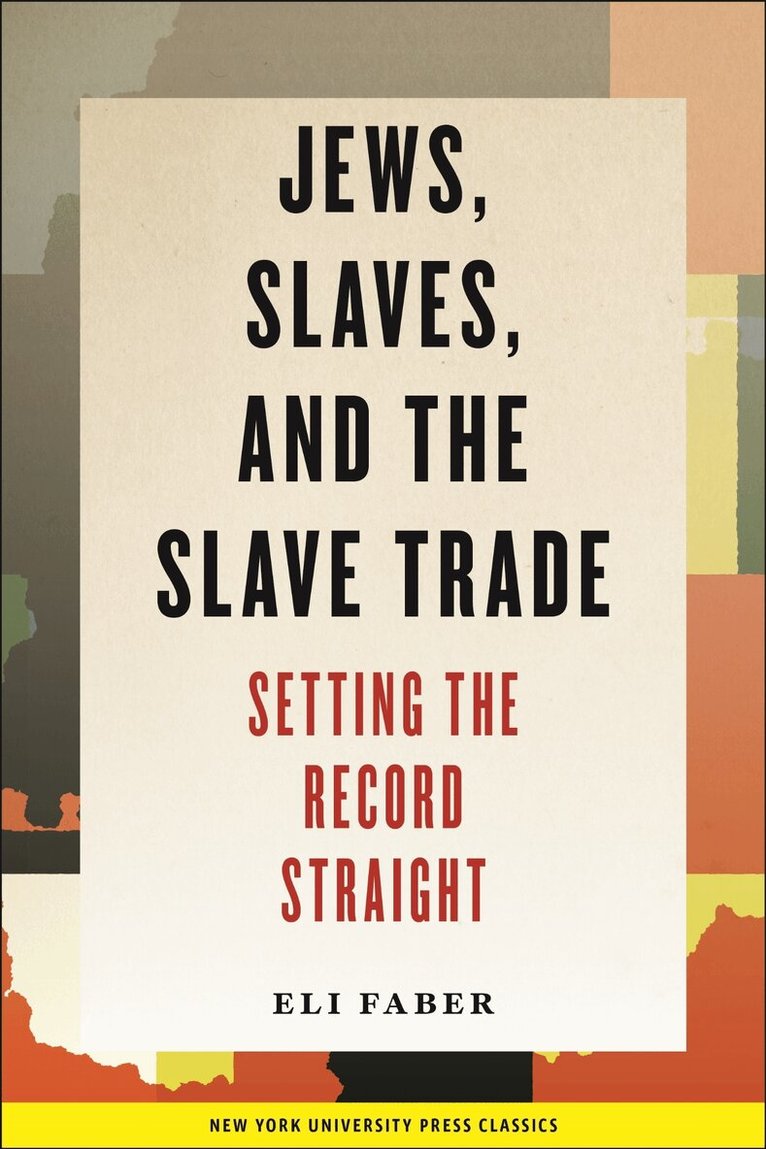
Lays to rest the controversial myth of Jewish involvement in the slave tradeIn the wake of the civil rights movement, a great divide opened up between African American and Jewish communities. What was historically a harmonious and supportive relationship suffered from a powerful and oft-repeated legend, that Jews controlled and masterminded the slave trade and owned slaves on a large scale, well in excess of their own proportion in the population.In this groundbreaking book, likely to stand as the definitive word on the subject, Eli Faber cuts through this cloud of mystification to recapture an important chapter in both Jewish and African diasporic history.Focusing on the British empire, Faber assesses the extent to which Jews participated in the institution of slavery through investment in slave trading companies, ownership of slave ships, commercial activity as merchants who sold slaves upon their arrival from Africa, and direct ownership of slaves. His unprecedented original research utilizes shipping and tax records, stock-transfer ledgers, censuses, slave registers, and synagogue records. These materials reveal, once and for all, the minimal nature of Jews' involvement in the subjugation of Africans in the Americas.A crucial corrective, Jews, Slaves, and the Slave Trade lays to rest one of the most contested historical controversies of our time.
371 kr
Skickas inom 7-10 vardagar
Lays to rest the controversial myth of Jewish involvement in the slave tradeIn the wake of the civil rights movement, a great divide opened up between African American and Jewish communities. What was historically a harmonious and supportive relationship suffered from a powerful and oft-repeated legend, that Jews controlled and masterminded the slave trade and owned slaves on a large scale, well in excess of their own proportion in the population.In this groundbreaking book, likely to stand as the definitive word on the subject, Eli Faber cuts through this cloud of mystification to recapture an important chapter in both Jewish and African diasporic history.Focusing on the British empire, Faber assesses the extent to which Jews participated in the institution of slavery through investment in slave trading companies, ownership of slave ships, commercial activity as merchants who sold slaves upon their arrival from Africa, and direct ownership of slaves. His unprecedented original research utilizes shipping and tax records, stock-transfer ledgers, censuses, slave registers, and synagogue records. These materials reveal, once and for all, the minimal nature of Jews' involvement in the subjugation of Africans in the Americas.A crucial corrective, Jews, Slaves, and the Slave Trade lays to rest one of the most contested historical controversies of our time.
1 320 kr
Skickas inom 10-15 vardagar
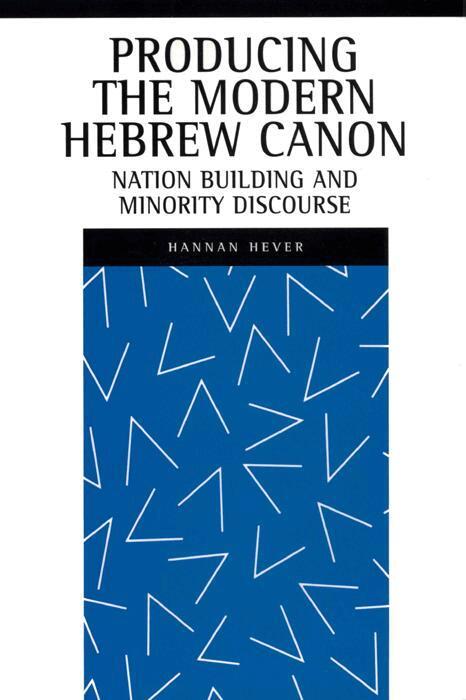
A people's writings can play a dramatic role in nation building, as the development of modern Hebrew literature powerfully illustrates. Since the end of the nineteenth century, Hebrew writers in Europe and Palestine/Israel have produced texts and consolidated moments in the shaping of national identity.Yet, this process has not always been a unified and continuous one. The processes of canon formation and the suppression of heterodox discourses have been played out publicly and vociferously. Producing the Modern Hebrew Canon offers a sweeping view of the entirety of modern Hebrew literature, from Berdichevski and Agnon to Shammas and Habiby, shedding light on the moments of rupture and reversal which have undermined efforts to construct a hegemonic Zionist narrative. It provides a model for understanding the relations between minority and majority voices in postcolonial situations, showing these processes working and changing over time, from the earliest days of the creation of a labor Zionist sensibility for literature to Israeli state culture and the discourses of Arab otherness.By illuminating both the process of canon formation as well as the voices excluded from the canon, Producing the Modern Hebrew Canon offers a powerful alternative reading of twentieth century Hebrew fiction.
1 148 kr
Skickas inom 10-15 vardagar
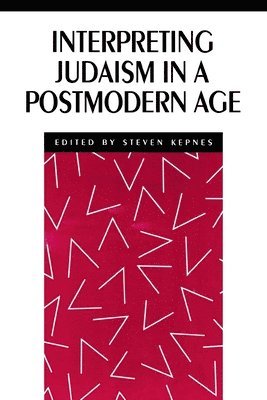
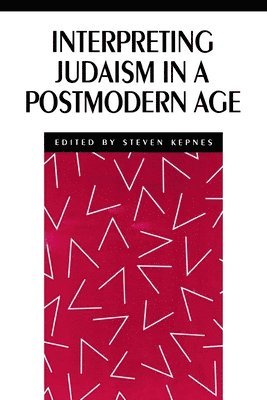
Postmodernity marks a time of creative conflict when the voices of the other, previously rendered silent by the majority, are prominently heard. What effect has postmodernism had on Judaism? The neat narratives and metanarratives of the Jewish past are being questioned and deconstructed, allowing for different versions of Jewish history to emerge. For example, a postmodern exploration of the place of women in Talmudic culture can upset portraits of women as powerless and rabbis as closed off to female experience thereby helping to secure a place for women today. Similarly, an analysis of Zionism using concepts drawn from postmodern thinkers problematizes such basic Zionists concepts as nation, exile, and normalization, and raises significant questions concerning the relationship of Israel and the diaspora.The twelve contributors, including Daniel Boyarin, Elliot R. Wolfson, and Laurence J. Silberstein, shed new light on the central texts and issues of Judaism through their postmodern interpretations. They offer up provocative perspectives on Bible and Midrash; Talmud and Halakhah; Kabbalah; Zionism; the Holocaust; feminism; literature; pedagogy; and liturgy.
399 kr
Skickas inom 7-10 vardagar
Postmodernity marks a time of creative conflict when the voices of the other, previously rendered silent by the majority, are prominently heard. What effect has postmodernism had on Judaism? The neat narratives and metanarratives of the Jewish past are being questioned and deconstructed, allowing for different versions of Jewish history to emerge. For example, a postmodern exploration of the place of women in Talmudic culture can upset portraits of women as powerless and rabbis as closed off to female experience thereby helping to secure a place for women today. Similarly, an analysis of Zionism using concepts drawn from postmodern thinkers problematizes such basic Zionists concepts as nation, exile, and normalization, and raises significant questions concerning the relationship of Israel and the diaspora.The twelve contributors, including Daniel Boyarin, Elliot R. Wolfson, and Laurence J. Silberstein, shed new light on the central texts and issues of Judaism through their postmodern interpretations. They offer up provocative perspectives on Bible and Midrash; Talmud and Halakhah; Kabbalah; Zionism; the Holocaust; feminism; literature; pedagogy; and liturgy.
1 409 kr
Skickas inom 5-8 vardagar
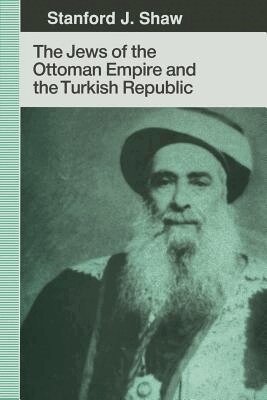
Shaw's excellent treatise is a must for anyone researching roots in Turkey or the Ottoman Empire . . . well organized. . . . [and] impressively researched. DorotShaw points out many interesting facts of the symbiosis between Jews and Muslims as he traces the relationship of more than 600 years. ChoiceEspecially recommended for college-level students of Jewish history and culture. The BookwatchOver the course of the last 600 years, the existence of the Jews of western Europe was continually threatened. While many took refuge in the Eastern regions of Europe, particularly in Poland and Lithuania, many more found shelter in the dominions of the Ottoman empire and in the Middle East, where their reception was far more congenial.This remarkable history, written by one of the world's foremost scholars of Turkish history, is the definitive account of Jewish life and history in this region. It is the story of the ideological and religious differences, and the hazardous but often successful cohabitation that characterized the life of the Jews of the Ottoman empire and, later, of Turkey.Examining the economic, cultural, and religious contributions of the Ottoman Jewish community, Stanford J. Shaw, a master of Turkish history, here documents the role of Ottoman Jews in the early Zionist movement, in World War I, and in the Turkish War for Independence. His analysis of the structures of different Jewish communities, the relations between them, and the relations between Jews, Christians, and Muslims in this unique circumstance is engaging and incisive. As Shaw sifts through the centuries, it becomes apparent that the fortunes of the Ottoman Jews directly paralleled those of the Ottoman empire.Shaw's extensive research in Ottoman, British, and French archives, as well as sources in Hebrew and Ladino, is supplemented by personal interviews with such major players as Haim Nahum Efendi, the last Grand Rabbi of the Ottoman empire, Rabbi David Asseo, Chief Rabbi of Turkey, and a number of prominent Turkish-Jewish scholars and businessmen.
411 kr
Skickas inom 7-10 vardagar
In this volume a distinguished group of international scholars draws from history, folklore, political anthropology, historiography, and cultural criticism to reexamine critical issues surrounding the birth of Israel. The authors explore such issues as the transition form yishuv to state, early state policy toward the Arab minority, the origins of the Palestinian refugee problem, the conflict over myths and symbols in the early state, early attitude toward Holocaust victims and survivors, Arab historiography of the 1948 war, Israel-Diaspora relations, and the shaping of Israeli foreign policy.The contributors to the book include: Myron J. Aronoff (Rutgers University), Uri Bialer (Hebrew University of Jerusalem), Neil Caplan (Vanier College, Montreal), Benny Morris(Hebrew Univeristy of Jerusalem), Don Peretz (State University of New York, Binghamton), Dina Porat (Tel Aviv University), Jehuda Reinharz (Brandeis University), Elie Rekhess (Tel Aviv University), Avraham Sela(Hebrew University of Jerusalem), Anton Shammas(University of Michigan), Laurence J. Silberstein (Lehigh University), Kennethy STein (Emory University), Yael Zerubavel(University of Pennsylvania), and Ronald W. Zweig (Tel Aviv University).
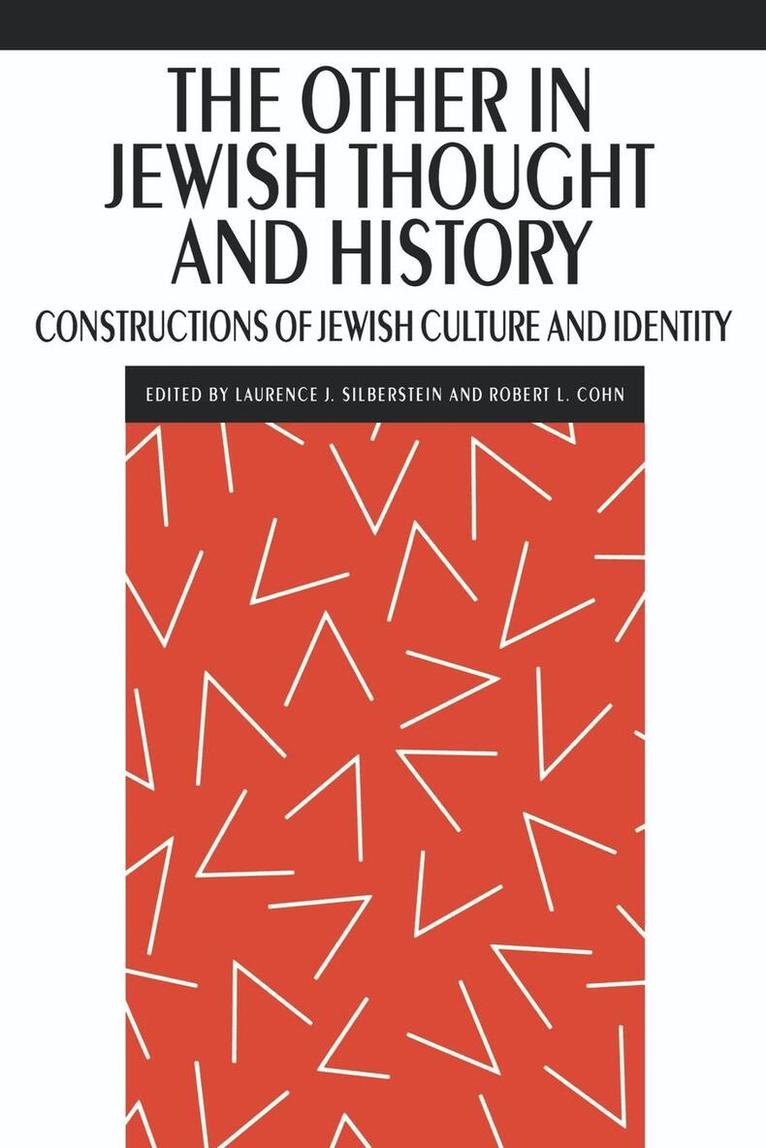
Other in Jewish Thought and History
Constructions of Jewish Culture and Identity
Inbunden, Engelska, 1994
1 148 kr
Skickas inom 10-15 vardagar
Cultural boundaries and group identity are often forged in relation to the Other. In every society, conceptions of otherness, which often reflect a group's fears and vulnerabilities, result in deep-rooted traditions of inclusion and exclusion that permeate the culture's literature, religion, and politics. This volume explores the ways in which Jews have traditionally defined other groups and, in turn, themselves. The contributors, a distinguished international group of scholars, explore the discursive processss through which Jewish identity and culture have been constructed, disseminated, and perpetuated.Among the topics addressed are: Others in the biblical world; the construction of gender in Roman-period Judaism; the Other as woman in the Greco-Roman world; the gentile as Other in rabbinic law; the feminine as Other in kabbalah; the reproduction of the Other in the Passover Haggadah; the Palestinian Arab as Other in Israeli politics and literature; the Other in Levinas and Derrida; Blacks as Other in American Jewish literature; the Jewish body image as symbol of Otherness; and women as Other in Israeli cinema.Contributors to this interdisciplinary volume are: Jonathan Boyarin (New School for Social Research), Robert L. Cohn (Lafayette College), Gerald Cromer (Bar-Ilan University), Trude Dothan (Hebrew University of Jerusalem), Elizabeth Fifer (Lehigh University), Steven D. Fraade (Yale University), Sander L. Gilman (Cornell University), Hannan Hever (Tel Aviv University), Ross S. Kraemer (University of Pennsylvania), Orly Lubin (Tel Aviv University), Peter Machinist (Harvard University), Jacob Meskin (Williams College), Adi Ophir (Tel Aviv University), Ilan Peleg (Lafayette College), Miriam Peskowitz (University of Florida), Laurence J. Silberstein (Lehigh University), Naomi Sokoloff (University of Washington), and Elliot R. Wolfson (New York University).
Other in Jewish Thought and History
Constructions of Jewish Culture and Identity
Häftad, Engelska, 1994
399 kr
Skickas inom 7-10 vardagar
Cultural boundaries and group identity are often forged in relation to the Other. In every society, conceptions of otherness, which often reflect a group's fears and vulnerabilities, result in deep-rooted traditions of inclusion and exclusion that permeate the culture's literature, religion, and politics. This volume explores the ways in which Jews have traditionally defined other groups and, in turn, themselves. The contributors, a distinguished international group of scholars, explore the discursive processss through which Jewish identity and culture have been constructed, disseminated, and perpetuated.Among the topics addressed are: Others in the biblical world; the construction of gender in Roman-period Judaism; the Other as woman in the Greco-Roman world; the gentile as Other in rabbinic law; the feminine as Other in kabbalah; the reproduction of the Other in the Passover Haggadah; the Palestinian Arab as Other in Israeli politics and literature; the Other in Levinas and Derrida; Blacks as Other in American Jewish literature; the Jewish body image as symbol of Otherness; and women as Other in Israeli cinema.Contributors to this interdisciplinary volume are: Jonathan Boyarin (New School for Social Research), Robert L. Cohn (Lafayette College), Gerald Cromer (Bar-Ilan University), Trude Dothan (Hebrew University of Jerusalem), Elizabeth Fifer (Lehigh University), Steven D. Fraade (Yale University), Sander L. Gilman (Cornell University), Hannan Hever (Tel Aviv University), Ross S. Kraemer (University of Pennsylvania), Orly Lubin (Tel Aviv University), Peter Machinist (Harvard University), Jacob Meskin (Williams College), Adi Ophir (Tel Aviv University), Ilan Peleg (Lafayette College), Miriam Peskowitz (University of Florida), Laurence J. Silberstein (Lehigh University), Naomi Sokoloff (University of Washington), and Elliot R. Wolfson (New York University).
949 kr
Skickas inom 10-15 vardagar
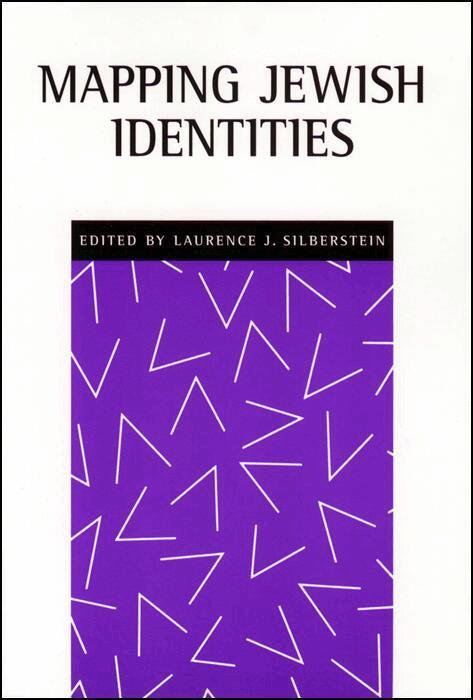
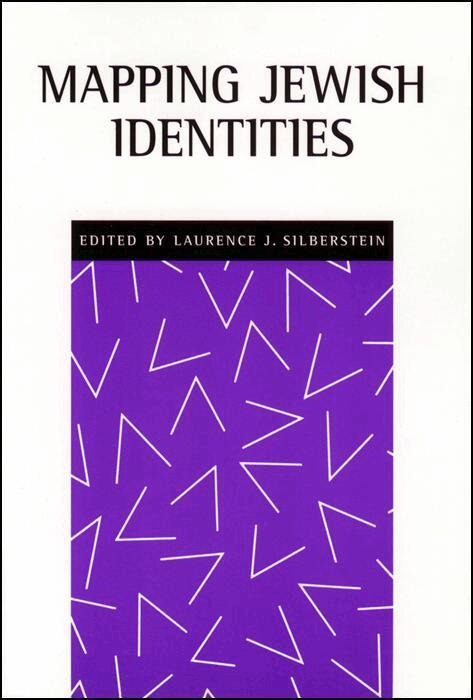
Is Jewish identity flourishing or in decline? Community leaders and scholarly researchers continually seek to determine the attitudes, beliefs, and activities that best measure Jewish identity. At issue, according to these studies, is the very survival of the Jewish community itself. But such studies rarely ask what actually is being examined when we attempt to assess "Jewish identity" or any identity. Most tend to assume that identity is a preexisting, relatively fixed frame of reference reflecting shared cultural and historical experiences.Drawing on recent work in such fields as cultural studies, poststructuralist theory, postmodern philosophy, and feminist theory, Mapping Jewish Identities challenges this premise. Contesting conventional approaches to Jewish identity, contributors argue that Jewish identity should be conceptualized as an ongoing dynamic process of "becoming" in response to changing cultural and social conditions rather than as a stable defining body of traits.Contributors, including Daniel Boyarin, Laura Levitt, Adi Ophir, and Gordon Bearn, examine such topics as American Jews' desires to connect with a lost immigrant past through photography, the complicated function of the Holocaust in the identity formation of contemporary Jews, the impact of the struggle with the Palestinians on Israeli group identity construction, and the ways in which repressed voices such as those of women, Mizrahim, and Israeli Arabs have changed our ways of thinking about Jewish and Israeli identity.
399 kr
Skickas inom 7-10 vardagar
Is Jewish identity flourishing or in decline? Community leaders and scholarly researchers continually seek to determine the attitudes, beliefs, and activities that best measure Jewish identity. At issue, according to these studies, is the very survival of the Jewish community itself. But such studies rarely ask what actually is being examined when we attempt to assess "Jewish identity" or any identity. Most tend to assume that identity is a preexisting, relatively fixed frame of reference reflecting shared cultural and historical experiences.Drawing on recent work in such fields as cultural studies, poststructuralist theory, postmodern philosophy, and feminist theory, Mapping Jewish Identities challenges this premise. Contesting conventional approaches to Jewish identity, contributors argue that Jewish identity should be conceptualized as an ongoing dynamic process of "becoming" in response to changing cultural and social conditions rather than as a stable defining body of traits.Contributors, including Daniel Boyarin, Laura Levitt, Adi Ophir, and Gordon Bearn, examine such topics as American Jews' desires to connect with a lost immigrant past through photography, the complicated function of the Holocaust in the identity formation of contemporary Jews, the impact of the struggle with the Palestinians on Israeli group identity construction, and the ways in which repressed voices such as those of women, Mizrahim, and Israeli Arabs have changed our ways of thinking about Jewish and Israeli identity.
1 182 kr
Skickas inom 10-15 vardagar
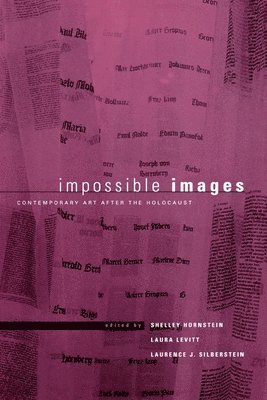
Impossible Images brings together a distinguished group of contributors, including artists, photographers, cultural critics, and historians, to analyze the ways in which the Holocaust has been represented in and through paintings, architecture, photographs, museums, and monuments.Exploring frequently neglected aspects of contemporary art after the Holocaust, the volume demonstrates how visual culture informs Jewish memory, and makes clear that art matters in contemporary Jewish studies. Accepting that knowledge is culturally constructed, Impossible Images makes explicit the ways in which context matters. It shows how the places where an artist works shape what is produced, in what ways the space in which a work of art is exhibited and how it is named influences what is seen or not seen, and how calling attention to certain details in a visual work, such as a gesture, a color, or an icon, can change the meaning assigned to the work as a whole.Written accessibly for a general readership and those interested in art and art history, the volume also includes 20 color plates from leading artists Alice Lok Cahana, Judy Chicago, Debbie Teicholz, and Mindy Weisel.
411 kr
Skickas inom 7-10 vardagar
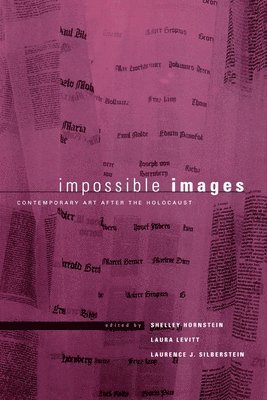
Impossible Images brings together a distinguished group of contributors, including artists, photographers, cultural critics, and historians, to analyze the ways in which the Holocaust has been represented in and through paintings, architecture, photographs, museums, and monuments.Exploring frequently neglected aspects of contemporary art after the Holocaust, the volume demonstrates how visual culture informs Jewish memory, and makes clear that art matters in contemporary Jewish studies. Accepting that knowledge is culturally constructed, Impossible Images makes explicit the ways in which context matters. It shows how the places where an artist works shape what is produced, in what ways the space in which a work of art is exhibited and how it is named influences what is seen or not seen, and how calling attention to certain details in a visual work, such as a gesture, a color, or an icon, can change the meaning assigned to the work as a whole.Written accessibly for a general readership and those interested in art and art history, the volume also includes 20 color plates from leading artists Alice Lok Cahana, Judy Chicago, Debbie Teicholz, and Mindy Weisel.