New Perspectives on the South - Böcker
Visar alla böcker i serien New Perspectives on the South. Handla med fri frakt och snabb leverans.
9 produkter
9 produkter
440 kr
Skickas inom 3-6 vardagar
No general history of southern farming since the end of slavery has been published until now. For the first time, Gilbert C. Fite has drawn together the many threads that make up commercial agricultural development in the eleven states of the old Confederacy, to explain why agricultural change was so slow in the South, and then to show how the agents of change worked after 1933 to destroy the old and produce a new agriculture.Fite traces the decline and departure of King Cotton as the hard taskmaster of the region, and the replacement of cotton by a somewhat more democratically rewarding group of farm products: poultry, cattle, swine; soybeans; citrus and other fruits; vegetables; rice; dairy products; and forest products. He shows how such crop changes were related to other developments, such as the rise of a capital base in the South, mainly after World War II; technological innovation in farming equipment; and urbanization and regional population shifts.Based largely upon primary sources, Cotton Fields No More will become the standard work on post-Civil War agriculture in the South. It will be welcomed by students of the American South and of United States agriculture, economic, and social history.
469 kr
Skickas inom 3-6 vardagar
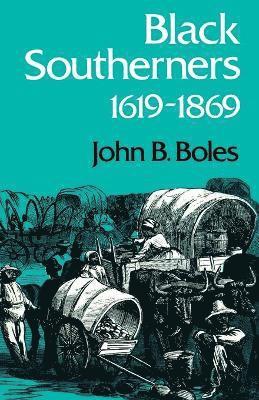
This revealing interpretation of the black experience in the South emphasizes the evolution of slavery over time and the emergence of a rich, hybrid African American culture. From the incisive discussion on the origins of slavery in the Chesapeake colonies, John Boles embarks on an interpretation of a vast body of demographic, anthropological, and comparative scholarship to explore the character of black bondage in the American South. On such diverse issues as black population growth, the strength of the slave family, the efficiency and profitability of slavery, the diet and health care of bondsmen, the maturation of slave culture, the varieties of slave resistance, and the participation of blacks in the Civil War, Black Southerners provides a balanced and judicious treatment.
440 kr
Skickas inom 3-6 vardagar
Southern-style politics was one of those peculiar institutions that differentiated the South from other American regions. This system -- long referred to as the Solid South -- embodied a distinctive regional culture and was perpetuated through an undemocratic distribution of power and a structure based on disfranchisement, malapportioned legislatures, and one-party politics. It was the mechanism that determined who would govern in the states and localities, and in national politics it was the means through which the South's politicians defended their region's special interests and political autonomy. The history of this remarkable institution can be traced in the gradual rise, long persistence, and ultimate decline of the Democratic Party dominance in the land below the Potomac and the Ohio.This is the story that Dewey W. Grantham tells in his fresh and authoritative account of the South's modern political experience. The distillation of many years of research and reflection, is both a synthesis of the extensive literature on politics in the recent South and a challenging reinterpretation of the region's political history.
512 kr
Skickas inom 3-6 vardagar
From Gone with the Wind to Designing Women, images of southern females that emerge from fiction and film tend to obscure the diversity of American women from below the Mason-Dixon line. In a work that deftly lays bare a myriad of myths and stereotypes while presenting true stories of ambition, grit, and endurance, Margaret Ripley Wolfe offers the first professional historical synthesis of southern women's experiences across the centuries.In telling their story, she considers many ordinary lives -- those of Native-American, African-American, and white women from the Tidewater region and Appalachia to the Mississippi Delta to the Gulf Coastal Plain, women whose varied economic and social circumstances resist simple explanations. Wolfe examines critical eras, outstanding personalities and groups -- wives, mothers, pioneers, soldiers, suffragists, politicians, and civil rights activists -- and the impact of the passage of time and the pressure of historical forces on the region's females.The historical southern woman, argues Wolfe, has operated under a number of handicaps, bearing the full weight of southern history, mythology, and legend. Added to these have been the limitations of being female in a patriarchal society and the constraining images of the "southern belle" and her mentor, the "southern lady." In addition, the specter of race has haunted all southern women. Gender is a common denominator, but according to Wolfe, it does not transcend race, class, point of view, or a host of other factors.Intrigued by the imagery as well as the irony of biblical stories and southern history, Wolfe titles her work Daughters of Canaan. Canaan symbolizes promise, and for activist women in particular the South has been about promise as much as fulfillment. General readers and students of southern and women's history will be drawn to Wolfe's engrossing chronicle.
440 kr
Skickas inom 3-6 vardagar
Here is the story of the long interaction between humans, land, and climate in the American South. It is a tale of exploitation and erosion, of destruction, disease, and defeat, but also of the persistent search for knowledge and wisdom. It is a story whose villains were also its victims and sometimes its heroes.Ancient forces created the southern landscape, but, as Albert E. Cowdrey shows, humankind from the time of earliest habitation has been at work reshaping it. The southern Indians, far from being the "natural ecologists" of myth, radically transformed their environment by hunting and burning. Such patterns were greatly accelerated by the arrival of Europeans, who viewed the land as a commodity to be exploited for immediate economic benefit.Cowdrey documents not only the long decline but the painfully slow struggle to repair the damage of human folly. The eighteenth century saw widespread though ineffectual efforts to protect game and conserve the soil. In the nineteenth century the first hesitant steps were taken toward scientific flood control, forestry, wildlife protection, and improved medicine. In this century, the New Deal, the explosion in scientific knowledge, and the national environmental movement have spurred more rapid improvements. But the efforts to harness the South's great rivers, to save its wild species, and to avert serious environmental pollution have often had equivocal results.Originally published in 1983 and needed now more than ever, This Land, This South was the first book to explore the cumulative impact of humans on the southern landscape and its effect on them. In graceful and at times lyrical prose, Albert Cowdrey brings together a vast array of information. Now revised and updated, this important book should be read by every person concerned with the past, present, or future of the South.
492 kr
Skickas inom 3-6 vardagar
Authors discussed include: Wendell Berry, Erskine Caldwell, Truman Capote, Ralph Ellison, William Faulkner, Shelby Foote, Zora Neal Hurston, Bobbie Ann Mason, Cormac McCarthy, Flannery O'Connor, William Styron, Anne Tyler, Alice Walker, Robert Penn Warren, Eudora Welty, Tennessee Williams, Thomas Wolfe, Richard Wright, and many more.By World War II, the Southern Renaissance had established itself as one of the most significant literary events of the century, and today much of the best American fiction is southern fiction. Though the flowering of realistic and local-color writing during the first two decades of the century was a sign of things to come, the period between the two world wars was the crucial one for the South's literary development: a literary revival in Richmond came to fruition; at Vanderbilt University a group of young men produced The Fugitive, a remarkable, controversial magazine that published some of the century's best verse in its brief run; and the publication and widespread recognition of Faulkner (among others) inaugurated the great flood of southern writing that was to follow in novels, short stories, poetry, and plays.With more than forty years of experience writing and reading about the subject, and friendships with many of the figures discussed, J. A. Bryant is uniquely qualified to provide the first comprehensive account of southern American literature since 1900. Bryant pays attention to both the cultural and the historical context of the works and authors discussed, and presents the information in an enjoyable, accessible style. No lover of great American literature can afford to be without this book.
297 kr
Skickas inom 3-6 vardagar
The essentially tragic political fate of the American South in the nineteenth century resulted from what Robert F. Durden calls a "self-inflicted wound" -- the gradual surrender of the white majority to the pride, fears, and hates of racism. In this gracefully written and closely reasoned study, Durden traces the course of southern political life from the predominantly optimistic, nationalistic Jeffersonian era to the sullenly sectional, chronically defensive decades following the Civil War.Politics, as the clearest reflection of the southern electorate's collective hopes and fears, illustrates the South's transition from buoyant nationalism to aggrieved sectionalism. Like the rest of the new nation, the South entered the nineteenth century as proud heirs of the American Revolution and its ideology of liberty, property, and equal rights. But for southerners, from the 1820s on, that liberty came increasingly to mean the freedom to own slave property and to take that property into the nation's new western territories.As the possibility of a ban on slavery in the territories rose to the center of national attention during and after the Mexican War, the South's views on the "peculiar institution" became increasingly defensive and intransigent. The presidential victory in 1860 of an all-northern party pledged to the exclusion of slavery from the territories made the Civil War inevitable. In its aftermath, white southerners sought and ultimately found, in the hegemony of the Democratic party, other ways to maintain their national position and their dominance over the black minority. But the South would long suffer the aftereffects of its "self-inflicted wound."
369 kr
Skickas inom 3-6 vardagar
In the 1880s, Southern boosters saw the growth of industry as the only means of escaping the poverty that engulfed the postbellum South. In the long run, however, as James C. Cobb demonstrates in this illuminating book, industrial development left much of the South's poverty unrelieved and often reinforced rather than undermined its conservative social and political philosophy. The exploitation of the South's resources, largely by interests from outside the region, was not only perpetuated but in many ways strengthened as industrialization proceeded. The 20th Century brought increasing competition for industry that favored management over labor and exploitation over protection of the environment. Even as the South blossomed into the "Sunbelt" in the late twentieth century, it is clear, Cobb argues, that the region had been unable to follow the path of development taken by the northern industrialized states, and that even an industrialized South has yet the escape the shadow of its deprived past.
369 kr
Skickas inom 3-6 vardagar
When Franklin D. Roosevelt was sworn in as president, the South was unmistakably the most disadvantaged part of the nation. The region's economy was the weakest, its educational level the lowest, its politics the most rigid, and its laws and social mores the most racially slanted. Moreover, the region was prostrate from the effects of the Great Depression.Roosevelt's New Deal effected significant changes on the southern landscape, challenging many traditions and laying the foundations for subsequent alterations in the southern way of life. At the same time, firmly entrenched values and institutions militated against change and blunted the impact of federal programs.In The South and the New Deal, Roger Biles examines the New Deal's impact on the rural and urban South, its black and white citizens, its poor, and its politics. He shows how southern leaders initially welcomed and supported the various New Deal measures but later opposed a continuation or expansion of these programs because they violated regional convictions and traditions. Nevertheless, Biles concludes, the New Deal, coupled with the domestic effects of World War II, set the stage for a remarkable postwar transformation in the affairs of the region.The post-World War II Sunbelt boom has brought Dixie more fully into the national mainstream. To what degree did the New Deal disrupt southern distinctiveness? Biles answers this and other questions and explores the New Deal's enduring legacy in the region.