New York Public Library Lectures in Humanities - Böcker
Visar alla böcker i serien New York Public Library Lectures in Humanities. Handla med fri frakt och snabb leverans.
9 produkter
9 produkter
123 kr
Skickas inom 5-8 vardagar
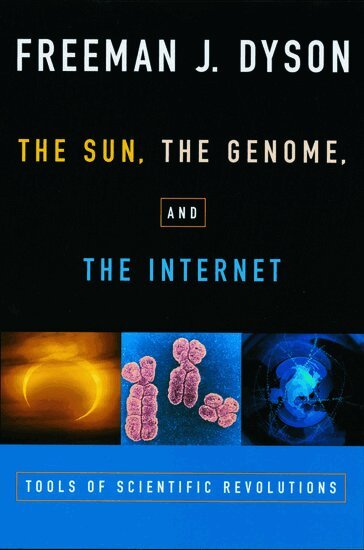
In this visionary look into the future, Freeman Dyson argues that technological changes fundamentally alter our ethical and social arrangements and that three rapidly advancing new technologies -- solar energy, genetic engineering, and worldwide communication -- together have the potential to create a more equal distribution of the world's wealth.Dyson begins by rejecting the idea that scientific revolutions are primarily concept driven. He shows rather that new tools are more often the sparks that ignite scientific discovery. Such tool-driven revolutions have profound social consequences: the invention of the telescope turning the medieval view of the world upside down, the widespread use of household appliances in the 1950s replacing servants, to cite just two examples. In looking ahead, Dyson suggests that solar energy, genetics, and the Internet will have similarly transformative effects, with the potential to produce a more just and equitable society. Solar power could bring electricity to even the poorest, most remote areas of third-world nations, allowing everyone access to the vast stores of information on the Internet and effectively ending the cultural isolation of the poorest countries. Similarly, breakthroughs in genetics may well enable us to give our children healthier lives and grow more efficient crops, thus restoring the economic and human vitality of village cultures devalued and dislocated by the global market.Written with passionate conviction about the ethical uses of science, The Sun, The Genome, and The Internet is both a brilliant reinterpretation of the scientific process and a challenge to use new technologies to close, rather than widen, the gap between rich and poor.
642 kr
Skickas inom 5-8 vardagar
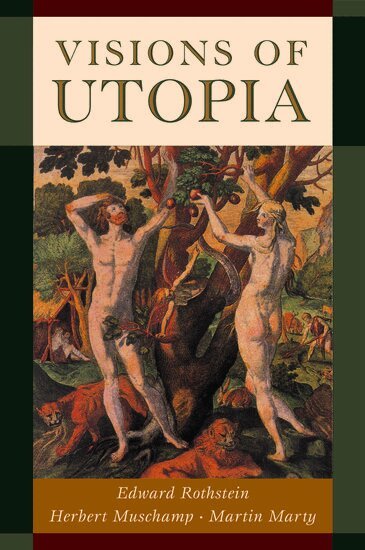
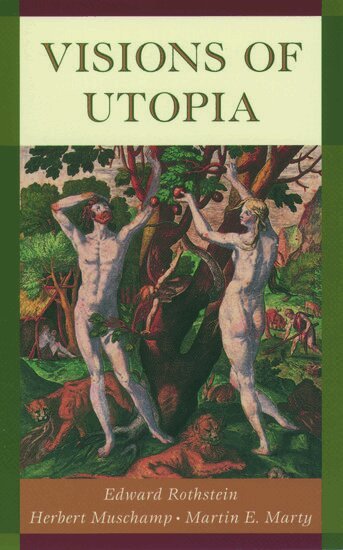
From the sex-free paradise of the Shakers to the worker's paradise of Marx, utopian ideas seem to have two things in common--they all are wonderfully plausible at the start and they all end up as disasters. In Visions of Utopia, three leading cultural critics--Edward Rothstein, Martin Marty, and Herbert Muschamp--look at the history of utopian thinking, exploring why they fail and why they are still worth pursuing.Edward Rothstein, New York Times cultural critic, contends that every utopia is really a dystopia--a disaster in the making--one that overlooks the nature of humanity and the impossibilities of paradise. He traces the ideal in politics and technology and suggests that only in art--and especially in music--does the desire for utopia find satisfaction. Martin Marty examines several models of utopia--from Thomas More's to a 1960s experimental city that he helped to plan--to show that, even though utopias can never be realized, we should not be too quick to condemn them. They can express dimensions of the human spirit that might otherwise be stifled and can plant ideas that may germinate in more realistic and practical soil. And Herbert Muschamp, the New York Times architectural critic, looks at Utopianism as exemplified in two different ways: the Buddhist tradition and the work of visionary Viennese architect Adolph Loos. Utopian thinking embodies humanity's noblest impulses, yet it can lead to horrors such as Nazi Germany and the Soviet Regime. In Visions of Utopia, these leading thinkers offer an intriguing look at the paradoxes of paradise.
255 kr
Skickas inom 7-10 vardagar
In this highly successful series seven prominent scholars offer a "mediation on temptation" for each of the seven deadly sins. In Greed, Phyllis Tickle argues that it is through an engagement with greed and our current, popular absorption with its consequences, that morality most obviously and broadly is being re-configured and re-introduced into formal religion. In other words, while greed may be the deadliest of the seven, it ironically enough may also be the first to revitalize us.
255 kr
Skickas inom 7-10 vardagar
Part of a series of highly entertaining books on the history of sinning. Eating too much is one of the Western world's greatest problems, but relatively few people would consider it a crime against God. Yet even as gluttony has ceased to be an evil, food and dieting have become a cultural obsessions, with millions of pounds expended on mortifying the flesh with punishing diet and exercise regimes. This brief history of gluttony traces the changing cultural attitudes towards food and pleasure, scarcity and abundance. It reveals how notions of saintliness and purity have helped form modern views of enjoyment, self-mortification, and ultimately nutrition. Restaurant-goers and readers of gourmet magazines rationalize their pursuit of too much food in many ways, but does a slight tinge of guilt makes your meal taste that much better? This book provides the answer, thoroughly exploring humankind's attempts to quell its chief survival strategy - eating.
232 kr
Skickas inom 5-8 vardagar
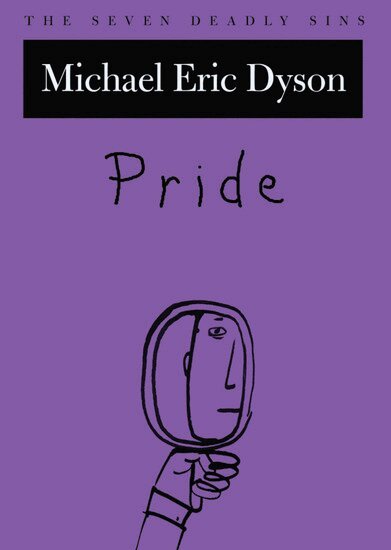
"Pride goeth before destruction, a hoaughty spirit before a mighty fall." As the biblical fall of Satan suggests, pride as a defining symptom of self-preoccupation follows a paradoxical route at which end lies self-destruction. Dyson explores the fate of pride from Christian theology to the social responsibilities of self-regard and regard for the society as a whole. Pride is also vain glory, or the inordinate obsession with one's existence, body and intellect, which becomes the playground for human vanity. Dyson examines how pride, within black communities, becomes a necessary and ironic defense against a culture that at once formally rejected it in their vreligious beliefs but embraced it in their social realtions. As a result, blacks were ensconced, implicated, even embroiled, in the West's schizophrenic views of the deadly sin. Dyson will explore all these moments of pride, attempting to probe the contradictory facets of a vice that in some instances became a celebrated virtue, and a virtue among some cultures that ultimately became a vice.
219 kr
Skickas inom 7-10 vardagar
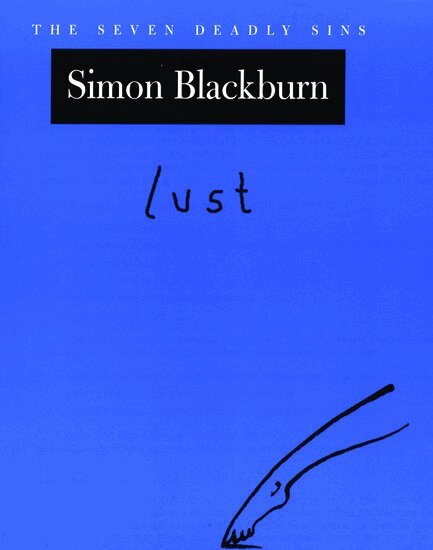
Lust, says Simon Blackburn, is furtive, headlong, always sizing up opportunities. It is a trail of clothing in the hallway, the trashy cousin of love. But be that as it may, the aim of this delightful book is to rescue lust "from the denunciations of old men of the deserts, to deliver it from the pallid and envious confessor and the stocks and pillories of the Puritans, to drag it from the category of sin to that of virtue." Blackburn, author of such popular philosophy books as Think and Being Good, here offers a sharp-edged probe into the heart of lust, blending together insight from some of the world's greatest thinkers on sex, human nature, and our common cultural foibles. Blackburn takes a wide ranging, historical approach, discussing lust as viewed by Aristophanes and Plato, lust in the light of the Stoic mistrust of emotion, and the Christian fear of the flesh that catapulted lust to the level of deadly sin. He describes how philosophical pessimists like Schopenhauer and Sartre contributed to our thinking about lust and explores the false starts in understanding lust represented by Freud, Kinsey, and modern "evolutionary psychology." But most important, Blackburn reminds us that lust is also life-affirming, invigorating, fun. He points to the work of David Hume (Blackburn's favorite philosopher) who saw lust not only as a sensual delight but also "a joy of the mind." Written by one of the most eminent living philosophers, attractively illustrated and colourfully packaged, Lust is a book that anyone would lust over.
223 kr
Skickas inom 7-10 vardagar
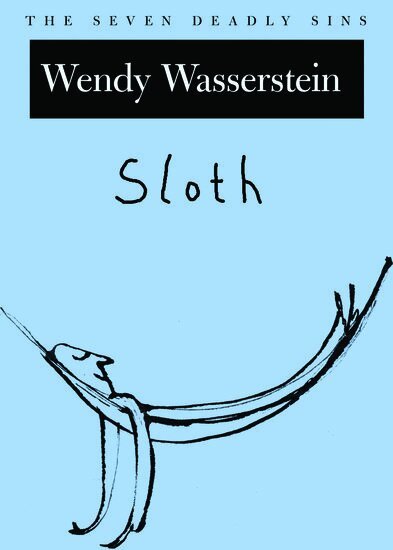
Here is a rollicking parody of the self-help genre, one that skewers the couch-bound, apathetic mentality so pervasive in America today. With tongue in cheek, Sloth guides readers step-by-step toward a life of noncommittal inertia. "You have the right to be lazy," writes Wasserstein. "You can choose not to respond. You can choose not to move." Readers will find out the importance of Lethargiosis--the process of eliminating energy and drive, the vital first step in becoming a sloth. To help you attain the perfect state of indolent bliss, the book offers a wealth of self-help aids. Readers will find the sloth songbook, sloth breakfast bars (packed with sugar, additives, and a delicious touch of Ambien), sloth documentaries (such as the author's 12-hour epic on Thomas Aquinas), and the sloth network, channel 823, programming guaranteed not to stimulate or challenge in any way. ("It may be difficult to distinguish between this and other channels, but only on channel 823 can you watch me sleeping.") Readers will also learn the top ten lies about Sloth, the ten commandments of Sloth, the SLOTH mantra, even the "too-much ten"--over-achievers such as Marie Curie, Shakespeare, and William the Conqueror. You will discover how to become a sloth in your diet, exercise, work, and even love-life (true love leads to passion, she warns, and passion is the biggest enemy of sloth). Wendy Wasserstein is one of America's great comic writers--one who always has a serious point to her humor. Here, as she pokes fun at the self-help industry, she also satirizes the legion of Americans who are cultural and political sloths.
330 kr
Skickas inom 7-10 vardagar
Heated words, cool malice, deadly feuds, the furious rush of adrenaline-anger is clearly the most destructive of the seven deadly sins. It can ruin families, wreck one's health, destroy peace of mind and, at its worst, lead to murder, genocide, and war.In Anger, Robert A. F. Thurman, best-selling author and one of America's leading authorities on Buddhism and Eastern philosophy, offers an illuminating look at this deadliest of sins. In the West, Thurman points out, anger is seen as an inevitable part of life, an evil to be borne, not overcome. There is the tradition of the wrathful God, of Jesus driving the money-changers from the temple. If God can be angry, how can men rid themselves of this destructive emotion? Thurman shows that Eastern philosophy sees anger differently. Certainly, it is a dreadful evil, one of the "three poisons" that underlie all human suffering. But Buddhism teaches that anger can be overcome. Indeed, the defeat of anger is not only possible, but also the only thing worth doing in a lifetime. Thurman shows how to recognize the destructiveness of anger and understand its workings, and how we can go from being a slave to anger to becoming "a knight of patience." We discover finally that when this deadliest emotion is transmuted by wisdom, it can become the most powerful force in freeing us from human suffering. Drawing on the time-tested wisdom of Buddhism, Robert A. F. Thurman ranges from the individual struggle with anger to global crises spurred by dogmatic ideologies, religious fanaticism, and racial prejudice. He offers a path of calm understanding in a time of terrorism and war.
263 kr
Skickas inom 5-8 vardagar
From the sex-free paradise of the Shakers to the worker's paradise of Marx, utopian ideas seem to have two things in common--they all are wonderfully plausible at the start and they all end up as disasters. In Visions of Utopia, three leading cultural critics--Edward Rothstein, Martin Marty, and Herbert Muschamp--look at the history of utopian thinking, exploring why they fail and why they are still worth pursuing.Rothstein contends that every utopia is really a dystopia-- one that overlooks the nature of humanity and the impossibilities of paradise. He traces the ideal in politics and technology and suggests that only in art--and especially in music--does the desire for utopia find satisfaction. Marty examines several models of utopia--from Thomas More's to a 1960s experimental city that he helped to plan--to show that, even though utopias can never be realized, we should not be too quick to condemn them. They can express dimensions of the human spirit that might otherwise be stifled and can plant ideas that may germinate in more realistic and practical soil. Muschamp looks at Utopianism as exemplified in two different ways: the Buddhist tradition and the work of visionary Viennese architect Adolph Loos. Utopian thinking embodies humanity's noblest impulses, yet it can lead to horrors such as Nazi Germany and the Soviet Regime. In Visions of Utopia, these leading thinkers offer an intriguing look at the paradoxes of paradise.