New York University Salomon Center Series on Financial Markets and Institutions – serie
Visar alla böcker i serien New York University Salomon Center Series on Financial Markets and Institutions. Handla med fri frakt och snabb leverans.
18 produkter
18 produkter
Inbunden, Engelska, 2001
1 665 kr
Skickas inom 10-15 vardagar
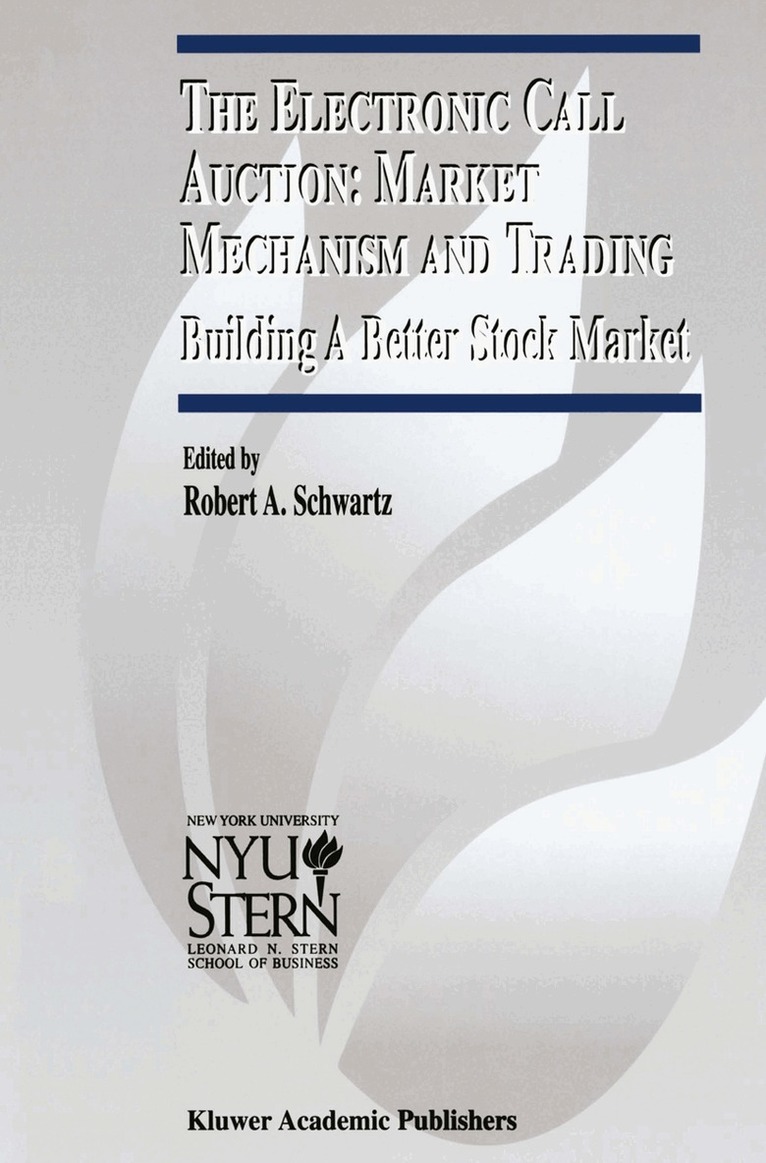
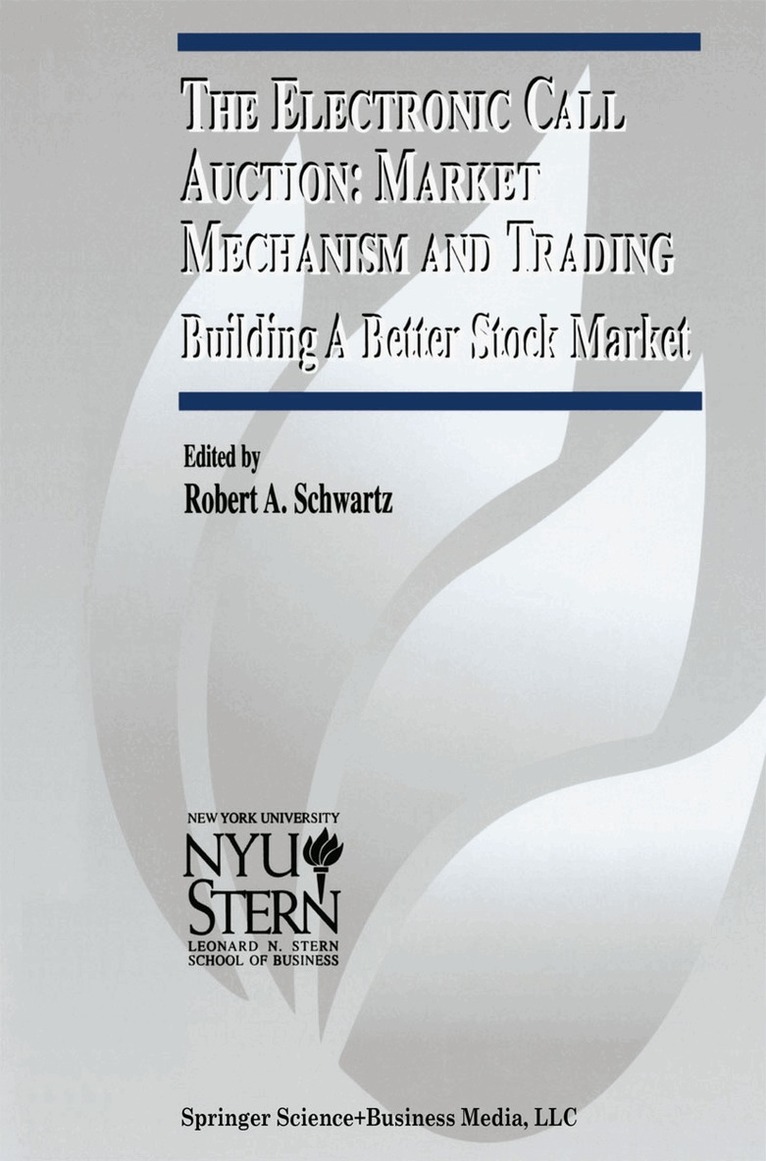
This title considers how the inclusion of electronic call auction trading would affect the performance of our US equity markets. The papers it contains focus on the call auction and its role in a hybrid market structure. The purpose is to increase understanding of this trading environment, and to consider the design of a more efficient stock market. Call auction is a form of trading that died out in the pre-computer age but is making its re-entrance as an electronic marketplace. Batching orders for simultaneous execution at a single moment in time at a single price is the essence of call auction trading. Because its determination is based on the full set of orders, the clearing price in a call auction can be thought of as a "consensus value". This contrasts with a continuous market where a transaction is made any time a buy and sell order meet in price, and where price generally fluctuates as the orders meet. Recent advances in computer technology have considerably expanded the call auction's functionality.The book is divided into three parts; the first, "Call Auction Trading", gives an overview of this trading environment; the second, "Investor Trading Practices and the Demand for Immediacy", contains the findings of four institutional trader surveys; the third, "Market Structure: The Broader Picture", presents a more inclusive view of the development of market structure.
Inbunden, Engelska, 2001
1 665 kr
Skickas inom 10-15 vardagar
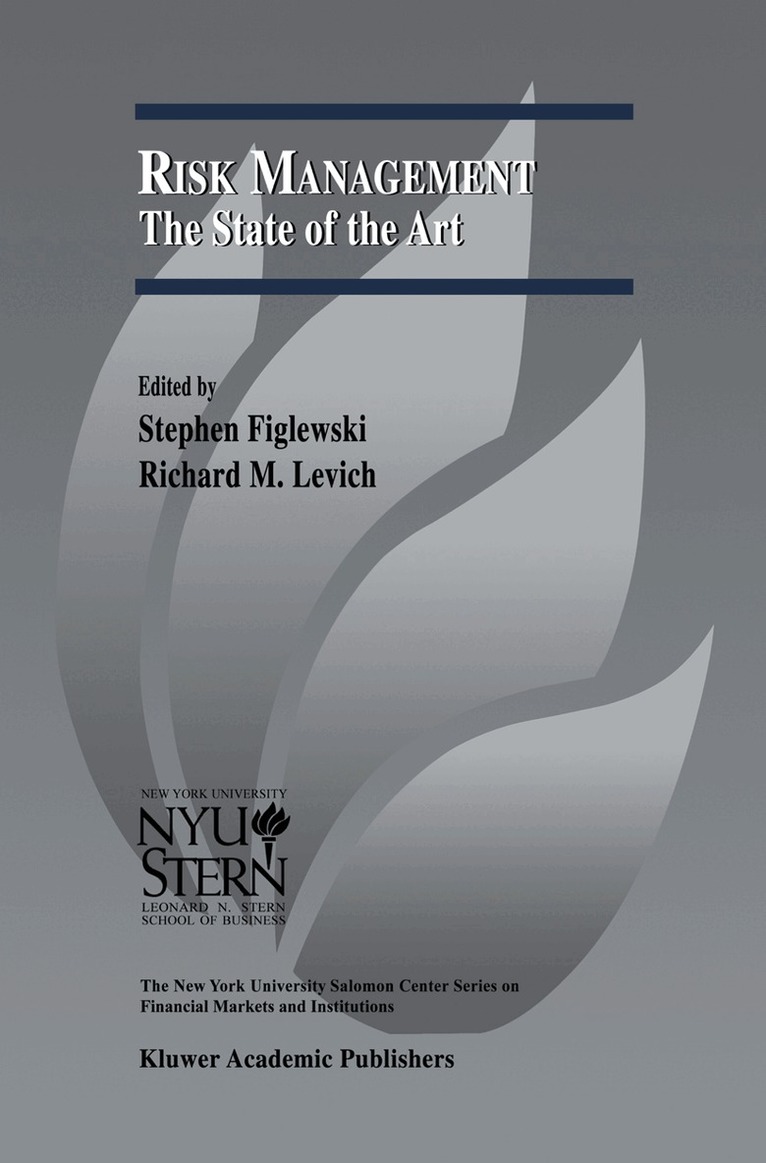
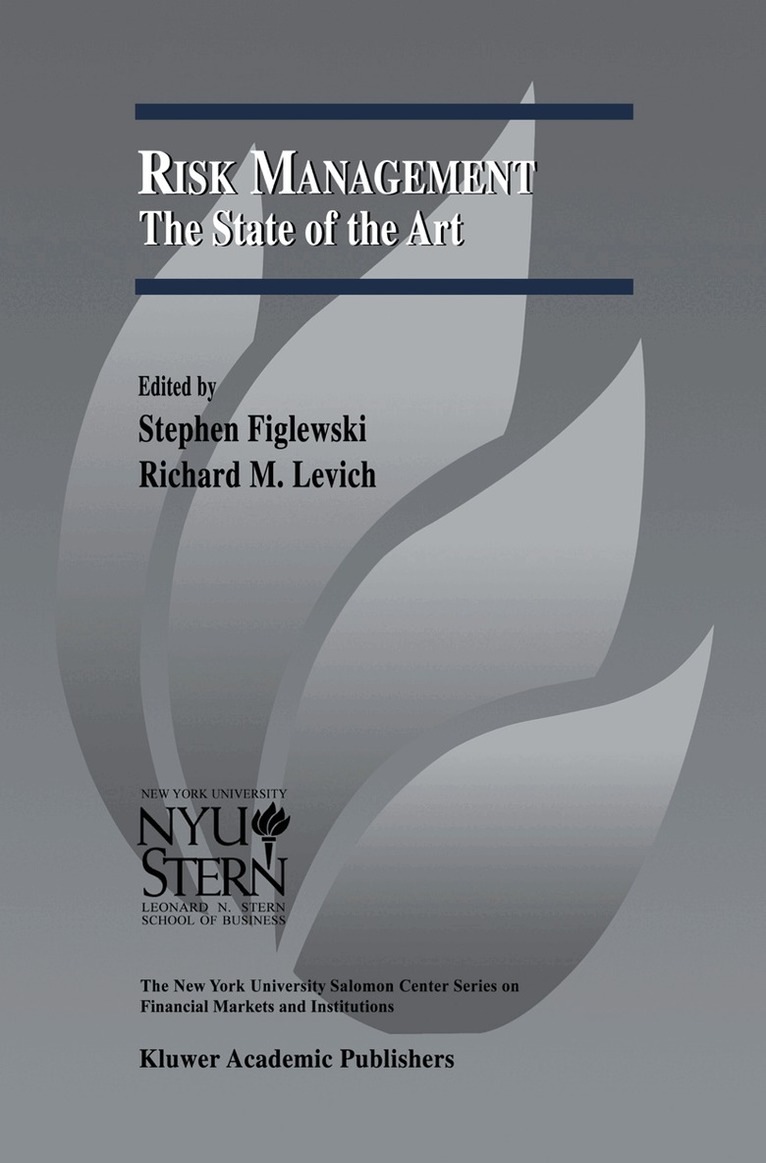
Very often, we associate the dawn of modern financial theory with Harry Markowitz who in the 1950s introduced the formal mathematics of probability theory to the problem of managing risk in an asset portfolio. The 1970s saw the advent of formal models for pricing options and other derivative contracts, whose primary purpose was also financial risk management and hedging. But events in the 1990s made it clear that effective risk management is a critical element for success, and indeed, for long term survival, not only for financial institutions, but also for industrial firms, and even for nonprofit organizations and governmental bodies. These recent events vividly show that the world is filled with all manner of risks, and so risk management must extend far beyond the use of standard derivative instruments in routine hedging applications. The articles in this volume cover two broad themes. One theme emphasizes methods for identifying, modeling, and hedging specific types of financial and business risks.Articles in this category consider the technology of risk measurement, such as Value at Risk and extreme value theory; new classes of risk, such as liquidity risk; new financial instruments and markets for risk management, such as derivative contracts based on weather and on catastrophic insurance risks; and finally, credit risk, which has become one of the most important areas of practical interest for risk management. The second theme stresses risk management from the perspective of the firm and the financial system as a whole. Articles in this category analyze risk management in the international arena, including payment and settlement risks and sovereign risk pricing, risk management from the regulator's viewpoint, and risk management for financial institutions. The articles in this volume examine the "State of the Art" in risk management from the standpoint of academic researchers, market analysts and practitioners, and government observers.
Inbunden, Engelska, 2001
1 112 kr
Skickas inom 10-15 vardagar
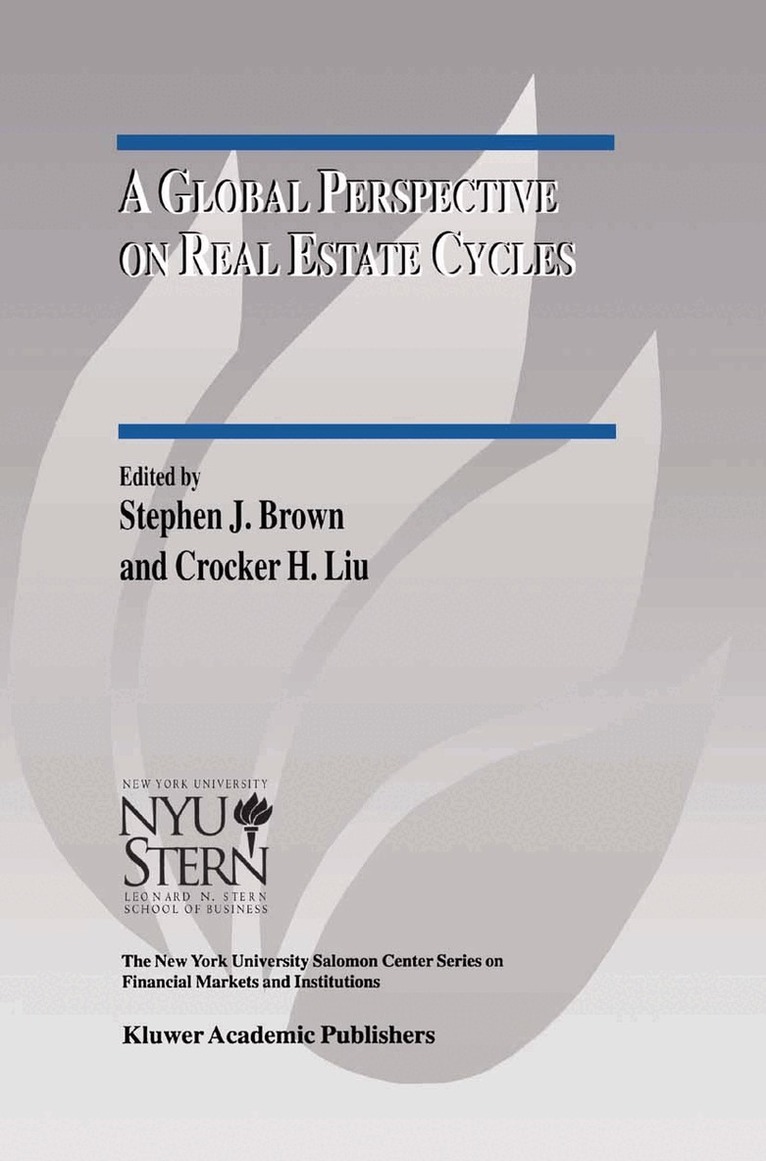
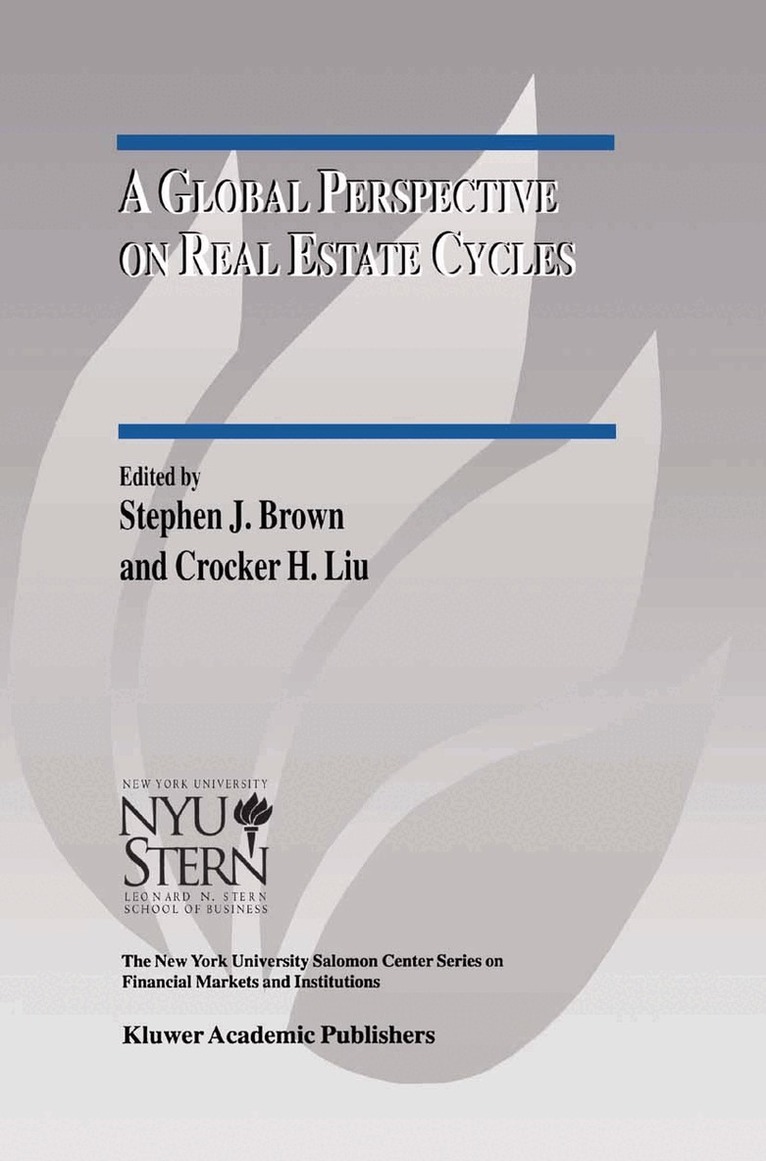
The real estate industry has been severely affected by developments in international capital markets. There has been a decline in real estate investment trust (REIT) share prices, and a decline in capital available for real estate ventures. These setbacks have coincided with serious financial problems of very large hedge funds and other institutional investors in the market for commercial mortgage-backed securities. This volume collects the revised papers first presented at a conference hosted by New York University's Salomon Center on the impact of globalization on real estate business cycles. To this end, the conference offered new insights into the implications of US and global real estate cycles on real estate securities including REITs and mortgage-backed securities as well as direct real estate investment. The most important insight is that the amplitude and frequency of the cycles differ from place to place and time to time. To the extent that this implies that real estate markets around the world are not yet fully integrated, there are opportunities, and risks, for global investors.
Inbunden, Engelska, 1998
1 665 kr
Skickas inom 10-15 vardagar
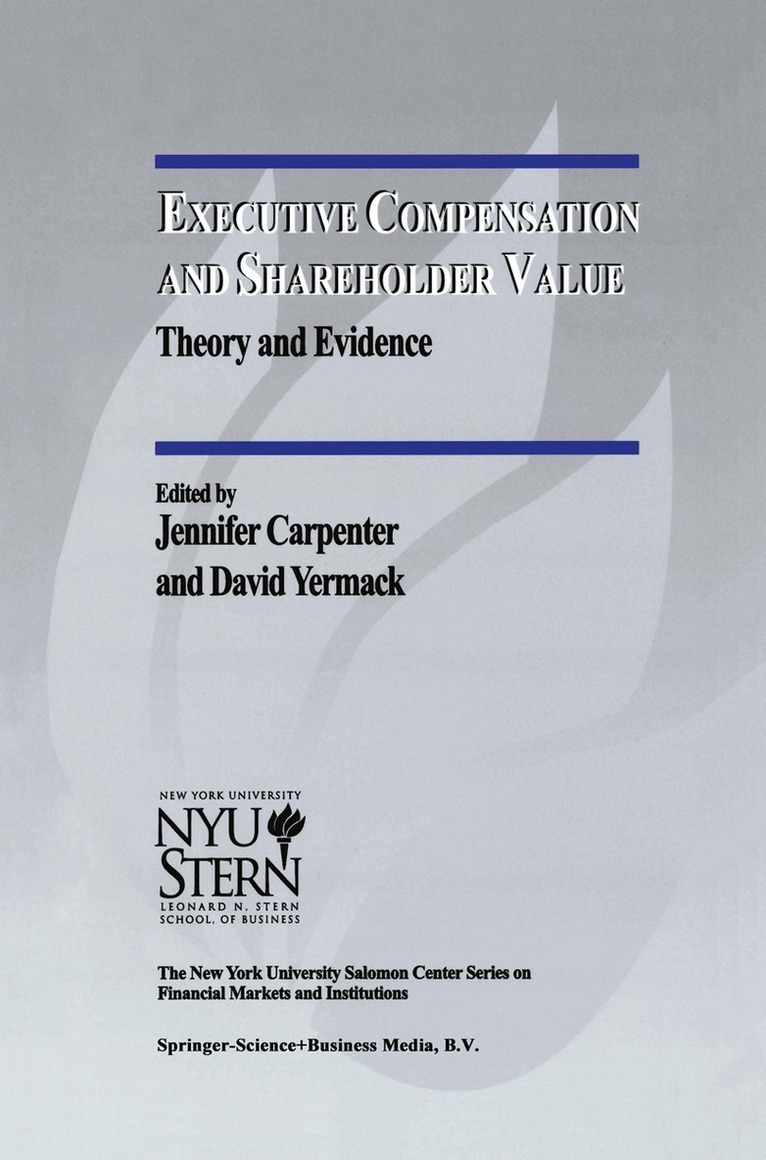
Executive compensation has gained widespread public attention in recent years, with the pay of top US executives reaching unprecedented levels compared either with past levels, with the remuneration of top executives in other countries, or with the wages and salaries of typical employees. The extraordinary levels of executive compensation have been achieved at a time when U.S. public companies have realized substantial gains in stock market value. Many have cited this as evidence that U.S. executive compensation works well, rewarding managers who make difficult decisions that lead to higher shareholder values, while others have argued that the overly generous salaries and benefits bear little relation to company performance. Recent conceptual and empirical research permits for the first time a truly rigorous debate on these and related issues, which is the subject of this volume.
Inbunden, Engelska, 2000
1 665 kr
Skickas inom 10-15 vardagar
Risk Management: FASB recently postponed the implementation of its new rules on accounting for the use of derivatives instruments. However, if the final set of rules for figuring the fair value of derivatives is not carefully crafted, it may be possible that companies prudently hedging their risks are subject to penalties in their financial reports, while companies taking greater risks appear to have less volatile financial performance. Compared to banks and other financial intermediaries, life insurance companies have the longest term and most complex liabilities, and hence the new FASB requirement poses the most severe challenges to the life insurance industry. The lessons learned from the debate among life insurance academics and professionals about how respond to the fair value reporting rule will be instructive to their counterparts in other sectors of the insurance industry, as well as those involved with other financial institutions. Of particular note are the two papers which comprise Part III. The first provides examples of the fair valuing of annuity contracts, while the second offers examples of the fair valuing of term insurance products.As the papers collected in The Fair Value of Insurance Business extend and update some of the issues treated in a previous Salomon Center conference volume, The Fair Value of Insurance Liabilities, this new volume may be viewed as a companion to the earlier book.
Inbunden, Engelska, 1998
2 217 kr
Skickas inom 10-15 vardagar
This is an exploration of theoretical and practical implications of reflecting the fair value of liabilities for insurance companies. In addition, the contributions discuss the disclosure of these values to the financial and regulatory communities and auditing firms which are actually calculating this illusive but important variable. It combines contributions by distinguished practitioners from the insurance, accounting and finance fields, with those of prominent academics. One of the central themes of the collection is that adequate disclosure of the true economic value of insurance company liabilities is both possible and desirable. Wherever possible, the insurance valuation process is wedded with modern financial theory. For example, the use of option pricing theory is applied to insurance companies, where the true value of the firm's liabilities is a critical variable. Methods such as cash flow, earned profit and indirect discount are explored.
Inbunden, Engelska, 1998
1 112 kr
Skickas inom 10-15 vardagar
As the financial services industry becomes increasingly international, the more narrowly defined and historically protected national financial markets become less significant. Consequently, financial institutions must achieve a critical size in order to compete. Bank Mergers & Acquisitions analyses the major issues associated with the large wave of bank mergers and acquisitions in the 1990's. While the effects of these changes have been most pronounced in the commercial banking industry, they also have a profound impact on other financial institutions: insurance firms, investment banks, and institutional investors. Bank Mergers & Acquisitions is divided into three major sections: A general and theoretical background to the topic of bank mergers and acquisitions; the effect of bank mergers on efficiency and shareholders' wealth; and regulatory and legal issues associated with mergers of financial institutions. It brings together contributions from leading scholars and high-level practitioners in economics, finance and law.
Inbunden, Engelska, 1998
1 665 kr
Skickas inom 10-15 vardagar
In a little over one decade, the spread of market-oriented policies has turned the once so-called lesser developed countries into emerging markets. Many forces have been responsible for the tremendous growth in emerging markets. Trends toward market-oriented policies that permit private ownership of economic activities, such as public utilities and telecommunications, are part of the explanation. Corporate restructuring, following the debt crisis of the early 1980's has permitted many emerging market companies to gain international competitiveness. And an essential condition, a basic sea-change in economic policy, has opened up many emerging markets to international investors. This growth in emerging markets has been accompanied by volatility in individual markets, and a sector-wide shock after the meltdown in the Mexican Bolsa and Mexican peso, resulting in heated debate over the nature of these markets. Emerging market capital flows continue to be the subject of intense discussion around the world among investors, academics, and policymakers.Emerging Market Capital Flows examines the issues of emerging market capital flows from several perspectives, addressing a number of related questions about emerging markets.
Inbunden, Engelska, 2002
1 112 kr
Skickas inom 10-15 vardagar
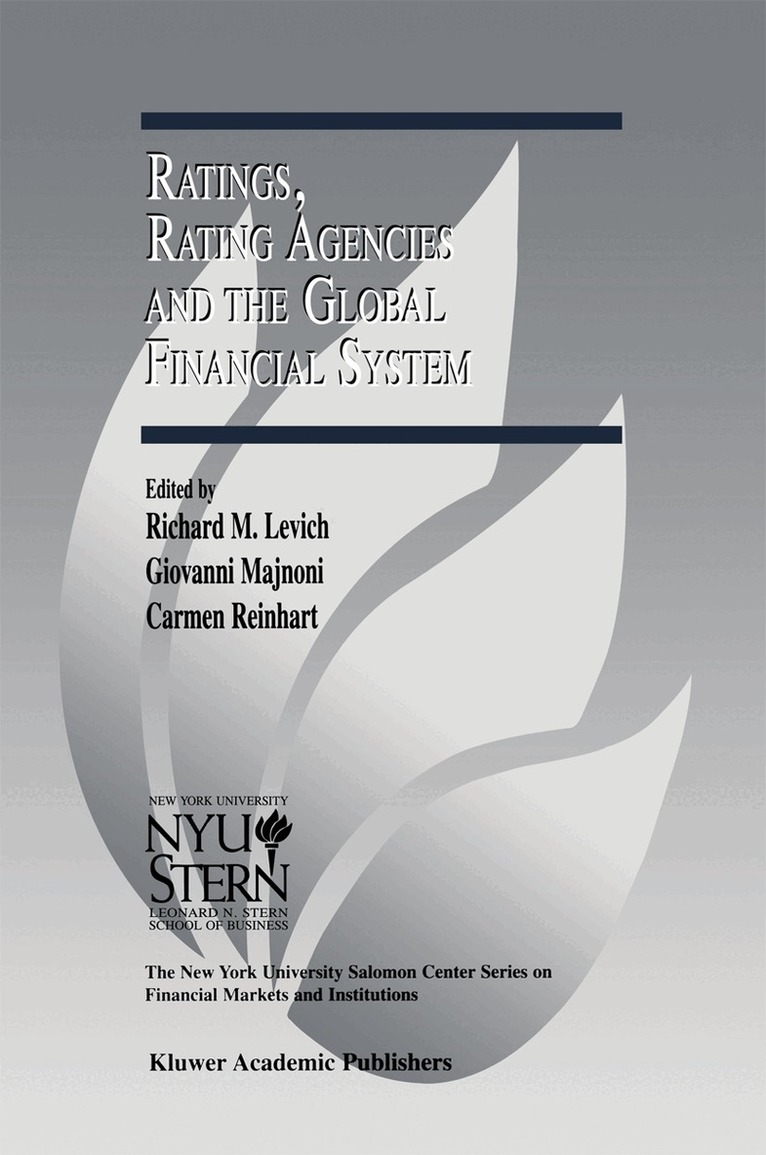
The business of credit ratings began in the US in the early 1900s. Over time, credit ratings have gradually taken on an expanding role, both in the US and abroad and in official financial market regulation as well as in private capital market decisions. However, in 1999 the Bank for International Settlements (through its Committee on Banking Supervision) proposed rule changes that would provide an explicit role for credit ratings in determining a bank's required regulatory risk capital. Once implemented, this BIS proposal (often referred to as Basel 2) would vastly elevate the importance of credit ratings by linking the required measure of bank capital to the credit rating of the bank's obligors. The title brings together the research of economists at New York University and the University of Maryland, along with those from the private sector, government bodies, and other universities. It begins by focusing on the historical origins of the credit rating business and its contemporary industrial organization structure, then presents several empirical studies crafted largely around individual firm-level or bank-level data.These studies examine: the relationship between ratings and the default and recovery experience of corporate borrowers; the comparability of credit ratings made by domestic and foreign rating agencies; and the usefulness of financial market indicators for rating banks, among other topics. In the third section, the record of sovereign credit ratings in predicting financial crises and the reaction of financial markets to changes in credit ratings is examined. The final section of the volume emphasizes policy issues facing regulators and credit rating agencies.
Häftad, Engelska, 2010
1 665 kr
Skickas inom 10-15 vardagar
Executive compensation has gained widespread public attention in recent years, with the pay of top U.S. executives reaching unprecedented levels compared either with past levels, with the remuneration of top executives in other countries, or with the wages and salaries of typical employees. The extraordinary levels of executive compensation have been achieved at a time when U.S. public companies have realized substantial gains in stock market value. Many have cited this as evidence that U.S. executive compensation works well, rewarding managers who make difficult decisions that lead to higher shareholder values, while others have argued that the overly generous salaries and benefits bear little relation to company performance. Recent conceptual and empirical research permits for the first time a truly rigorous debate on these and related issues, which is the subject of this volume.
Häftad, Engelska, 2010
2 217 kr
Skickas inom 10-15 vardagar
This book explores theoretical and practical implications of reflecting the fair value of liabilities for insurance companies. In addition, the contributions discuss the disclosure of these values to the financial and regulatory communities and auditing firms which are actually calculating this illusive but important variable. It combines contributions by distinguished practitioners from the insurance, accounting and finance fields, with those of prominent academics. One of the central themes of the collection is that adequate disclosure of the true economic value of insurance company liabilities is both possible and desirable. Wherever possible, the insurance valuation process is wedded with modern financial theory. For example, the use of option pricing theory is applied to insurance companies, where the true value of the firm's liabilities is a critical variable. Methods such as cash flow, earned profit and indirect discount are explored.
Häftad, Engelska, 2010
994 kr
Skickas inom 10-15 vardagar
As the financial services industry becomes increasingly international, the more narrowly defined and historically protected national financial markets become less significant. Consequently, financial institutions must achieve a critical size in order to compete. Bank Mergers & Acquisitions analyses the major issues associated with the large wave of bank mergers and acquisitions in the 1990's. While the effects of these changes have been most pronounced in the commercial banking industry, they also have a profound impact on other financial institutions: insurance firms, investment banks, and institutional investors. Bank Mergers & Acquisitions is divided into three major sections: A general and theoretical background to the topic of bank mergers and acquisitions; the effect of bank mergers on efficiency and shareholders' wealth; and regulatory and legal issues associated with mergers of financial institutions. It brings together contributions from leading scholars and high-level practitioners in economics, finance and law.
Häftad, Engelska, 2012
1 112 kr
Skickas inom 10-15 vardagar
In March 1999, New York University Salomon Center in assocIatIOn with the Department of Finance at NYU Stern held a one-day conference on the impact of real estate cycles on the real estate industry both from a domestic as well as an international perspective.
Häftad, Engelska, 2012
1 665 kr
Skickas inom 10-15 vardagar
Very often, we associate the dawn of modern financial theory with Harry Markowitz who in the 1950s introduced the formal mathematics of probability theory to the problem of managing risk in an asset portfolio. The 1970s saw the advent of formal models for pricing options and other derivative contracts, whose primary purpose was also financial risk management and hedging. But events in the 1990s made it clear that effective risk management is a critical element for success, and indeed, for long term survival, not only for financial institutions, but also for industrial firms, and even for nonprofit organizations and governmental bodies. These recent events vividly show that the world is filled with all manner of risks, and so risk management must extend far beyond the use of standard derivative instruments in routine hedging applications. The articles in this volume cover two broad themes. One theme emphasizes methods for identifying, modeling, and hedging specific types of financial and business risks. Articles in this category consider the technology of risk measurement, such as Value at Risk and extreme value theory; new classes of risk, such as liquidity risk; new financial instruments and markets for risk management, such as derivative contracts based on weather and on catastrophic insurance risks; and finally, credit risk, which has become one of the most important areas of practical interest for risk management. The second theme stresses risk management from the perspective of the firm and the financial system as a whole. Articles in this category analyze risk management in the international arena, including payment and settlement risks and sovereign risk pricing, risk management from the regulator's viewpoint, and risk management for financial institutions. The articles in this volume examine the "State of the Art" in risk management from the standpoint of academic researchers, market analysts and practitioners, and government observers.
Häftad, Engelska, 2012
1 112 kr
Skickas inom 10-15 vardagar
Ratings, Rating Agencies and the Global Financial System brings together the research of economists at New York University and the University of Maryland, along with those from the private sector, government bodies, and other universities. The first section of the volume focuses on the historical origins of the credit rating business and its present day industrial organization structure. The second section presents several empirical studies crafted largely around individual firm-level or bank-level data. These studies examine (a) the relationship between ratings and the default and recovery experience of corporate borrowers, (b) the comparability of credit ratings made by domestic and foreign rating agencies, and (c) the usefulness of financial market indicators for rating banks, among other topics. In the third section, the record of sovereign credit ratings in predicting financial crises and the reaction of financial markets to changes in credit ratings is examined. The final section of the volume emphasizes policy issues now facing regulators and credit rating agencies.
Häftad, Engelska, 2012
1 665 kr
Skickas inom 10-15 vardagar
ROBERT A. SCHWARTZ The primary objective of this book is to consider how the inclusion of electronic call auction trading would affect the performance of our U.S. equity markets. The papers it contains focus on the call auction and its role in a hybrid market struc ture. The purpose is to increase understanding of this trading environment, and to consider the design of a more efficient stock market. This book had its origin in a symposium, Electronic Call Market Trading, that was held at New York University's Salomon Center on April 20, 1995. Nearly 150 people from 16 different countries attended. At the time, three proprietary trading systems based on call auction principles (The Arizona Stock Exchange, Posit, and Instinet's Crossing Network) had been operating for several years and interest already existed in the procedure. Since the symposium, increasing use has been made of call auctions, primarily by the ParisBourse in its Nouveau Marchi: and CAC markets, by Deutsche Borse in its Xetra market, and in the U.S. by OptiMark. Rather than being used as stand alone systems, however, call auctions are now being interfaced with continuous markets so as to produce hybrid market structures, a development that is given considerable attention to in a number of the chapters in this book.
Häftad, Engelska, 2012
1 665 kr
Skickas inom 10-15 vardagar
Insurance companies, as well as banks and thrift institutions, have traditionally reported assets and liabilities on the basis of their amortized cost, or book value. But following the turmoil in securities markets due to highly volatile interest rate fluctuations in the 1980s and the early 1990s, and problems caused by inadequate liquidity, in the mid-1990s the Financial Accounting Standards Board (FASB) issued a new ruling calling for financial intermediaries to report the fair, or market, value of most assets. Called FAS 115, this new standard is the first step in the eventual change to valuing all the assets and liabilities belonging to financial intermediaries under the fair value accounting method. Thus, these changes will pose tremendous future implications for three key business measures of a financial intermediary: Solvency: if the fair values of assets and liabilities are out-of-step, then healthy companies may report negative net worth and insolvent companies may appear to be in sound financial condition. Reported Earnings: if the fair values of assets and liabilities are out of step, then reported earnings will not accurately represent the financial operations of the company. Risk Management: FASB recently postponed the implementation of its new rules on accounting for the use of derivatives instruments. However, if the final set of rules for figuring the fair value of derivatives is not carefully crafted, it may be possible that companies prudently hedging their risks are subject to penalties in their financial reports, while companies taking greater risks appear to have less volatile financial performance. Compared to banks and other financial intermediaries, life insurance companies have the longest term and most complex liabilities, and hence the new FASB requirement poses the most severe challenges to the life insurance industry. The lessons learned from the debate amonglife insurance academics and professionals about how respond to the fair value reporting rule will be instructive to their counterparts in other sectors of the insurance industry, as well as those involved with other financial institutions. Of particular note are the two papers which comprise Part III. The first provides examples of the fair valuing of annuity contracts, while the second offers examples of the fair valuing of term insurance products. As the papers collected in The Fair Value of Insurance Business extend and update some of the issues treated in a previous Salomon Center conference volume, The Fair Value of Insurance Liabilities, this new volume may be viewed as a companion to the earlier book.
Häftad, Engelska, 2012
1 665 kr
Skickas inom 10-15 vardagar
In a little over one decade, the spread of market-oriented policies has turned the once so-called lesser developed countries into emerging markets. Many forces have been responsible for the tremendous growth in emerging markets. Trends toward market-oriented policies that permit private ownership of economic activities, such as public utilities and telecommunications, are part of the explanation. Corporate restructuring, following the debt crisis of the early 1980's has permitted many emerging market companies to gain international competitiveness. And an essential condition, a basic sea-change in economic policy, has opened up many emerging markets to international investors. This growth in emerging markets has been accompanied by volatility in individual markets, and a sector-wide shock after the meltdown in the Mexican Bolsa and Mexican peso, resulting in heated debate over the nature of these markets. Emerging market capital flows continue to be the subject of intense discussion around the world among investors, academics, and policymakers. Emerging Market Capital Flows examines the issues of emerging market capital flows from several distinct perspectives, addressing a number of related questions about emerging markets.