Häftad, Engelska, 2012
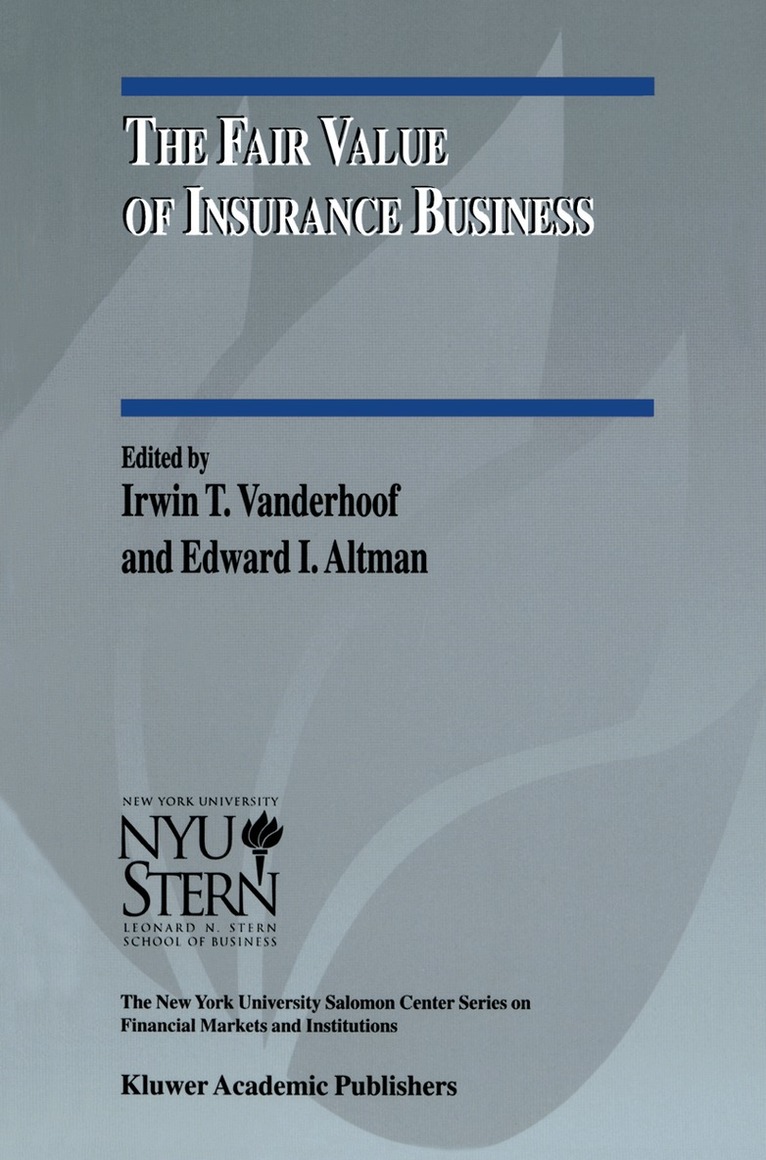
Fair Value of Insurance Business
Av Irwin T. Vanderhoof, Edward I. Altman
1688 kr
Beställningsvara. Skickas inom 10-15 vardagar. Fri frakt över 249 kr.
Beskrivning
Insurance companies, as well as banks and thrift institutions, have traditionally reported assets and liabilities on the basis of their amortized cost, or book value. But following the turmoil in securities markets due to highly volatile interest rate fluctuations in the 1980s and the early 1990s, and problems caused by inadequate liquidity, in the mid-1990s the Financial Accounting Standards Board (FASB) issued a new ruling calling for financial intermediaries to report the fair, or market, value of most assets. Called FAS 115, this new standard is the first step in the eventual change to valuing all the assets and liabilities belonging to financial intermediaries under the fair value accounting method. Thus, these changes will pose tremendous future implications for three key business measures of a financial intermediary: Solvency: if the fair values of assets and liabilities are out-of-step, then healthy companies may report negative net worth and insolvent companies may appear to be in sound financial condition. Reported Earnings: if the fair values of assets and liabilities are out of step, then reported earnings will not accurately represent the financial operations of the company. Risk Management: FASB recently postponed the implementation of its new rules on accounting for the use of derivatives instruments. However, if the final set of rules for figuring the fair value of derivatives is not carefully crafted, it may be possible that companies prudently hedging their risks are subject to penalties in their financial reports, while companies taking greater risks appear to have less volatile financial performance. Compared to banks and other financial intermediaries, life insurance companies have the longest term and most complex liabilities, and hence the new FASB requirement poses the most severe challenges to the life insurance industry. The lessons learned from the debate amonglife insurance academics and professionals about how respond to the fair value reporting rule will be instructive to their counterparts in other sectors of the insurance industry, as well as those involved with other financial institutions. Of particular note are the two papers which comprise Part III. The first provides examples of the fair valuing of annuity contracts, while the second offers examples of the fair valuing of term insurance products. As the papers collected in The Fair Value of Insurance Business extend and update some of the issues treated in a previous Salomon Center conference volume, The Fair Value of Insurance Liabilities, this new volume may be viewed as a companion to the earlier book.
Produktinformation
- Utgivningsdatum: 2012-10-25
- Mått: 155 x 235 x 19 mm
- Vikt: 517 g
- Format: Häftad
- Språk: Engelska
- Serie: New York University Salomon Center Series on Financial Markets and Institutions
- Antal sidor: 322
- Förlag: Springer-Verlag New York Inc.
- ISBN: 9781461370901
Utforska kategorier
Betyg & recensioner
0 recensioner
Inga recensioner tillgängliga.