Nuclear History Program - Böcker
Visar alla böcker i serien Nuclear History Program. Handla med fri frakt och snabb leverans.
5 produkter
5 produkter
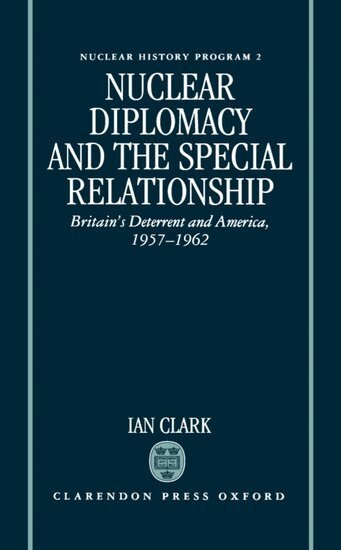
Del 2 - Nuclear History Program
Nuclear Diplomacy and the Special Relationship
Britain's Deterrent and America, 1957-1962
Inbunden, Engelska, 1994
1 539 kr
Skickas inom 3-6 vardagar
The full inside storyThe full and fascinating inside story of Anglo-American nuclear relations from 1957 to 1962 is told for the first time in this book. This period saw the creation of a close and exclusive relationship of nuclear collaboration between Britain and the United States, with an agreement on atomic co-operation, the establishment of the facilities for US nuclear submarines in the UK, and the sale of US missiles, including Thor and Polaris for the British strategic submarine force.Revelations from formerly top secret documentsIan Clark's detailed analysis of newly declassified official documents reveals that, while special, the Anglo-American nuclear partnership was not without tension and rivalry. Prime Minister Harold Macmillan sought to combine interdependence--which reduced costs--with national policies on nuclear strategy, NATO, nuclear co-operation with France, and nuclear testing; the result was conflict with US administrations.Dr Clark examines such critical issues as British nuclear targeting of the Soviet Union and co-ordination with US nuclear war plans, cancellation of the Blue Streak missile, the bargain over Skybolt and the Holy Loch base, the diplomacy of the Skybolt crisis in 1962, and British ambitions for Polaris. The frank revelations contained in the formerly top secret British and American documents from the period enable him to offer fundamentally new and sometimes controversial interpretations of events in this dramatic period.
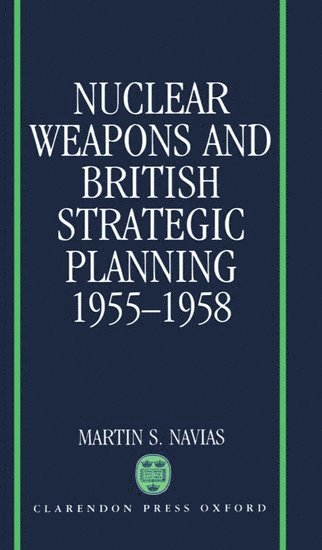
Del 1 - Nuclear History Program
Nuclear Weapons and British Strategic Planning, 1955-1958
Inbunden, Engelska, 1991
3 437 kr
Skickas inom 7-10 vardagar
During the 1950s nuclear weapons began to play an increasingly important role in Britain's defence policy. The development of thermonuclear bombs and assessments of the great destruction that would result from an exchange of nuclear warheads helped alter Britain's planning for war, and influenced the structure and deployment of her armed forces.In this study Martin Navias seeks to analyse the significance of the 1957 White Paper on Defence in the context of British strategic planning during the mid-1950s. He assesses claims that the White Paper represented a culmination of trends already prevalent in British defence planning, discusses whether the basis for a truly independent deterrent was established during 1955-6, and identifies continuities and discontinuities in strategic policies.A major theme throughout is the relationship between nuclear deterrence and the shape and size of conventional forces. Before Duncan Sandys became Minister of Defence, that ministry seemed unable to impose itself on the service departments. Sandys, however, was able to override many traditional service preferences. The result was the adoption of a British New Look: conventional forces were reduced, greater relative importance was placed on the nuclear deterrent, but once more the requirements of a truly independent deterrent did not receive priority.
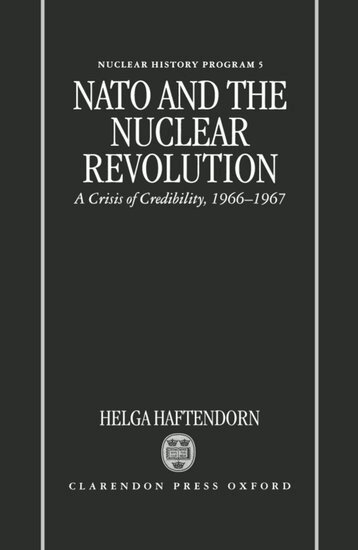
Del 5 - Nuclear History Program
NATO and the Nuclear Revolution
A Crisis of Credibility 1966-67
Inbunden, Engelska, 1996
3 425 kr
Skickas inom 5-8 vardagar
This book deals with the crucially important NATO crises of 1966-67 - a period when a number of issues which had been developing for some time within NATO came to a head. It concentrates on the intensive reorientation of NATO strategy from the departure of France from the integrated military command to the adoption of Flexible Response and the Hermel report on the Future Tasks of the Alliance.The author sets out the diplomacy of this period in a broader historical and theoretical context and provides four detailed, and related, case studies. The first case deals with problems of doctrine stemming from American determination to reduce NATO's dependence on what it believed to be incredible nuclear threats and the European resistance to any diminution of the US nuclear guarantee. The second case considers the attempt to ease European concerns about dependence on American nuclear policy. The third examines the programmatic consequences of the strategic shift. Finally, there is an analysis of the process by which the Harmel Report was set up to establish political guidance for the Alliance in the context of the French withdrawal and the move to detente.
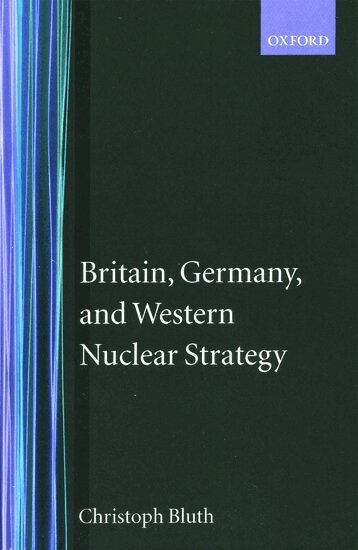
Del 3 - Nuclear History Program
Britain, Germany, and Western Nuclear Strategy
Inbunden, Engelska, 1995
1 585 kr
Skickas inom 3-6 vardagar
This book is a comprehensive account of post war British and German policies towards nuclear weapons and how these interacted in the context of alliance strategy.The author gives a detailed account of major episodes in the evolution of the alliance and its doctrine - such as the MLF debate, the origins of flexible response, theatre modernisation programmes - and demonstrates how British and German interests impinged upon these episodes. On occasion, these interests converged; at others, they diverged and Britain and Germany took on the role of protagonists. In all this, one of the less well-known nuclear relationships within the alliance comes vividly into focus.The book tells this part of the alliance's story in detail for the first time, and, in the accounts of development of German strategy, brings a refreshingly new perspective to the predominant Anglo-American interpretations.
Del 4 - Nuclear History Program
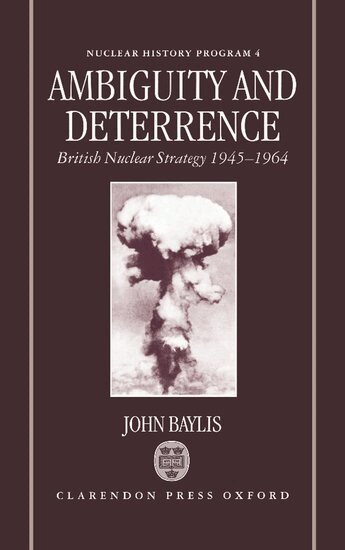
Ambiguity and Deterrence
British Nuclear Strategy 1945-1964
Inbunden, Engelska, 1995
3 784 kr
Skickas inom 5-8 vardagar
Ambiguity and Deterrence focuses on the role of competing strategic beliefs in the formulation of British nuclear strategy between 1945 and 1964. Based on recently released documents, it is argued that the British approach to nuclear weapons during this formative period was characterized by paradox and ambiguity. The paradox was that while there was a widespread consensus in political and military circles in favour of nuclear deterrence, there were constant disagreements over the requirements of an effective deterrent policy. These disagreements centred on six main questions: whether deterrence was best achieved through `punishment' or `denial'; whether deterrence necessitated nuclear superiority; whether preparations had to be made for a long war or a short war; what strategic implications followed from nuclear stalemate; whether limited nuclear wars could be fought without escalation to all-out nuclear war; and whether pre-emption was politically acceptable and militarily necessary. It is argued that the failure of successive governments to provide clear political direction on these issues meant that British nuclear strategy was more ambiguous and much less coherent than is usually supposed.