Nutshell Handbooks - Böcker
Visar alla böcker i serien Nutshell Handbooks. Handla med fri frakt och snabb leverans.
3 produkter
3 produkter
290 kr
Skickas inom 7-10 vardagar
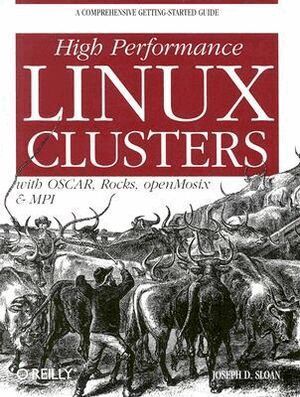
To the outside world, a "supercomputer" appears to be a single system. In fact, it's a cluster of computers that share a local area network and have the ability to work together on a single problem as a team. Many businesses used to consider supercomputing beyond the reach of their budgets, but new Linux applications have made high-performance clusters more affordable than ever. These days, the promise of low-cost supercomputing is one of the main reasons many businesses choose Linux over other operating systems. This new guide covers everything a newcomer to clustering will need to plan, build, and deploy a high-performance Linux cluster. The book focuses on clustering for high-performance computation, although much of its information also applies to clustering for high-availability (failover and disaster recovery). The book discusses the key tools you'll need to get started, including good practices to use while exploring the tools and growing a system. You'll learn about planning, hardware choices, bulk installation of Linux on multiple systems, and other basic considerations. Then, you'll learn about software options that can save you hours--or even weeks--of deployment time.Since a wide variety of options exist in each area of clustering software, the author discusses the pros and cons of the major free software projects and chooses those that are most likely to be helpful to new cluster administrators and programmers. A few of the projects introduced in the book include: * MPI, the most popular programming library for clusters. This book offers simple but realistic introductory examples along with some pointers for advanced use. * OSCAR and Rocks, two comprehensive installation and administrative systems * openMosix (a convenient tool for distributing jobs), Linux kernel extensions that migrate processes transparently for load balancing * PVFS, one of the parallel filesystems that make clustering I/O easier * C3, a set of commands for administering multiple systems Ganglia, OpenPBS, and cloning tools (Kickstart, SIS and G4U) are also covered. The book looks at cluster installation packages (OSCAR & Rocks) and then considers the core packages individually for greater depth or for folks wishing to do a custom installation.Guidelines for debugging, profiling, performance tuning, and managing jobs from multiple users round out this immensely useful book.
325 kr
Skickas inom 7-10 vardagar
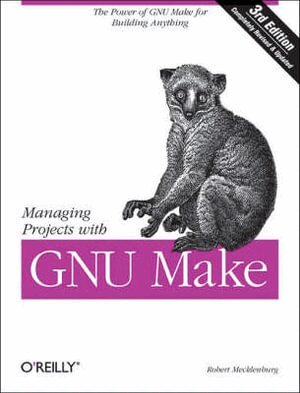
The utility simply known as make is one of the most enduring features of both Unix and other operating systems. First invented in the 1970s, make still turns up to this day as the central engine in most programming projects; it even builds the Linux kernel. In the third edition of the classic Managing Projects with GNU make, readers will learn why this utility continues to hold its top position in project build software, despite many younger competitors. The premise behind make is simple: after you change source files and want to rebuild your program or other output files, make checks timestamps to see what has changed and rebuilds just what you need, without wasting time rebuilding other files. But on top of this simple principle, make layers a rich collection of options that lets you manipulate multiple directories, build different versions of programs for different platforms, and customize your builds in other ways. This edition focuses on the GNU version of make, which has deservedly become the industry standard. GNU make contains powerful extensions that are explored in this book.It is also popular because it is free software and provides a version for almost every platform, including a version for Microsoft Windows as part of the free Cygwin project. Managing Projects with GNU make, 3rd Edition provides guidelines on meeting the needs of large, modern projects. Also added are a number of interesting advanced topics such as portability, parallelism, and use with Java. Robert Mecklenburg, author of the third edition, has used make for decades with a variety of platforms and languages. In this book he zealously lays forth how to get your builds to be as efficient as possible, reduce maintenance, avoid errors, and thoroughly understand what make is doing. Chapters on C++ and Java provide makefile entries optimized for projects in those languages. The author even includes a discussion of the makefile used to build the book.
325 kr
Skickas inom 7-10 vardagar
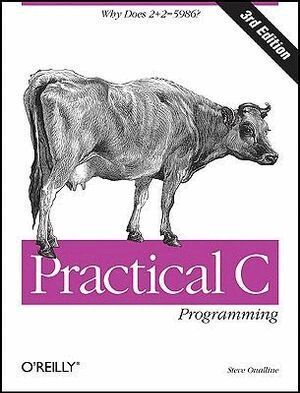
There are lots of introductory C books, but this is the first one that has the no-nonsense, practical approach that has made Nutshell Handbooks(r) famous. C programming is more than just getting the syntax right. Style and debugging also play a tremendous part in creating programs that run well and are easy to maintain. This book teaches you not only the mechanics of programming, but also describes how to create programs that are easy to read, debug, and update. Practical rules are stressed. For example, there are fifteen precedence rules in C (&& comes before || comes before ?:). The practical programmer reduces these to two: * Multiplication and division come before addition and subtraction. Contrary to popular belief, most programmers do not spend most of their time creating code. Most of their time is spent modifying someone else's code. This books shows you how to avoid the all-too-common obfuscated uses of C (and also to recognize these uses when you encounter them in existing programs) and thereby to leave code that the programmer responsible for maintenance does not have to struggle with.Electronic Archaeology, the art of going through someone else's code, is described. This third edition introduces popular Integrated Development Environments on Windows systems, as well as UNIX programming utilities, and features a large statistics-generating program to pull together the concepts and features in the language.