Oceans in Depth - Böcker
Visar alla böcker i serien Oceans in Depth. Handla med fri frakt och snabb leverans.
6 produkter
6 produkter
184 kr
Skickas inom 7-10 vardagar
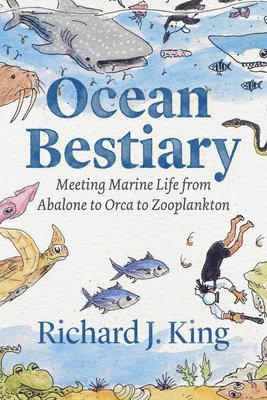
A delightful A-to-Z menagerie of the sea—whimsically illustrated, authoritative, and thought-provoking. For millennia, we have taken to the waves. And yet, for humans, the ocean remains our planet’s most inaccessible region, the place about which we know the least. From A to Z, abalone to zooplankton, and through both text and original illustrations, Ocean Bestiary is a celebration of our ongoing quest to know the sea and its creatures. Focusing on individual species or groups of animals, Richard J. King embarks upon a global tour of ocean wildlife, including beluga whales, flying fish, green turtles, mako sharks, noddies, right whales, sea cows (as well as sea lions, sea otters, and sea pickles), skipjack tuna, swordfish, tropicbirds, walrus, and yellow-bellied sea snakes. But more than this, King connects the natural history of ocean animals to the experiences of people out at sea and along the world’s coastlines. From firsthand accounts passed down by the earliest Polynesian navigators to observations from Wampanoag clamshell artists, African-American whalemen, Korean female divers (or haenyeo), and today’s pilots of deep-sea submersibles—and even to imaginary sea expeditions launched through poems, novels, and paintings—Ocean Bestiary weaves together a diverse array of human voices underrepresented in environmental history to tell the larger story of our relationship with the sea. Sometimes funny, sometimes alarming, but always compelling, King’s vignettes reveal both how our perceptions of the sea have changed for the better and how far we still have to go on our voyage.
282 kr
Skickas inom 7-10 vardagar
A welcome dive into the world of aquarium craft that offers much-needed knowledge about undersea environments.Atlantic coral is rapidly disappearing in the wild. To save the species, they will have to be reproduced quickly in captivity, and so for the last decade conservationists have been at work trying to preserve their lingering numbers and figure out how to rebuild once-thriving coral reefs from a few survivors. Captive environments, built in dedicated aquariums, offer some hope for these corals. This book examines these specialized tanks, charting the development of tank craft throughout the twentieth century to better understand how aquarium modeling has enhanced our knowledge of the marine environment.Aquariums are essential to the way we understand the ocean. Used to investigate an array of scientific questions, from animal behavior to cancer research and climate change, they are a crucial factor in the fight to mitigate the climate disaster already threatening our seas. To understand the historical development of this scientific tool and the groups that have contributed to our knowledge about the ocean, Samantha Muka takes up specialty systems—including photographic aquariums, kriesel tanks (for jellyfish), and hatching systems—to examine the creation of ocean simulations and their effect on our interactions with underwater life. Lively and engaging, Oceans under Glass offers a fresh history about how the aquarium has been used in modern marine biology and how integral it is to knowing the marine world.
223 kr
Skickas inom 7-10 vardagar
Traces a commonplace average—sea level—from its origins in charting land to its emergence as a symbol of global warming. News reports warn of rising sea levels spurred by climate change. Waters inch ever higher, disrupting delicate ecosystems and threatening island and coastal communities. The baseline for these measurements—sea level—may seem unremarkable, a long-familiar zero point for altitude. But as Wilko Graf von Hardenberg reveals, the history of defining and measuring sea level is intertwined with national ambitions, commercial concerns, and shifting relationships between people and the ocean. Sea Level provides a detailed and innovative account of how mean sea level was first defined, how it became the prime reference point for surveying and cartography, and how it emerged as a powerful mark of humanity’s impact on the earth. With Hardenberg as our guide, we traverse the muddy spaces of Venice and Amsterdam, the coasts of the Baltic Sea, the Panama and Suez canals, and the Himalayan foothills. Born out of Enlightenment studies of physics and quantification, sea level became key to state-sponsored public works, colonial expansion, Cold War development of satellite technologies, and recognizing the climate crisis. Mean sea level, Hardenberg reveals, is not a natural occurrence—it has always been contingent, the product of people, places, politics, and evolving technologies. As global warming transforms the globe, Hardenberg reminds us that a holistic understanding of the ocean and its changes requires a multiplicity of reference points. A fascinating story that revises our assumptions about land and ocean alike, Sea Level calls for a more nuanced understanding of this baseline, one that allows for new methods and interpretations as we navigate an era of unstable seas.
912 kr
Skickas inom 7-10 vardagar
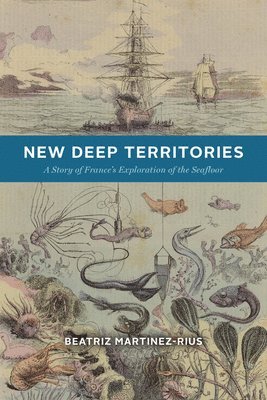
How France integrated the seafloor into its national territory through an interplay of science, technology, and geopolitical ambition during the Cold War. Beneath the surface of the seas and oceans lies a territory as important for human societies as the exposed land and the airspace above them: the seafloor. Our daily life is inextricably linked to the seafloor and its resources, from global telecommunications infrastructure to offshore oil and gas extraction to strategic mineral mining. By focusing on France, a country with an underwater territory seventeen times larger than its emerged lands, New Deep Territories explains how the seafloor emerged as a territory during the second half of the twentieth century. Beatriz Martinez-Rius traces the evolution of the country’s seafloor exploration and the motivations that fueled it from the aftermath of World War I to the late 1970s. In the early 1960s, the seafloor, instead of colonial territories, came to be seen as a source of natural resources. The French government, corporations such as oil companies, and scientists all imagined future uses of the seafloor, and these ever-evolving aspirations drove the development of technologies, techniques, and scientific fields that built up the submerged territory. Government officers and industrial stakeholders massively invested in technoscientific development to prepare for a future reliant on seafloor resources, including oil, gas, and minerals, well before it was technologically possible, economically feasible, and legally acceptable to extract them. The future they envisioned did not arrive, but their investment resulted in an unprecedented understanding of the ocean’s crust. Today, once again, national governments, international organizations, and private stakeholders are turning their attention to the seafloor.
243 kr
Skickas inom 7-10 vardagar
How France integrated the seafloor into its national territory through an interplay of science, technology, and geopolitical ambition during the Cold War. Beneath the surface of the seas and oceans lies a territory as important for human societies as the exposed land and the airspace above them: the seafloor. Our daily life is inextricably linked to the seafloor and its resources, from global telecommunications infrastructure to offshore oil and gas extraction to strategic mineral mining. By focusing on France, a country with an underwater territory seventeen times larger than its emerged lands, New Deep Territories explains how the seafloor emerged as a territory during the second half of the twentieth century. Beatriz Martinez-Rius traces the evolution of the country’s seafloor exploration and the motivations that fueled it from the aftermath of World War I to the late 1970s. In the early 1960s, the seafloor, instead of colonial territories, came to be seen as a source of natural resources. The French government, corporations such as oil companies, and scientists all imagined future uses of the seafloor, and these ever-evolving aspirations drove the development of technologies, techniques, and scientific fields that built up the submerged territory. Government officers and industrial stakeholders massively invested in technoscientific development to prepare for a future reliant on seafloor resources, including oil, gas, and minerals, well before it was technologically possible, economically feasible, and legally acceptable to extract them. The future they envisioned did not arrive, but their investment resulted in an unprecedented understanding of the ocean’s crust. Today, once again, national governments, international organizations, and private stakeholders are turning their attention to the seafloor.
396 kr
Kommande
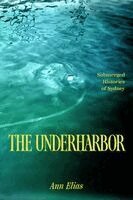
An underwater look at Sydney that surfaces new and unfamiliar histories of people, objects, spaces, and environmental and social change.The Underharbor places the ocean at the center of a cultural history of Sydney, Australia, a place built on and around seawater, where the community is linked historically, emotionally, and psychologically to the water. Drawing on a series of vignettes that focus on Sydney’s underwater dimensions—including the harbor’s relationship to technological modernity, Indigenous ideas and practices, artistic experimentation, and scientific inquiry—Ann Elias creates a unique portrait of a city and its past. By shifting the terrestrial perspective to the subaquatic, Elias uncovers an area filled with political meaning, poetic significance, and ideological struggles.Few harbors are as researched as Sydney’s, where fishing, exploration, colonialism, warfare, science, and industry all shaped cultural ideas about underwater space. Between 1850 to 1950, only a few groups of people had access to the remote underharbor: Indigenous divers and First Nations peoples, who were dispossessed by colonizers; divers working primarily to further the maritime industrialization of the growing city and to salvage objects from the harbor floor; researchers in the emerging field of marine science who dove for first-hand observation; and beachcombers, naturalists, and dredgers who got to know the underharbor by bringing it to the surface. Through press stories, models, illustrations, maps, and photographic and cinematic representations, The Underharbor reveals how these watery visions of Sydney shifted over the course of a century.