
Odéon – serie
Visar alla böcker i serien Odéon. Handla med fri frakt och snabb leverans.
2 produkter
2 produkter
1 095 kr
Skickas inom 5-8 vardagar
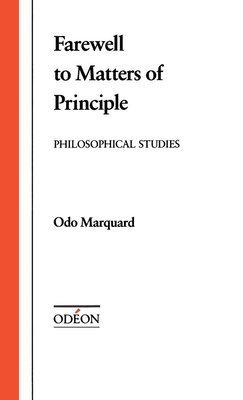
This book is a series of translated essays covering German philosophy, literary theory, and modern intellectual history. Odo Marquard is considered the natural heir to Gadamer, Habermas, and Blumenberg, and here discusses a number of different topics: his role as 'skeptical' philosopher; the formation during the 18th century of modern 'themes' and 'disciplines' such as aesthetics, philosophical anthropology, and philosophy of history; the nature of myth and attempts to account for it, from Schelling to Levi-Strauss; and the question of hermeneutics.
925 kr
Skickas inom 5-8 vardagar
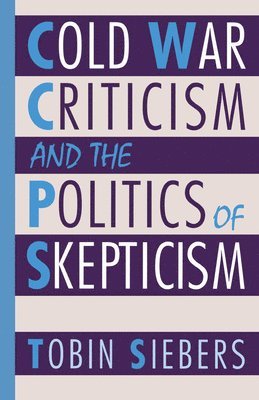
In Cold War Criticism, Tobin Siebers claims that modern criticism is a Cold War criticism. Postwar literary theory has absorbed the scepticism, suspicion and paranoia of the Cold War mentality, and it plays them out in debates about the divided self, linguistic indeterminacy, the metaphysics of presence, multiculturalism, canon formation, power, cultural literacy and the politics of literature. The major critical movements of the postwar age, Siebers argues, belong to three dominant phases of the Cold War era. The age of charismatic leadership (Churchill, FDR, Stalin, and Hitler) lies behind the preoccupation with "intention", "effect" and "impersonality" found in the New Criticism. The age of propaganda motivates the fascination with the guiles of language, undecidability and deconstruction. The age of superpowers provides the dominant metaphor in the new historicism's analysis of the technology of power. All three ages of criticism reflect Cold War Scepticism as it has impaired the ability of literary theorists to talk effectively about the politics of criticism. Supporting his claims with polemical readings from such figures as Arendt, Bloom, deMan, Lyotard, Siebers offers a new and often surprising vision of what theory must do if it is to enter the post Cold War era suiccessfully.