Oliver Wendell Holmes Lectures – serie
Visar alla böcker i serien Oliver Wendell Holmes Lectures. Handla med fri frakt och snabb leverans.
3 produkter
3 produkter
274 kr
Skickas inom 10-15 vardagar
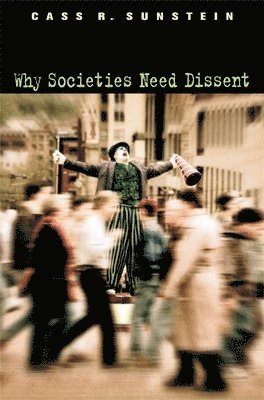
In this timely book, Cass R. Sunstein shows that organizations and nations are far more likely to prosper if they welcome dissent and promote openness. Attacking "political correctness" in all forms, Sunstein demonstrates that corporations, legislatures, even presidents are likely to blunder if they do not cultivate a culture of candor and disclosure. He shows that unjustified extremism, including violence and terrorism, often results from failure to tolerate dissenting views. The tragedy is that blunders and cruelties could be avoided if people spoke out. Sunstein casts new light on freedom of speech, showing that a free society not only forbids censorship but also provides public spaces for dissenters to expose widely held myths and pervasive injustices. He provides evidence about the effects of conformity and dissent on the federal courts. The evidence shows not only that Republican appointees vote differently from Democratic appointees but also that both Republican and Democratic judges are likely to go to extremes if unchecked by opposing views. Understanding the need for dissent illuminates countless social debates, including those over affirmative action in higher education, because diversity is indispensable to learning.Dissenters are often portrayed as selfish and disloyal, but Sunstein shows that those who reject pressures imposed by others perform valuable social functions, often at their own expense. This is true for dissenters in boardrooms, churches, unions, and academia. It is true for dissenters in the White House, Congress, and the Supreme Court. And it is true during times of war and peace.
385 kr
Skickas inom 7-10 vardagar
The dominance of legislatures and statutory law has put an impossible burden on the courts. Guido Calabresi thinks it is time for this country seriously to consider returning to a traditional American judicial–legislative balance in which courts would enlarge the common law and would also decide when a rule of law has seen its day and should be revised.
174 kr
Skickas inom 7-10 vardagar
Every liberal democracy has laws or codes against hate speech—except the United States. For constitutionalists, regulation of hate speech violates the First Amendment and damages a free society. Against this absolutist view, Jeremy Waldron argues powerfully that hate speech should be regulated as part of our commitment to human dignity and to inclusion and respect for members of vulnerable minorities.Causing offense—by depicting a religious leader as a terrorist in a newspaper cartoon, for example—is not the same as launching a libelous attack on a group’s dignity, according to Waldron, and it lies outside the reach of law. But defamation of a minority group, through hate speech, undermines a public good that can and should be protected: the basic assurance of inclusion in society for all members. A social environment polluted by anti-gay leaflets, Nazi banners, and burning crosses sends an implicit message to the targets of such hatred: your security is uncertain and you can expect to face humiliation and discrimination when you leave your home.Free-speech advocates boast of despising what racists say but defending to the death their right to say it. Waldron finds this emphasis on intellectual resilience misguided and points instead to the threat hate speech poses to the lives, dignity, and reputations of minority members. Finding support for his view among philosophers of the Enlightenment, Waldron asks us to move beyond knee-jerk American exceptionalism in our debates over the serious consequences of hateful speech.