Oxford Centre for Buddhist Studies Monographs – serie
Visar alla böcker i serien Oxford Centre for Buddhist Studies Monographs. Handla med fri frakt och snabb leverans.
14 produkter
14 produkter
Inbunden, Engelska, 2015
1 312 kr
Skickas inom 5-8 vardagar
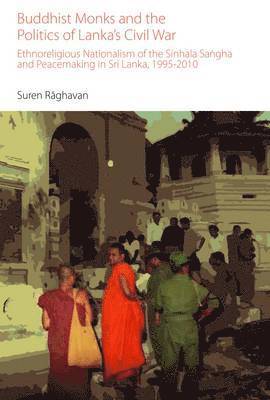
The war in Sri Lanka was violent and costly in human and material terms. This was one of the longest wars in modern South Asia. Often referred to as an 'ethnic' conflict between the majority Sinhalas and the minority Tamils, the war had a profound religious dimension. The majority of Sinhala Buddhist monks (the Sangha) not only opposed any meaningful powersharing but latterly advocated an all-out military solution. Such a nexus between Buddhism and violence is paradoxical; nevertheless it has a historical continuity. In 2009 when the war ended amid serious questions of war crimes and crimes against humanity, monks defended the military and its Buddhist leadership. Taking the lives of three key Sangha activists as the modern framework of a Sinhala Buddhist worldview, this book examines the limitations of Western theories of peacebuilding and such solutions as federalism and multinationalism. It analyzes Sinhala Buddhist ethnoreligious nationalism and argues for the urgent need to engage Buddhist politics - in Lanka and elsewhere - with approaches and mechanisms that accommodate the Sangha as key actors in political reform.Sinhala Buddhism is often studied from a sociological or anthropological standpoint.This book fills a gap by examining the faith and practice of the Sinhala Sangha and their followers from a political science perspective.
Häftad, Engelska, 2018
365 kr
Skickas inom 5-8 vardagar
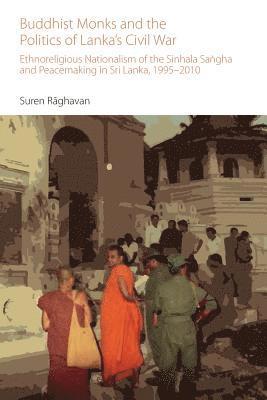
The war in Sri Lanka was violent and costly in human and material terms. This was one of the longest wars in modern South Asia. Often referred to as an `ethnic’ conflict between the majority Sinhalas and the minority Tamils, the war had a profound religious dimension. The majority of Sinhala Buddhist monks (the Saṅgha) not only opposed any meaningful powersharing but latterly advocated an all-out military solution. Such a nexus between Buddhism and violence is paradoxical; nevertheless it has a historical continuity. In 2009 when the war ended amid serious questions of war crimes and crimes against humanity, monks defended the military and its Buddhist leadership.Taking the lives of three key Saṅgha activists as the modern framework of a Sinhala Buddhist worldview, this book examines the limitations of Western theories of peacebuilding and such solutions as federalism and multinationalism. It analyzes Sinhala Buddhist ethnoreligious nationalism and argues for the urgent need to engage Buddhist politics – in Lanka and elsewhere – with approaches and mechanisms that accommodate the Saṅgha as key actors in political reform.Sinhala Buddhism is often studied from a sociological or anthropological standpoint. This book fills a gap by examining the faith and practice of the Sinhala Saṅgha and their followers from a political science perspective.
Inbunden, Engelska, 2020
1 312 kr
Skickas inom 5-8 vardagar
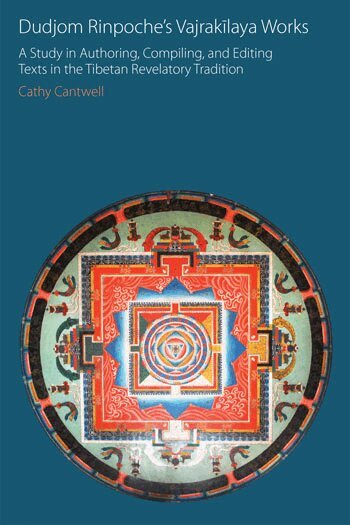
It is often assumed that a revelation must be new and innovative, and indeed, that the point of a new sacred text must be to revitalize the heritage. Yet in the Tibetan Nyingma Treasure Revelatory tradition, the ongoing vitality of textual production often has more to do with the fresh blessings, rather than altogether novel content. This book for the first time analyses precise continuities and changes in comparing the new and the old, considering examples of the creation and development of tantric revelations, including further re-workings in subsequent generations. In doing so, the focus enlarges to encompass materials from the broader religious heritage, as well as from specific lineages of related visionary lamas. By identifying such exact linkages and departures, it is possible to answer questions both of how and why developments may occur, not limiting the purview merely to the individual stories of the virtuoso lamas producing the books, but looking also to the tantric communities they are part of. The case studies in the book stem from the prolific writings of the famous 20th century scholar-lama, Dudjom Jigdral Yeshe Dorje Rinpoche, who contributed to numerous revelatory traditions of the past, as well as producing his own revelations. They concern a single tantric deity, Vajrakilaya, the most popular Nyingma deity, whose tantras and ritual practices stem from the earliest formulations of Tibetan tantric Buddhism, and who is closely connected with the culture heros and founding fathers of the Nyingmapa. This particular focus gives us the opportunity to discover patterns in the creation of new tantric texts which have significance beyond the specific examples.
Häftad, Engelska, 2020
631 kr
Skickas inom 5-8 vardagar
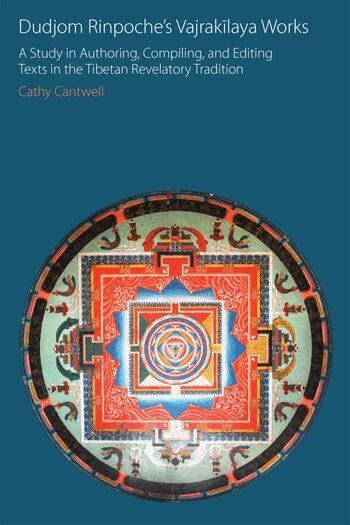
It is often assumed that a revelation must be new and innovative, and indeed, that the point of a new sacred text must be to revitalize the heritage. Yet in the Tibetan Nyingma Treasure Revelatory tradition, the ongoing vitality of textual production often has more to do with the fresh blessings, rather than altogether novel content. This book for the first time analyses precise continuities and changes in comparing the new and the old, considering examples of the creation and development of tantric revelations, including further re-workings in subsequent generations. In doing so, the focus enlarges to encompass materials from the broader religious heritage, as well as from specific lineages of related visionary lamas. By identifying such exact linkages and departures, it is possible to answer questions both of how and why developments may occur, not limiting the purview merely to the individual stories of the virtuoso lamas producing the books, but looking also to the tantric communities they are part of. The case studies in the book stem from the prolific writings of the famous 20th century scholar-lama, Dudjom Jigdral Yeshe Dorje Rinpoche, who contributed to numerous revelatory traditions of the past, as well as producing his own revelations. They concern a single tantric deity, Vajrakilaya, the most popular Nyingma deity, whose tantras and ritual practices stem from the earliest formulations of Tibetan tantric Buddhism, and who is closely connected with the culture heros and founding fathers of the Nyingmapa. This particular focus gives us the opportunity to discover patterns in the creation of new tantric texts which have significance beyond the specific examples.
Inbunden, Engelska, 2022
1 007 kr
Skickas inom 5-8 vardagar
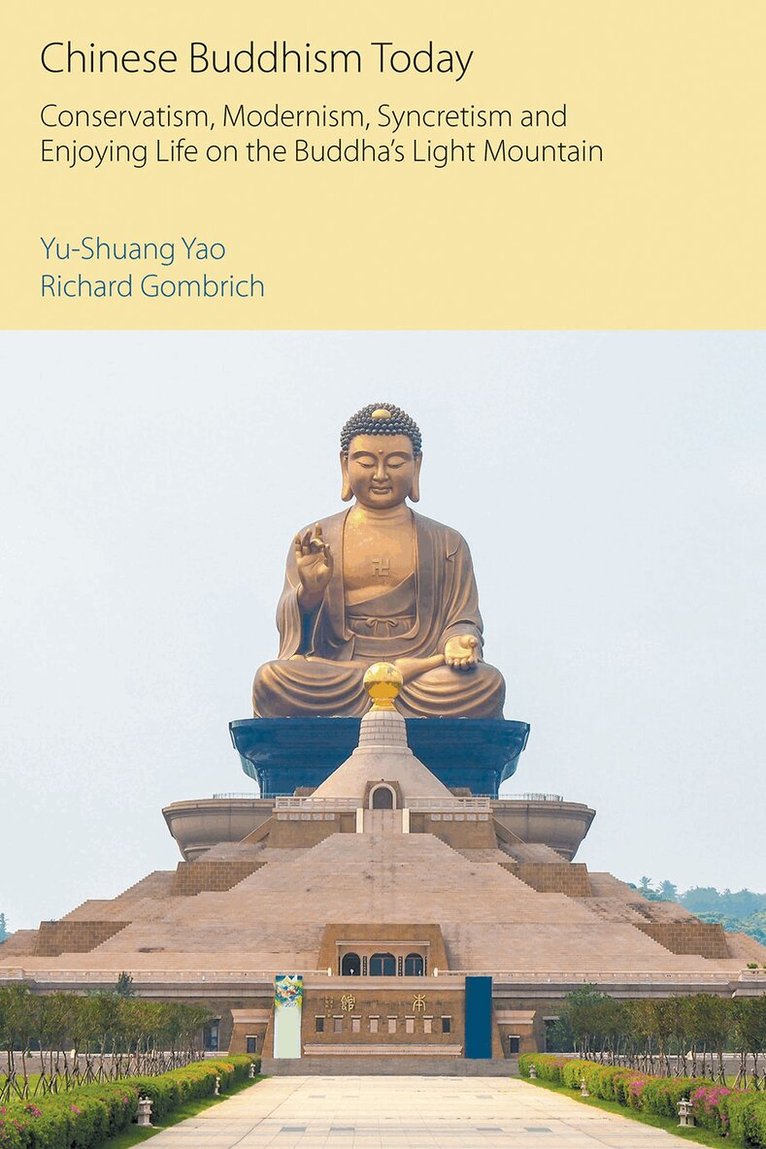
Fo Guang Shan, “Buddha’s Light Mountain”, is a Buddhist movement founded in Taiwan in 1967 and led by the Ven Hsing Yun (b.1927), who had fled to Taiwan from mainland China in 1949. It stands in the Chinese tradition of Mahāyāna Buddhism and more specifically is a form of Buddhism which in English is usually referred to as “Humanistic Buddhism” or as “engaged Buddhism”. Humanistic Buddhism owes its origin to the Chinese monk Tai Xu (1890-1947). He found the Buddhism which surrounded him in China dreary and moribund, preoccupied with rituals for the dead, and offering nothing to help or guide people living in the world outside monasteries. His determination to reverse this decay centred on the idea that it was the vocation of a Mahayana Buddhist to do good to others, finding their own spiritual benefit in benefitting society.Hsing Yun has been a devoted disciple of Tai Xu. It is telling that he founded a seminary before he founded a monastery, and has laid huge emphasis on education. As the sub-title of this book indicates, in order to make Buddhism widely attractive and relevant he has incorporated every influence available. Gifted with a benign personality, he has turned his seemingly boundless energy and prodigious versatility to creating an institution which presents Buddhism as potentially a source for benefitting society through making life enjoyable. This book hopes to convey the movement’s ethos primarily by focusing on his views and activities.
Häftad, Engelska, 2022
365 kr
Skickas inom 5-8 vardagar
Fo Guang Shan, “Buddha’s Light Mountain”, is a Buddhist movement founded in Taiwan in 1967 and led by the Ven Hsing Yun (b.1927), who had fled to Taiwan from mainland China in 1949. It stands in the Chinese tradition of Mahāyāna Buddhism and more specifically is a form of Buddhism which in English is usually referred to as “Humanistic Buddhism” or as “engaged Buddhism”. Humanistic Buddhism owes its origin to the Chinese monk Tai Xu (1890-1947). He found the Buddhism which surrounded him in China dreary and moribund, preoccupied with rituals for the dead, and offering nothing to help or guide people living in the world outside monasteries. His determination to reverse this decay centred on the idea that it was the vocation of a Mahayana Buddhist to do good to others, finding their own spiritual benefit in benefitting society.Hsing Yun has been a devoted disciple of Tai Xu. It is telling that he founded a seminary before he founded a monastery, and has laid huge emphasis on education. As the sub-title of this book indicates, in order to make Buddhism widely attractive and relevant he has incorporated every influence available. Gifted with a benign personality, he has turned his seemingly boundless energy and prodigious versatility to creating an institution which presents Buddhism as potentially a source for benefitting society through making life enjoyable. This book hopes to convey the movement’s ethos primarily by focusing on his views and activities.
Inbunden, Engelska, 2024
1 170 kr
Skickas inom 5-8 vardagar
While it has long been acknowledged that Chan differs in many ways from more mainstream forms of Buddhism, recent scholarship has also resulted in an increasing awareness of the originality of early Buddhist teachings found in the Nikayas and their distinctiveness from the later doctrine of classical Theravada. This book is inspired by passages in Nikaya and early Chan texts that can be read as expressing surprisingly similar and at the same time very unconventional ideas about meditation, consciousness, and reality. While due to their unorthodox character, these passages have often been ignored or explained away when studied in the context of just one tradition, the new perspective provided by their comparative analysis allows a more direct reading to be considered, thereby drawing out their radical implications. This book argues that the unconventional concepts found in Nikaya and early Chan texts are part of a unique and coherent meditative paradigm that is very different from the one commonly associated with Buddhism and dominant in its history. One of its central ideas is that certain crucial meditative states cannot be directly attained through methods involving acts of will and mental effort such as active concentration, but their occurrence is dependent on a specific way of life, state of mind and existential condition. To make better sense of Nikaya and early Chan views that are often at odds with commonly held beliefs about mental functioning and the structure of reality, and to assess their plausibility, they are compared with relevant developments in Western philosophy and cognitive science.
Häftad, Engelska, 2024
367 kr
Skickas
While it has long been acknowledged that Chan differs in many ways from more mainstream forms of Buddhism, recent scholarship has also resulted in an increasing awareness of the originality of early Buddhist teachings found in the Nikayas and their distinctiveness from the later doctrine of classicalTheravada. This book is inspired by passages in Nikaya and early Chan texts that can be read as expressing surprisingly similar and at the same time very unconventional ideas about meditation, consciousness, and reality. While due to their unorthodox character, these passages have often been ignored or explained away when studied in the context of just one tradition, the new perspective provided by their comparative analysis allows a more direct reading to be considered, thereby drawing out their radical implications. This book argues that the unconventional concepts found in Nikaya and early Chan texts are part of a unique and coherent meditative paradigm that is very different from the one commonly associated with Buddhism and dominant in its history. One of its central ideas is that certain crucial meditative states cannot be directly attained through methods involving acts of will and mental effort such as active concentration, but their occurrence is dependent on a specific way of life, state of mind and existential condition. To make better sense of Nikaya and early Chan views that are often at odds with commonly held beliefs about mental functioning and the structure of reality, and to assess their plausibility, they are compared with relevant developments in Western philosophy and cognitive science.
Inbunden, Engelska, 2009
1 160 kr
Skickas inom 5-8 vardagar
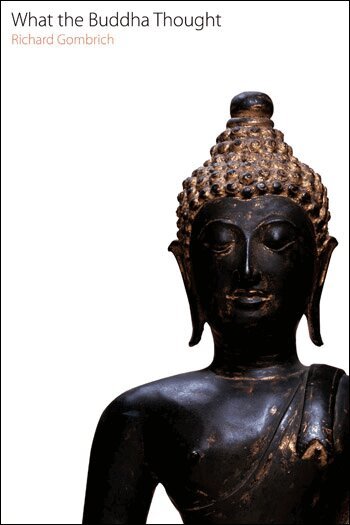
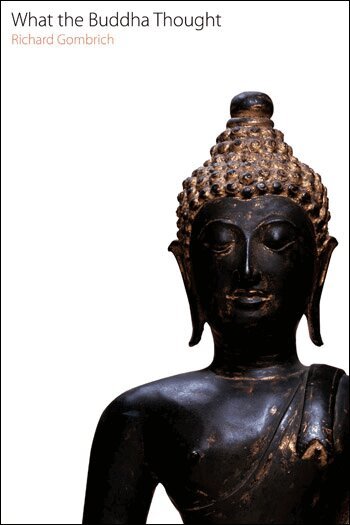
In "What the Buddha Thought", Richard Gombrich argues that the Buddha was one of the most brilliant and original thinkers of all time. Intended to serve as an introduction to the Buddha's thought, and hence even to Buddhism itself, the book also has larger aims: it argues that we can know far more about the Buddha than it is fashionable among scholars to admit, and that his thought has a greater coherence than is usually recognised. It contains much new material. Interpreters both ancient and modern have taken little account of the historical context of the Buddha's teachings; but by relating them to early brahminical texts, and also to ancient Jainism, Gombrich gives a much richer picture of the Buddha's meaning, especially when his satire and irony are appreciated. Incidentally, since many of the Buddha's allusions can only be traced in the Pali versions of surviving texts, the book establishes the importance of the Pali Canon as evidence. The book contains much new material. The author stresses the Buddha's capacity for abstraction: though he made extensive use of metaphor, he did not found his arguments upon it, as earlier thinkers had done.He ethicized and radically reinterpreted older ideas of karma (human action) and rebirth. Similarly, building on older texts, he argued for the fundamental importance of love and compassion, and analysed fire as a process which could stand as a model for every component of conscious experience. Morally, the Buddha's theory of karma provided a principle of individuation and asserted each individual's responsibility for his own destiny. To make the book completely accessible to the general reader, the author provides an introductory section of 'Background Information,' for easy reference.
Häftad, Engelska, 2009
335 kr
Skickas inom 5-8 vardagar
In "What the Buddha Thought", Richard Gombrich argues that the Buddha was one of the most brilliant and original thinkers of all time. Intended to serve as an introduction to the Buddha's thought, and hence even to Buddhism itself, the book also has larger aims: it argues that we can know far more about the Buddha than it is fashionable among scholars to admit, and that his thought has a greater coherence than is usually recognised. It contains much new material. Interpreters both ancient and modern have taken little account of the historical context of the Buddha's teachings; but by relating them to early brahminical texts, and also to ancient Jainism, Gombrich gives a much richer picture of the Buddha's meaning, especially when his satire and irony are appreciated. Incidentally, since many of the Buddha's allusions can only be traced in the Pali versions of surviving texts, the book establishes the importance of the Pali Canon as evidence. The book contains much new material. The author stresses the Buddha's capacity for abstraction: though he made extensive use of metaphor, he did not found his arguments upon it, as earlier thinkers had done.He ethicized and radically reinterpreted older ideas of karma (human action) and rebirth. Similarly, building on older texts, he argued for the fundamental importance of love and compassion, and analysed fire as a process which could stand as a model for every component of conscious experience. Morally, the Buddha's theory of karma provided a principle of individuation and asserted each individual's responsibility for his own destiny. To make the book completely accessible to the general reader, the author provides an introductory section of 'Background Information,' for easy reference.
Inbunden, Engelska, 2010
1 160 kr
Skickas inom 5-8 vardagar
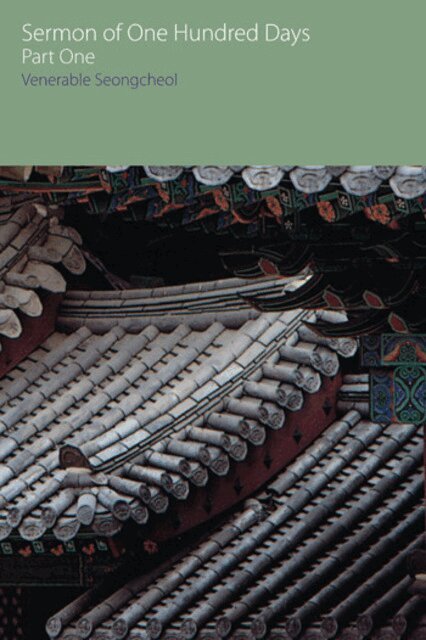
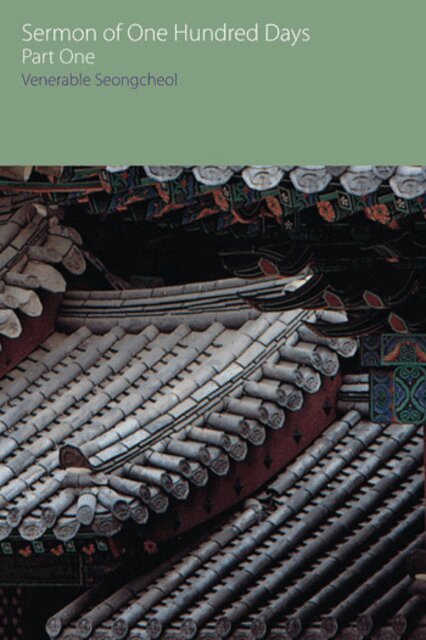
"Sermon of One Hundred Days" is the first translation into English from Korean of a seminal text in Korean Buddhism. Buddhism was introduced into Korea through China in about the 4th-5th century C.E. and within 200 years became so advanced that it influenced the development of Chinese Buddhism. Chan Buddhism was introduced into Korea around the 8th century and Seon Master Jinul (1158-1210) is honoured as having set the curriculum for the education of Buddhist monks and established Korean Buddhism as it was known for the next millennium. In this "Sermon of One Hundred Days", published in 1967, Master Songcheol (1912-93) develops Korean Buddhism further by teaching what Buddhist truth is. This Sermon comprehends the vast developments of Buddhism in India and China, including early Buddhism, Abhidharma, Madhyamaka, Yogacara Buddhism, Chinese doctrinal schools of Tiantai and Huayan and Chinese Chan and Korean Seon Buddhism. The Master analyses the logical structure of various historical teachings, which are connected by the principle of 'the middle way,' and encourages his audience to pursue solely the truth to which the Buddha awakened.
Häftad, Engelska, 2010
365 kr
Skickas inom 5-8 vardagar
"Sermon of One Hundred Days" is the first translation into English from Korean of a seminal text in Korean Buddhism. Buddhism was introduced into Korea through China in about the 4th-5th century C.E. and within 200 years became so advanced that it influenced the development of Chinese Buddhism. Chan Buddhism was introduced into Korea around the 8th century and Seon Master Jinul (1158-1210) is honoured as having set the curriculum for the education of Buddhist monks and established Korean Buddhism as it was known for the next millennium. In this "Sermon of One Hundred Days", published in 1967, Master Songcheol (1912-93) develops Korean Buddhism further by teaching what Buddhist truth is. This Sermon comprehends the vast developments of Buddhism in India and China, including early Buddhism, Abhidharma, Madhyamaka, Yogacara Buddhism, Chinese doctrinal schools of Tiantai and Huayan and Chinese Chan and Korean Seon Buddhism. The Master analyses the logical structure of various historical teachings, which are connected by the principle of 'the middle way,' and encourages his audience to pursue solely the truth to which the Buddha awakened.
Inbunden, Engelska, 2012
1 160 kr
Skickas inom 5-8 vardagar
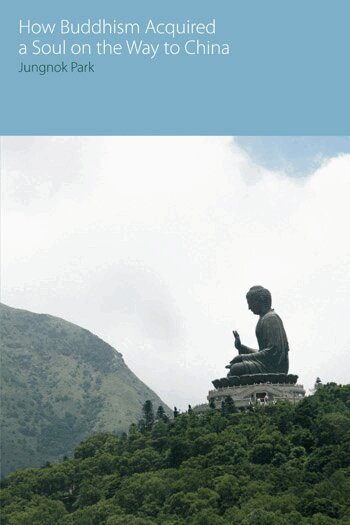
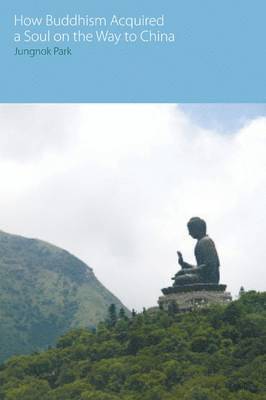
Why did some Buddhist translators in China interpolate terms designating an agent which did not appear in the original texts? The Chinese made use of raw material imported from India; however, they added some seasoningsA" peculiar to China and developed their own recipesA" about how to construct the ideas of Buddhism. While Indian Buddhists constructed their ideas of self by means of empiricism, anti-Brahmanism and analytic reasoning, the Chinese Buddhists constructed their ideas of self by means of non-analytic insights, utilising pre-established epistemology and cosmogony. Furthermore, many of the basic renderings had specific implications that were peculiar to China. For example, while shen in philosophical Daoism originally signified an agent of thought, which disintegrates after bodily death, Buddhists added to it the property of permanent existence. Since many Buddhists in China read the reinterpreted term shen with the implications of the established epistemology and cosmogony, they came to develop their own ideas of self. After the late 6C, highly educated Buddhist theorists came to avoid including the idea of an imperishable soul in their doctrinal system.However, the idea of a permanent agent of perception remained vividly alive even during the development of Chinese Buddhism after the 7C.
Häftad, Engelska, 2012
400 kr
Skickas inom 5-8 vardagar
Why did some Buddhist translators in China interpolate terms designating an agent which did not appear in the original texts? The Chinese made use of raw material imported from India; however, they added some seasoningsA" peculiar to China and developed their own recipesA" about how to construct the ideas of Buddhism. While Indian Buddhists constructed their ideas of self by means of empiricism, anti-Brahmanism and analytic reasoning, the Chinese Buddhists constructed their ideas of self by means of non-analytic insights, utilising pre-established epistemology and cosmogony. Furthermore, many of the basic renderings had specific implications that were peculiar to China. For example, while shen in philosophical Daoism originally signified an agent of thought, which disintegrates after bodily death, Buddhists added to it the property of permanent existence. Since many Buddhists in China read the reinterpreted term shen with the implications of the established epistemology and cosmogony, they came to develop their own ideas of self. After the late 6C, highly educated Buddhist theorists came to avoid including the idea of an imperishable soul in their doctrinal system.However, the idea of a permanent agent of perception remained vividly alive even during the development of Chinese Buddhism after the 7C.