• Fri frakt över 249 kr
  • •
  • Snabba leveranser
  • •
  • Billiga böcker
Kundservice

Du är på sajten för privatpersoner.

Företag, bibliotek eller offentlig verksamhet?

Du handlar på classic.bokus.com, där alla dina funktioner finns intakta.
Till classic.bokus.com
Bokus logotyp. Gå till startsidan.
  • Erbjudanden
  • Nyheter
  • Student
  • Topplistor
  • Barn & ungdom
  • Bokus Play
  • E-böcker
  • Pocketböcker
  • Spel & pussel

Må bättre, för mindre! Upp till 50% rabatt på hälsoböcker

Sidfot

Mina sidor

    Hjälp

    • Kundservice
    • Vanliga frågor och svar
    • Frakt och leverans
    • Retur vid ångerrätt
    • Reklamera vara
    • Betalning
    • Köpvillkor
    • Allmänna villkor
    • Information om webbplatsens tillgänglighet

    Om Bokus

    • Om oss
    • Pressrum
    • För studenter
    • För företag
    • För bibliotek och offentlig verksamhet
    • För leverantörer
    • Hållbarhet

    Populärt

    • Aktuella erbjudanden
    • Presentkort
    • Studentlitteratur
    • Nya böcker
    • Topplistor
    • Signerade böcker
    • Engelska böcker

    Inspiration

    • Boktips
    • BookTok
    • Populära bokserier
    • Barnbokskaraktärer
    • Populära författare
    Logotyp för Bokus
    Följ oss på Facebook (extern länk)Följ oss på Instagram (extern länk)Följ oss på YouTube (extern länk)Följ oss på TikTok (extern länk)
    bokus @ CookiesAnpassa cookiesIntegritetspolicyKöpvillkor
    Till Citymail hemsida (extern länk)Till Budbee hemsida (extern länk)Till Postnord hemsida (extern länk)Till Schenker hemsida (extern länk)Till Early Bird hemsida (extern länk)Till Walleys hemsida (extern länk)
    1. Filosofi och religion
    2. Religion och tro
    3. Buddhism

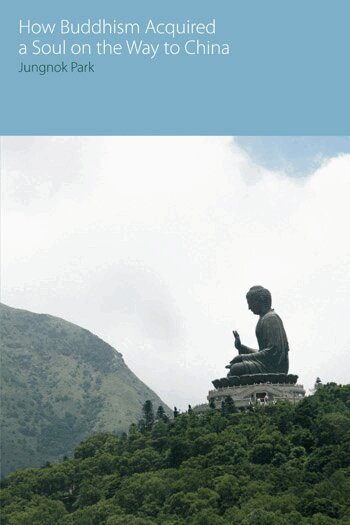
    How Buddhism Acquired a Soul on the Way to China

    AvJungnok Park,Richard Gombrich

    Inbunden, Engelska, 2012

    Del i serien Oxford Centre for Buddhist Studies Monographs

    1 198 kr

    Beställningsvara. Skickas inom 5-8 vardagar. Fri frakt över 249 kr.

    Fler format och utgåvor

    Häftad

    409 kr

    Beskrivning

    How Buddhism Acquired a Soul on the Way to China tells the story of the spread of Buddhist religious thinking and practice from India to China and how, along the way, a religion was changed. While Indian Buddhists had constructed their ideas of self by means of empiricism, anti-Brahmanism and analytic reasoning, Chinese Buddhists did so by means of non-analytic insights, utilising pre-established epistemology and cosmogony. Furthermore, many specific Buddhist ideas were transformed when exchanged from an Indian to a Chinese context, often through the work of translators concept-matching Buddhist and Daoist terms. One of the key changes was the Chinese reinterpretation of the concept of shen - originally an agent of thought which died with the body - into an eternal essence of human spirit, a soul. Though the notion of an imperishable soul was later disputed by Chinese Buddhist scholars the idea of a permanent agent of perception flourished in China. This historical analysis of the concept of self as it developed between Indian and Chinese Buddhism will be of interest to readers of Buddhist Philosophy as well as the History of Ideas.

    Produktinformation

    • Utgivningsdatum:2012-03-30
    • Mått:156 x 234 x 24 mm
    • Vikt:529 g
    • Format:Inbunden
    • Språk:Engelska
    • Serie:Oxford Centre for Buddhist Studies Monographs
    • Antal sidor:258
    • Förlag:Equinox Publishing Ltd
    • ISBN:9781845539962

    Utforska kategorier

    • Buddhism inom Filosofi och religion
    • Filosofiska discipliner inom Filosofi och religion

    Mer om författaren

    Jungnok Park, 1971-2008, was a Korean student of outstanding intelligence and originality. He began his university education only after spending 10 years (1989-1999) as a Buddhist monk. He had a brilliant career in the Dept. of Philosophy at Seoul National University; his MA thesis was on Nirvana and Buddhist Ethics. In 2003 he came to Wolfson College, Oxford, on a scholarship from the Korea Foundation. Already proficient in Classical Chinese and fluent in reading Japanese, he soon learnt enough Sanskrit and Pali to use them for his research. This book is based on his Oxford D.Phil. thesis, which he completed early in 2008.

    Innehållsförteckning

    • INTRODUCTION Part I: Chinese Buddhist Translation in its Cultural Context Preamble Chapter 1: The characteristics of Chinese Buddhist translation Chapter 2: The verification of the traditional attributions of translatorship Part II: The Development of the Indian Buddhist Concept of Self Preamble Chapter 3: Self in early Buddhist soteriology Chapter 4: Development of Buddhist self Chapter 5: Nirvana and a permanent self Part III: The Development of the Chinese Buddhist Concept of Self Preamble Chapter 6: Chinese ideas about self before the arrival of Buddhism Chapter 7: Non-self but an imperishable soul in Chinese Buddhist translations Chapter 8: A survey of interpolations and adaptations of an agent in samsara Chapter 9: The characteristics of the Chinese Buddhist concept of self CONCLUSION