Oxford Guides to Cognitive Behavioural Therapy - Böcker
Visar alla böcker i serien Oxford Guides to Cognitive Behavioural Therapy. Handla med fri frakt och snabb leverans.
6 produkter
6 produkter
787 kr
Skickas inom 5-8 vardagar
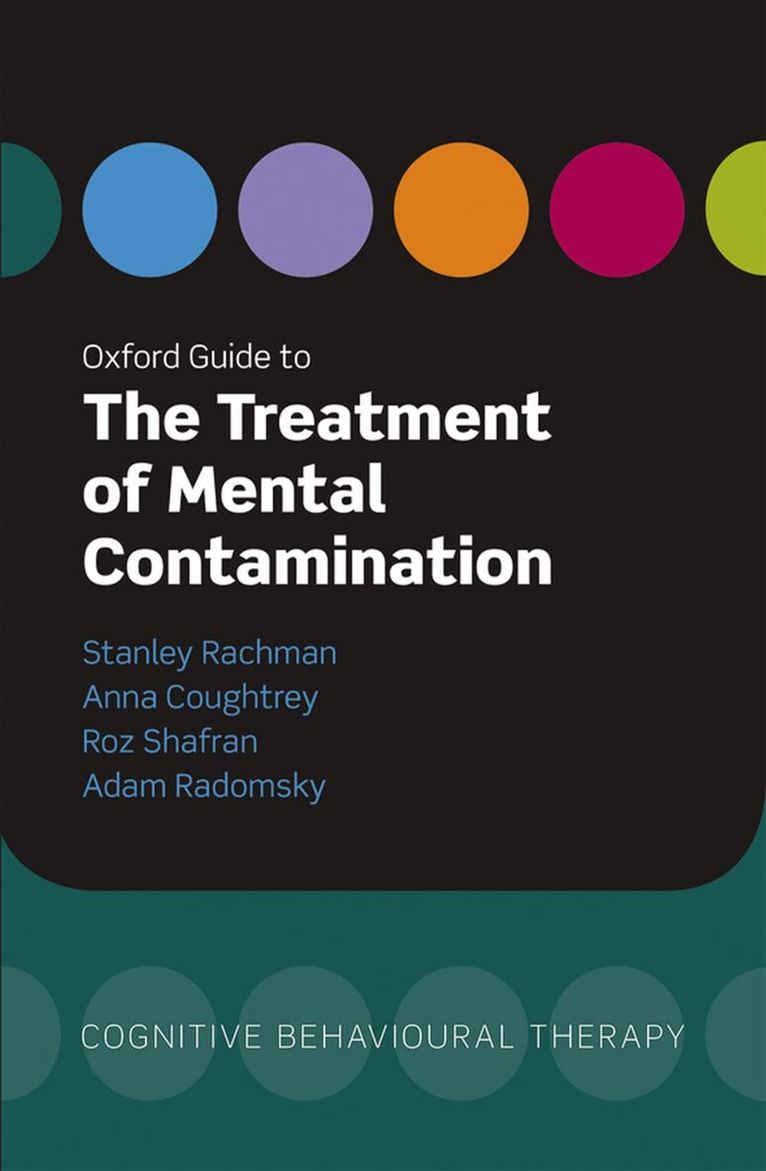
A fear of contamination drives the most common manifestation of obsessive compulsive disorders(OCD), compulsive washing. OCD is a distressing anxiety disorder that affects 1-2 percent of the population and can be disabling. Intense and complex forms of the disorder benefit from advanced analyses of contamination and its treatment. This book, part of a series on modern psychological treatments published by OUP, provides a detailed account of the nature and causes of the various forms of a fear of contamination and their consequences. Methods of treatment are described and fully illustrated by case histories. The inclusion of original analyses and explanations of a newly recognised form of the fear, mental contamination, is an important feature of the book and will enable therapists to expand their ability to assess and treat the abnormal fears of contamination.Written by clinicians with extensive experience, this volume is valuable for all clinical psychologists and psychotherapists with an interest in OCD
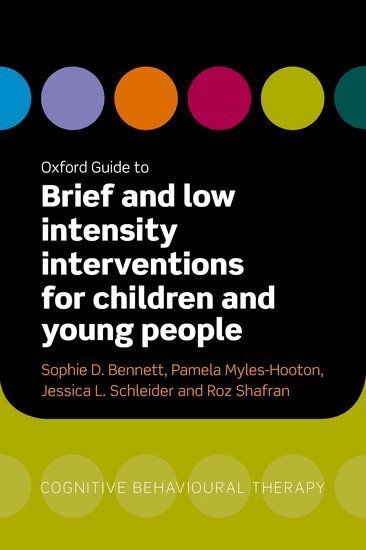
Oxford Guide to Brief and Low Intensity Interventions for Children and Young People
Häftad, Engelska, 2022
793 kr
Skickas
Many children with mental health problems do not receive support and there are often extensive waiting lists for Children and Young People's Mental Health Services, which are increasingly overstretched. Unfortunately, a large proportion of children with mental health disorders do not access evidence-based treatment. Low-intensity psychological interventions are now recommended by a number of national guidelines and in the UK, are being implemented by a new workforce of Child Wellbeing Practitioners (CWPs).The Oxford Guide to Brief and Low Intensity Interventions for Children and Young People provides a comprehensive resource for therapists, services and training providers regarding the use, delivery, and implementation of brief and low intensity psychological interventions within a child and adolescent context. It includes concise, focused chapters from leading experts in the field, combining the most up-to-date research with practical considerations regarding the delivery of low intensity interventions. The first of its kind, this book will be an indispensable resource for practitioners, services, and training courses internationally.
890 kr
Skickas
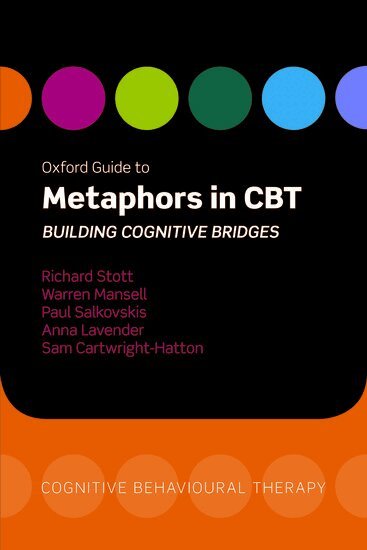
The business of cognitive therapy is to transform meanings. What better way to achieve this than through a metaphor? Metaphors straddle two different domains at once, providing a conceptual bridge from a problematic interpretation to a fresh new perspective that can cast one's experiences in a new light. Even the simplest metaphor can be used again and again with different clients, yet still achieve the desired effect. One such example is the 'broken leg' metaphor for depression. Clients with depression are understandably frustrated with their symptoms. They may often push themselves to get better or tell themselves that they should be better by now. As a therapist, it is fair to ask, would the client be so harsh and demanding on herself after getting a broken leg? A broken leg needs time to heal and you need to begin to walk on it gradually as it builds up in strength. "You can't run before you can walk", and if you try, you are likely to make it worse. For many clients this simple metaphor is enlightening, changing their view of their symptoms as a sign of their own laziness and worthlessness, to a view of them as part of an understandable illness, that while open to improvement, cannot get better over night. This book shows just how metaphors can be used productively in CBT as an integral part of the treatment. It describes the use of metaphors for a wide range of problems, including anxiety and depression, and provides countless examples of metaphors that have been used by others in CBT. It brings together in one place hundreds of metaphors that experienced therapists have used to great success. It will be a valuable sourcebook for all cognitive behaviour therapists, as well as those training in CBT.
775 kr
Skickas inom 7-10 vardagar
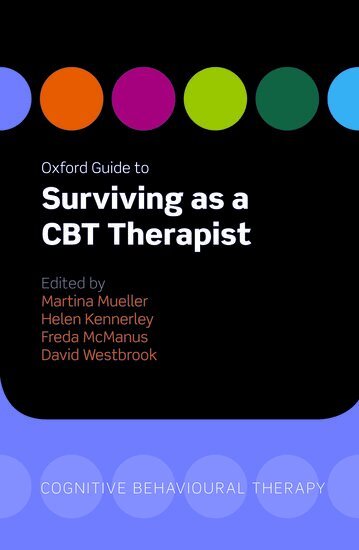
For the newly trained Cognitive Behavioural Therapist, there are a wealth of challenges and difficulties faced, as they try and apply their new found skills in the outside world. These might include the stresses of working in isolation, and finding it difficult to widen their scope or bounce ideas of other CBT therapists; or the need for practical advice on setting up group therapy; the possible conflicts betweens ethical practice and theory; how to retain ones integrity as a therapist, while maintaing a viable business practice; dealing with diverse communities, or becoming a supervisor. The Oxford Guide to Surviving CBT Practice is the one-stop resource for the newly trained therapist. It offers practical guidance on a range of issues and challenges faced by the therapist. Written by people with vast experience of training and practising CBT, it draws on real life situations to help the reader hone and develop their skills, adjust to life as a therapist, and maintain a successful and satisfying career whilst helping others.With thousands of new CBT therapists being trained over the coming years, this book will be a constant companion for all those starting life as a therapist, one they will want to have to hand at all times.
890 kr
Skickas
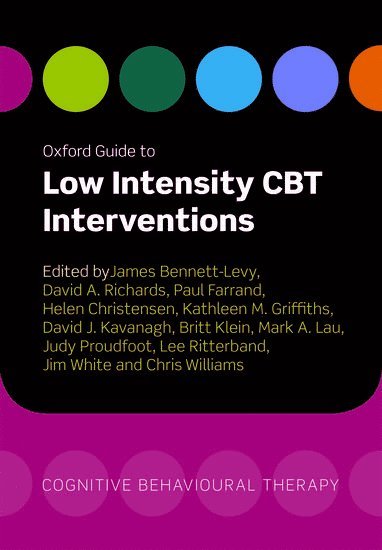
Mental disorders such as depression and anxiety are increasingly common. Yet there are too few specialists to offer help to everyone, and negative attitudes to psychological problems and their treatment discourage people from seeking it. As a result, many people never receive help for these problems. The Oxford Guide to Low Intensity CBT Interventions marks a turning point in the delivery of psychological treatments for people with depression and anxiety. Until recently, the only form of psychological intervention available for patients with depression and anxiety was traditional one-to-one 60 minute session therapy - usually with private practitioners for those patients who could afford it. Now Low Intensity CBT Interventions are starting to revolutionize mental health care by providing cost effective psychological therapies which can reach the vast numbers of people with depression and anxiety who did not previously have access to effective psychological treatment. The Oxford Guide to Low Intensity CBT Interventions is the first book to provide a comprehensive guide to Low Intensity CBT interventions. It brings together researchers and clinicians from around the world who have led the way in developing evidence-based low intensity CBT treatments. It charts the plethora of new ways that evidence-based low intensity CBT can be delivered: for instance, guided self-help, groups, advice clinics, brief GP interventions, internet-based or book-based treatment and prevention programs, with supported provided by phone, email, internet, sms or face-to-face. These new treatments require new forms of service delivery, new ways of communicating, new forms of training and supervision, and the development of new workforces. They involve changing systems and routine practice, and adapting interventions to particular community contexts. The Oxford Guide to Low Intensity CBT Interventions is a state-of-the-art handbook, providing low intensity practitioners, supervisors, managers commissioners of services and politicians with a practical, easy-to-read guide - indispensible reading for those who wish to understand and anticipate future directions in health service provision and to broaden access to cost-effective evidence-based psychological therapies.
842 kr
Skickas inom 7-10 vardagar
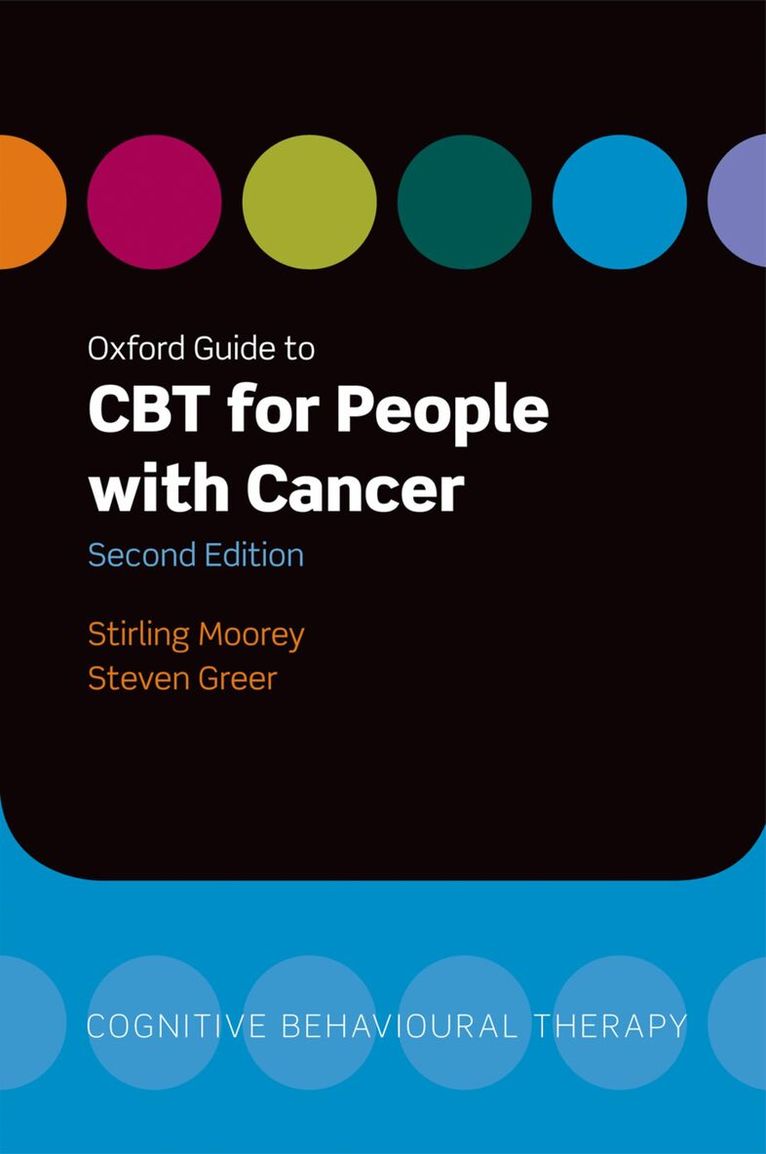
Cognitive behaviour therapy (CBT) is a brief, focused and flexible approach that has much to offer in helping people cope with cancer. This book demonstrates how interventions that CBT therapists use in emotional disorders can be adapted for use in the challenging clinical environment of oncology and palliative care. Using a CBT model to understand reactions to cancer, the authors present cognitive, behavioural, emotional, and interpersonal techniques to help people adjust to the threats cancer presents to their survival and identity. Case examples illustrate how these methods are used to reduce anxiety and depression, enable a fighting spirit, teach effective coping skills, and develop open communication between patients and their partners.Now part of the Oxford Guide to Cognitive Behavioural Therapy series, this new edition has been updated in light of new clinical and research findings in the fields of psycho-oncology and cognitive behaviour therapy over the last ten years, with guidance on using CBT for common symptoms such as insomnia, fatigue and nausea. Mental health professionals working in medical settlings and health care professionals interested in psychological management will find this a useful resource for understanding and treating the distress caused by life limiting illness.