Oxford Guides to Philosophy - Böcker
Visar alla böcker i serien Oxford Guides to Philosophy. Handla med fri frakt och snabb leverans.
12 produkter
12 produkter
1 252 kr
Skickas inom 5-8 vardagar
Written against the background of her controversial opposition to the University of Oxford's awarding of an honorary degree to Harry S. Truman, Elizabeth Anscombe's Intention laid the groundwork she thought necessary for a proper ethical evaluation of actions like the bombing of Hiroshima and Nagasaki. The devoutly Catholic Anscombe thought that these actions made Truman a murderer, and thus unworthy of the university's honor-but that this verdict depended on an understanding of intentional action that had been widely rejected in contemporary moral philosophy. Intention was her attempt to work out that understanding and argue for its superiority over a conception of intention as an inner mental state. Though recognized universally as one of the definitive works in analytic philosophy of action, Anscombe's book is often dismissed as unsystematic or obscure, and usually read through the lens of philosophical concerns very far from her own. Schwenkler's Guide offers a careful and critical presentation of Anscombe's main lines of argument at a level appropriate to advanced undergraduates but also capable of benefiting specialists in action theory, moral philosophy, and the history of analytic philosophy. Further, it situates Intention in a context that emphasizes Anscombe's debts to Aristotle, Aquinas, and Wittgenstein, and her engagement with the work of contemporaries like Gilbert Ryle and R.M. Hare, inviting new avenues of engagement with the ideas of historically important philosophers.
311 kr
Skickas inom 5-8 vardagar
Written against the background of her controversial opposition to the University of Oxford's awarding of an honorary degree to Harry S. Truman, Elizabeth Anscombe's Intention laid the groundwork she thought necessary for a proper ethical evaluation of actions like the bombing of Hiroshima and Nagasaki. The devoutly Catholic Anscombe thought that these actions made Truman a murderer, and thus unworthy of the university's honor-but that this verdict depended on an understanding of intentional action that had been widely rejected in contemporary moral philosophy. Intention was her attempt to work out that understanding and argue for its superiority over a conception of intention as an inner mental state. Though recognized universally as one of the definitive works in analytic philosophy of action, Anscombe's book is often dismissed as unsystematic or obscure, and usually read through the lens of philosophical concerns very far from her own. Schwenkler's Guide offers a careful and critical presentation of Anscombe's main lines of argument at a level appropriate to advanced undergraduates but also capable of benefiting specialists in action theory, moral philosophy, and the history of analytic philosophy. Further, it situates Intention in a context that emphasizes Anscombe's debts to Aristotle, Aquinas, and Wittgenstein, and her engagement with the work of contemporaries like Gilbert Ryle and R.M. Hare, inviting new avenues of engagement with the ideas of historically important philosophers.
1 130 kr
Skickas inom 5-8 vardagar
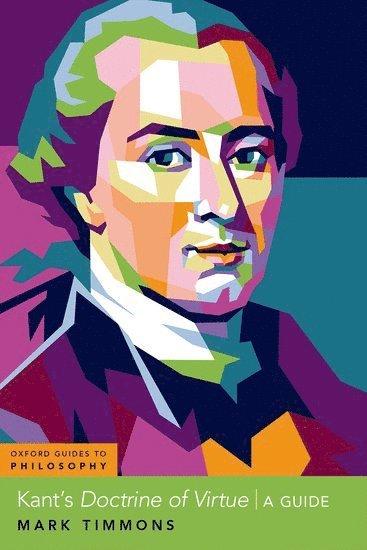
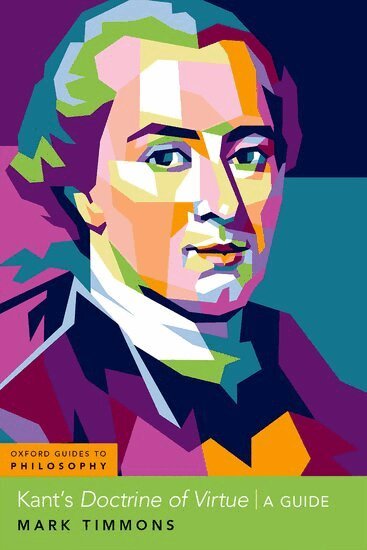
Immanuel Kant's final publication in ethics was The Doctrine of Virtue, Part II of the 1797 The Metaphysics of Morals. This text presents Kant's normative ethical theory. This guide is meant to be read alongside Kant's text, combining accessible explanations and novel interpretations of this difficult text. It is the first book in English devoted to The Doctrine of Virtue, one of Kant's most significant works. Timmons divides the guide into five parts. Part I reviews Kant's life, the history and significance of The Doctrine of Virtue, and situates Kant's ethics within his general metaphysical and epistemological views. Part II is devoted to the General Introduction to The Metaphysics of Morals, which is essential for understanding Kant's ethics. Part III and Part IV turn to The Doctrine of Virtue itself, exploring Kant's defense of a system of duties and corresponding virtues. Part V examines Kant's conception of moral education, the practice of virtue, and the conclusion to the book where Kant explains why the discipline of ethics does not include religion as a doctrine of duties to God. Timmons concludes the book highlighting key aspects of The Doctrine of Virtue, situating Kant's ethical theory in relation to other normative ethical theories. This guide is a vital resource for both students and scholars interested in ethics and the history of philosophy.
359 kr
Skickas inom 5-8 vardagar
Immanuel Kant's final publication in ethics was The Doctrine of Virtue, Part II of the 1797 The Metaphysics of Morals. This text presents Kant's normative ethical theory. This guide is meant to be read alongside Kant's text, combining accessible explanations and novel interpretations of this difficult text. It is the first book in English devoted to The Doctrine of Virtue, one of Kant's most significant works. Timmons divides the guide into five parts. Part I reviews Kant's life, the history and significance of The Doctrine of Virtue, and situates Kant's ethics within his general metaphysical and epistemological views. Part II is devoted to the General Introduction to The Metaphysics of Morals, which is essential for understanding Kant's ethics. Part III and Part IV turn to The Doctrine of Virtue itself, exploring Kant's defense of a system of duties and corresponding virtues. Part V examines Kant's conception of moral education, the practice of virtue, and the conclusion to the book where Kant explains why the discipline of ethics does not include religion as a doctrine of duties to God. Timmons concludes the book highlighting key aspects of The Doctrine of Virtue, situating Kant's ethical theory in relation to other normative ethical theories. This guide is a vital resource for both students and scholars interested in ethics and the history of philosophy.
1 240 kr
Skickas inom 5-8 vardagar
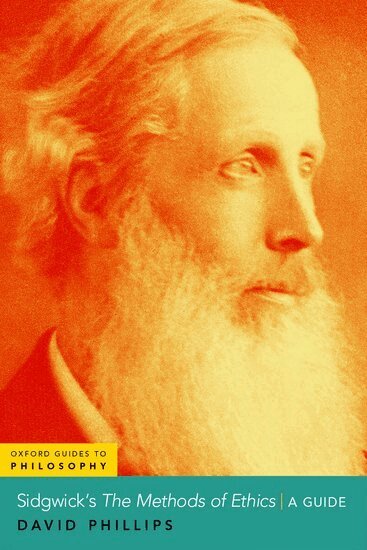
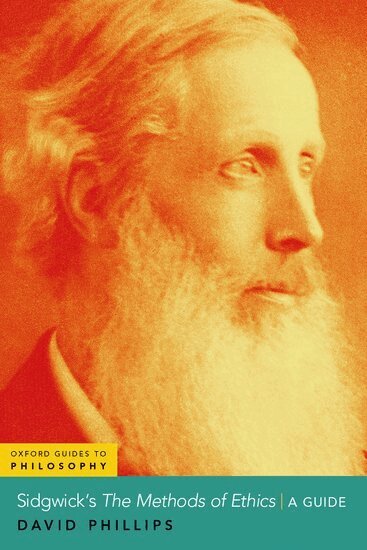
Henry Sidgwick's The Methods of Ethics has been a central part of the utilitarian canon since its publication in 1874. This book, part of the Oxford Guides to Philosophy series, is a consice companion to Sidgwick's masterpiece, written primarily to aid advanced undergraduate students and interested general readers in navigatiing and interpreting the original text. Author David Phillips connects Sidgwick's work to work in contemporary moral philosophy and in the history of moral philosophy, paying particular attention to his relationships with key predecessors, including Kant and Mill, and with Moore and Ross, his most influencial successors in the British intuitionist tradition. The book's first eight chapters end with brief suggestions for further reading. At the end of the final three chapters there are more substantial overviews of the secondary literature on the aspects of Sidgwick's work that have generated the most interest among his commentators: metaethics and moral epistemology; consequentialism versus deontology; and egoism and the dualism of practical reason. The result is an Oxford Guide that will be a helpful resource for both students and scholars.
366 kr
Skickas inom 5-8 vardagar
Henry Sidgwick's The Methods of Ethics has been a central part of the utilitarian canon since its publication in 1874. This book, part of the Oxford Guides to Philosophy series, is a concise companion to Sidgwick's masterpiece, written primarily to aid advanced undergraduate students and interested general readers in navigating and interpreting the original text. Author David Phillips connects Sidgwick's work to work in contemporary moral philosophy and in the history of moral philosophy, paying particular attention to his relationships with key predecessors, including Kant and Mill, and with Moore and Ross, his most influential successors in the British intuitionist tradition. The book's first eight chapters end with brief suggestions for further reading. At the end of the final three chapters there are more substantial overviews of the secondary literature on the aspects of Sidgwick's work that have generated the most interest among his commentators: metaethics and moral epistemology; consequentialism versus deontology; and egoism and the dualism of practical reason. The result is an Oxford Guide that will be a helpful resource for both students and scholars.Â
929 kr
Skickas inom 7-10 vardagar
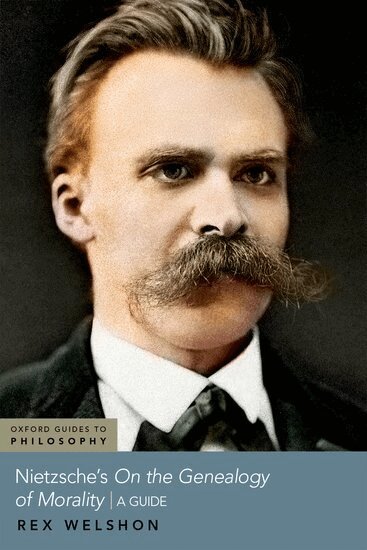
On the Genealogy of Morality is one of Nietzsche's greatest works. Taking recent scholarship on board and using it to inform its analysis of this challenging text, Rex Welshon's Guide introduces readers of all levels to the major arguments found in the Genealogy. Welshon also shows how arguments Nietzsche develops elsewhere clarify and buttress what he says in the Genealogy.The guide begins by introducing the reader to Nietzsche's life, identifying some of his major intellectual influences, and tracking his influence on subsequent philosophers, artists, literary critics, social and political thinkers, and moral psychologists. Then, in four longer chapters, the Genealogy's Preface and three essays are investigated in detail. Each chapter is divided into two parts, the first dedicated to section-by-section examinations of Nietzsche's claims and arguments as they unfold in the book, the second to detailed analyses of the most important, intricate, and perplexing of those arguments. This structure permits readers to remain oriented through the Genealogy's unusual development and unique style. The guide then unpacks Nietzsche's arguments in greater detail, steering readers through arguments that sometimes lie behind the Genealogy's surface text and showing how recent scholarship has improved our understanding of some of its more cryptic claims. Throughout, the guide strives to remain accessible and avoid technical jargon and to keep Nietzsche's fascinating, if disturbing, insights into moral evaluation, moral history, and moral psychology front and center. Having read the guide, readers will be prepared to appreciate the Genealogy's many merits and identify some of its gaps.
292 kr
Skickas inom 5-8 vardagar
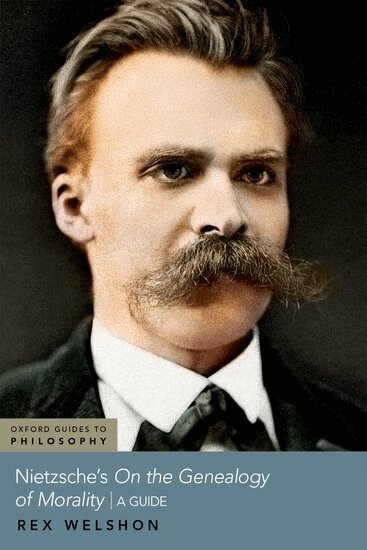
On the Genealogy of Morality is one of Nietzsche's greatest works. Taking recent scholarship on board and using it to inform its analysis of this challenging text, Rex Welshon's Guide introduces readers of all levels to the major arguments found in the Genealogy. Welshon also shows how arguments Nietzsche develops elsewhere clarify and buttress what he says in the Genealogy.The guide begins by introducing the reader to Nietzsche's life, identifying some of his major intellectual influences, and tracking his influence on subsequent philosophers, artists, literary critics, social and political thinkers, and moral psychologists. Then, in four longer chapters, the Genealogy's Preface and three essays are investigated in detail. Each chapter is divided into two parts, the first dedicated to section-by-section examinations of Nietzsche's claims and arguments as they unfold in the book, the second to detailed analyses of the most important, intricate, and perplexing of those arguments. This structure permits readers to remain oriented through the Genealogy's unusual development and unique style. The guide then unpacks Nietzsche's arguments in greater detail, steering readers through arguments that sometimes lie behind the Genealogy's surface text and showing how recent scholarship has improved our understanding of some of its more cryptic claims. Throughout, the guide strives to remain accessible and avoid technical jargon and to keep Nietzsche's fascinating, if disturbing, insights into moral evaluation, moral history, and moral psychology front and center. Having read the guide, readers will be prepared to appreciate the Genealogy's many merits and identify some of its gaps.
1 456 kr
Skickas inom 3-6 vardagar
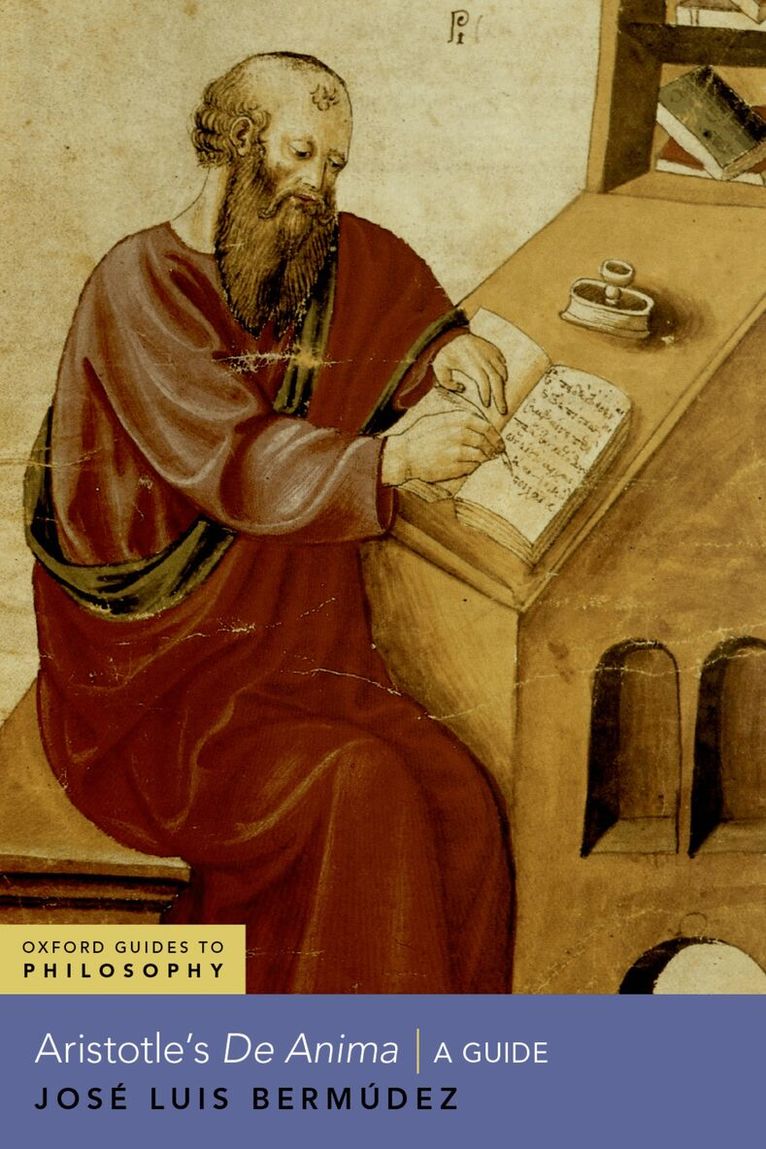
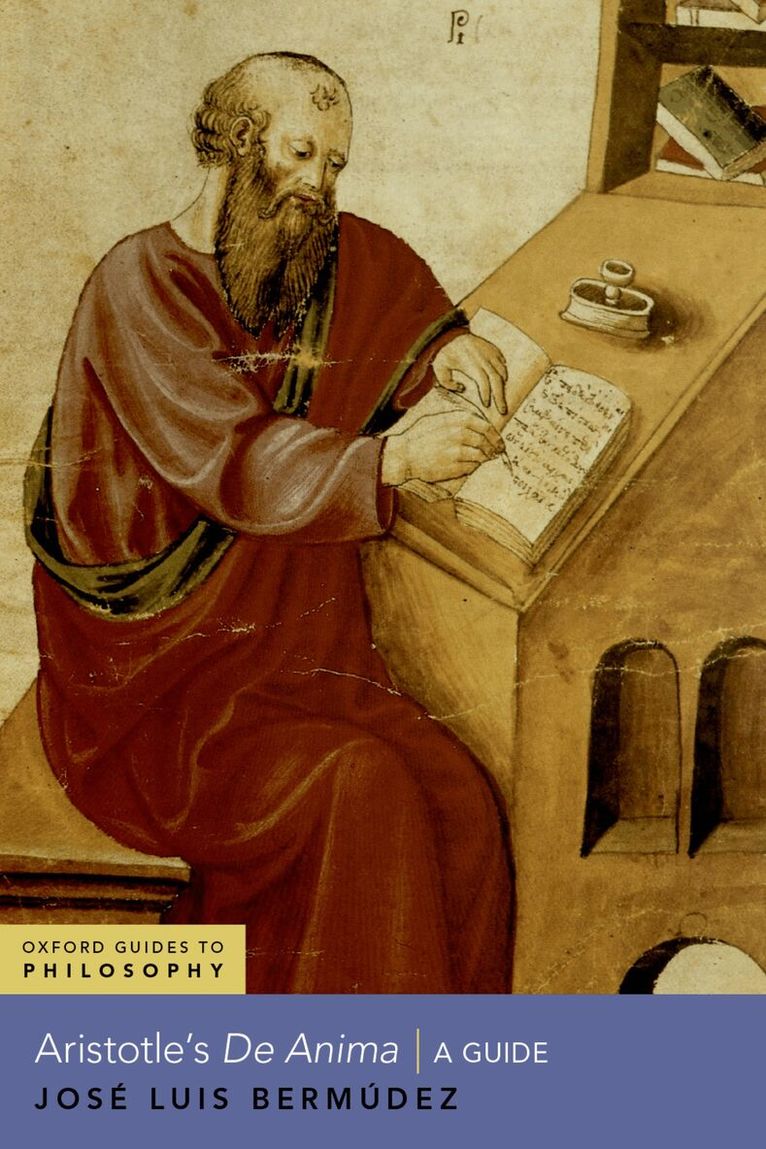
Aristotle's De Anima is an extraordinarily influential text in the history of philosophy; it is also one of the earliest works in what we now call psychology. Aristotle explores the psuchê, a distinctively Greek concept that overlaps in certain respects with our modern notions of the mind and the soul, but also applies to plants and non-human animals. The De Anima develops an innovative and challenging account of the relation between the psuchê and the body, and offers thought-provoking analyses of the different capacities of the psuchê, starting with nutrition and reproduction. A general discussion of perception is followed by detailed accounts of the five individual sense modalities, as well as perceptual imagination. After subtly exploring the intellectual capacities that he considers distinctive to human beings (where we find his famous discussion of the "agent intellect") Aristotle gives a sophisticated account of how desire leads to action.In this lively and accessible Oxford Guide, which presupposes no knowledge of Greek, José Luis Bermúdez situates the De Anima in the context of ancient Greek philosophy, and places it within Aristotle's corpus as a whole. Each chapter is organized around focus readings from the De Anima and elsewhere in Aristotle's writings (as well as from Plato's Phaedo and Theaetetus). Bermúdez develops a historically-informed account of Aristotle's arguments in the De Anima that draws connections with contemporary philosophy of mind as appropriate. The reader is introduced to some of the key topics and controversies in modern Aristotle scholarship, as well as to the insights of the ancient and medieval commentators.
237 kr
Skickas inom 5-8 vardagar
Aristotle's De Anima is an extraordinarily influential text in the history of philosophy; it is also one of the earliest works in what we now call psychology. Aristotle explores the psuchê, a distinctively Greek concept that overlaps in certain respects with our modern notions of the mind and the soul, but also applies to plants and non-human animals. The De Anima develops an innovative and challenging account of the relation between the psuchê and the body, and offers thought-provoking analyses of the different capacities of the psuchê, starting with nutrition and reproduction. A general discussion of perception is followed by detailed accounts of the five individual sense modalities, as well as perceptual imagination. After subtly exploring the intellectual capacities that he considers distinctive to human beings (where we find his famous discussion of the "agent intellect") Aristotle gives a sophisticated account of how desire leads to action.In this lively and accessible Oxford Guide, which presupposes no knowledge of Greek, José Luis Bermúdez situates the De Anima in the context of ancient Greek philosophy, and places it within Aristotle's corpus as a whole. Each chapter is organized around focus readings from the De Anima and elsewhere in Aristotle's writings (as well as from Plato's Phaedo and Theaetetus). Bermúdez develops a historically-informed account of Aristotle's arguments in the De Anima that draws connections with contemporary philosophy of mind as appropriate. The reader is introduced to some of the key topics and controversies in modern Aristotle scholarship, as well as to the insights of the ancient and medieval commentators.
929 kr
Kommande
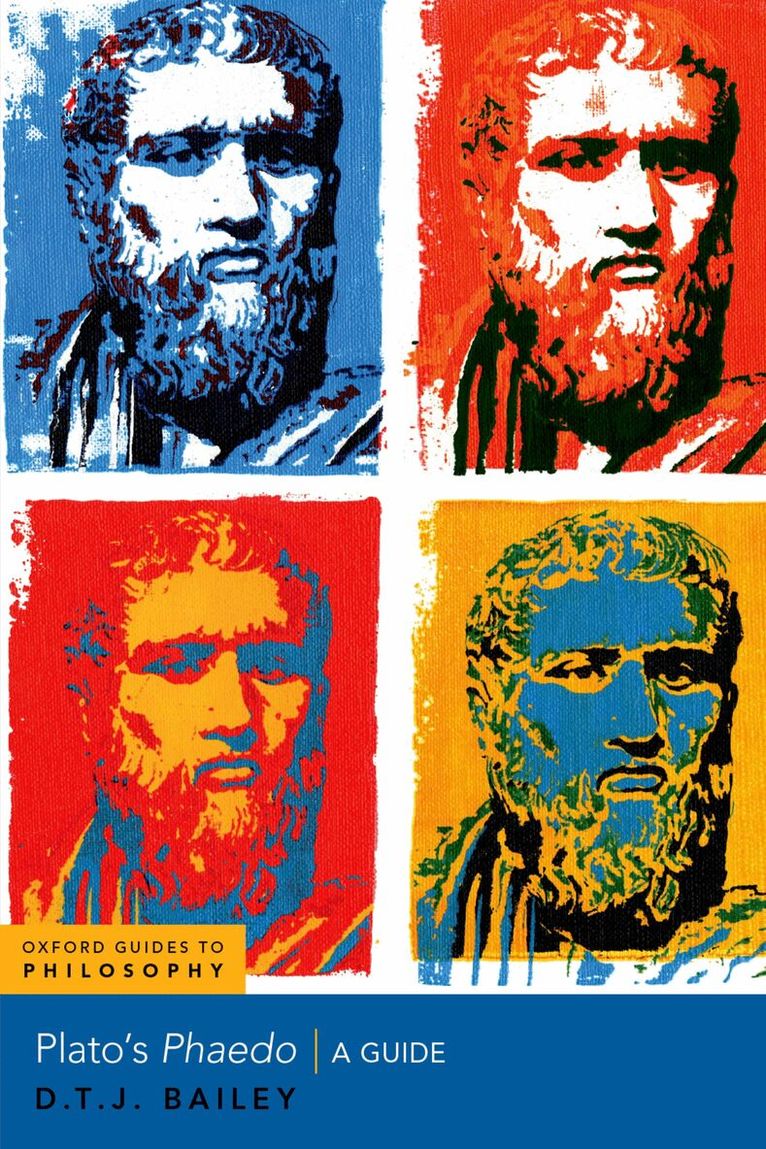
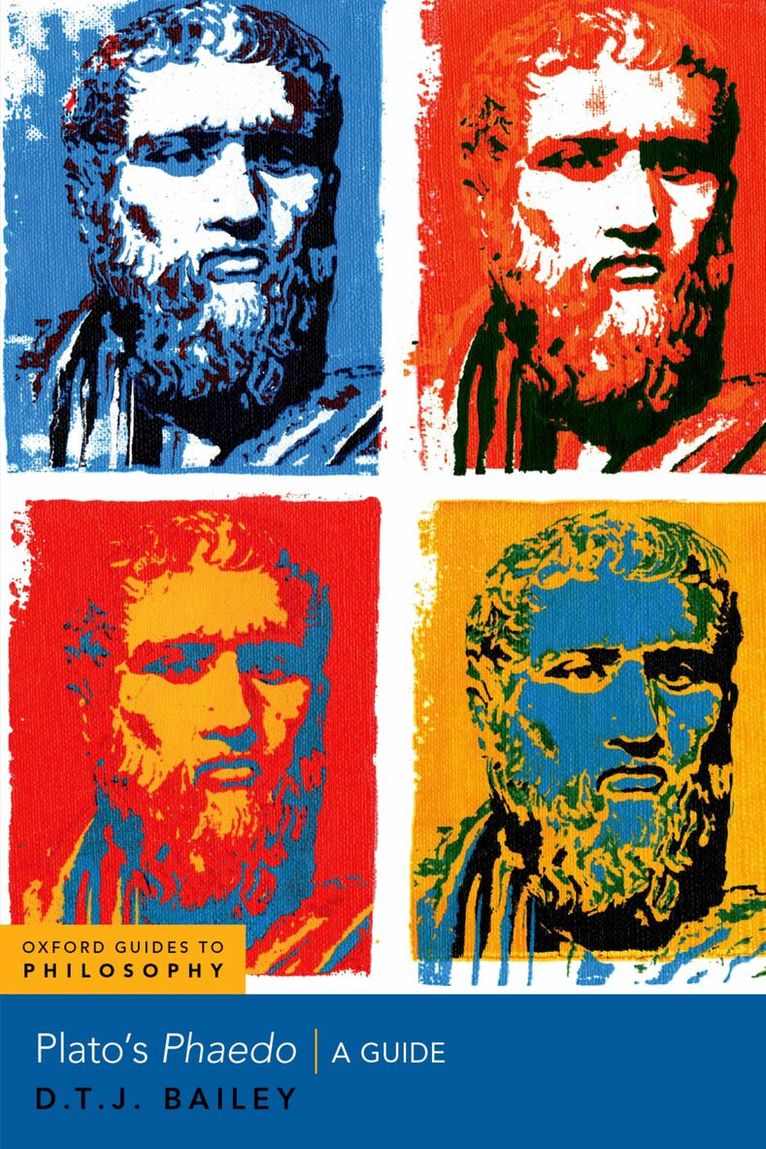
D.T.J. Bailey here offers a student-friendly guide to Plato's dialogue Phaedo, as part of the Oxford Guides to Philosophy series. In the process of explaining the text, Bailey provides a picture of Plato's metaphysics as revealed by the four major arguments it contains. Offering a concise discussion of Platonic forms--the abstract objects Plato famously proposed--Bailey argues that Plato was thinking carefully about names and naming throughout the construction of the Phaedo. Readers of the Symposium and the Republic, those intrigued by the figure of Socrates, and those who believe in the immortality of the Soul will value Bailey's expert explanation of the thematic diversity contained in the Phaedo.
319 kr
Kommande
D.T.J. Bailey here offers a student-friendly guide to Plato's dialogue Phaedo, as part of the Oxford Guides to Philosophy series. In the process of explaining the text, Bailey provides a picture of Plato's metaphysics as revealed by the four major arguments it contains. Offering a concise discussion of Platonic forms--the abstract objects Plato famously proposed--Bailey argues that Plato was thinking carefully about names and naming throughout the construction of the Phaedo. Readers of the Symposium and the Republic, those intrigued by the figure of Socrates, and those who believe in the immortality of the Soul will value Bailey's expert explanation of the thematic diversity contained in the Phaedo.