Rex Welshon - Böcker
Visar alla böcker från författaren Rex Welshon. Handla med fri frakt och snabb leverans.
6 produkter
6 produkter
929 kr
Skickas inom 7-10 vardagar
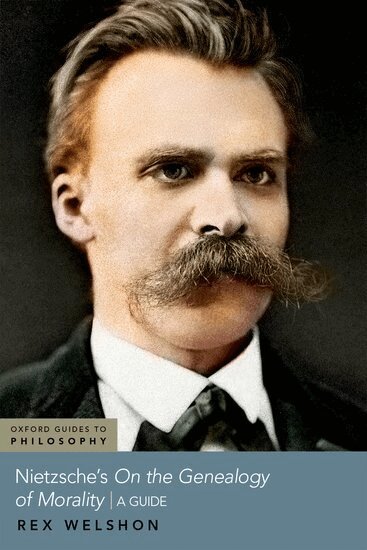
On the Genealogy of Morality is one of Nietzsche's greatest works. Taking recent scholarship on board and using it to inform its analysis of this challenging text, Rex Welshon's Guide introduces readers of all levels to the major arguments found in the Genealogy. Welshon also shows how arguments Nietzsche develops elsewhere clarify and buttress what he says in the Genealogy.The guide begins by introducing the reader to Nietzsche's life, identifying some of his major intellectual influences, and tracking his influence on subsequent philosophers, artists, literary critics, social and political thinkers, and moral psychologists. Then, in four longer chapters, the Genealogy's Preface and three essays are investigated in detail. Each chapter is divided into two parts, the first dedicated to section-by-section examinations of Nietzsche's claims and arguments as they unfold in the book, the second to detailed analyses of the most important, intricate, and perplexing of those arguments. This structure permits readers to remain oriented through the Genealogy's unusual development and unique style. The guide then unpacks Nietzsche's arguments in greater detail, steering readers through arguments that sometimes lie behind the Genealogy's surface text and showing how recent scholarship has improved our understanding of some of its more cryptic claims. Throughout, the guide strives to remain accessible and avoid technical jargon and to keep Nietzsche's fascinating, if disturbing, insights into moral evaluation, moral history, and moral psychology front and center. Having read the guide, readers will be prepared to appreciate the Genealogy's many merits and identify some of its gaps.
292 kr
Skickas inom 5-8 vardagar
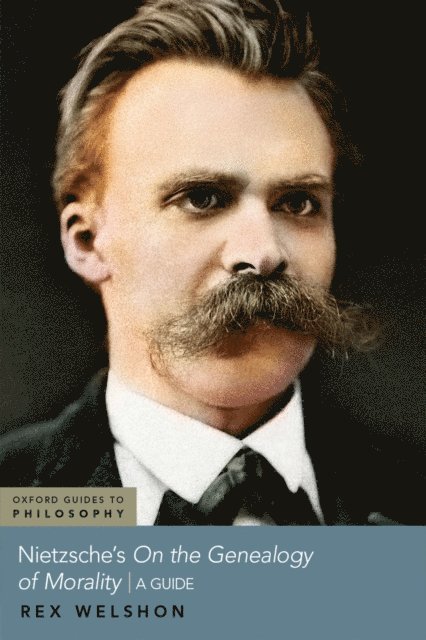
On the Genealogy of Morality is one of Nietzsche's greatest works. Taking recent scholarship on board and using it to inform its analysis of this challenging text, Rex Welshon's Guide introduces readers of all levels to the major arguments found in the Genealogy. Welshon also shows how arguments Nietzsche develops elsewhere clarify and buttress what he says in the Genealogy.The guide begins by introducing the reader to Nietzsche's life, identifying some of his major intellectual influences, and tracking his influence on subsequent philosophers, artists, literary critics, social and political thinkers, and moral psychologists. Then, in four longer chapters, the Genealogy's Preface and three essays are investigated in detail. Each chapter is divided into two parts, the first dedicated to section-by-section examinations of Nietzsche's claims and arguments as they unfold in the book, the second to detailed analyses of the most important, intricate, and perplexing of those arguments. This structure permits readers to remain oriented through the Genealogy's unusual development and unique style. The guide then unpacks Nietzsche's arguments in greater detail, steering readers through arguments that sometimes lie behind the Genealogy's surface text and showing how recent scholarship has improved our understanding of some of its more cryptic claims. Throughout, the guide strives to remain accessible and avoid technical jargon and to keep Nietzsche's fascinating, if disturbing, insights into moral evaluation, moral history, and moral psychology front and center. Having read the guide, readers will be prepared to appreciate the Genealogy's many merits and identify some of its gaps.
312 kr
Skickas inom 7-10 vardagar
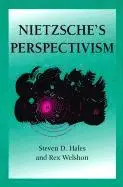
In Nietzsche's Perspectivism, Steven Hales and Rex Welshon offer an analytic approach to Nietzsche's important idea that truth is perspectival. Drawing on Nietzsche's entire published corpus, along with manuscripts he never saw to press, they assess the different perspectivisms at work in Nietzsche's views with regard to truth, logic, causality, knowledge, consciousness, and the self. They also examine Nietzsche's perspectivist ontology of power and the attendant claims that substances and subjects are illusory while forces and alliances of power constitute the only reality. Hales and Welshon present Nietzsche's treatment of perspectivism as both more complex and more fruitful than the common view of it as a doctrine that truth is not objective. Neither a metaphor nor a methodology, perspectivism emerges as a protean concept akin to a unifying theme; an alternative to the absolutism that recurs in science, philosophy, and religion; and a technique for revealing the unimagined possibilities open to every individual.
448 kr
Tillfälligt slut
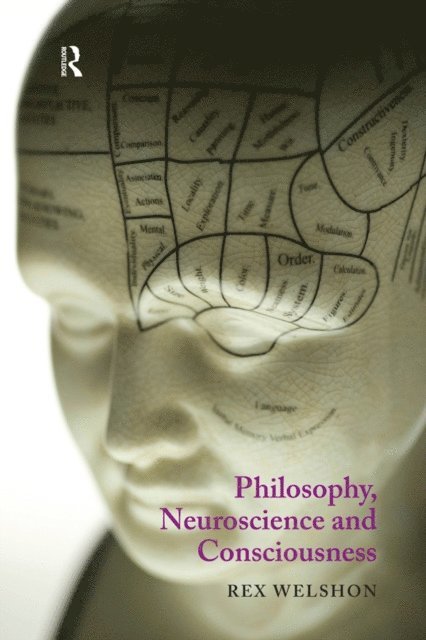
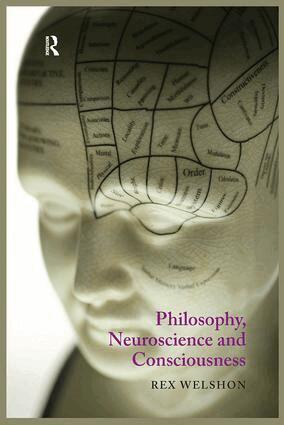
This introduction to these and many of the other problems posed by consciousness discusses the most important work of cognitive science, neurophysiology and philosophy of the past thirty years and presents an up-to-date assessment of the issues and debates. CONTENTS: Preface and acknowledgements Introduction: problems of consciousness 1. Refection on consciousness before the mid-twentieth century 2. Functional neuroanatomy 3. Primate neuropsychology 4. Human evolution 5. Contemporary neuropsychology 6. Neuropsychology of consciousness 7. Philosophy of mind and consciousness 8. Reduction and non-reduction 9. Emergence 10. Prospects for neural theories of consciousness Notes Bibliography Index
2 103 kr
Skickas inom 10-15 vardagar
Explaining consciousness is one of the last great unanswered scientific and philosophical problems. Immediately known, familiar and obvious, consciousness is also baffling, opaque and strange. This introduction to the problems posed by consciousness discusses the most important work of cognitive science, neurophysiology and philosophy of mind of the past thirty years and presents an up to date assessment of the issues and debates. The reader is first introduced to the way that consciousness has been thought about in the history of philosophy and psychology. The author then presents an informal and largely non-technical account of the properties of consciousness that are thought to be the most paradigmatic and problematic. Recent scientific work on consciousness, from neurophysiological studies of the brain and evolutionary studies of the development of consciousness to computational theories of the mind are then examined and the philosophical problems that these accounts raise are systematically introduced. The final chapters of the book consider more practical matters by addressing self-deception, neuroses, the unconscious and notions of the self, before concluding with an assessment of the future for psychology and the philosophy of mind.
567 kr
Skickas inom 10-15 vardagar
Explaining consciousness is one of the last great unanswered scientific and philosophical problems. Immediately known, familiar and obvious, consciousness is also baffling, opaque and strange. This introduction to the problems posed by consciousness discusses the most important work of cognitive science, neurophysiology and philosophy of mind of the past thirty years and presents an up to date assessment of the issues and debates. The reader is first introduced to the way that consciousness has been thought about in the history of philosophy and psychology. The author then presents an informal and largely non-technical account of the properties of consciousness that are thought to be the most paradigmatic and problematic. Recent scientific work on consciousness, from neurophysiological studies of the brain and evolutionary studies of the development of consciousness to computational theories of the mind are then examined and the philosophical problems that these accounts raise are systematically introduced. The final chapters of the book consider more practical matters by addressing self-deception, neuroses, the unconscious and notions of the self, before concluding with an assessment of the future for psychology and the philosophy of mind.