Oxford Handbooks of Literature – serie
Visar alla böcker i serien Oxford Handbooks of Literature. Handla med fri frakt och snabb leverans.
3 produkter
3 produkter
3 083 kr
Skickas inom 3-6 vardagar
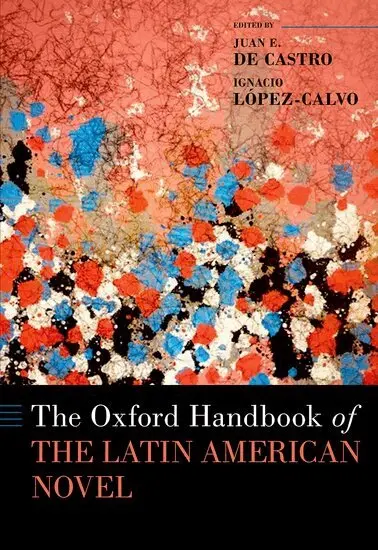
The Latin American novel burst onto the international literary scene with the Boom era--led by Julio Cortázar, Gabriel García Márquez, Carlos Fuentes, and Mario Vargas Llosa--and has influenced writers throughout the world ever since. García Márquez and Vargas Llosa each received the Nobel Prize in literature, and many of the best-known contemporary novelists are inspired by the region's fiction. Indeed, magical realism, the style associated with García Márquez, has left a profound imprint on African American, African, Asian, Anglophone Caribbean, and Latinx writers. Furthermore, post-Boom literature continues to garner interest, from the novels of Roberto Bolaño to the works of César Aira and Chico Buarque, to those of younger novelists such as Juan Gabriel Vásquez, Alejandro Zambra, and Valeria Luiselli. Yet, for many readers, the Latin American novel is often read in a piecemeal manner delinked from the traditions, authors, and social contexts that help explain its evolution. The Oxford Handbook of the Latin American Novel draws literary, historical, and social connections so that readers will come away understanding this literature as a rich and compelling canon. In forty-five chapters by leading and innovative scholars, the Handbook provides a comprehensive introduction, helping readers to see the region's intrinsic heterogeneity--for only with a broader view can one fully appreciate García Márquez or Bolaño. This volume charts the literary tradition of the Latin American novel from its beginnings during colonial times, its development during the nineteenth and the first half of the twentieth century, and its flourishing from the 1960s onward. Furthermore, the Handbook explores the regions, representations of identity, narrative trends, and authors that make this literature so diverse and fascinating, reflecting on the Latin American novel's position in world literature.
718 kr
Skickas inom 5-8 vardagar
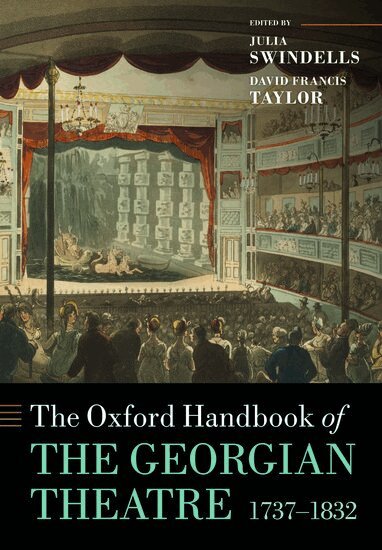
The Oxford Handbook of the Georgian Theatre 1737-1832 provides an essential guide to theatre in Britain between the passing of the Stage Licensing Act in 1737 and the Reform Act of 1832 — a period of drama long neglected but now receiving significant scholarly attention. Written by specialists from a range of disciplines, its forty essays both introduce students and scholars to the key texts and contexts of the Georgian theatre and also push the boundaries of the field, asking questions that will animate the study of drama in the eighteenth and early nineteenth centuries for years to come. The Handbook gives equal attention to the range of dramatic forms — not just tragedy and comedy, but the likes of melodrama and pantomime — as they developed and overlapped across the period, and to the occasions, communities, and materialities of theatre production. It includes sections on historiography, the censorship and regulation of drama, theatre and the Romantic canon, women and the stage, and the performance of race and empire. In doing so, it shows the centrality of theatre to Georgian culture and politics, and paints a picture of a stage defined by generic fluidity and experimentation; by networks of performance that spread far beyond London; by professional women who played pivotal roles in every aspect of production; and by its complex mediation of contemporary attitudes of class, race, and gender.
2 635 kr
Skickas inom 7-10 vardagar
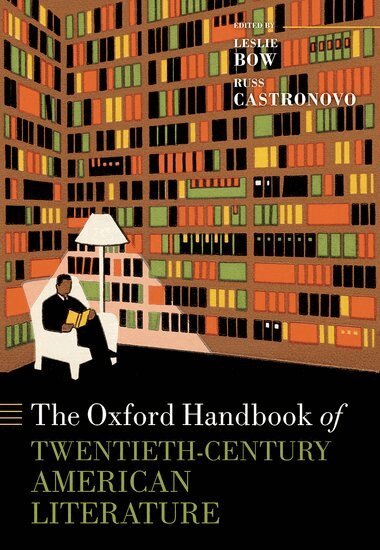
An essential and field-defining resource, this volume brings fresh approaches to major US novels, poetry, and performance literature of the twentieth century. With sections on 'structures', 'movements', 'attachments', and 'imaginaries', this handbook brings a new set of tools and perspectives to the rich and diverse traditions of American literary production. The editors have turned to leading as well as up-and-coming scholars in the field to foreground methodological concerns that assess the challenges of transnational perspectives, critical race and indigenous studies, disability and care studies, environmental criticism, affect studies, gender analysis, media and sound studies, and other cutting-edge approaches. The 20 original chapters include the discussion of working-class literature, border narratives, children's literature, novels of late-capitalism, nuclear poetry, fantasies of whiteness, and Native American, African American, Asian American, and Latinx creative texts.