Oxford Histories - Böcker
Visar alla böcker i serien Oxford Histories. Handla med fri frakt och snabb leverans.
13 produkter
13 produkter
1 810 kr
Skickas inom 5-8 vardagar
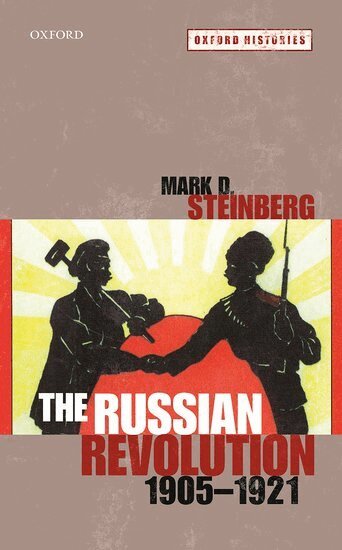
The Russian Revolution, 1905-1921 is a new history of Russia's revolutionary era as a story of experience-of people making sense of history as it unfolded in their own lives and as they took part in making history themselves. The major events, trends, and explanations, reaching from Bloody Sunday in 1905 to the final shots of the civil war in 1921, are viewed through the doubled perspective of the professional historian looking backward and the contemporary journalist reporting and interpreting history as it happened. The volume then turns toward particular places and people: city streets, peasant villages, the margins of empire (Central Asia, Ukraine, the Jewish Pale), women and men, workers and intellectuals, artists and activists, utopian visionaries, and discontents of all kinds. We spend time with the famous (Vladimir Lenin, Lev Trotsky, Alexandra Kollontai, Vladimir Mayakovsky, Isaac Babel) and with those whose names we don't even know. Key themes include difference and inequality (social, economic, gendered, ethnic), power and resistance, violence, and ideas about justice and freedom. Written especially for students and general readers, this history relies extensively on contemporary texts and voices in order to bring the past and its meanings to life. This is a history about dramatic and uncertain times and especially about the interpretations, values, emotions, desires, and disappointments that made history matter to those who lived it.
458 kr
Skickas inom 5-8 vardagar
The Russian Revolution, 1905-1921 is a new history of Russia's revolutionary era as a story of experience-of people making sense of history as it unfolded in their own lives and as they took part in making history themselves. The major events, trends, and explanations, reaching from Bloody Sunday in 1905 to the final shots of the civil war in 1921, are viewed through the doubled perspective of the professional historian looking backward and the contemporary journalist reporting and interpreting history as it happened. The volume then turns toward particular places and people: city streets, peasant villages, the margins of empire (Central Asia, Ukraine, the Jewish Pale), women and men, workers and intellectuals, artists and activists, utopian visionaries, and discontents of all kinds. We spend time with the famous (Vladimir Lenin, Lev Trotsky, Alexandra Kollontai, Vladimir Mayakovsky, Isaac Babel) and with those whose names we don't even know. Key themes include difference and inequality (social, economic, gendered, ethnic), power and resistance, violence, and ideas about justice and freedom. Written especially for students and general readers, this history relies extensively on contemporary texts and voices in order to bring the past and its meanings to life. This is a history about dramatic and uncertain times and especially about the interpretations, values, emotions, desires, and disappointments that made history matter to those who lived it.
1 379 kr
Skickas inom 5-8 vardagar
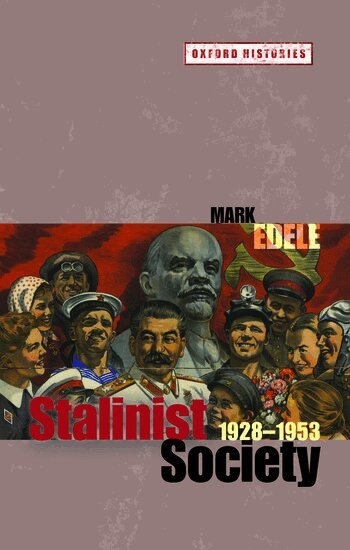
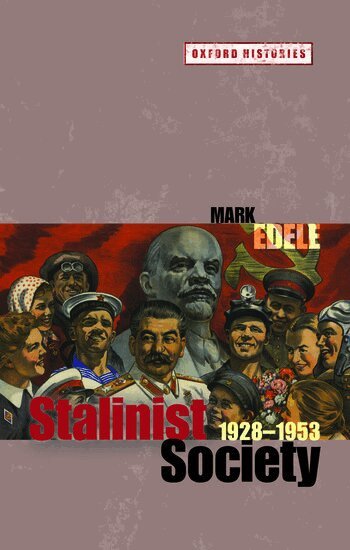
Stalinist Society offers a fresh analytical overview of the complex social formation ruled over by Stalin and his henchmen from the late 1920s to the early 1950s. Drawing on declassified archival materials, interviews with former Soviet citizens, old and new memoirs, and personal diaries, as well as the best of sixty years of scholarship, this book offers a non-reductionist account of social upheaval and social cohesion in a society marred by violence. Combining the perspectives from above and from below, the book integrates recent writing on everyday life, culture and entertainment, ideology and politics, terror and welfare, consumption and economics. Utilizing the latest archival research on the evolution of Soviet society during and after World War II, this study also integrates the entire history of Stalinism from the late 1920s to the dictator's death in 1953. Breaking radically with current scholarly consensus, Mark Edele shows that it was not ideology, terror, or state control which held this society together, but the harsh realities of making a living in a chaotic economy which the rulers claimed to plan and control, but which in fact they could only manage haphazardly.
455 kr
Skickas inom 5-8 vardagar
Stalinist Society offers a fresh analytical overview of the complex social formation ruled over by Stalin and his henchmen from the late 1920s to the early 1950s. Drawing on declassified archival materials, interviews with former Soviet citizens, old and new memoirs, and personal diaries, as well as the best of sixty years of scholarship, this book offers a non-reductionist account of social upheaval and social cohesion in a society marred by violence. Combining the perspectives from above and from below, the book integrates recent writing on everyday life, culture and entertainment, ideology and politics, terror and welfare, consumption and economics. Utilizing the latest archival research on the evolution of Soviet society during and after World War II, this study also integrates the entire history of Stalinism from the late 1920s to the dictator's death in 1953. Breaking radically with current scholarly consensus, Mark Edele shows that it was not ideology, terror, or state control which held this society together, but the harsh realities of making a living in a chaotic economy which the rulers claimed to plan and control, but which in fact they could only manage haphazardly.
1 589 kr
Skickas inom 7-10 vardagar
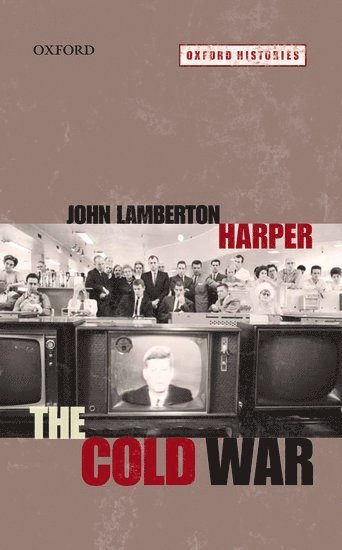
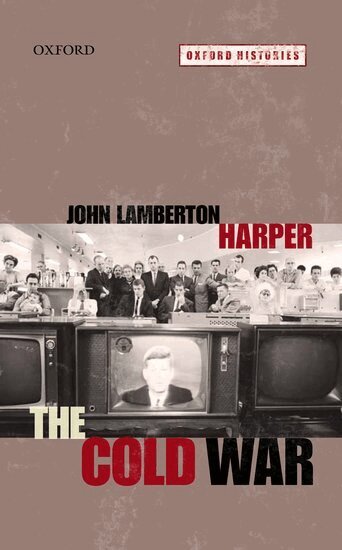
The East-West struggle for supremacy from 1945 to 1989 shaped the lives of hundreds of millions and brought the world to the brink of disaster on several occasions. More than two decades on, the debate over its causes and dynamics is far from over. Drawing on the latest archival evidence and scholarly research, prize-winning historian John Lamberton Harper provides a concise, briskly-written assessment of the Cold War. Why did it start, and eventually envelope nearly every corner of the planet? Why did it stay "cold," at least in its original, European theatre? Why did it end, and who should take the credit? Harper illuminates the deep-seated behavioural patterns within both the Soviet Union and the United States: the search for security through expansion and military might, the belief in a "messianic" mission to uplift humanity, but also a readiness to live and let live based on membership in a common state system and a shared interest in survival. He stresses ways in which internal competitions for political power tilted both the U.S. and Soviet systems towards bellicosity and obsessive preparation for a hot war that no one seriously intended to begin. It is a story of delusions of omnipotence and rash behavior, punctuated by moments of redeeming statesmanship and self-restraint. Harper concludes that, rather than triumphalism, a clear look back at the Cold War's close calls with catastrophe and enormous cost in lives and treasure ought to evoke a sense of regret and humility, as well as relief.
401 kr
Skickas inom 5-8 vardagar
The East-West struggle for supremacy from 1945 to 1989 shaped the lives of hundreds of millions and brought the world to the brink of disaster on several occasions. More than two decades on, the debate over its causes and dynamics is far from over. Drawing on the latest archival evidence and scholarly research, prize-winning historian John Lamberton Harper provides a concise, briskly-written assessment of the Cold War. Why did it start, and eventually envelope nearly every corner of the planet? Why did it stay "cold," at least in its original, European theatre? Why did it end, and who should take the credit? Harper illuminates the deep-seated behavioural patterns within both the Soviet Union and the United States: the search for security through expansion and military might, the belief in a "messianic" mission to uplift humanity, but also a readiness to live and let live based on membership in a common state system and a shared interest in survival. He stresses ways in which internal competitions for political power tilted both the U.S. and Soviet systems towards bellicosity and obsessive preparation for a hot war that no one seriously intended to begin. It is a story of delusions of omnipotence and rash behavior, punctuated by moments of redeeming statesmanship and self-restraint. Harper concludes that, rather than triumphalism, a clear look back at the Cold War's close calls with catastrophe and enormous cost in lives and treasure ought to evoke a sense of regret and humility, as well as relief.
1 415 kr
Skickas inom 5-8 vardagar
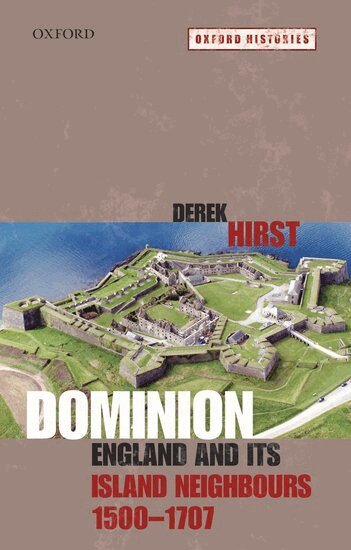
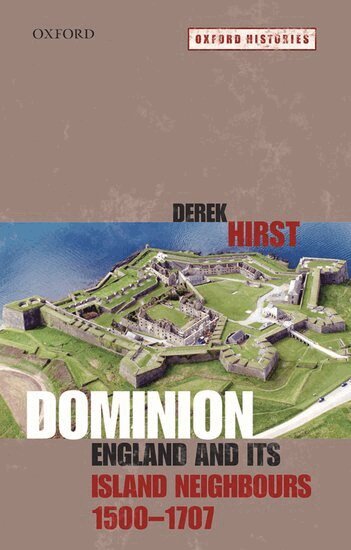
Dominion: England and its Island Neighbours c.1500-1707 is a rich narrative history of England's increasing dominance over the cluster of territories that became known as the British Isles. It brings alive a period and a geography remarkable for repeated religious wars and a long colonial struggle as well as for London's emergence as a political, economic, and cultural hub. While Dominion concentrates on English actions and purposes, it pays careful attention to interactions in Ireland, Scotland, and Wales, and to the pressures of European competition. It does so by drawing on the vibrant recent scholarship of the separate nations and considerable primary research, and also on the language of the actors, from Henry VIII and Elizabeth, Spenser and Shakespeare, to Oliver Cromwell and John Milton. Its purpose is not just to explore English understandings and ideologies, but their consequences, both creative and disruptive. The landmarks of the Tudor and Stuart centuries may be familiar: the creation of Ireland as a subordinate but fractured kingdom, the unification of Wales with England, the unstable union of the crowns of England and Scotland, the bloody conquest and reconquest of Ireland, and the formation of the United Kingdom amid fierce rivalry with France. By interweaving these strands as a single coherent story of English reactions and projections, this book opens up a new understanding of this formative period in the history of these islands - and also of its fractious legacy.
419 kr
Skickas inom 5-8 vardagar
Dominion: England and its Island Neighbours c.1500-1707 is a rich narrative history of England's increasing dominance over the cluster of territories that became known as the British Isles. It brings alive a period and a geography remarkable for repeated religious wars and a long colonial struggle as well as for London's emergence as a political, economic, and cultural hub. While Dominion concentrates on English actions and purposes, it pays careful attention to interactions in Ireland, Scotland, and Wales, and to the pressures of European competition. It does so by drawing on the vibrant recent scholarship of the separate nations and considerable primary research, and also on the language of the actors, from Henry VIII and Elizabeth, Spenser and Shakespeare, to Oliver Cromwell and John Milton. Its purpose is not just to explore English understandings and ideologies, but their consequences, both creative and disruptive. The landmarks of the Tudor and Stuart centuries may be familiar: the creation of Ireland as a subordinate but fractured kingdom, the unification of Wales with England, the unstable union of the crowns of England and Scotland, the bloody conquest and reconquest of Ireland, and the formation of the United Kingdom amid fierce rivalry with France. By interweaving these strands as a single coherent story of English reactions and projections, this book opens up a new understanding of this formative period in the history of these islands - and also of its fractious legacy.
1 842 kr
Skickas inom 7-10 vardagar
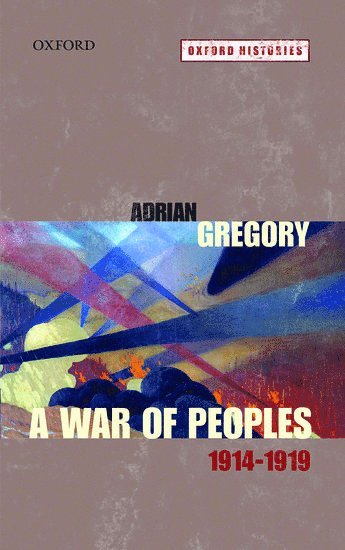
A War of Peoples, 1914-1919 provides a new perspective on the First World War, offering a concise narrative of the war from the first military actions in July 1914 until the signing of the peace treaty by Germany in July 1919. Adrian Gregory considers the sources of information available to historians and the ways in which historians have written about the war for over fifty years.This volume will appeal equally to people with little or no familiarity with the events of the war and to those who already think they know about it. It presents a thought-provoking account which reflects the changes to historians' understanding of the war. There is a great deal of emphasis on aspect of the war which are less familiar to English-speaking audiences, particularly the war in Eastern Europe, in the Balkans, and on the Italian front. A War of Peoples, 1914-1919 concludes in 1919 with a study of the fraught and complex process of peace making, a subject which is often neglected in general surveys that end on 11 November 1918.
411 kr
Skickas inom 7-10 vardagar
A War of Peoples, 1914-1919 provides a new perspective on the First World War, offering a concise narrative of the war from the first military actions in July 1914 until the signing of the peace treaty by Germany in July 1919. Adrian Gregory considers the sources of information available to historians and the ways in which historians have written about the war for over fifty years.This volume will appeal equally to people with little or no familiarity with the events of the war and to those who already think they know about it. It presents a thought-provoking account which reflects the changes to historians' understanding of the war. There is a great deal of emphasis on aspect of the war which are less familiar to English-speaking audiences, particularly the war in Eastern Europe, in the Balkans, and on the Italian front. A War of Peoples, 1914-1919 concludes in 1919 with a study of the fraught and complex process of peace making, a subject which is often neglected in general surveys that end on 11 November 1918.
486 kr
Skickas inom 5-8 vardagar
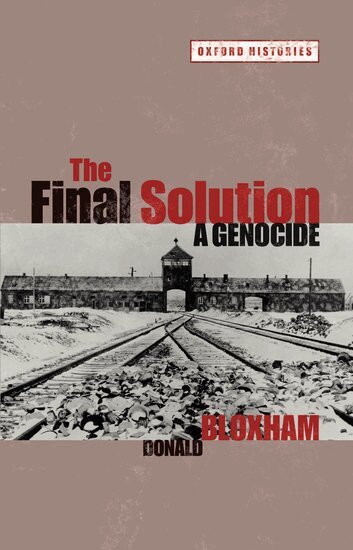
The Holocaust is frequently depicted in isolation by its historians. Some of them believe that to place it in any kind of comparative context risks diminishing its uniqueness and even detracts from the enormity of the Nazi crime. In reality, such a restricted understanding of 'uniqueness' has pulled the Holocaust apart from history and set up barriers to a better understanding of the racial onslaught unleashed within the Third Reich and its conquered territories.Working against the grain of much earlier writing, this innovative new history combines a detailed re-appraisal of the development of the genocide of the Jews, a full consideration of Nazi policies against other population groups, and a comparative analysis of other modern genocides. The Holocaust is portrayed as the culmination of a much wider history of European genocide and ethnic cleansing, from the late nineteenth century onwards. Ultimately, Bloxham shows that an explanation for the Holocaust rooted exclusively in Nazism and antisemitism is inadequate when set against one that is both prepared to give due weight to the immediate circumstances of the Second World War in eastern Europe and to situate the Jewish genocide within the broader patterns of human behaviour in the late-modern world.
1 942 kr
Skickas inom 3-6 vardagar
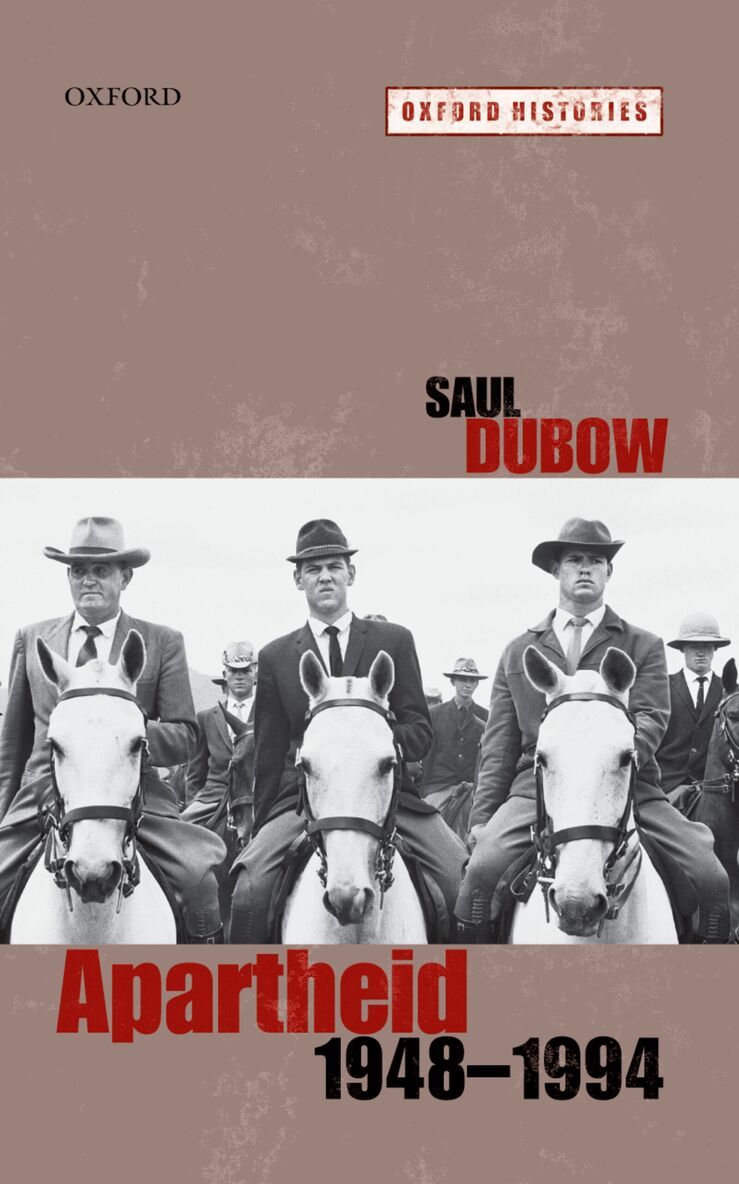
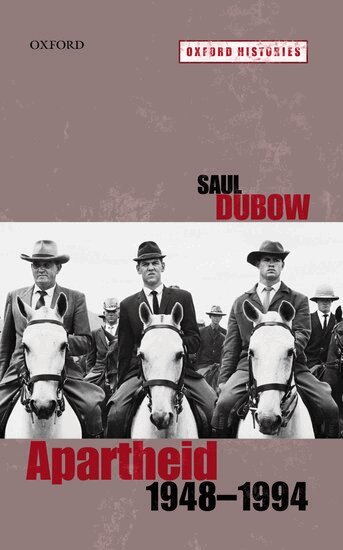
This new study offers a fresh interpretation of apartheid South Africa. Emerging out of the author's long-standing interests in the history of racial segregation, and drawing on a great deal of new scholarship, archival collections, and personal memoirs, he situates apartheid in global as well as local contexts. The overall conception of Apartheid, 1948-1994 is to integrate studies of resistance with the analysis of power, paying attention to the importance of ideas, institutions, and culture. Saul Dubow refamiliarises and defamiliarise apartheid so as to approach South Africa's white supremacist past from unlikely perspectives. He asks not only why apartheid was defeated, but how it survived so long. He neither presumes the rise of apartheid nor its demise. This synoptic reinterpretation is designed to introduce students to apartheid and to generate new questions for experts in the field.
418 kr
Skickas inom 5-8 vardagar
This new study offers a fresh interpretation of apartheid South Africa. Emerging out of the author's long-standing interests in the history of racial segregation, and drawing on a great deal of new scholarship, archival collections, and personal memoirs, he situates apartheid in global as well as local contexts. The overall conception of Apartheid, 1948-1994 is to integrate studies of resistance with the analysis of power, paying attention to the importance of ideas, institutions, and culture. Saul Dubow refamiliarises and defamiliarise apartheid so as to approach South Africa's white supremacist past from unlikely perspectives. He asks not only why apartheid was defeated, but how it survived so long. He neither presumes the rise of apartheid nor its demise. This synoptic reinterpretation is designed to introduce students to apartheid and to generate new questions for experts in the field.