Oxford History of Medieval Europe – serie
Visar alla böcker i serien Oxford History of Medieval Europe. Handla med fri frakt och snabb leverans.
3 produkter
3 produkter
465 kr
Skickas inom 5-8 vardagar
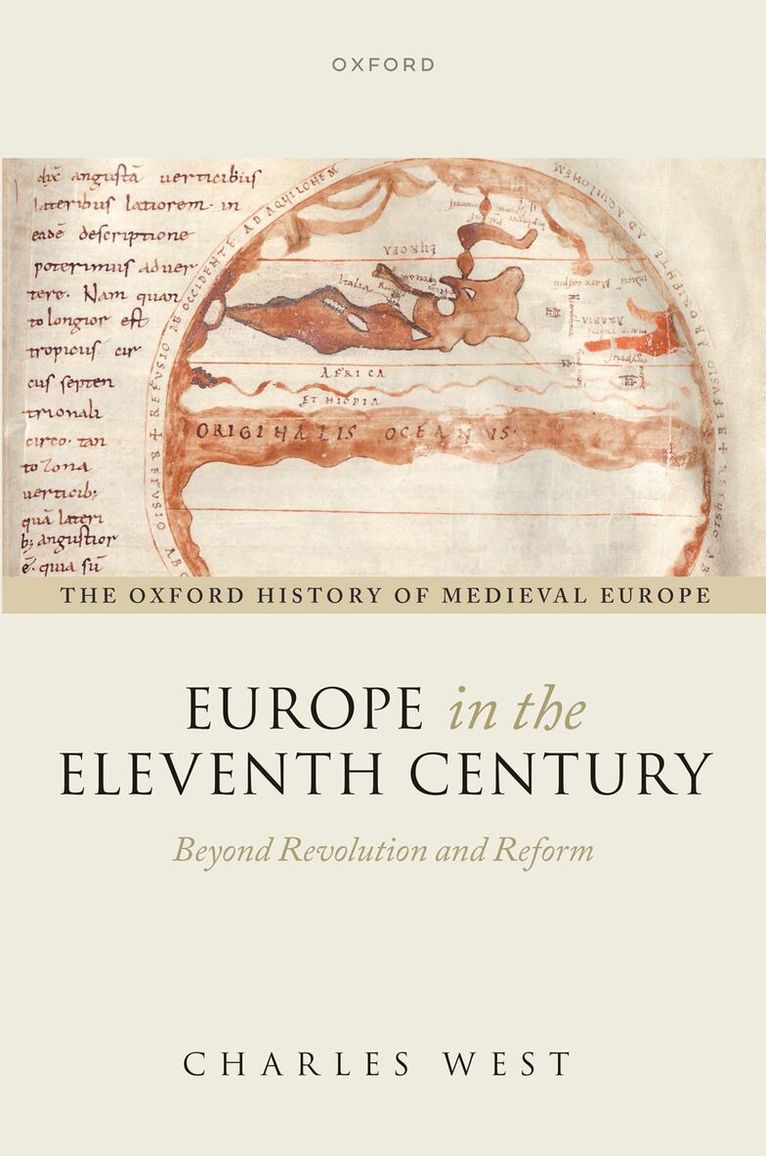
Eleventh-century Europe was diverse and fast-changing. Historians have often debated this change through two sets of competing arguments, one about the shifting role of the Church and the Papacy, and the other about the rise of castellan lords and a proliferation in violence. Yet these arguments about 'Church Reform' and 'Feudal Revolution' only really apply to one part of Europe, the Latin West. This book takes its cue from contemporary perceptions of Europe, and includes Byzantium (or East Rome) and Muslim al-Andalus in scope. In doing so, it presents a new perspective on Europe in the period. Its chapters assess different scales of action and interaction within this wide space. They take from the reader from the peasants living in small village settlements, via the great city of Constantinople, the taifa emirates, kingdoms from Ireland to Hungary, and the two universal empires, up to contemporary ideas, cosmologies, and representations of the wider world. Viewed in this broad setting, the Latin West's remarkable expansion during this period, dramatically illustrated by the First Crusade at the century's end, can best be understood as the poorly controlled overspilling of internal dynamics, as the established public order was disrupted. Elsewhere in Europe, existing structures proved more resilient and better able to accommodate internal economic and social development, though remaining vulnerable to aggression from outside.
956 kr
Skickas inom 5-8 vardagar
Drawing upon the latest historical and archaeological research, Dr Peter Sarris provides a panoramic account of the history of Europe, the Mediterranean, and the Near East from the fall of Rome to the rise of Islam. The formation of a new social and economic order in western Europe in the fifth, sixth, and seventh centuries, and the ascendancy across the West of a new culture of military lordship, are placed firmly in the context of on-going connections and influence radiating outwards from the surviving Eastern Roman Empire, ruled from the great imperial capital of Constantinople. The East Roman (or 'Byzantine') Emperor Justinian's attempts to revive imperial fortunes, restore the empire's power in the West, and face down Constantinople's great superpower rival, the Sasanian Empire of Persia, are charted, as too are the ways in which the escalating warfare between Rome and Persia paved the way for the development of new concepts of 'holy war', the emergence of Islam, and the Arab conquests of the Near East. Processes of religious and cultural change are explained through examination of social, economic, and military upheavals, and the formation of early medieval European society is placed in a broader context of changes that swept across the world of Eurasia from Manchuria to the Rhine. Warfare and plague, holy men and kings, emperors, shahs, caliphs, and peasants all play their part in a compelling narrative suited to specialist, student, and general readership alike.
417 kr
Skickas inom 5-8 vardagar
Drawing upon the latest historical and archaeological research, Dr Peter Sarris provides a panoramic account of the history of Europe, the Mediterranean, and the Near East from the fall of Rome to the rise of Islam. The formation of a new social and economic order in western Europe in the fifth, sixth, and seventh centuries, and the ascendancy across the West of a new culture of military lordship, are placed firmly in the context of on-going connections and influence radiating outwards from the surviving Eastern Roman Empire, ruled from the great imperial capital of Constantinople. The East Roman (or 'Byzantine') Emperor Justinian's attempts to revive imperial fortunes, restore the empire's power in the West, and face down Constantinople's great superpower rival, the Sasanian Empire of Persia, are charted, as too are the ways in which the escalating warfare between Rome and Persia paved the way for the development of new concepts of 'holy war', the emergence of Islam, and the Arab conquests of the Near East. Processes of religious and cultural change are explained through examination of social, economic, and military upheavals, and the formation of early medieval European society is placed in a broader context of changes that swept across the world of Eurasia from Manchuria to the Rhine.Warfare and plague, holy men and kings, emperors, shahs, caliphs, and peasants all play their part in a compelling narrative suited to specialist, student, and general readership alike.