Oxford History of the United States – serie
Visar alla böcker i serien Oxford History of the United States. Handla med fri frakt och snabb leverans.
18 produkter
18 produkter
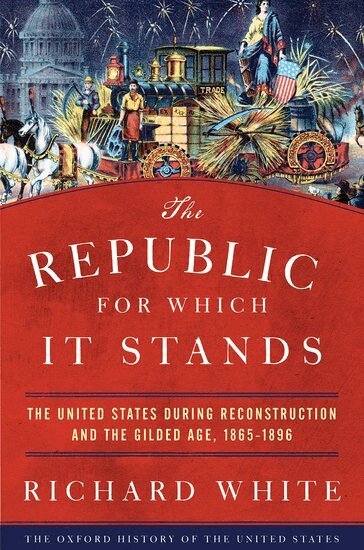
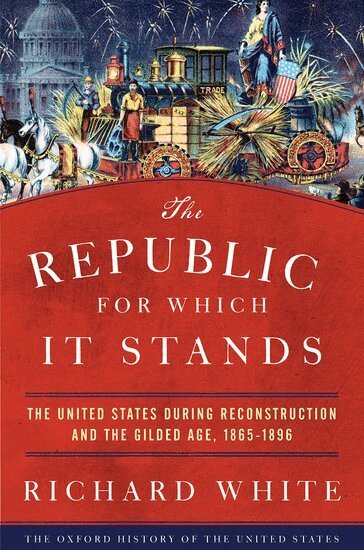
The Republic for Which It Stands
The United States during Reconstruction and the Gilded Age, 1865-1896
Häftad, Engelska, 2019
235 kr
Skickas
The Oxford History of the United States is the most respected multivolume history of the American nation. In the newest volume in the series, The Republic for Which It Stands, acclaimed historian Richard White offers a fresh and integrated interpretation of Reconstruction and the Gilded Age as the seedbed of modern America.At the end of the Civil War the leaders and citizens of the victorious North envisioned the country's future as a free-labor republic, with a homogenous citizenry, both black and white. The South and West were to be reconstructed in the image of the North. Thirty years later Americans occupied an unimagined world. The unity that the Civil War supposedly secured had proved ephemeral. The country was larger, richer, and more extensive, but also more diverse. Life spans were shorter, and physical well-being had diminished, due to disease and hazardous working conditions. Independent producers had become wage earners. The country was Catholic and Jewish as well as Protestant, and increasingly urban and industrial. The "dangerous" classes of the very rich and poor expanded, and deep differences -- ethnic, racial, religious, economic, and political -- divided society. The corruption that gave the Gilded Age its name was pervasive. These challenges also brought vigorous efforts to secure economic, moral, and cultural reforms. Real change -- technological, cultural, and political -- proliferated from below more than emerging from political leadership. Americans, mining their own traditions and borrowing ideas, produced creative possibilities for overcoming the crises that threatened their country.In a work as dramatic and colorful as the era it covers, White narrates the conflicts and paradoxes of these decades of disorienting change and mounting unrest, out of which emerged a modern nation whose characteristics resonate with the present day.
284 kr
Skickas inom 3-6 vardagar
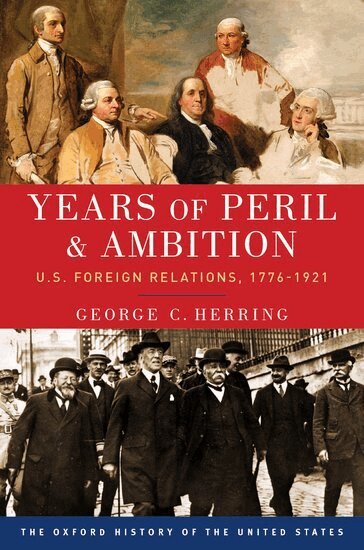
Praised in the New York Times Book Review for its "Herculean power of synthesis," George C. Herring's 2008 From Colony to Superpower has won wide acclaim from critics and readers alike. Years of Peril and Ambition: U.S. Foreign Relations, 1776-1921 is the first volume of a new split paperback edition of that masterwork, making this award-winning title accessible to those with a particular interest in the first half of the United States' history. This first volume of Herring's international narrative charts the rise of the United States from a loose grouping of British colonies huddled along the Atlantic coast of North America into an emerging world power at the end of World War I. It tells an epic story of restless settlers pushing against weak restraints; of explorers, sea captains, adventurers, merchants, and missionaries carrying American ways to new lands. It analyzes countless crises, some resulting in war and others resolved peacefully. Above all, it is the tale of United States' expansion, commercial and political, across the North American continent, into the Caribbean and Pacific Ocean regions, and, economically, worldwide. Herring brings this first segment of America's dramatic emergence as a superpower to a close with the United States' post-World War I rise to the status of the world's most powerful nation, poised-however unsteadily-for global engagement in what would be called the American Century.Years of Peril and Ambition highlights the ongoing impact of the nation's international affairs on the household names of U.S. history but also on ordinary citizens. Featuring a grand cast of characters, encompassing statesmen and presidents, diplomats and foreigners, and rogues and rascals alike, this fast-paced account illuminates the central importance of foreign relations to the existence and survival of the nation.
209 kr
Skickas
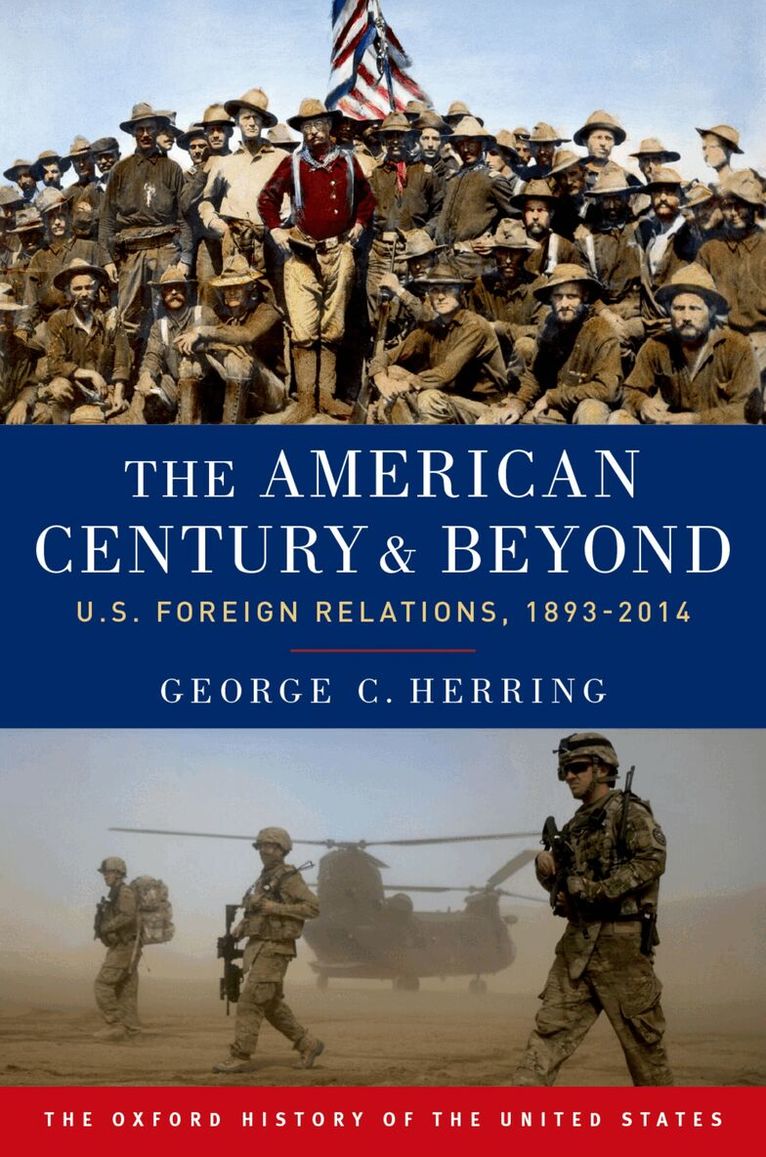
In his last years as president of the United States, an embattled George Washington yearned for a time when his nation would have "the strength of a Giant and there will be none who can make us afraid." At the turn of the twentieth century, the United States seemed poised to achieve a position of world power beyond what even Washington could have imagined.In The American Century and Beyond: U.S. Foreign Relations, 1893-2014, the second volume of a new split paperback edition of the award-winning From Colony to Superpower, George C. Herring recounts the rise of the United States from the dawn of what came to be known as the American Century. This fast-paced narrative tells a story of stunning successes and tragic failures, illuminating the central importance of foreign relations to the existence and survival of the nation. Herring shows how policymakers defined American interests broadly to include territorial expansion, access to growing markets, and the spread of the "American way of life." He recounts the United States' domination of the Caribbean and Pacific, its decisive involvement in two world wars, and the eventual victory in the half-century Cold War that left it, after the collapse of the Soviet Union, the world's lone superpower.But the unipolar moment turned out to be stunningly brief. Since the turn of the twenty-first century, conflicts in Afghanistan and Iraq and the emergence of nations such as Brazil, Russia, India, and China have left the United States in a position that is uncertain at best. A new chapter brings Herring's sweeping narrative up through the Global War on Terror to the present.
597 kr
Skickas inom 5-8 vardagar
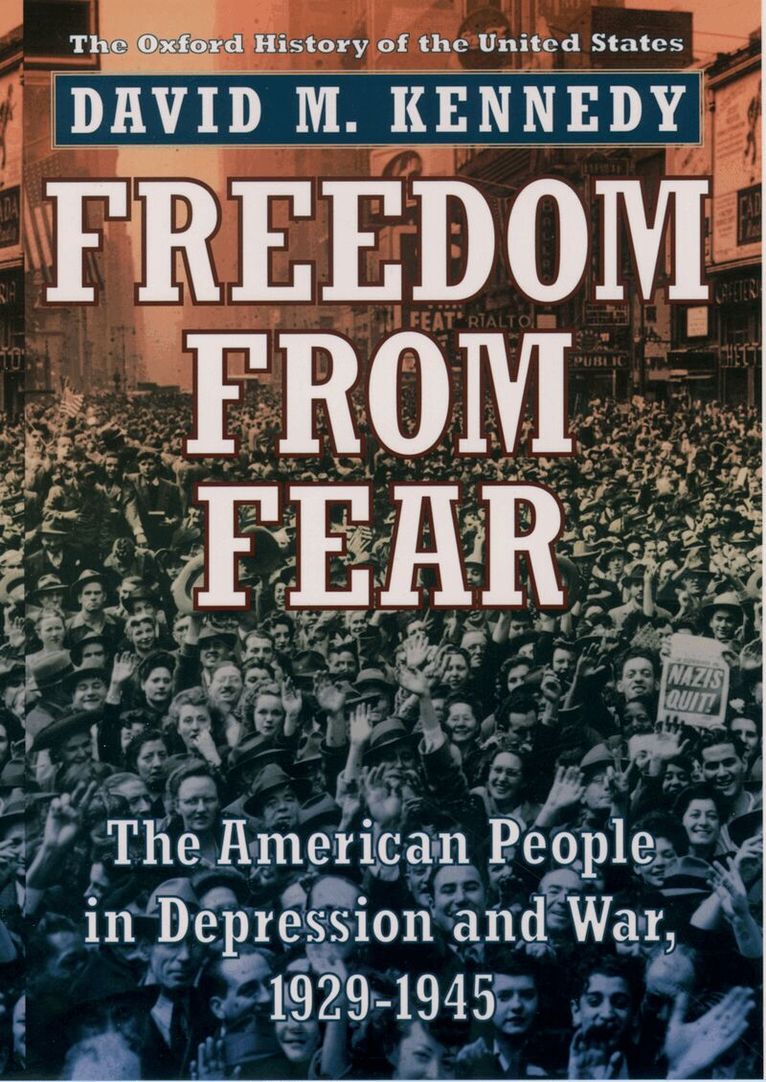
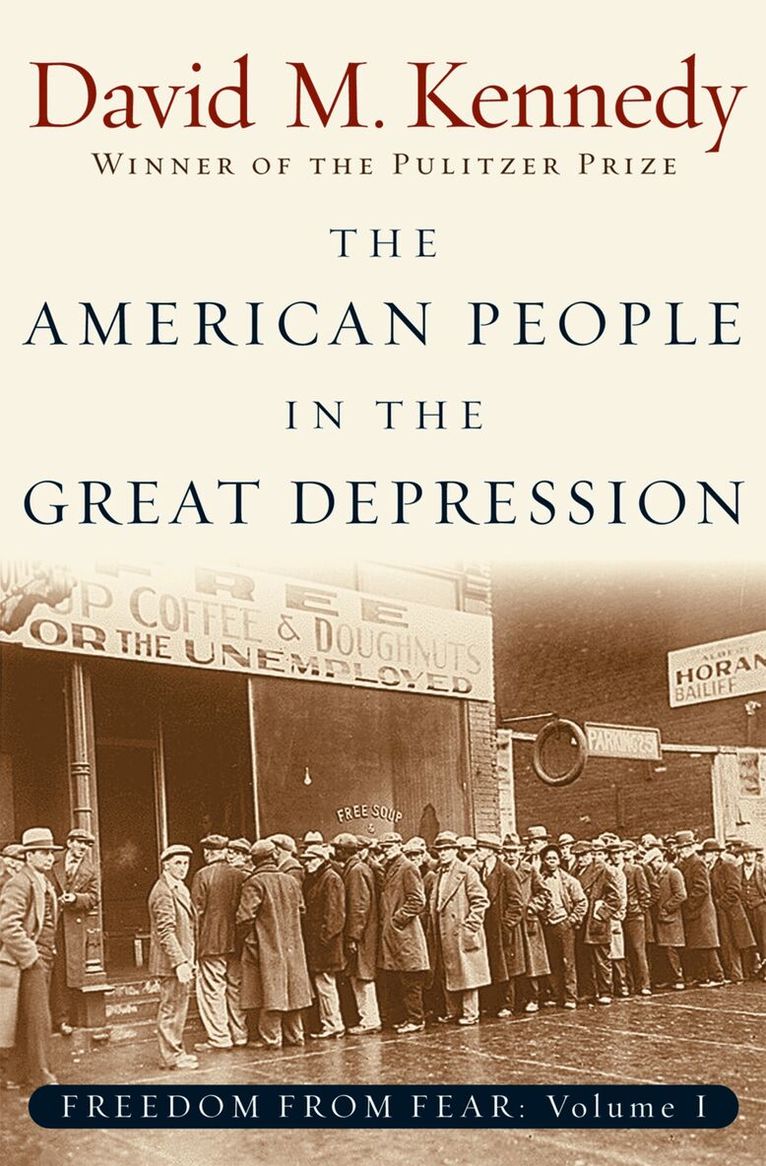
Between 1929 and 1945, two great travails were visited upon the American people: the Great Depression and World War II. Freedom From Fear tells the story of how Americans endured, and eventually prevailed, in the face of those unprecedented calamities.The Depression was both a disaster and an opportunity. As David Kennedy vividly demonstrates, the economic crisis of the 1930s was far more than a simple reaction to the alleged excesses of the 1920s. For more than a century before 1929, America's unbridled industrial revolution had gyrated through repeated boom and bust cycles, wastefully consuming capital and inflicting untold misery on city and countryside alike. Nor was the fabled prosperity of the 1920s as uniformly shared as legend portrays. Countless Americans, especially if they were farmers, African Americans, or recent immigrants, eked out thread bare lives on the margins of national life. For them, the Depression was but another of the ordeals of fear and insecurity with which they were sadly familiar.Franklin Roosevelt's New Deal wrung from the trauma of the 1930s a lasting legacy of economic and social reform, including the Social Security Act, new banking and financial laws, regulatory legislation, and new opportunities for organized labor. Taken together, those reforms gave a measure of security to millions of Americans who had never had much of it, and with it a fresh sense of having a stake in their country. Freedom From Fear tells the story of the New Deal's achievements, without slighting its shortcomings, contradictions, and failures. It is a story rich in drama and peopled with unforgettable personalities, including the incandescent but enigmatic figure of Roosevelt himself. Even as the New Deal was coping with the Depression, a still more fearsome menace was developing abroad--Hitler's thirst for war in Europe, coupled with the imperial ambitions of Japan in Asia. The same generation of Americans who battled the Depression eventually had to shoulder arms in another conflict that wreaked world wide destruction, ushered in the nuclear age, and forever changed their own way of life and their country's relationship to the rest of the world. Freedom From Fear explains how the nation agonized over its role in World War II, how it fought the war, why the United States won, and why the consequences of victory were sometimes sweet, sometimes ironic. In a compelling narrative, Kennedy analyzes the determinants of American strategy, the painful choices faced by commanders and statesmen, and the agonies inflicted on the millions of ordinary Americans who were compelled to swallow their fears and face battle as best they could. Freedom From Fear is a comprehensive and colorful account of the most convulsive period in American history, excepting only the Civil War--a period that formed the crucible in which modern America was formed. The Oxford History of the United StatesThe Atlantic Monthly has praised The Oxford History of the United States as "the most distinguished series in American historical scholarship," a series that "synthesizes a generation's worth of historical inquiry and knowledge into one literally state-of-the-art book. Who touches these books touches a profession."Conceived under the general editorship of one of the leading American historians of our time, C. Vann Woodward, The Oxford History of the United States blends social, political, economic, cultural, diplomatic, and military history into coherent and vividly written narrative. Previous volumes are Robert Middlekauff's The Glorious Cause: The American Revolution; James M. McPherson's Battle Cry of Freedom: The Civil War Era (which won a Pulitzer Prize and was a New York Times Best Seller); and James T. Patterson's Grand Expectations: The United States 1945-1974 (which won a Bancroft Prize).
839 kr
Skickas inom 3-6 vardagar
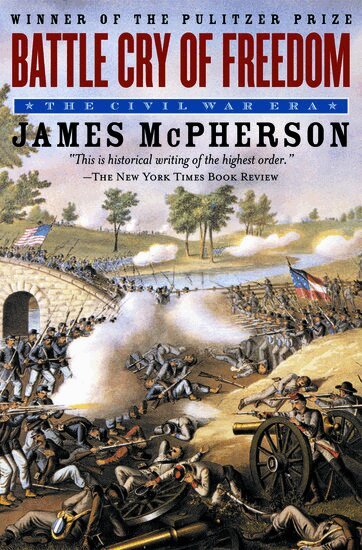
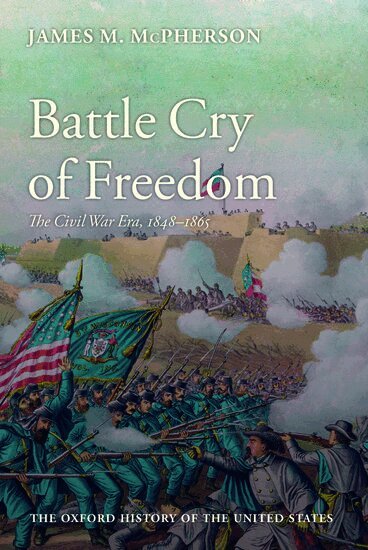
This book covers one of the most turbulent periods of the USA's history, from the Mexican War in 1848 to the end of the Civil War in 1865. With a broad historical sweep, it traces the heightening sectional conflict of the 1850s: the growing estrangement of the South and its impassioned defence of slavery; the formation of the Republican Party in the North, with its increasing opposition to slavery; and the struggle over territorial expansion, with its accompanying social tensions and economic expansion. The whole panorama of the Civil War is captured in these pages, from the military campaign, which is described with vividness, immediacy, a grasp of strategy and logistics, and a keen awareness of the military leaders and the common soldiers involved, to its political and social aspects.
382 kr
Skickas inom 5-8 vardagar
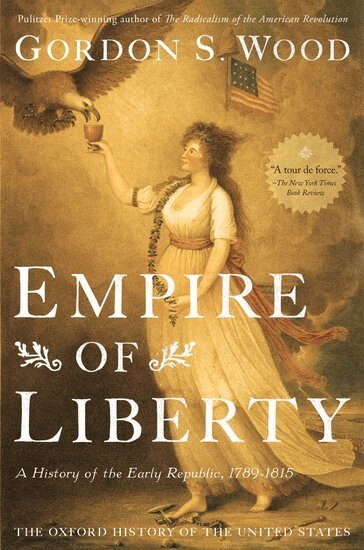
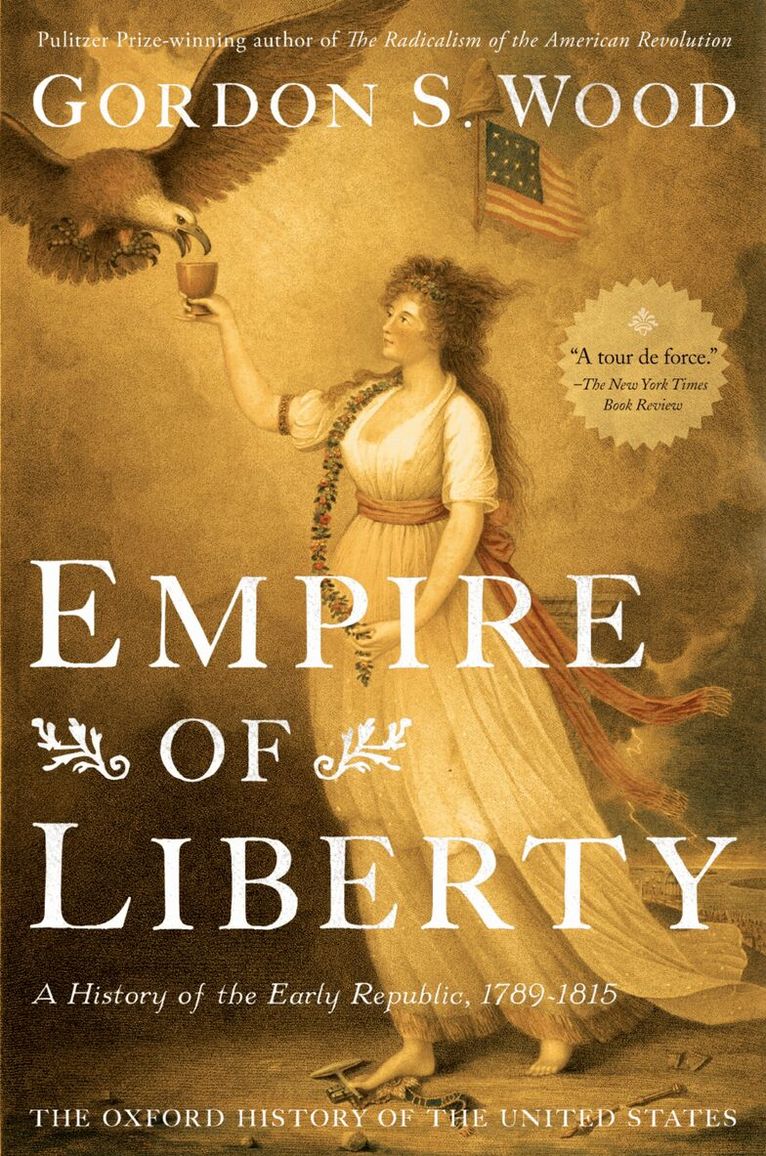
The Oxford History of the United States is by far the most respected multi-volume history of the USA. The series includes three Pulitzer Prize winners, two New York Times bestsellers, and winners of the Bancroft and Parkman Prizes. Now, in the newest volume in the series, one of America's most esteemed historians, Gordon S. Wood, offers a brilliant account of the early American Republic, ranging from 1789 and the beginning of the national government to the end of the War of 1812.As Wood reveals, the period was marked by tumultuous change in all aspects of American life--in politics, society, economy, and culture. The men who founded the new government had high hopes for the future, but few of their hopes and dreams worked out quite as they expected. They hated political parties but parties nonetheless emerged. Some wanted the United States to become a great fiscal-military state like those of Britain and France; others wanted the country to remain a rural agricultural state very different from the European states. Instead, by 1815 the United States became something neither group anticipated. Many leaders expected American culture to flourish and surpass that of Europe; instead it became popularized and vulgarized. The leaders also hope to see the end of slavery; instead, despite the release of many slaves and the end of slavery in the North, slavery was stronger in 1815 than it had been in 1789. Many wanted to avoid entanglements with Europe, but instead the country became involved in Europe's wars and ended up waging another war with the former mother country. Still, with a new generation emerging by 1815, most Americans were confident and optimistic about the future of their country. Integrating all aspects of life, from politics and law to the economy and culture, Empire of Liberty offers a marvelous account of this pivotal era when America took its first unsteady steps as a new and rapidly expanding nation.
Del 5 - Oxford History of the United States
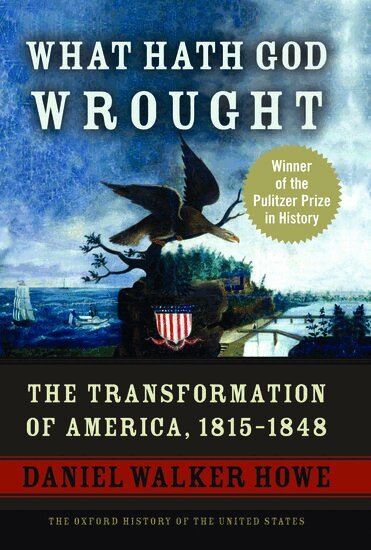
What Hath God Wrought
The Transformation of America, 1815-1848
Inbunden, Engelska, 2008
313 kr
Skickas inom 5-8 vardagar
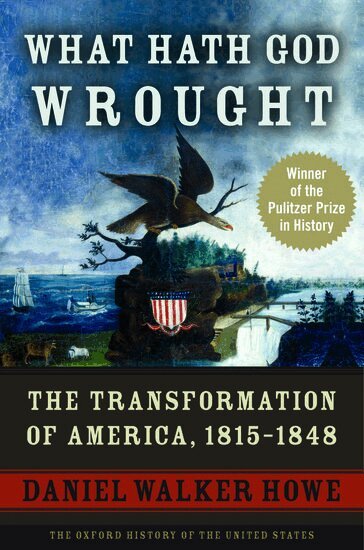
The Oxford History of the United States is by far the most respected multi-volume history of our nation. The series includes two Pulitzer Prize winners, two New York Times bestsellers, and winners of the Bancroft and Parkman Prizes. Now, in What Hath God Wrought, historian Daniel Walker Howe illuminates the period from the battle of New Orleans to the end of the Mexican-American War, an era when the United States expanded to the Pacific and won control over the richest part of the North American continent. Howe's panoramic narrative portrays revolutionary improvements in transportation and communications that accelerated the extension of the American empire. Railroads, canals, newspapers, and the telegraph dramatically lowered travel times and spurred the spread of information. These innovations prompted the emergence of mass political parties and stimulated America's economic development from an overwhelmingly rural country to a diversified economy in which commerce and industry took their place alongside agriculture. In his story, the author weaves together political and military events with social, economic, and cultural history. He examines the rise of Andrew Jackson and his Democratic party, but contends that John Quincy Adams and other Whigs--advocates of public education and economic integration, defenders of the rights of Indians, women, and African-Americans--were the true prophets of America's future. He reveals the power of religion to shape many aspects of American life during this period, including slavery and antislavery, women's rights and other reform movements, politics, education, and literature. Howe's story of American expansion culminates in the bitterly controversial but brilliantly executed war waged against Mexico to gain California and Texas for the United States. By 1848 America had been transformed. What Hath God Wrought provides a monumental narrative of this formative period in United States history.
261 kr
Skickas
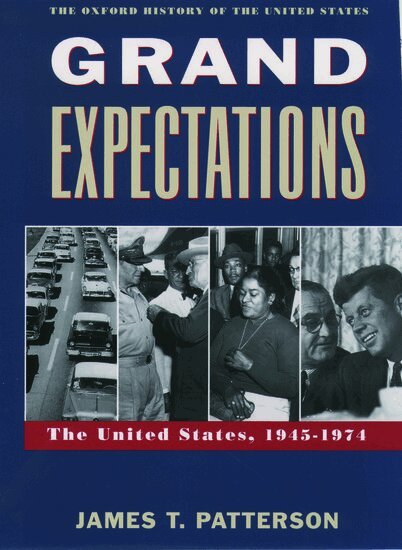
Beginning in 1945, America rocketed through a quarter-century of extraordinary economic growth, experiencing an amazing boom that soared to unimaginable heights in the 1960s. At one point, in the late 1940s, American workers produced 57 percent of the planet's steel, 62 percent of the oil, 80 percent of the automobiles. The U.S. then had three-fourths of the world's gold supplies. English Prime Minister Edward Heath later said that the United States in the post-War era enjoyed "the greatest prosperity the world has ever known." It was a boom that produced a national euphoria, a buoyant time of grand expectations and an unprecedented faith in our government, in our leaders, and in the American dream--an optimistic spirit which would be shaken by events in the '60s and '70s, and particularly by the Vietnam War.Now, in Grand Expectations, James T. Patterson has written a highly readable and balanced work that weaves the major political, cultural, and economic events of the period into a superb portrait of America from 1945 through Watergate. Here is an era teeming with memorable events--from the bloody campaigns in Korea and the bitterness surrounding McCarthyism to the assassinations of the Kennedys and Martin Luther King, to the Vietnam War, Watergate, and Nixon's resignation. Patterson excels at portraying the amazing growth after World War II--the great building boom epitomized by Levittown (the largest such development in history) and the baby boom (which exploded literally nine months after V-J Day)--as well as the resultant buoyancy of spirit reflected in everything from streamlined toasters, to big, flashy cars, to the soaring, butterfly roof of TWA's airline terminal in New York. And he shows how this upbeat, can-do mood spurred grander and grander expectations as the era progressed.Of course, not all Americans shared in this economic growth, and an important thread running through the book is an informed and gripping depiction of the civil rights movement--from the electrifying Brown v. Board of Education decision, to the violent confrontations in Little Rock, Birmingham, and Selma, to the landmark civil rights acts of 1964 and 1965. Patterson also shows how the Vietnam War--which provoked LBJ's growing credibility gap, vast defense spending that dangerously unsettled the economy, and increasingly angry protests--and a growing rights revolution (including demands by women, Hispanics, the poor, Native Americans, and gays) triggered a backlash that widened hidden rifts in our society, rifts that divided along racial, class, and generational lines. And by Nixon's resignation, we find a national mood in stark contrast to the grand expectations of ten years earlier, one in which faith in our leaders and in the attainability of the American dream was becoming shaken.Grand Expectations is the newest volume in the prestigious Oxford History of the United States. The earlier releases were highly acclaimed, and one, Battle Cry of Freedom, was both a New York Times bestseller and a winner of the Pulitzer Prize. Patterson's volume takes its rightful place beside these distinguished works. It is a brilliant summation of the years that created the America that we know today, a time of setbacks amid unmatched and lasting achievements.
494 kr
Skickas inom 5-8 vardagar
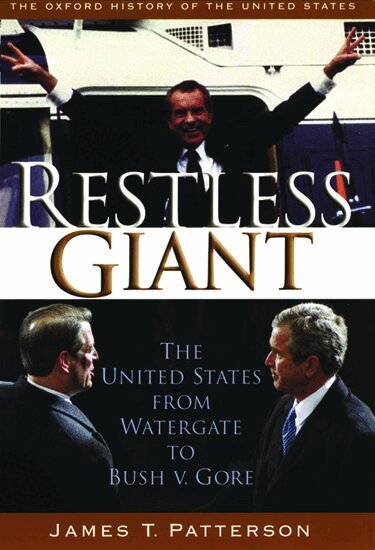
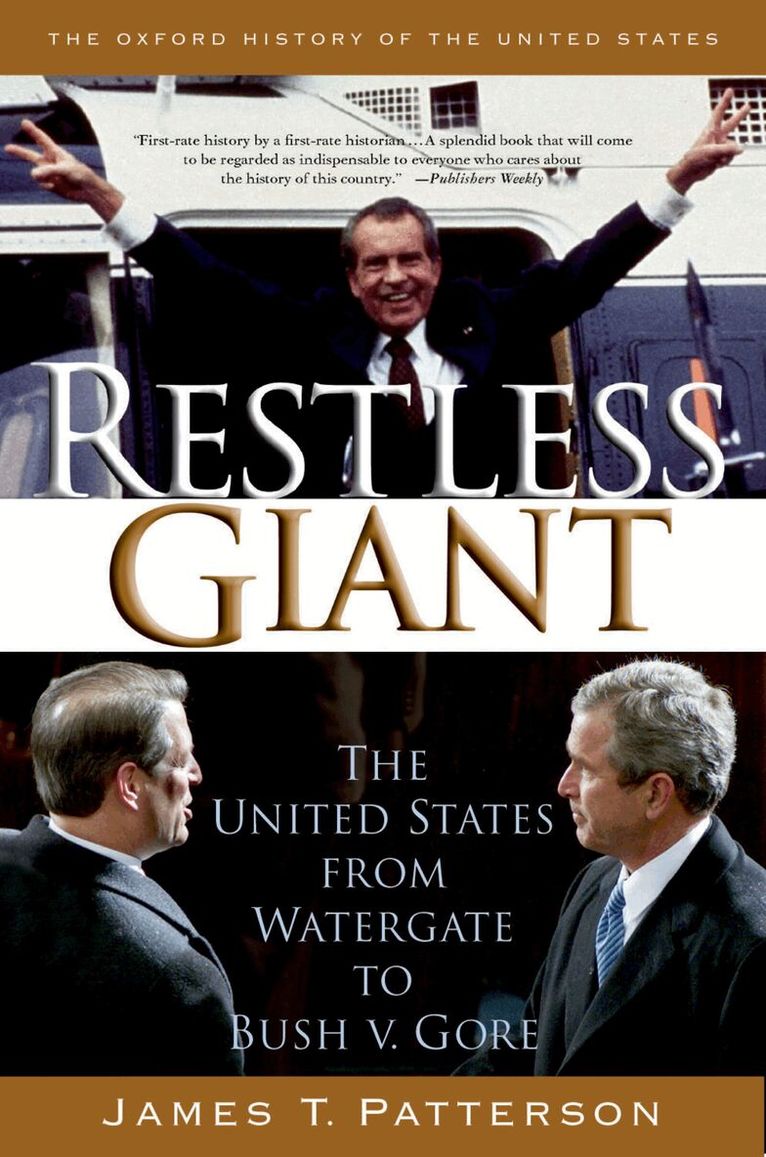
Restless Giant is a magisterial interpretation of American history between 1974, when the crisis of Watergate imperiled the nation, and November 2000, when the bitterly contested presidential election marked an all-time low in confidence in the electoral process. James T. Patterson, whose earlier contribution to the Oxford History of the United States, Grand Expectations (1996), won a Bancroft Prize for History, offers in this follow-up volume a vivid narrative of this quarter century which did so much to shape American life today. A host of memorable characters, notably Ronald Reagan and Bill Clinton, sought to transform the nation. Conservatives, including a resurgent Religious Right, battled liberals in 'culture wars' that appeared to cut the country in two. The frightening Cold War finally ended, whereupon Americans faced bewildering new developments in international relations. Though a military colossus, the United States discovered-in Panama, Somalia, Bosnia, Iraq-that it was far from easy to direct the outcome of overseas events. Restless Giant explores a wide range of cultural, social, and economic concerns. Many of these-abiding racial tensions, rising income inequality, dismal inner-city schools, tasteless popular entertainment, an ever more exuberant materialism-drove critics to label these years as an 'Era of Conflict', an 'Age of Limits', and an 'Era of Decline'. Patterson, highlighting the buoyancy of American culture, is not so pessimistic. The economy, having wallowed in 'stagflation' between 1974 and 1982, later surged ahead. By 2000, most Americans lived far more comfortably than they had in the 1970s. Thanks to rising tolerance and a powerful rights consciousness, many groups-racial and ethnic minorities, Catholics and Jews, women, the handicapped, senior citizens, gay people-encountered considerably less bigotry and discrimination than they had in the past.
235 kr
Skickas
Between 1929 and 1945, two great travails were visited upon the American people: the Great Depression and World War II. Freedom from Fear tells the story of how Americans endured, and eventually prevailed, in the face of those unprecedented calamities.The Depression was both a disaster and an opportunity. As David Kennedy vividly demonstrates, the economic crisis of the 1930s was far more than a simple reaction to the alleged excesses of the 1920s. For more than a century before 1929, America's unbridled industrial revolution had gyrated through repeated boom and bust cycles, wastefullly consuming capital and inflicting untold misery on city and countryside alike. Nor was the fabled prosperity of the 1920s as uniformly shared ag legend portrays. Countless Americans, especially if they were farmers, African Americans, or recent immigrants, eked out thread bare lives on the margins of national life. For them the Depression was but another of the ordeals of fear and insecurity with which they were sadly familiar.Franklin Roosevelt's New Deal wrung from the trauma of the 1930s a lasting legacy of economic and social reform, in cluding the Social Security Act, new banking and financial laws, regulatory legistlation, and new opportunities for organized labour. Taken together, those reforms gave a measure of security to millons of Americans who had never had much of it, and with a fresh sense of having a stake in their country.Freedom from Fear tells the story of the New Deal's achievments, without slighting its shortcomings, contraditions and failures. It is a story rinch in drama and peopled with unforgettable personalities, including the incandescent but enigmatic figure of Roosevelt himself.Even as the New Deal was coping with the Depression, a still more fearsome menace was developing abroad--Hitler's thirst for war in Europe, coupled with the imperial ambitions of Japan in Asia. The same generation of Americans who battled the Depression evenutally had to shoulder the arms in another conflict that wreaked world wide destruction, ushered in the nuclear age and forever changed their own way of life and their country's relationship to the rest of the world. Freedom from Fear explains how the nation agonized over its role in World War II, how it fought the war, why the United States won, and why the consequences of victory were sometimes sweet, sometimes ironic. In a compelling narrative, Kenney analyses the determinants of American strategy, the painful choices faced by commanders and statesmen, and the agonies inflicted on the millions of ordinary Americans who were compelled to swallow their fears and face battle as best they could.Freedom from Fear is a comprehensive and colourful account of the most convulsive period in American history, excepting only the Civil War - a period that formed the crucible in which modern America was formed.
494 kr
Skickas inom 5-8 vardagar
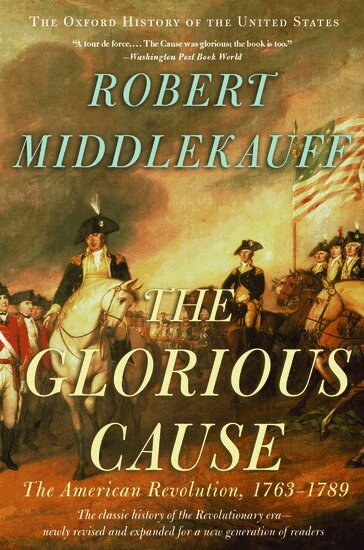
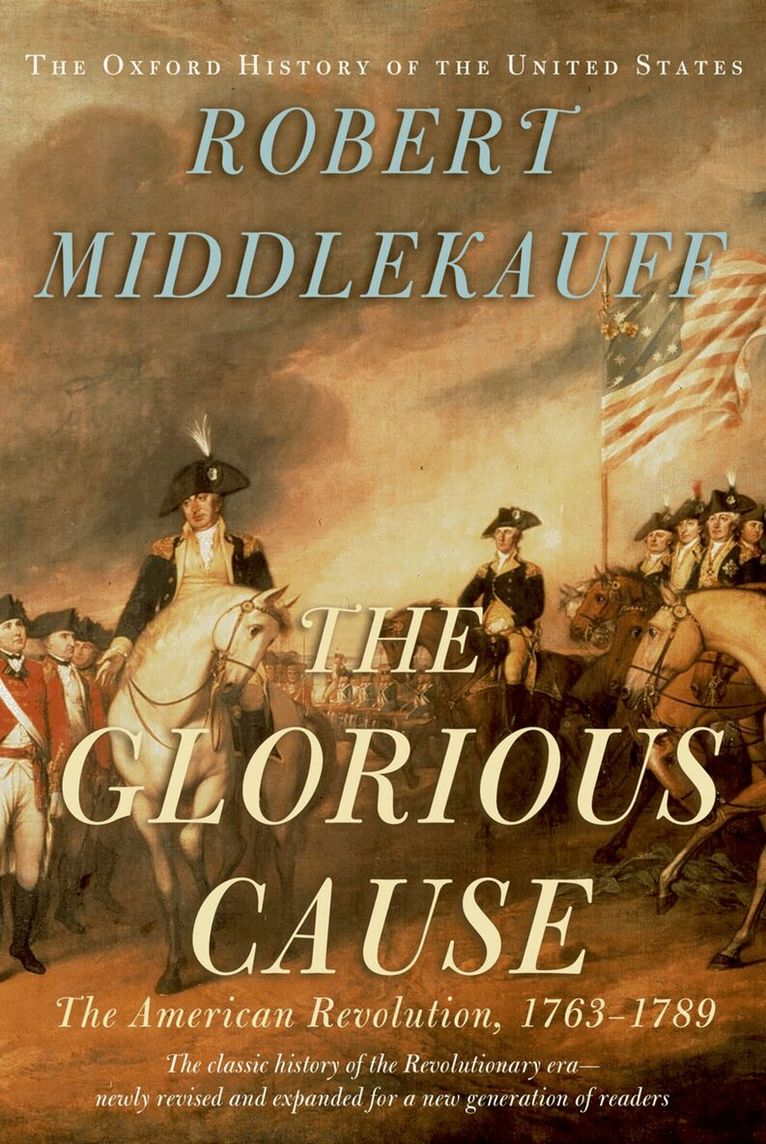
The first book to appear in the illustrious Oxford History of the United States, this critically acclaimed volume--a finalist for the Pulitzer Prize--offers an unsurpassed history of the Revolutionary War and the birth of the American republic.Beginning with the French and Indian War and continuing to the election of George Washington as first president, Robert Middlekauff offers a panoramic history of the conflict between England and America, highlighting the drama and anguish of the colonial struggle for independence. Combining the political and the personal, he provides a compelling account of the key events that precipitated the war, from the Stamp Act to the Tea Act, tracing the gradual gathering of American resistance that culminated in the Boston Tea Party and "the shot heard 'round the world." The heart of the book features a vivid description of the eight-year-long war, with gripping accounts of battles and campaigns, ranging from Bunker Hill and Washington's crossing of the Delaware to the brilliant victory at Hannah's Cowpens and the final triumph at Yorktown, paying particular attention to what made men fight in these bloody encounters. The book concludes with an insightful look at the making of the Constitution in the Philadelphia Convention of 1787 and the struggle over ratification. Through it all, Middlekauff gives the reader a vivid sense of how the colonists saw these events and the importance they gave to them. Common soldiers and great generals, Sons of Liberty and African slaves, town committee-men and representatives in congress--all receive their due. And there are particularly insightful portraits of such figures as Sam and John Adams, James Otis, Thomas Jefferson, George Washington, and many others. This new edition has been revised and expanded, with fresh coverage of topics such as mob reactions to British measures before the War, military medicine, women's role in the Revolution, American Indians, the different kinds of war fought by the Americans and the British, and the ratification of the Constitution. The book also has a new epilogue and an updated bibliography.The cause for which the colonists fought, liberty and independence, was glorious indeed. Here is an equally glorious narrative of an event that changed the world, capturing the profound and passionate struggle to found a free nation. The Oxford History of the United StatesThe Oxford History of the United States is the most respected multi-volume history of our nation. The series includes three Pulitzer Prize winners, a New York Times bestseller, and winners of the Bancroft and Parkman Prizes. The Atlantic Monthly has praised it as "the most distinguished series in American historical scholarship," a series that "synthesizes a generation's worth of historical inquiry and knowledge into one literally state-of-the-art book." Conceived under the general editorship of C. Vann Woodward and Richard Hofstadter, and now under the editorship of David M. Kennedy, this renowned series blends social, political, economic, cultural, diplomatic, and military history into coherent and vividly written narrative.
238 kr
Skickas inom 5-8 vardagar
On October 24, 1929, America met the greatest economic devastation it had ever known. In this first instalment of his Pulitzer Prize-winning Freedom from Fear, Kennedy tells how America endured, and eventually prevailed, in the face of that unprecedented calamity.Kennedy vividly demonstrates that the economic crisis of the 1930s was more than a reaction to the excesses of the 1920s. For more than a century before the Crash, America's unbridled industrial revolution had gyrated through repeated boom and bust cycles, consuming capital and inflicting misery on city and countryside alike. Nor was the alleged prosperity of the 1920s as uniformly shared as legend portrays. Countless Americans eked out threadbare lives on the margins of national life.Roosevelt's New Deal wrenched opportunity from the trauma of the 1930s and created a lasting legacy of economic and social reform, but it was afflicted with shortcomings and contradictions as well. With an even hand Kennedy details the New Deal's problems and defeats, as well as its achievements. He also sheds fresh light on its incandescent but enigmatic author, Franklin D. Roosevelt.Marshalling unforgettable narratives that feature prominent leaders as well as lesser-known citizens, The American People in the Great Depression tells the story of a resilient nation finding courage in an unrelenting storm.
246 kr
Skickas inom 5-8 vardagar
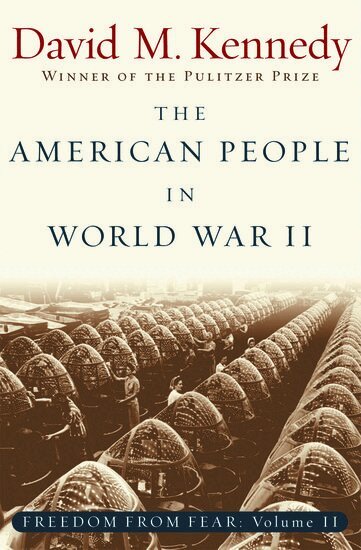
Even as the New Deal was coping with the Depression, a new menace was developing abroad. Exploiting Germany's own economic burdens, Hitler reached out to the disaffected, turning their aimless discontent into loyal support for his Nazi Party. In Asia, Japan harbored imperial ambitions of its own. The same generation of Americans who battled the Depression eventually had to shoulder arms in another conflict that wreaked worldwide destruction, ushered in the nuclear age, and forever changed their way of life and their country's relationship to the rest of the world.The American People in World War II--the second installment of Kennedy's Pulitzer Prize-winning Freedom from Fear--explains how the nation agonized over its role in the conflict, how it fought the war, why the United States emerged victorious, and why the consequences of victory were sometimes sweet, sometimes ironic. In a compelling narrative, Kennedy analyzes the determinants of American strategy, the painful choices faced by commanders and statesmen, and the agonies inflicted on the millions of ordinary Americans who were compelled to swallow their fears and face battle as best they could. The American People in World War II is a gripping narrative and an invaluable analysis of the trials and victories through which modern America was formed.
240 kr
Skickas
The first book to appear in the illustrious Oxford History of the United States, this critically acclaimed volume--a finalist for the Pulitzer Prize--offers an unsurpassed history of the Revolutionary War and the birth of the American republic.Beginning with the French and Indian War and continuing to the election of George Washington as first president, Robert Middlekauff offers a panoramic history of the conflict between England and America, highlighting the drama and anguish of the colonial struggle for independence. Combining the political and the personal, he provides a compelling account of the key events that precipitated the war, from the Stamp Act to the Tea Act, tracing the gradual gathering of American resistance that culminated in the Boston Tea Party and "the shot heard 'round the world." The heart of the book features a vivid description of the eight-year-long war, with gripping accounts of battles and campaigns, ranging from Bunker Hill and Washington's crossing of the Delaware to the brilliant victory at Hannah's Cowpens and the final triumph at Yorktown, paying particular attention to what made men fight in these bloody encounters. The book concludes with an insightful look at the making of the Constitution in the Philadelphia Convention of 1787 and the struggle over ratification. Through it all, Middlekauff gives the reader a vivid sense of how the colonists saw these events and the importance they gave to them. Common soldiers and great generals, Sons of Liberty and African slaves, town committee-men and representatives in congress--all receive their due. And there are particularly insightful portraits of such figures as Sam and John Adams, James Otis, Thomas Jefferson, George Washington, and many others. This new edition has been revised and expanded, with fresh coverage of topics such as mob reactions to British measures before the War, military medicine, women's role in the Revolution, American Indians, the different kinds of war fought by the Americans and the British, and the ratification of the Constitution. The book also has a new epilogue and an updated bibliography.The cause for which the colonists fought, liberty and independence, was glorious indeed. Here is an equally glorious narrative of an event that changed the world, capturing the profound and passionate struggle to found a free nation.
318 kr
Kommande
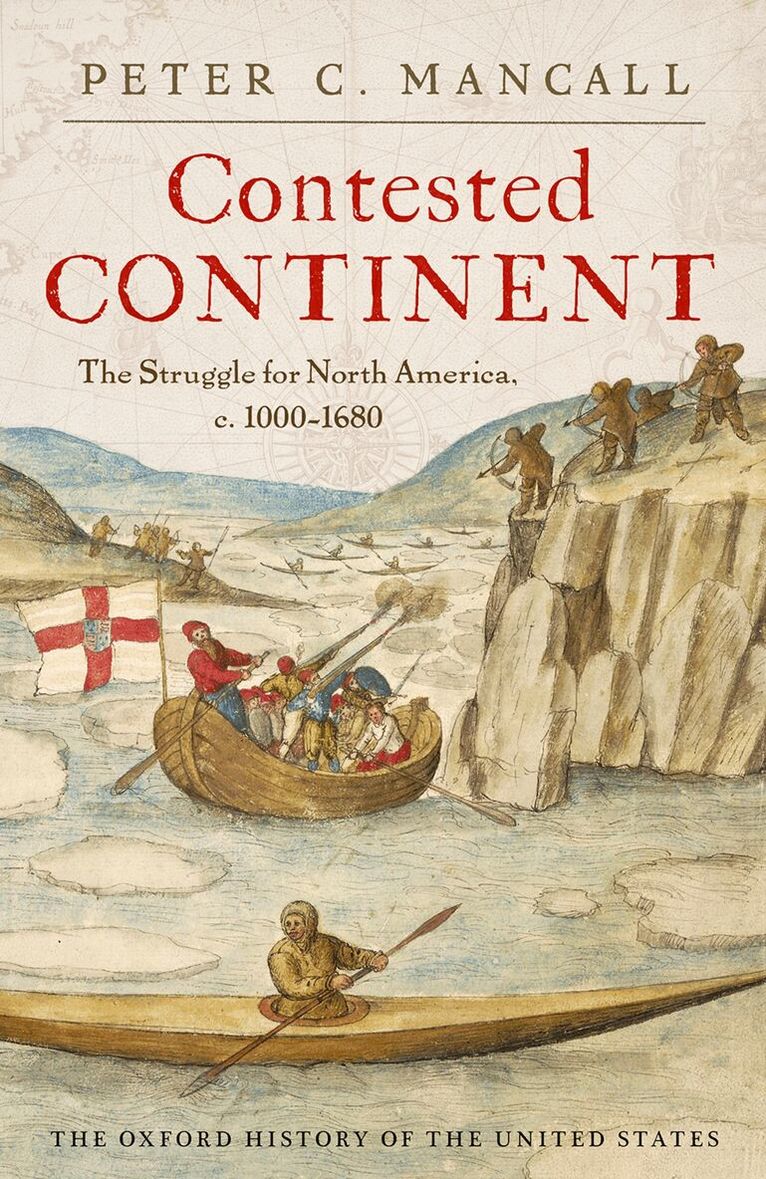
The newest volume in the acclaimed Oxford History of the United States series, Contested Continent recounts the origins of "America" and how it came to birth the United States.The Oxford History of the United States is by far the most respected multi-volume history of our nation. The series includes three Pulitzer Prize winners, two New York Times bestsellers, and winners of the Bancroft and Parkman Prizes. In the newest volume in the series, Peter C. Mancall recounts how North America was forged from the experiences of millions of Indigenous women and men as well as Europeans and Africans. The first volume of the Oxford History of the United States series, Contested Continent is also the most ambitiously far-ranging history of North America concentrating on the period from c. 1000 to 1680, from the arrival of Norse explorers to an explosion of revolts that underlined the stubborn struggle to master the continent some two centuries after Columbus's landfall. This history spans the continent from the North Atlantic to the West Indies and includes the entire Atlantic basin. Mancall emphasizes the experiences of diverse peoples while, at the same time, telling a new story about the origins of major aspects of American culture. He illuminates the rise of a booming trans-Atlantic economy based on the extraction of abundant American natural resources; the central role that European migrants and their descendants played in the enslavement of Africans and the displacement of Indigenous peoples; and the spread of self-governing polities where many enjoyed religious freedom. None of these developments was inevitable. Conflicts broke out frequently as different peoples battled over precious resources. Europeans' appetites for material gain and expanding Christendom brought horrific consequences for those brutalized, enslaved, and vulnerable to infectious diseases.This is a sweeping history of developments crucial to the eventual founding of the United States. Contested Continent underscores the titanic struggles between the peoples who had populated the Americas for centuries and the migrants from the Old World who initiated changes that created a New World that offered boundless opportunities for some and crushed the aspirations of others.
The Republic for Which It Stands
The United States during Reconstruction and the Gilded Age, 1865-1896
Inbunden, Engelska, 2017
334 kr
Skickas inom 5-8 vardagar
The Oxford History of the United States is the most respected multivolume history of the American nation. In the newest volume in the series, The Republic for Which It Stands, acclaimed historian Richard White offers a fresh and integrated interpretation of Reconstruction and the Gilded Age as the seedbed of modern America.At the end of the Civil War the leaders and citizens of the victorious North envisioned the country's future as a free-labor republic, with a homogenous citizenry, both black and white. The South and West were to be reconstructed in the image of the North. Thirty years later Americans occupied an unimagined world. The unity that the Civil War supposedly secured had proved ephemeral. The country was larger, richer, and more extensive, but also more diverse. Life spans were shorter, and physical well-being had diminished, due to disease and hazardous working conditions. Independent producers had become wage earners. The country was Catholic and Jewish as well as Protestant, and increasingly urban and industrial. The "dangerous" classes of the very rich and poor expanded, and deep differences-ethnic, racial, religious, economic, and political-divided society. The corruption that gave the Gilded Age its name was pervasive. These challenges also brought vigorous efforts to secure economic, moral, and cultural reforms. Real change-technological, cultural, and political-proliferated from below more than emerging from political leadership. Americans, mining their own traditions and borrowing ideas, produced creative possibilities for overcoming the crises that threatened their country.In a work as dramatic and colorful as the era it covers, White narrates the conflicts and paradoxes of these decades of disorienting change and mounting unrest, out of which emerged a modern nation whose characteristics resonate with the present day.
203 kr
Skickas
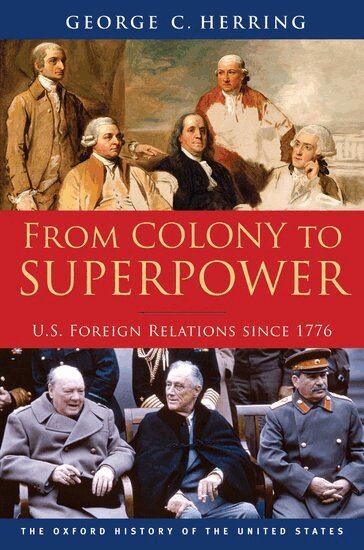
A finalist for the 2008 National Book Critics Circle Award for Nonfiction, this prize-winning and critically acclaimed history uses foreign relations as the lens through which to tell the story of America's dramatic rise from thirteen disparate colonies huddled along the Atlantic coast to the world's greatest superpower. George C. Herring tells a story of stunning successes and sometimes tragic failures, captured in a fast-paced narrative that illuminates the central importance of foreign relations to the existence and survival of the nation, and highlights its ongoing impact on the lives of ordinary citizens. He shows how policymakers defined American interests broadly to include territorial expansion, access to growing markets, and the spread of an "American way" of life. And Herring does all this in a story rich in human drama and filled with epic events. Statesmen such as Benjamin Franklin and Woodrow Wilson and Harry Truman and Dean Acheson played key roles in America's rise to world power. But America's expansion as a nation also owes much to the adventurers and explorers, the sea captains, merchants and captains of industry, the missionaries and diplomats, who discovered or charted new lands, developed new avenues of commerce, and established and defended the nation's interests in foreign lands. From Colony to Superpower captures all this as it tells the dramatic story of America's emergence as superpower--its birth in revolution, its troubled present, and its uncertain future.
584 kr
Skickas
The Oxford History of the United States is by far the most respected multi-volume history of the USA. The series includes three Pulitzer Prize winners, two New York Times bestsellers, and winners of the Bancroft and Parkman Prizes. Now, in the newest volume in the series, one of America's most esteemed historians, Gordon S. Wood, offers a brilliant account of the early American Republic, ranging from 1789 and the beginning of the national government to the end of the War of 1812. As Wood reveals, the period was marked by tumultuous change in all aspects of American life--in politics, society, economy, and culture. The men who founded the new government had high hopes for the future, but few of their hopes and dreams worked out quite as they expected. They hated political parties but parties nonetheless emerged. Some wanted the United States to become a great fiscal-military state like those of Britain and France; others wanted the country to remain a rural agricultural state very different from the European states. Instead, by 1815 the United States became something neither group anticipated. Many leaders expected American culture to flourish and surpass that of Europe; instead it became popularized and vulgarized. The leaders also hope to see the end of slavery; instead, despite the release of many slaves and the end of slavery in the North, slavery was stronger in 1815 than it had been in 1789. Many wanted to avoid entanglements with Europe, but instead the country became involved in Europe's wars and ended up waging another war with the former mother country. Still, with a new generation emerging by 1815, most Americans were confident and optimistic about the future of their country. Integrating all aspects of life, from politics and law to the economy and culture, Empire of Liberty offers a marvelous account of this pivotal era when America took its first unsteady steps as a new and rapidly expanding nation. A Finalist for the Pulitzer Prize for HistoryWinner of the New-York Historical Society American History Book PrizeA New York Times BestsellerSelected as one of the Top 25 Books of 2009 by The Atlantic"On every page of this book, Wood's subtlety and erudition show. Grand in scope and a landmark achievement of scholarship, Empire of Liberty is a tour de force, the culmination of a lifetime of brilliant thinking and writing." --The New York Times Book Review"Empire of Liberty will rightly take its place among the authoritative volumes in this important and influential series."--The Washington Post