Oxford Legal History – serie
Visar alla böcker i serien Oxford Legal History. Handla med fri frakt och snabb leverans.
9 produkter
9 produkter
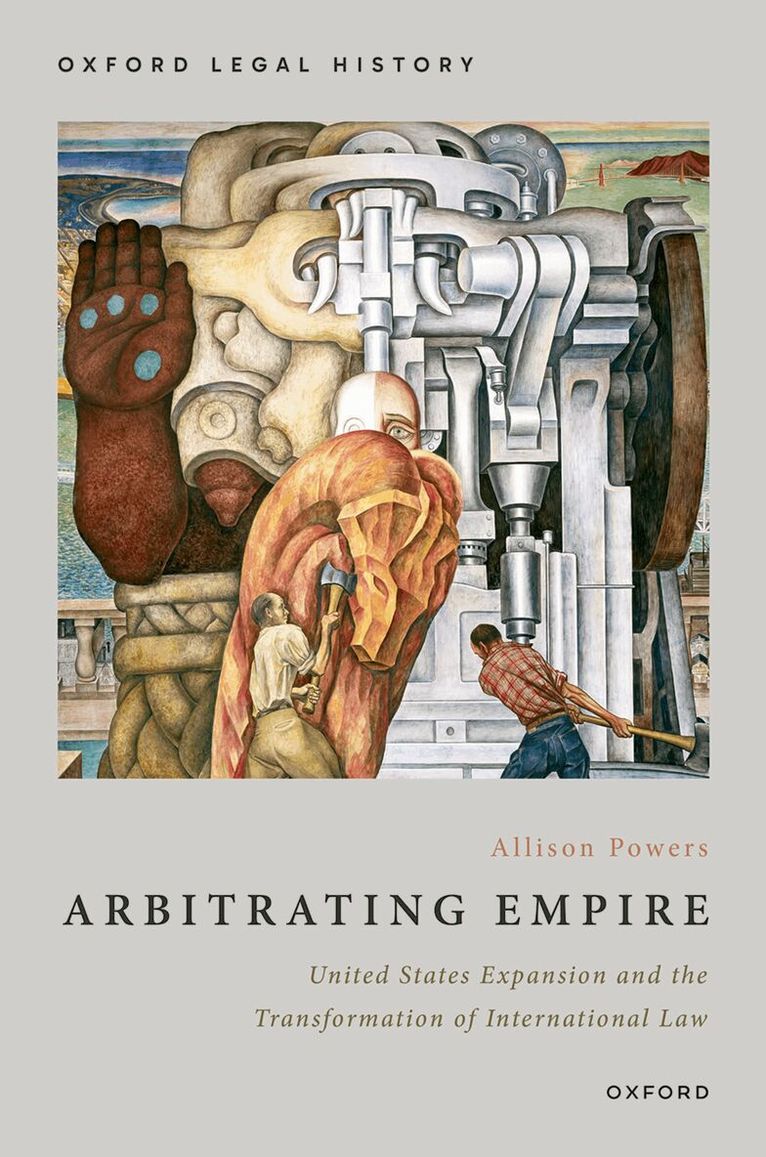
Arbitrating Empire
United States Expansion and the Transformation of International Law
Inbunden, Engelska, 2025
1 138 kr
Skickas inom 5-8 vardagar
Arbitrating Empire offers a new history of the emergence of the United States as a global power-one shaped as much by attempts to insulate the US government from international legal scrutiny as it was by efforts to project influence across the globe. Drawing on extensive archival research in the United States, Mexico, Panama, and the United Kingdom, the book traces how thousands of dispossessed residents of US-annexed territories petitioned international Claims Commissions between the 1870s and the 1930s to charge the United States with violating international legal protections for life and property.Through attention to the consequences of their unexpected claims, Allison Powers demonstrates how colonized subjects, refugees from slavery, and migrant workers transformed a series of tribunals designed to establish the legality of US imperial interventions into sites through which to challenge the legitimacy of US colonial governance. One of the first social histories of international law, the book argues that contests over meanings of sovereignty and state responsibility that would reshape the mid-twentieth-century international order were waged not only at diplomatic conferences, but also in Arizona copper mines, Texas cotton fields, Samoan port cities, Cuban sugar plantations, and the locks and stops of the Panama Canal.Arbitrating Empire uncovers how ordinary people used international law to hold the United States accountable for state-sanctioned violence during the decades when the nation was first becoming a global empire-and demonstrates why State Department attempts to erase their claims transformed international law in ways that continue to shield the US government from liability to this day.
480 kr
Skickas inom 5-8 vardagar
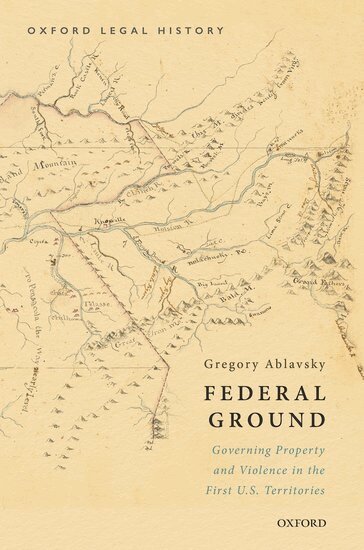
Federal Ground depicts the haphazard and unplanned growth of federal authority in the Northwest and Southwest Territories, the first U.S. territories established under the new territorial system. The nation's foundational documents, particularly the Constitution and the Northwest Ordinance, placed these territories under sole federal jurisdiction and established federal officials to govern them. But, for all their paper authority, these officials rarely controlled events or dictated outcomes. In practice, power in these contested borderlands rested with the regions' pre-existing inhabitants-diverse Native peoples, French villagers, and Anglo-American settlers. These residents nonetheless turned to the new federal government to claim ownership, jurisdiction, protection, and federal money, seeking to obtain rights under federal law. Two areas of governance proved particularly central: contests over property, where plural sources of title created conflicting land claims, and struggles over the right to use violence, in which customary borderlands practice intersected with the federal government's effort to establish a monopoly on force. Over time, as federal officials improvised ad hoc, largely extrajudicial methods to arbitrate residents' claims, they slowly insinuated federal authority deeper into territorial life. This authority survived even after the former territories became Tennessee and Ohio: although these new states spoke a language of equal footing and autonomy, statehood actually offered former territorial citizens the most effective way yet to make claims on the federal government. The federal government, in short, still could not always prescribe the result in the territories, but it set the terms and language of debate-authority that became the foundation for later, more familiar and bureaucratic incarnations of federal power.
Contract Before the Enlightenment
The Ideas of James Dalrymple, Viscount Stair, 1619-1695
Inbunden, Engelska, 2023
1 438 kr
Skickas inom 5-8 vardagar
Contract Before the Enlightenment represents a fresh investigation of what was then a ground-breaking approach to the law of contract written by James Dalrymple, Viscount Stair (1619-1695), lauded by some as the founding father of Scots law.As a judge and public figure, Stair was at the forefront of both political and legal developments in Scotland from the 1640s until he died in 1695. This study explores the development and reception of his ideas relating to the law of contract on the eve of the Scottish Enlightenment. It is here that Stair's legal legacy is most evident, and where the imprint of Calvinism, Aristotelianism, and Protestant natural law can be found within Scottish legal thought. In his legal treatise, the Institutions of Law of Scotland you find a sophisticated, innovative, and novel synthesis of Roman law with Stair's own Calvinist variant of a Protestant natural law theory. Yet it is also possible to find, once the theistic premises of Stair's natural law theory are dropped, the beginnings of a form of Scottish moral philosophy that rose to prominence in the eighteenth century. Undoubtedly, Stair is not only a key figure within Scottish legal history but also significant to how we understand the transition of Scottish intellectual life from the execution of Charles I to the emergence of the Scottish Enlightenment.
The King's Felons
Church, State and Criminal Confinement in Early Tudor England
Inbunden, Engelska, 2023
2 443 kr
Skickas inom 3-6 vardagar
The King's Felons examines the subtle but intentional development of criminal confinement as an alternative to capital punishment in early Tudor England. As the judicial establishment looked for ways to enhance law and order without provoking political opposition, they increasingly turned to two traditional mitigations of criminal punishment: benefit of clergy and sanctuary. Often reviled as corrupt clerical rights which served to undermine secular authority and the rule of law, benefit of clergy and sanctuary in fact provided the justices with room to manoeuvre, allowing them to punish a larger number of felons less harshly while avoiding political scrutiny. The King's Felons explores the evolution of this approach over a period of sixty years, allowing us to see not only the internal development of both law and process, but the ways in which the judicial system responded to external pressures.The dissolution of the monasteries between 1536 and 1540, together with the steady erosion of the wealth and power of the bishops, meant that the institutional and financial foundations on which the justices built this system began to crumble as it was reaching fruition. Over the next two decades they scrambled, with limited success, to secure some small vestiges of the system they had built. The epilogue connects the state of the system in the aftermath of this collapse to our existing understanding of the system in the later part of the century.Providing the first detailed study of criminal justice in the early Tudor period, The King's Felons highlights the role of the Church in the administration of criminal justice and reframes our understanding of many significant acts of the Reformation parliament. This book is a must-read for students and scholars of Tudor history, legal historians and those interested in the role of the church with regard to politics, law, and crime.
1 138 kr
Skickas inom 5-8 vardagar
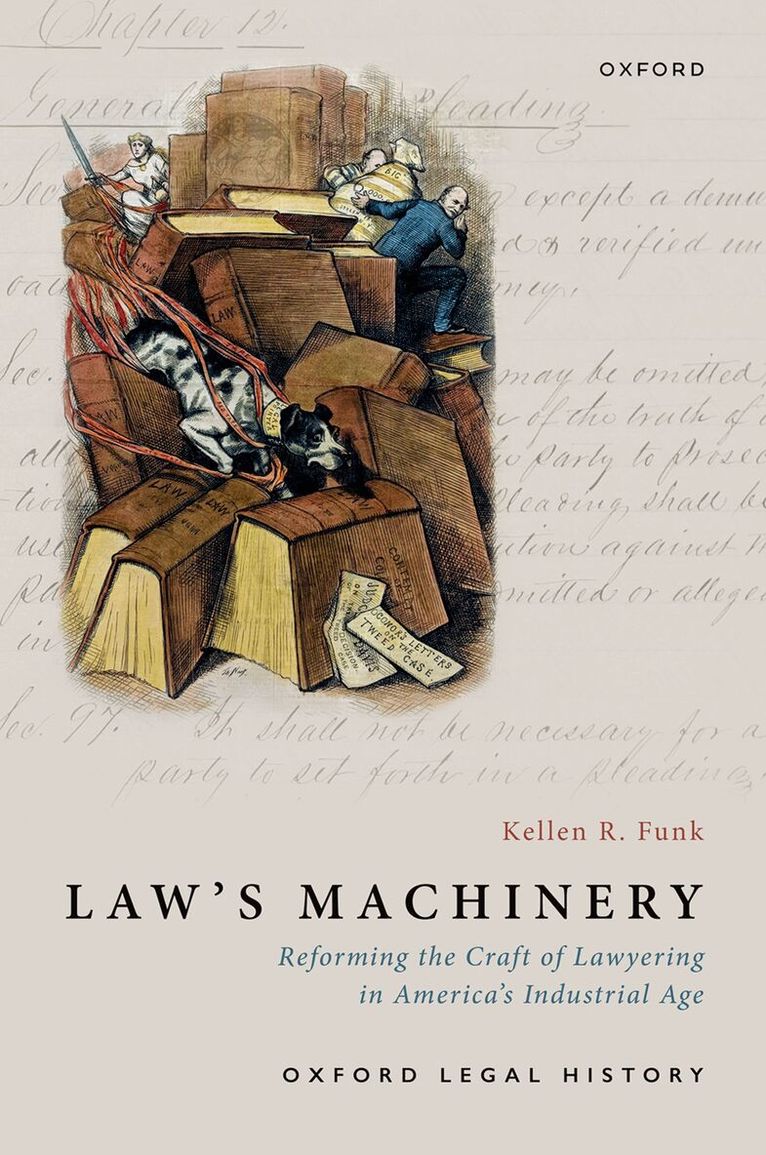
It was perhaps fitting that in an age of industrialization, Americans began to think of the law as a tool, one that could be forged to fit their needs, without regard to the traditional ways of litigating cases in court. Law's Machinery explores how innovators like New York attorney David Dudley Field, and his associates across the elite American bar, legislated a "code of practice" and attempted to rebuild the practice of law from the ground up in the mid-nineteenth century. While many of their efforts proved futile or misguided, the codifiers ultimately succeeded in turning American law into a machine run by, and in the interests of, professional lawyers like themselves. Often overlooked by histories of the world's famous code systems, the United States settled on a code of practice that elevated lawyers as the dominant force of the country's legal institutions. Professor Funk's account ranges widely: from the Jacksonian Era to the end of the Gilded Age; from urban Gotham to the peripheries of the American West and the Reconstruction-era South; and from the parlours of Brooklyn pastors and merchants to the ornamented courthouses of Wall Street. Drawing on innovative methods in digital legal history, Law's Machinery offers a sweeping intellectual, cultural, and political telling of the modernization of American legal practice.
Priests of the Law
Roman Law and the Making of the Common Law's First Professionals
Inbunden, Engelska, 2019
1 271 kr
Skickas inom 5-8 vardagar
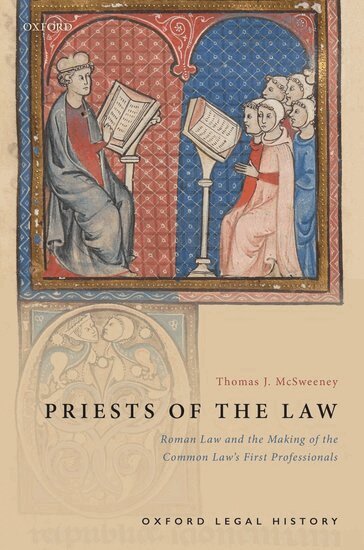
Priests of the Law tells the story of the first people in the history of the common law to think of themselves as legal professionals. In the middle decades of the thirteenth century, a group of justices working in the English royal courts spent a great deal of time thinking and writing about what it meant to be a person who worked in the law courts. This book examines the justices who wrote the treatise known as Bracton. Written and re-written between the 1220s and the 1260s, Bracton is considered one of the great treatises of the early common law and is still occasionally cited by judges and lawyers when they want to make the case that a particular rule goes back to the beginning of the common law. This book looks to Bracton less for what it can tell us about the law of the thirteenth century, however, than for what it can tell us about the judges who wrote it. The judges who wrote Bracton - Martin of Pattishall, William of Raleigh, and Henry of Bratton - were some of the first people to work full-time in England's royal courts, at a time when there was no recourse to an obvious model for the legal professional. They found one in an unexpected place: they sought to clothe themselves in the authority and prestige of the scholarly Roman-law tradition that was sweeping across Europe in the thirteenth century, modelling themselves on the jurists of Roman law who were teaching in European universities. In Bracton and other texts they produced, the justices of the royal courts worked hard to ensure that the nascent common-law tradition grew from Roman Law. Through their writing, this small group of people, working in the courts of an island realm, imagined themselves to be part of a broader European legal culture. They made the case that they were not merely servants of the king: they were priests of the law.
1 296 kr
Skickas inom 5-8 vardagar
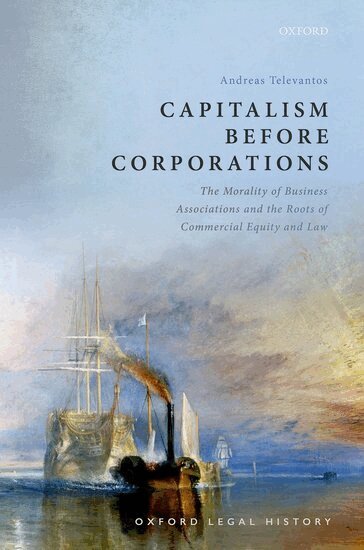
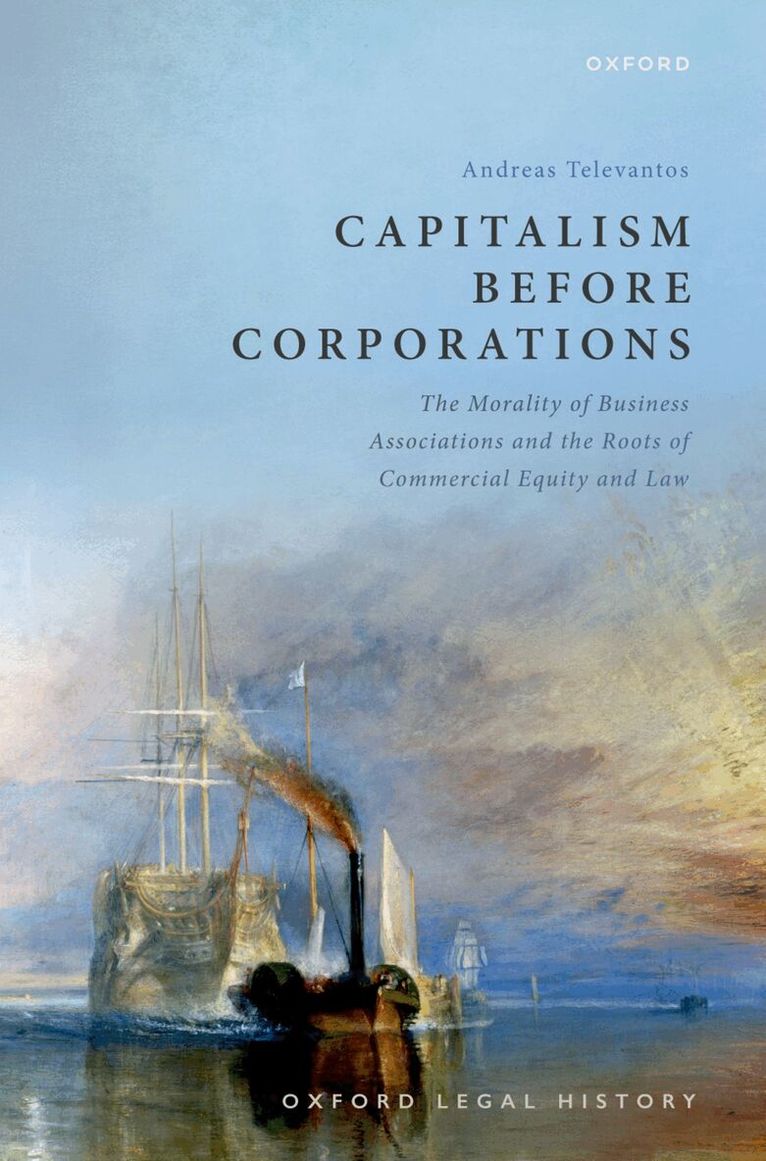
To what extent did English law facilitate trade before the advent of general incorporation and modern securities law? This is the question at the heart of Capitalism before Corporations. It examines the extent to which legal institutions of the Regency period, especially Lord Eldon's Chancellorship, were sympathetic to the needs of merchants and willing to accommodate their changing practices and demands within established legal doctrinal frameworks and contemporary political economic thought. In so doing, this book probes at the heart of modern debates about equity, trusts, insolvency, and the justifiability of corporate privileges.Corporations are an integral part of modern life. We bank with corporations, we usually buy our groceries from them, and they provide us with most news and media. We take it for granted too that most large-scale business, and even much small-scale business, is carried out by corporations. Things were not always so. Televantos considers the Bubble Act of 1720, which criminalised the forming of corporations without a Royal Charter or Act of Parliament, its repeal in 1825, and the subsequent impact. Much of the modernisation of Britain's industry therefore took place before general incorporation was allowed. Unaided by statute, traders had to create business organisations using the basic building blocks of private law: trusts, partnership, and agency.
1 752 kr
Skickas inom 5-8 vardagar
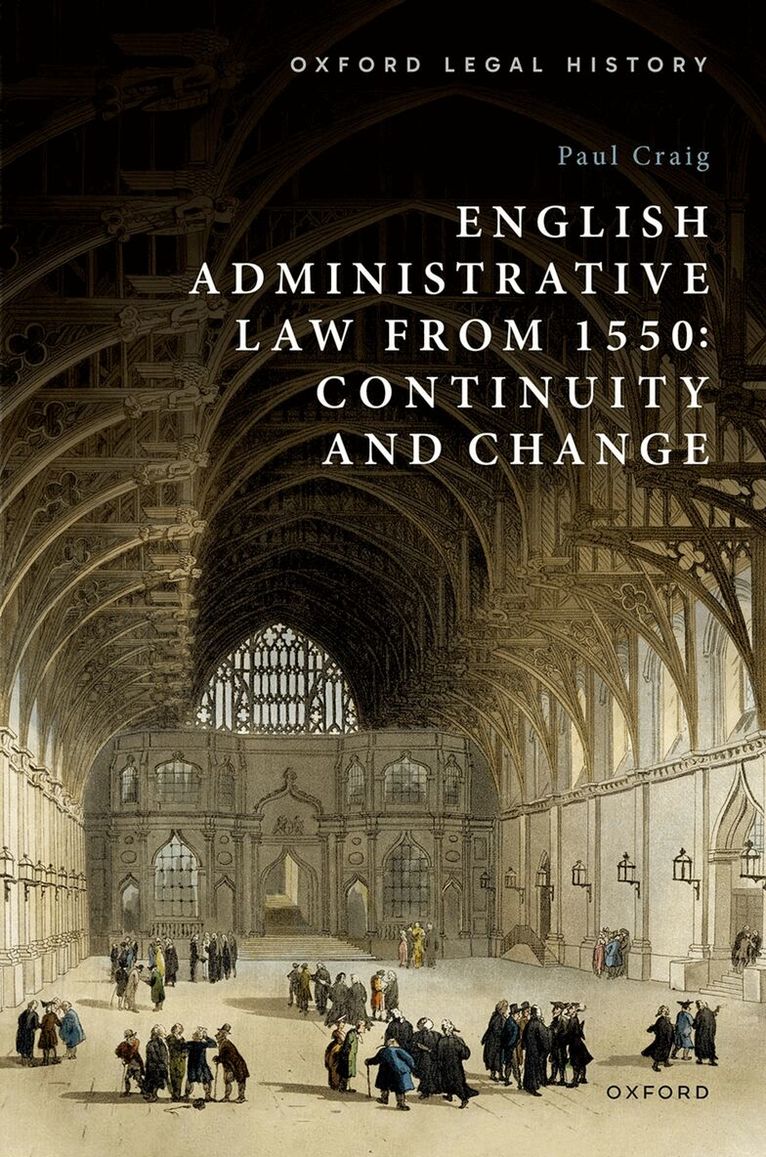
The commonly held view about English administrative law is that it is of recent origin, with some dating it from the mid-20th century and some venturing back to the late 19th century. English Administrative Law from 1550: Continuity and Change upends this conventional thinking, charting its development from the mid-16th century with an in-depth examination of administrative law doctrine based on primary legal materials, statute, and case law. This book is divided into four parts. Part I sets out the book's principal thesis, contrasting standard perceptions concerning the existence of English administrative law with the reality of its emergence from the mid-16th century. Part II is concerned with Regulation and Administration from the mid-16th century to the end of the 19th century. There is detailed analysis of the regulatory and administrative state, which includes chapters on the way in which administrative policy was developed through individual decision-making and rulemaking, and the role played by contract in service delivery. Part III deals with Courts and Doctrine. It begins with discussion of foundational precepts followed by chapters on natural justice; review of law and fact; rights; delegation, fettering and purpose; reasonableness; proportionability; prerogative; and third and fourth source power. Part IV of the book covers Remedies and Review, with chapters on invalidity; standing; the prerogative writs; injunction, declaration, quo warranto and habeas corpus; and damages and restitutionary liability. With thought-provoking and original insights, English Administrative Law from 1550 systematically elaborates and contextualizes the origins of administrative law features while linking them to their modern-day equivalents.
381 kr
Skickas inom 5-8 vardagar
To what extent did English law facilitate trade before the advent of general incorporation and modern securities law? This is the question at the heart of Capitalism before Corporations. It examines the extent to which legal institutions of the Regency period, especially Lord Eldon's Chancellorship, were sympathetic to the needs of merchants and willing to accommodate their changing practices and demands within established legal doctrinal frameworks and contemporary political economic thought. In so doing, this book probes at the heart of modern debates about equity, trusts, insolvency, and the justifiability of corporate privileges.Corporations are an integral part of modern life. We bank with corporations, we usually buy our groceries from them, and they provide us with most news and media. We take it for granted too that most large-scale business, and even much small-scale business, is carried out by corporations. Things were not always so. Televantos considers the Bubble Act of 1720, which criminalised the forming of corporations without a Royal Charter or Act of Parliament, its repeal in 1825, and the subsequent impact. Much of the modernisation of Britain's industry therefore took place before general incorporation was allowed. Unaided by statute, traders had to create business organisations using the basic building blocks of private law: trusts, partnership, and agency.