Oxford Neuroimaging Primers - Böcker
Visar alla böcker i serien Oxford Neuroimaging Primers. Handla med fri frakt och snabb leverans.
4 produkter
4 produkter
545 kr
Skickas inom 7-10 vardagar
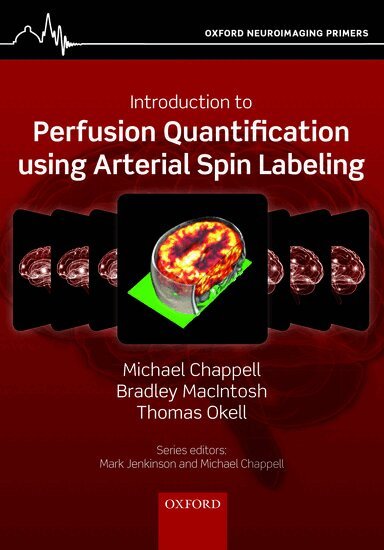
Arterial Spin Labeling (ASL) is an increasingly popular tool to study the brain. What sets it apart from other neuroimaging methods is the combination of quantitative measurements of a physiologically well-defined process, namely perfusion, and a completely non-invasive acquisition methodology. Cerebral perfusion is a critical component to brain health, as it is the primary means to deliver nutrients to support brain function as well as clearing waste products. Hence it is a useful quantity to study in disease where changes in perfusion can indicate regions of the brain that are pathological. Likewise changes in perfusion can be indicative of greater demand for nutrients, such as might be required in response to an increase in neuronal activity. With the advent of a consensus by the ASL community on good practice and a recommendation on robust methods for ASL data collection, more and more researchers are now able to access and use ASL. Despite the technological advances, ASL remains a technique with a low signal to noise ratio. This makes the wise choice of the appropriate analysis methods more important. The aim of this primer is to equip someone new to the field of perfusion imaging and ASL with the knowledge not only to make good choices about ASL acquisition and analysis, but also to understand what choices they are making and why. Examples of analysis applied to real data are given throughout the text and instructions on how to reproduce the analyses are illustrated on the primer website. Written to provide a stand-alone introduction to perfusion qualification using ASL, this primer also works with other texts in the Oxford Neuroimaging Primers series to provide a comprehensive overview of the increasingly influential field of neuroimaging.
598 kr
Skickas
Spontaneous resting-state fluctuations in neuronal activity offer insights into the inherent organization of the human brain, and may provide markers for diagnosis and treatment of mental disorders. Resting state functional magnetic resonance imaging (fMRI) can be used to investigate intrinsic functional connectivity networks, which are identified based on similarities in the signal measured from different brain regions.From data acquisition to interpretation of results, Introduction to Resting State fMRI Functional Connectivity discusses a wide range of approaches without requiring any previous knowledge of resting state fMRI, making it highly accessible to readers from a broad range of backgrounds.Supplemented with online datasets and examples to enable the reader to obtain hands-on experience working with real data, this primer provides a practical and approachable introduction for those new to the field of resting state fMRI.The Oxford Neuroimaging Primers are short texts aimed at new researchers or advanced undergraduates from the biological, medical or physical sciences. They are intended to provide a thorough understanding of the ways in which neuroimaging data can be analyzed and how that relates to acquisition and interpretation. Each primer has been written so that it is a stand-alone introduction to a particular area of neuroimaging, and the primers also work together to provide a comprehensive foundation for this increasingly influential field.
579 kr
Skickas inom 7-10 vardagar
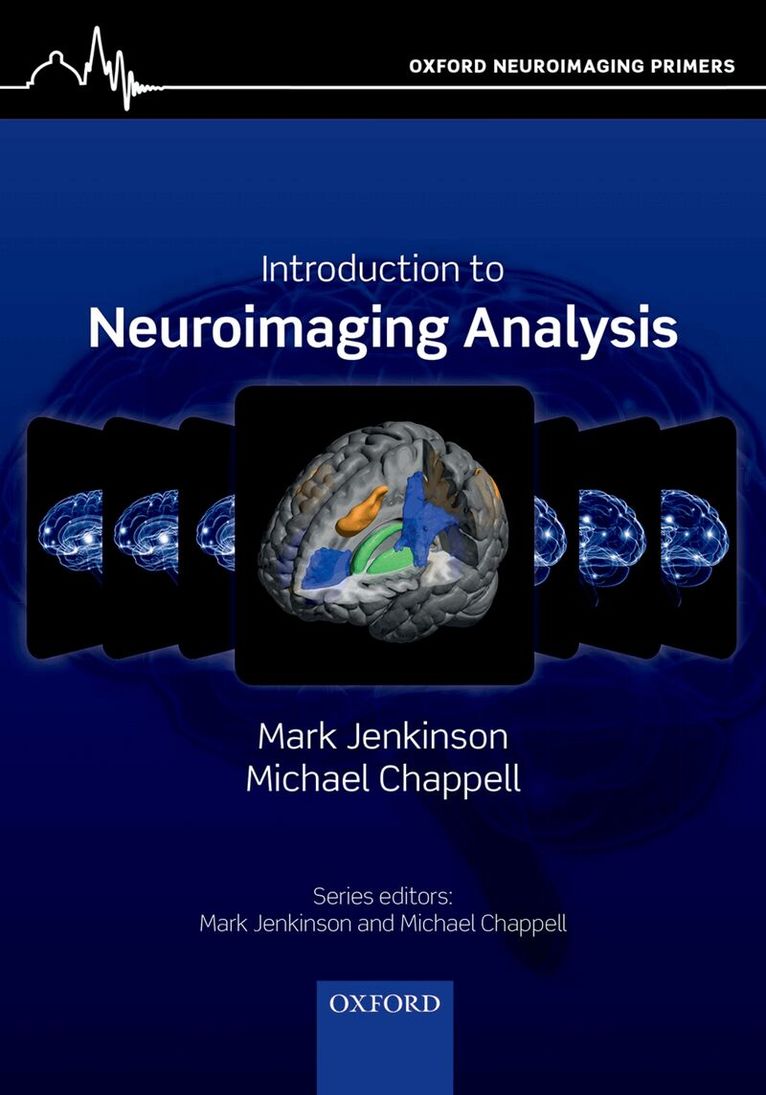
MRI has emerged as a powerful way of studying in-vivo brain structure and function in both healthy and disease states. Whilst new researchers may be able to call upon advice and support for acquisition from operators, radiologists and technicians, it is more challenging to obtain an understanding of the principles of analysing neuroimaging data. This is crucial for choosing acquisition parameters, designing and performing appropriate experiments, and correctly interpreting the results. This primer gives a general and accessible introduction to the wide array of MRI-based neuroimaging methods that are used in research. Supplemented with online datasets and examples to enable the reader to obtain hands-on experience working with real data, it provides a practical and approachable introduction for those new to the neuroimaging field. The text also covers the fundamentals of what different MRI modalities measure, what artifacts commonly occur, the essentials of the analysis, and common 'pipelines' including brain extraction, registration and segmentation. As it does not require any background knowledge beyond high-school mathematics and physics, this primer is essential reading for anyone wanting to work in neuroimaging or grasp the results coming from this rapidly expanding field.The Oxford Neuroimaging Primers are short texts aimed at new researchers or advanced undergraduates from the biological, medical or physical sciences. They are intended to provide a broad understanding of the ways in which neuroimaging data can be analyzed and how that relates to acquisition and interpretation. Each primer has been written so that it is a stand-alone introduction to a particular area of neuroimaging, and the primers also work together to provide a comprehensive foundation for this increasingly influential field.
496 kr
Skickas inom 5-8 vardagar
Magnetic resonance spectroscopy is a fantastically flexible, quantitative and non-invasive way to study the complex biochemistry of the human brain. However, MRS is renowned as a difficult technique to master. Researchers who want to use MRS may find themselves unable to call upon much advice and support, even from experienced scanner operators, radiologists and technicians. This book aims to close this gap, by providing an accessible description of the principles of acquiring MRS and how to successfully analyse MRS data. This is crucial for choosing acquisition parameters, designing and performing appropriate experiments, and correctly interpreting the results.The text covers the fundamentals of what MRS is, the choices that go into selecting an acquisition approach, and how to analyse MRS data. Later chapters describe in detail how to plan, pilot, and acquire high quality data. Illustrated examples show common artefacts and how to mitigate them by performing careful scanner calibration. This is all supplemented with online datasets and examples to enable the reader to obtain hands-on experience working with real data. The book provides a practical and approachable introduction for those new to the MRS field.As it does not require any background knowledge beyond basic mathematics and physics, this primer is essential reading for anyone wanting to work with MRS in neuroimaging or grasp the results coming from this highly flexible non-invasive imaging modality.The Oxford Neuroimaging Primers are short texts aimed at new researchers or advanced undergraduates from the biological, medical or physical sciences. Written to provide a stand-alone introduction to magnetic resonance spectroscopy, this primer also works with other texts in the Oxford Neuroimaging Primers series to provide a comprehensive overview of the increasingly influential field of neuroimaging.