Oxford Scholarship Online - Böcker
Visar alla böcker i serien Oxford Scholarship Online. Handla med fri frakt och snabb leverans.
4 produkter
4 produkter
850 kr
Skickas inom 5-8 vardagar
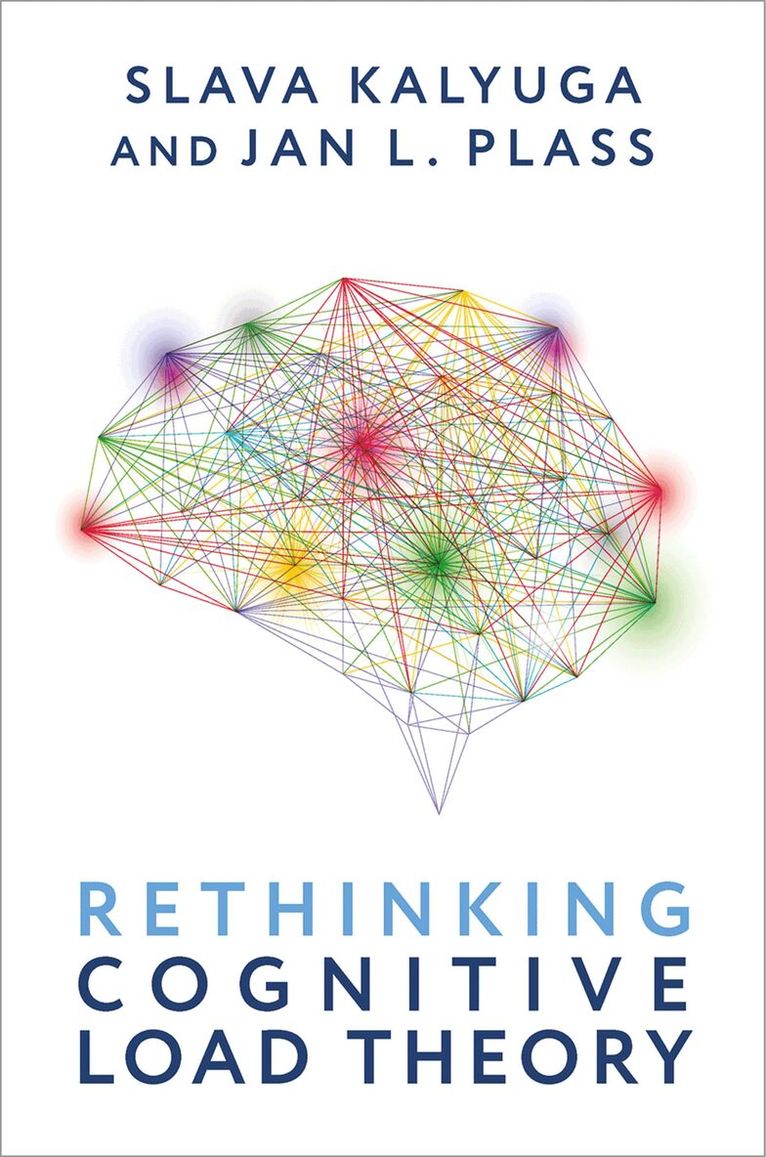
Cognitive load theory (CLT) considers instructional implications of characteristics of human cognition, such as processing limitations of working memory and the size and organization of the learner's knowledge base in long-term memory. CLT traditionally described how the limited capacity of working memory may cause cognitive overload and inhibit learning. Rethinking Cognitive Load Theory reflects on recent developments of this theory and proposes some essential modifications to improve its effectiveness in designing modern, technology-based, complex learning environments. The book describes a way of reconceptualizing the theory so that it can better account for the multifaceted nature of learner cognition that has emerged in recent research. It considers complex learning tasks as involving various goals of learner activities that need combining cognitive, motivational, and affective perspectives.The book starts with a review of basic tenets of the current understanding of CLT, including major components of human cognitive architecture, their characteristics and effects on cognitive load. It summarizes the modifications that have been made to CLT to date, including redefining types of cognitive load and applying an evolutionary approach. The criticisms of the theory that have been expressed over the years are reviewed and possible modifications to CLT that could enhance its usability are explored. The book considers existing instructional theories (e.g., problem-first, productive failure or invention learning) as evidence for the goal-driven approach, and offers examples of specific learning tasks and related motivational and affective goals of learner activities to illustrate the goal-driven approach to CLT using simulation- and game-based learning environments. Finally, the book provides theoretical and practical implications of the proposed new approach. This reframing of CLT is expected to result in a more learner-cantered framework in accordance with recent trends in instructional science and educational technology.
875 kr
Skickas inom 7-10 vardagar
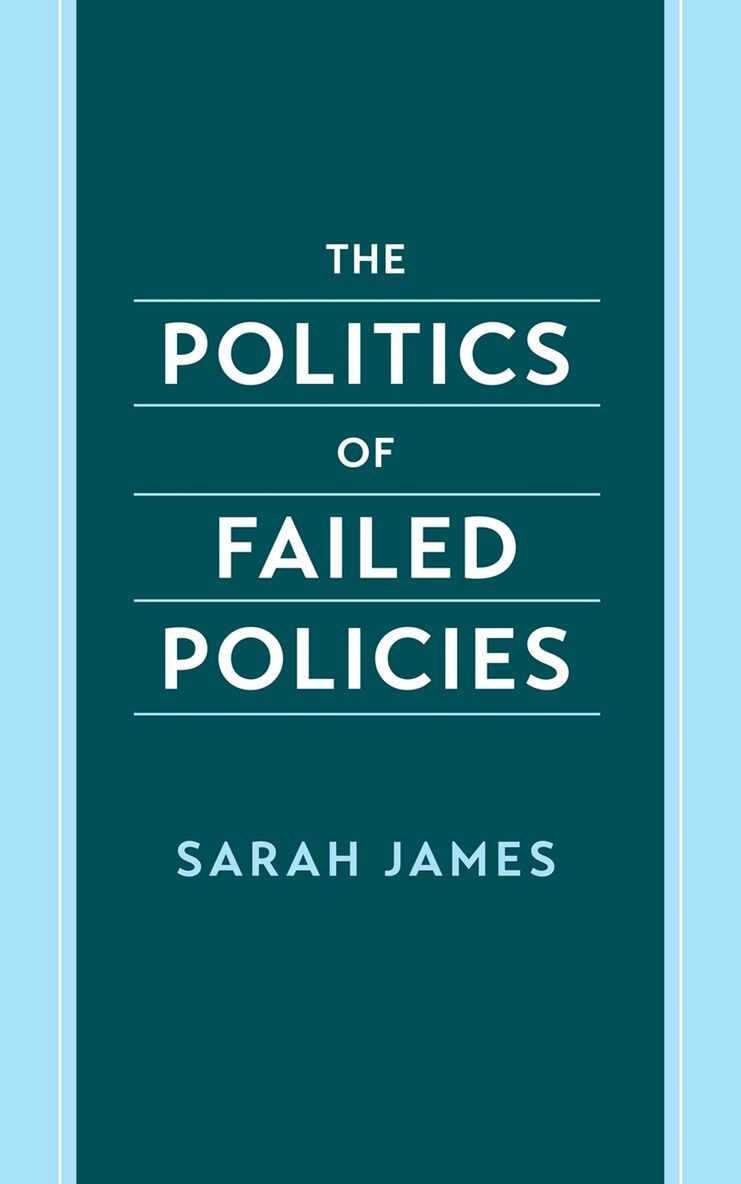
The Politics of Failed Policies examines the darker side of state autonomy and policy experimentation in our federal system: policy failure. While advances in statistics and computing promised the ability to evaluate the outcomes of state policies more precisely and accurately, the path from information to responsive policy remains far from guaranteed, especially given our highly polarized political climate. Most of the existing scholarship focuses on individual characteristics that affect public officials' likelihood of internalizing new information and refining their policy preferences. In stark contrast, author Sarah James takes a historical institutionalist approach and shows that the design, resources, and processes of state-level research institutions can systematically influence when evidence can overcome confirmation bias and partisan preferences among elected state officials evaluating a policy. This work contributes a more precise definition of a state's capacity for research that better explains political responses to policy failure. The detailed case studies support a theory of policy feedback in which policy and institutional landscape can empower diffusely organized and disadvantaged policy opponents to overcome the power of the traditional winners in the American political economy. The Politics of Failed Policies takes seriously that policy research and learning are not isolated from the caprices of party politics, and yet James shows that state politics and policymaking are not irrevocably beholden to the whims of partisan bickering. While ideological battles, pressure from well-resourced interest groups, and, yes, even elections, remain formidable forces in American politics, strategically designed state policies and institutions can lay a foundation for building a coalition to respond to actual policy outcomes. Choices about policy and institutional design have long-term effects on when, how, and why public officials feel pressured to acknowledge and respond to policy failure.
278 kr
Skickas inom 5-8 vardagar
The Politics of Failed Policies examines the darker side of state autonomy and policy experimentation in our federal system: policy failure. While advances in statistics and computing promised the ability to evaluate the outcomes of state policies more precisely and accurately, the path from information to responsive policy remains far from guaranteed, especially given our highly polarized political climate. Most of the existing scholarship focuses on individual characteristics that affect public officials' likelihood of internalizing new information and refining their policy preferences. In stark contrast, author Sarah James takes a historical institutionalist approach and shows that the design, resources, and processes of state-level research institutions can systematically influence when evidence can overcome confirmation bias and partisan preferences among elected state officials evaluating a policy. This work contributes a more precise definition of a state's capacity for research that better explains political responses to policy failure. The detailed case studies support a theory of policy feedback in which policy and institutional landscape can empower diffusely organized and disadvantaged policy opponents to overcome the power of the traditional winners in the American political economy. The Politics of Failed Policies takes seriously that policy research and learning are not isolated from the caprices of party politics, and yet Jamesw shows that state politics and policymaking are not irrevocably beholden to the whims of partisan bickering. While ideological battles, pressure from well-resourced interest groups, and, yes, even elections, remain formidable forces in American politics, strategically designed state policies and institutions can lay a foundation for building a coalition to respond to actual policy outcomes. Choices about policy and institutional design have long-term effects on when, how, and why public officials feel pressured to acknowledge and respond to policy failure.
956 kr
Kommande
Lectures on Neoclassical Production Economics is an advanced undergraduate treatment of the fundamental economic model of producer behaviour. It shows how producers, confronted with existing technical possibilities and markets, decide how and what to produce. The book first discusses the roles that models, abstraction, and mathematics play in economic analyses. It then introduces a “canonical model” of “The Technology” as a set of inputs and output that satisfies five basic assumptions. Successive chapters build on this foundation to develop representations of technical possibilities that include production functions, input-requirement functions, input sets, and output sets. A “primer” on the optimal behaviour of price-taking, profit maximizing producers follows. It describes in a rigorous, but accessible, form the optimal producer behaviour using verbal, graphical, and mathematical arguments. Following chapters cover cost functions, revenue functions, and profit functions. These chapters treat the theories of cost-minimizing, revenue-maximizing, and profit-maximizing producers. Concepts covered include cost-minimizing demands, revenue-maximizing supplies, profit maximizing input demands and supplies, Shephard's Lemma, McFadden's Lemma, and Hotelling's Lemma. A chapter on duality then shows that the existence of well-behaved profit function implies the existence of a canonical technology. Distance function representations of input set and output sets are then introduced and their properties are derived. The book discusses: how to use distance functions to derive cost and revenue functions, how to use cost and revenue functions to construct “dual distance functions”, the role that distance functions play in calculating shadow prices, the use of distance functions to measure efficiency, and the use of distance functions to measure relative performance. The final chapter examines the consequences of relaxing the assumptions of the “canonical model” and price-taking producers.