Oxford Series in Visual Cognition - Böcker
Visar alla böcker i serien Oxford Series in Visual Cognition. Handla med fri frakt och snabb leverans.
5 produkter
5 produkter
2 447 kr
Skickas inom 7-10 vardagar
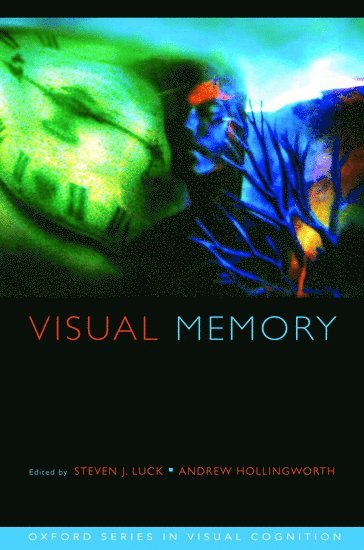
Vision and memory are two of the most intensively studied topics in psychology and neuroscience. The present book concerns the interaction between vision and memory: How do we remember what we see? And how does our memory for the visual world influence subsequent perception and action? topics in psychology and neuroscience, and the intersection etween them--visual memory--is emerging as a fertile ground for research. Certain memory systems appear to specialize in This book provides a state-of-the-art account of visual memory systems. Each chapter is written by an internationally renowned researcher, who has made seminal contributions to the topic. The chapters are comprehensive, providing both a broad overview of each topic and a summary of the latest research. They also present new perspectives that advance our theoretical understanding of visual memory and suggest directions for future research. After an introductory overview by the editors, chapters address visual sensory memory (iconic memory), visual short-term memory, and the relationship between visual memory and eye movements. Visual long-term memory is then reviewed from several different perspectives, including memory for natural scenes, the relationship between visual memory and object recognition, and associative learning. The final chapters discuss the neural mechanisms of visual memory and neuropsychological deficits in visual memory. This book is a comprehensive guide to visual memory research that will be a valuable resource for both students and professionals.
817 kr
Skickas inom 7-10 vardagar
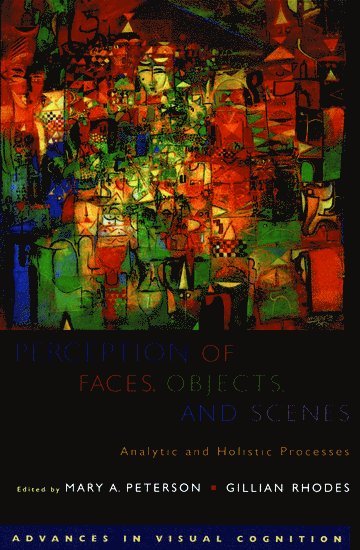
From a barrage of photons, we readily and effortlessly recognize the faces of our friends, and the familiar objects and scenes around us. However, these tasks cannot be simple for our visual systems--faces are all extremely similar as visual patterns, and objects look quite different when viewed from different viewpoints. How do our visual systems solve these problems? The contributors to this volume seek to answer this question by exploring how analytic and holistic processes contribute to our perception of faces, objects, and scenes. The role of parts and wholes in perception has been studied for a century, beginning with the debate between Structuralists, who championed the role of elements, and Gestalt psychologists, who argued that the whole was different from the sum of its parts. This is the first volume to focus on the current state of the debate on parts versus wholes as it exists in the field of visual perception by bringing together the views of the leading researchers. Too frequently, researchers work in only one domain, so they are unaware of the ways in which holistic and analytic processing are defined in different areas. The contributors to this volume ask what analytic and holistic processes are like; whether they contribute differently to the perception of faces, objects, and scenes; whether different cognitive and neural mechanisms code holistic and analytic information; whether a single, universal system can be sufficient for visual-information processing, and whether our subjective experience of holistic perception might be nothing more than a compelling illusion. The result is a snapshot of the current thinking on how the processing of wholes and parts contributes to our remarkable ability to recognize faces, objects, and scenes, and an illustration of the diverse conceptions of analytic and holistic processing that currently coexist, and the variety of approaches that have been brought to bear on the issues.
1 700 kr
Skickas inom 7-10 vardagar
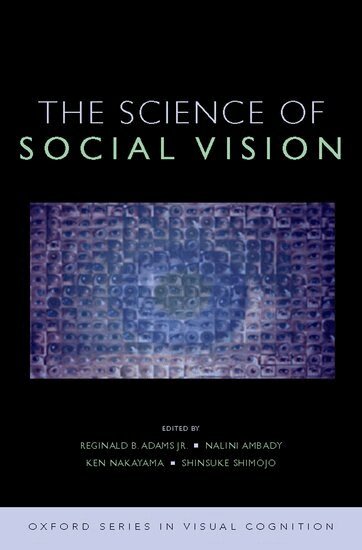
The human visual system is particularly attuned to and remarkably efficient at processing social cues. We can effectively "read" others' mental and emotional states and make snap judgments about their characters and dispositions, simply by watching them. Given what is clearly a close relationship between vision and social interaction, it has become increasingly clear to social psychologists seeking to better understand the functional and neuroanatomical mechanisms underlying social perception that vision plays a critical role in the development and maintenance of social exchange. Likewise, vision scientists have come to appreciate the profound impact people, as social agents, have had on the visual system, acknowledging just how important it is to consider the socially adaptive functions that system evolved to perform. The Science of Social Vision explores the biologically determined to the culturally shaped influences on social vision. Four themes emerge throughout the 25 chapters from leaders in the field. These include: 1) Visually mediated attention moderates complex social interactions and plays a critical role in the development of social cognition; 2) Visual features perceptually determine categorical thinking and have profound downstream consequences including stereotype activation; 3) Perceptual experiences can be directly triggered by visual cues, in which case, visual and social perception are essentially equivalent processes;4) Social factors exert powerful top-down influences on even low-level visual perception, at some times biasing, while at others fine-tuning perceptual acuity. This book heralds the new field of social vision, and showcases the cutting edge and broadly interdisciplinary research that is currently at its forefront. Together the perspectives drawn from these various fields offer unique insight into the origin, adaptive purpose, and cognitive, cultural, and biological underpinnings of social vision that will help to shape and guide the way we think about and examine social visual perception. The Science of Social Vision will provide a valuable resource for students and scholars across a wide range of fields, including cognitive, developmental, and social psychology, vision science, cognitive neuroscience, social neuroscience, and ethology.
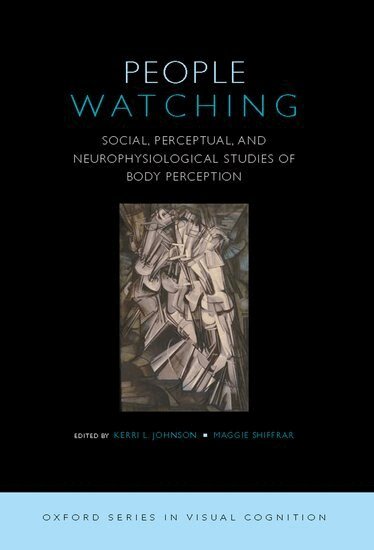
People Watching
Social, Perceptual, and Neurophysiological Studies of Body Perception
Inbunden, Engelska, 2013
2 528 kr
Skickas inom 7-10 vardagar
The human body has long been a rich source of inspiration for the arts, and artists have long recognized the body's special status. While the scientific study of body perception also has an important history, recent technological advances have triggered an explosion of research on the visual perception of the human body in motion, or as it is traditionally called, biological motion perception. Now reaching a point of burgeoning inter-disciplinary focus, biological motion perception research is poised to transform our understanding of person construal. Indeed, several factors highlight a privileged role for the human body as one of the most critical classes of stimuli affecting social perception. Human bodies in motion, for example, are among the most frequent moving stimulus in our environment. They can be readily perceived at a physical distance or visual vantage that precludes face perception. Moreover, body motion conveys meaningful psychological information such as social categories, emotion state, intentions, and underlying dispositions. Thus, body perception appears to serve as a first-pass filter for a vast array of social judgments from the routine (e.g., perceived friendliness in interactions) to the grave (e.g., perceived threat by law enforcement). This book provides an exciting integration of theory and findings that clarify how the human body is perceived by observers.
3 168 kr
Skickas inom 7-10 vardagar
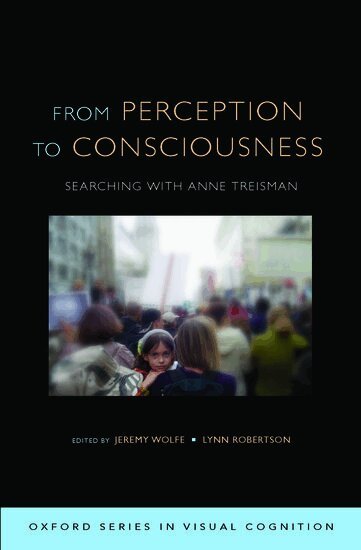
Anyone interested in the study of attention will have had some exposure to the work of Anne Treisman. Anne Treisman has been one of the most influential cognitive psychologists in the last 50 years. Her research and theoretical insights have influenced a variety of disciplines, including vision sciences, auditory sciences, cognitive psychology, cognitive neurosciences, philosophy, psychiatry, neuropsychology, and behavioral neurology. She is best known for her work on attention. Early in her career, much of that work involved auditory stimuli. Her later work has been primarily in the realm of visual attention. She has been especially concerned with the interactions among visual perception, attention, and memory as they relate to conscious and unconscious experience. Her Feature Integration Theory has been one of the organizing ideas in the field for three decades.While still a graduate student at Oxford, she helped launch the modern study of attention. In the present volume, several of her most influential papers are reprinted (including some of the harder to find early work). To accompany these reprints, the editors invited experts to comment and/or to show how their own work had been shaped by Treisman's ideas and findings. The result is a scientifically rich ride through the world of ideas inspired by Treisman's work. The contributed chapters include discussions of auditory and visual attention, the role of features in selection, parallel and serial processing, and automaticity. They describe the roots and evolution of Feature Integration Theory and related models like Guided Search. They explore the interactions of attention and perception at the cognitive, neuropsychological, and biological levels. Readers can consider the critical role of binding in perception, the role of attention in scene perception, as well as the influence of cognitive load, memory, reflection, and perceptual learning on early and late processing. They will see how methods to study conscious perceptual awareness have evolved over the years.