OXFORD STU WESTERN ESOTERICISM SERIES – serie
Visar alla böcker i serien OXFORD STU WESTERN ESOTERICISM SERIES. Handla med fri frakt och snabb leverans.
5 produkter
5 produkter
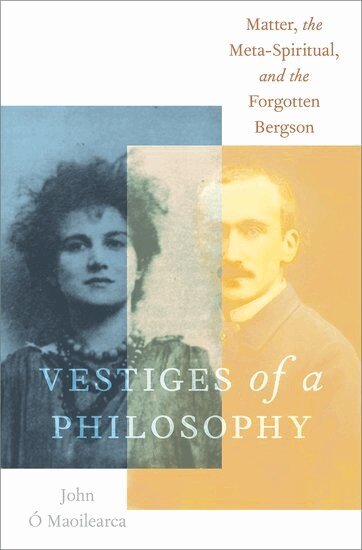
Vestiges of a Philosophy
Matter, the Meta-Spiritual, and the Forgotten Bergson
Inbunden, Engelska, 2022
1 302 kr
Skickas inom 5-8 vardagar
Vestiges of a Philosophy: Matter, the Meta-Spiritual, and the Forgotten Bergson covers a fascinating yet little known moment in history. At the turn of the twentieth century, Henri Bergson and his sister, Mina Bergson (also known as Moina Mathers), were both living in Paris and working on seemingly very different but nonetheless complementary and even correlated approaches to questions about the nature of matter, spirit, and their interaction. He was a leading professor within the French academy, soon to become the most renowned philosopher in Europe. She was his estranged sister, already celebrated in her own right as a feminist and occultist performing on theatre stages around Paris while also leading one of the most important occult societies of that era, the Hermetic Order of the Golden Dawn. One was a respectable if controversial intellectual, the other was a notorious mystic-artist who, together with her husband and fellow-occultist Samuel MacGregor Mathers, have been described as the "neo-pagan power couple" of the Belle Époque.Neither Henri nor Mina left any record of their feelings and attitudes towards the work of the other, but their views on time, mysticism, spirit, and art converge on many fronts, even as they emerged from very different forms of cultural practice. In Vestiges of a Philosophy, John Ó Maoilearca examines this convergence of ideas and uses the Bergsons' strange correlation to tackle contemporary themes in new materialist philosophy, as well as the relationship between mysticism and philosophy.
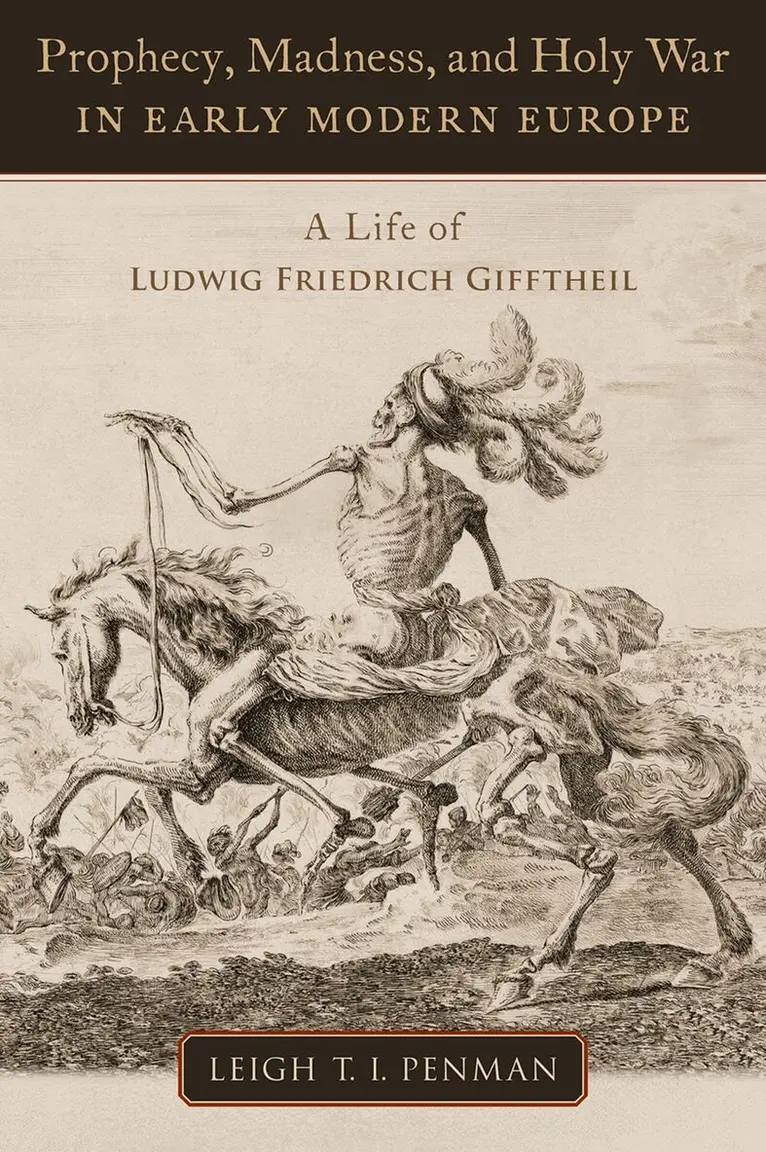
Prophecy, Madness, and Holy War in Early Modern Europe
A Life of Ludwig Friedrich Gifftheil
Inbunden, Engelska, 2023
1 024 kr
Skickas inom 5-8 vardagar
The political and religious turmoil of seventeenth century Europe appears in a strange new light in this volume, which explores the life and doctrines of the infamous German barber surgeon and prophet, Ludwig Friedrich Gifftheil (1595-1661). Inspired by an unstable alchemy of family tragedy and a corpus of dissenting religious writings, Gifftheil stalked Europe's battlefields, petitioning kings, princes, and emperors to end the warfare endemic on the continent. Convinced that all war was prompted by 'false prophets'--by which Gifftheil meant the clergy of Europe's Christian confessions--he pleaded with rulers to abjure the counsel of their advisors and institute instead a godly peace. Then, in 1635, Gifftheil reinvented himself by taking up his sword as “God's warrior,” embarking on a quest to recruit an army of the righteous and wage a holy war in Europe and to institute a divine peace.Prophecy, Madness, and Holy War in Early Modern Europe uses new manuscript and print sources from across Europe, the United Kingdom, and North America to craft the definitive account of Gifftheil's life and exploits. Against a background of family loss, and restless travels across the continent, Gifftheil's story reveals an alternative history of religious and political dissent in the seventeenth century. His adventures cast a dramatic new light on the culture and society of early modernity, the place of prophecy and madness in the negotiation of religious authority, the origins of the theosophical current, and the stranger apocalyptic impulses at the roots of Pietism and missionary Christianity.
1 024 kr
Skickas inom 5-8 vardagar
This book examines the life of a nineteenth- to early twentieth-century Tamil yogin named Sri Sabhapati Swami (Śrī Sabhāpati Svāmī or Capāpati Cuvāmikaḷ, ca. 1828-1923/4) and his unique English, Tamil, Hindi, and Bengali literature on a Sanskrit-based system of yogic meditation known as the "Rājayoga for Śiva" (Tamil: civarājayōkam, Sanskrit: śivarājayoga), the full experience of which is compared to being like a "tree universally spread." Its practice was based on a unique synthesis of Tamil Vīraśaiva and Siddhar cosmologies in the colonial period, and the yogic literature in which it is found was designed to have universal appeal across boundaries of caste, gender, and sectarian affiliation. His works, all of which are here analyzed together for the first time, are an important record in the history of yoga, print culture, and art history due to his vividly-illustrated and numbered diagrams on the yogic body with its subtle physiology. This book opens with a biographical account of Sabhapati, his editor Shrish Chandra Basu, and his students as gleaned from textual sources and the author's ethnographic field work. Sabhapati's literature in various languages is then analyzed, followed by a comprehensive exposition of his Śaiva cosmology and religious theories. Sabhapati's system of Śivarājayoga and its subtle physiology is then treated in detail, followed by an analysis of Sabhapati's aesthetic integration of aural sound and visual diagrams and an evaluation of the role of "science" in the swami's literature. Sabhapati also appealed to global authors and occultists outside of South Asia, so special attention is additionally given to his encounter with the founders of the Theosophical Society and the integration of his techniques into the thelemic "Magick" of Aleister Crowley, the German translation of Bavarian theosophical novelist Franz Hartmann, and the American publication of New Thought entrepreneur William Estep. To these are appended a never-before-translated Tamil hagiography of Sabhapati's life, a lexicon in table-form that compiles some archaic variants and Roman transliterations of technical terms used in his work, and a critically-edited passage on an innovative technique of Śivarājayoga that included visualizing the yogic central channel as a lithic "pole."
1 173 kr
Skickas inom 7-10 vardagar
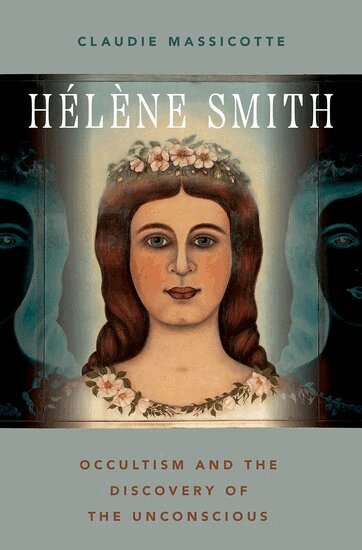
In 1896, a young Genevan medium named Hélène Smith perceived in trance the following words from a Martian inhabitant: "michma michtmon mimini thouainenm mimatchineg." Those attending her séance dutifully transcribed these words and the event marked the beginning of a series of occult experiences that transported her to the red planet. In her state of trance, Smith came to produce foreign conversations, a new alphabet, and paintings of the Martian surroundings that captured the popular and scientific imagination of Geneva. Alongside her Martian travels, she also retrieved memories of her past lives as a fifteenth-century "Hindoo" princess and as Queen Marie Antoinette.Today, Smith's séances may appear to be nothing more than eccentric practices at the margins of modernity. As author Claudie Massicotte argues, however, the medium came to embody the extreme possibilities of a new form of subjectivity, with her séances becoming important loci for pioneering authors' discoveries in psychology, linguistics, and the arts. Through analyses of archival documents, correspondences, and publications on the medium, Massicotte sheds light on the role of women in the construction of turn-of-the-century psychological discourses, showing how Smith challenged traditional representations of female patients as powerless victims and passive objects of powerful doctors. She shows how the medium became the site of conflicting theories about subjectivity--specifically one's relationship to embodiment, desire, language, art, and madness--while unleashing a radical form of creativity that troubled existing paradigms of modern sciences. Massicotte skillfully retraces the story of this prolific figure and the authors, scientists, and artists she inspired in order to bring to light a forgotten chapter in modern intellectual history.
380 kr
Skickas inom 5-8 vardagar
In 1896, a young Genevan medium named Hélène Smith perceived in trance the following words from a Martian inhabitant: "michma michtmon mimini thouainenm mimatchineg." Those attending her séance dutifully transcribed these words and the event marked the beginning of a series of occult experiences that transported her to the red planet. In her state of trance, Smith came to produce foreign conversations, a new alphabet, and paintings of the Martian surroundings that captured the popular and scientific imagination of Geneva. Alongside her Martian travels, she also retrieved memories of her past lives as a fifteenth-century "Hindoo" princess and as Queen Marie Antoinette.Today, Smith's séances may appear to be nothing more than eccentric practices at the margins of modernity. As author Claudie Massicotte argues, however, the medium came to embody the extreme possibilities of a new form of subjectivity, with her séances becoming important loci for pioneering authors' discoveries in psychology, linguistics, and the arts. Through analyses of archival documents, correspondences, and publications on the medium, Massicotte sheds light on the role of women in the construction of turn-of-the-century psychological discourses, showing how Smith challenged traditional representations of female patients as powerless victims and passive objects of powerful doctors. She shows how the medium became the site of conflicting theories about subjectivity--specifically one's relationship to embodiment, desire, language, art, and madness--while unleashing a radical form of creativity that troubled existing paradigms of modern sciences. Massicotte skillfully retraces the story of this prolific figure and the authors, scientists, and artists she inspired in order to bring to light a forgotten chapter in modern intellectual history.