Oxford Studies in Classical Literature and Gender Theory – Serie
Visar alla böcker i serien Oxford Studies in Classical Literature and Gender Theory. Handla med fri frakt och snabb leverans.
10 produkter
10 produkter
1 498 kr
Skickas inom 5-8 vardagar
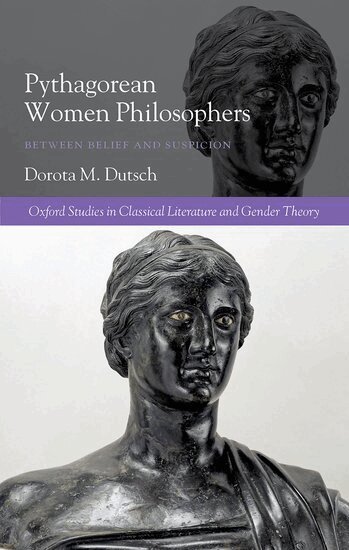
Women played an important part in Pythagorean communities, so Greek sources from the Classical era to Byzantium consistently maintain. Pseudonymous philosophical texts by Theano, Pythagoras' disciple or wife, his daughter Myia, and other female Pythagoreans, circulated in Greek and Syriac. Far from being individual creations, these texts rework and revise a standard Pythagorean script.What can we learn from this network of sayings, philosophical treatises, and letters about gender and knowledge in the Greek intellectual tradition? Can these writings represent the work of historical Pythagorean women? If so, can we find in them a critique of the dominant order or strategies of resistance?In search of answers to these questions, Pythagorean Women Philosophers examines Plato's dialogues, fragmentary historians, and little-known testimonies to women's contributions to Pythagorean thought. Adopting Paul Ricoeur's hermeneutics, Dutsch approaches such testimonies with a mixture of suspicion and belief. This approach allows the reader to alternate critique of the epistemic regimes that produced ancient texts with a hopeful reading, one which recognizes female knowledge and agency. Dutsch contends that the value of the Pythagorean text-network lies not in what it may represent but in what it is — a fictionalized version of Greek intellectual history that makes place for women philosophers. The book traces this alternative history, challenging us to rethink our own account of the past.
1 395 kr
Skickas inom 5-8 vardagar
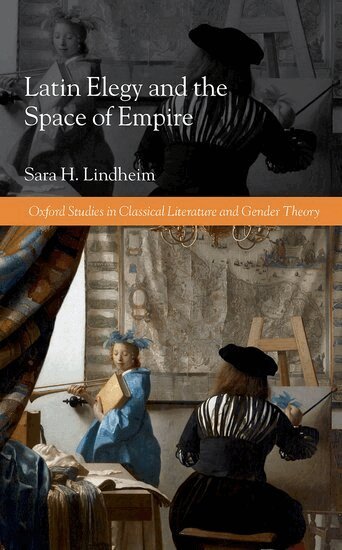
In a time of aggressive imperial expansion, Latin elegists expressed geographical concerns about boundaries and limits through masculine and feminine subjects in their poetry. Latin Elegy and the Space of Empire argues that the subject in Latin elegy, beginning with Catallus, constitutes itself in relation to the dynamic space of empire from the late Republic to the end of the Augustan age. The lack of fixiity in the elegiac subject and space of empire go hand in hand, and in imagining geographical space the question of our very nature as subjects comes to the fore.Catullus, Propertius, Tibullus and Ovid each offers his own unique expression of the gendered subject, and their poetry runs the gamut of responses to the expanding geographical empire. First comes the dream of Roman imperium sine fine, an empire that capaciously stretches to the ends of the inhabited world. And yet, imperium sine fine requires the existence of some sort of fines, even if the fantasy demands that they be overrun. Formlessness, or worse, rapidly alternating forms, gives rise to anxieties and the desire to set down some fines, to establish where, exactly, the boundaries of empire are, what belongs "inside" and what can be relegated to "outside". But fines, cartographically speaking, are never as stable as we want them to be, and, for a rapidly expanding empire, are always under pressure. The very constitution of the gendered elegiac subject mirrors, anticipates, runs parallel to the problems and anxieties that the map of expanding empire both tries to solve, yet simultaneously reveals in its production of space.
1 193 kr
Skickas inom 7-10 vardagar
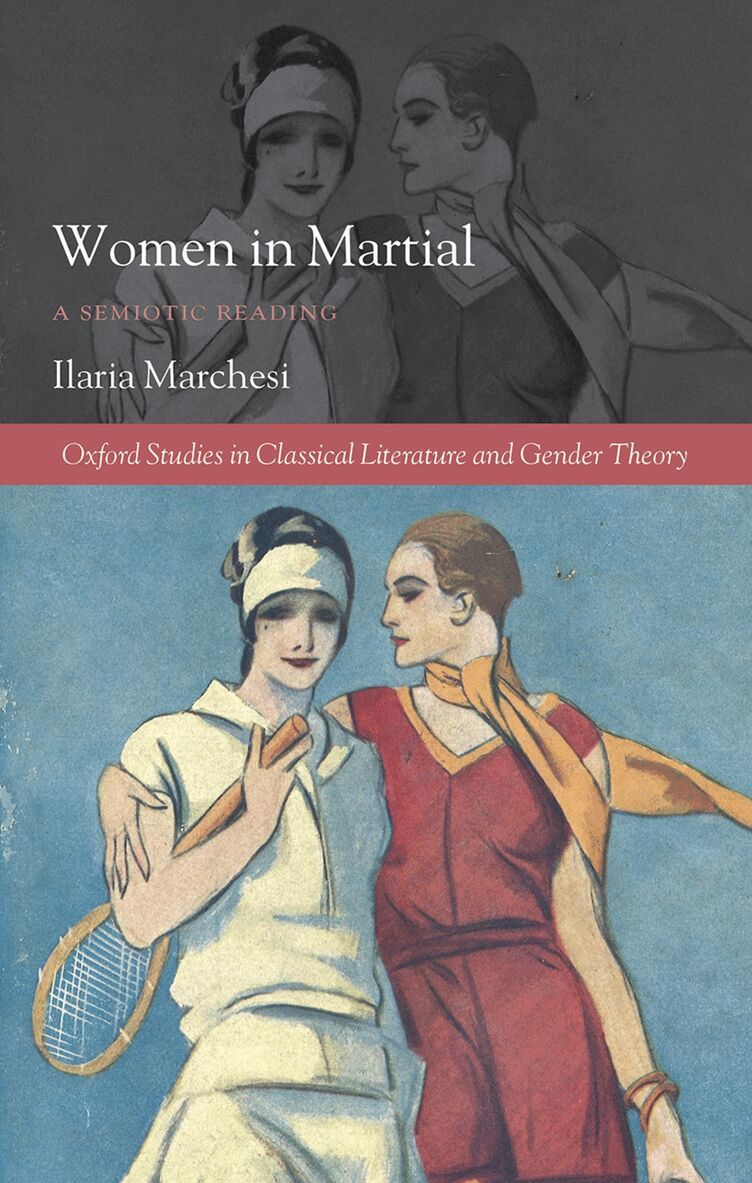
Women in Martial is the first monograph to treat the portrayals of women in Martial's Epigrams in a systematic way. In this volume, Marchesi proposes a new method of exploring the cultural construction of femininity in the Flavian age, presenting an interplay between close readings of Martial's poems and their contextualization through legal, historiographic, rhetorical, and grammatical discussions.This book discusses the social roles assigned to women in Roman society, where they were at once called to represent their fathers and reproduce their husbands, together with the question of to what extent they are depicted as semiotic signifiers in Martial's corpus. Noting socially aberrant behavior by pointedly using the discourse of grammar and its categories to detect and address the social issues of his time, Martial—a poet who distinctively adopts the role of a surrogate censor for Domitian—constructs the women he depicts in both negative and positive ways as signs of their time.Using a wide range of examples from ancient Roman culture, Women in Martial models a way of using literary sources to address the intersection of social and cultural issues in the study of women in the ancient world, ultimately demonstrating the extent to which the social roles and identities of women were constructed and policed through semiotic categories.
959 kr
Skickas inom 5-8 vardagar
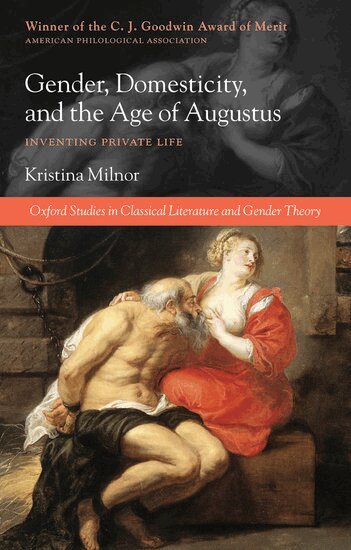
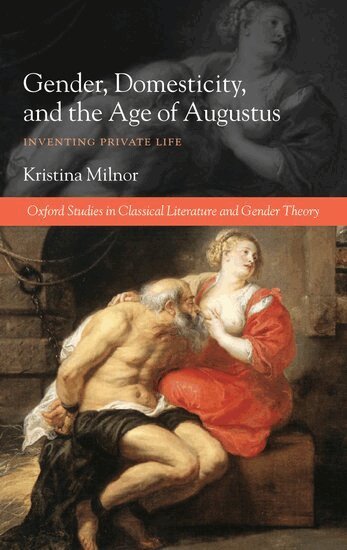
The age of Augustus has long been recognized as a time when the Roman state put a new emphasis on `traditional' feminine domestic ideals, yet at the same time gave real public prominence to certain women in their roles as wives, mothers, sisters, and daughters. Kristina Milnor takes up a series of texts and their contexts in order to explore this paradox. Through an examination of authors such as Vitruvius, Livy, Valerius Maximus, Seneca the Elder, and Columella, she argues that female domesticity was both a principle and a problem for early imperial writers, as they sought to construct a new definition of who and what constituted Roman public life.
2 822 kr
Skickas inom 5-8 vardagar
The age of Augustus has long been recognized as a time when the Roman state put a new emphasis on `traditional' feminine domestic ideals, yet at the same time gave real public prominence to certain women in their roles as wives, mothers, sisters, and daughters. Kristina Milnor takes up a series of texts and their contexts in order to explore this paradox. Through an examination of authors such as Vitruvius, Livy, Valerius Maximus, Seneca the Elder, and Columella, she argues that female domesticity was both a principle and a problem for early imperial writers, as they sought to construct a new definition of who and what constituted Roman public life.
2 221 kr
Skickas inom 5-8 vardagar
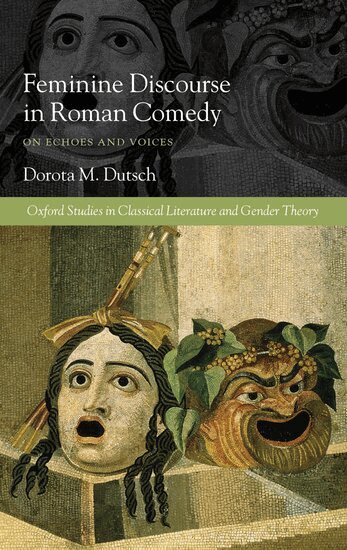
This is an open access title. It is available to read and download as a free PDF version on Oxford Academic and is made available under a Creative Commons Attribution 4.0 International licence. As literature written in Latin has almost no female authors, we are dependent on male writers for some understanding of the way women would have spoken. Plautus (3rd to 2nd century BCE) and Terence (2nd century BCE) consistently write particular linguistic features into the lines spoken by their female characters: endearments, soft speech, and incoherent focus on numerous small problems. Dorota M. Dutsch describes the construction of this feminine idiom and asks whether it should be considered as evidence of how Roman women actually spoke.
2 622 kr
Skickas inom 5-8 vardagar
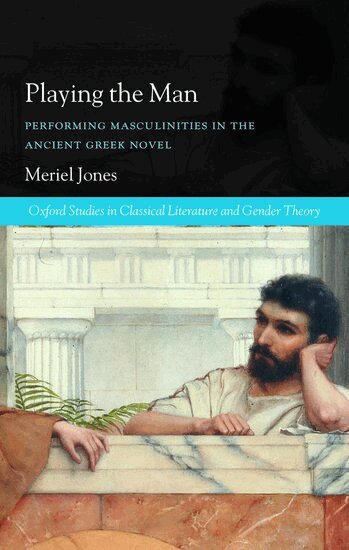
Despite the growth of research on masculinity in both Gender and Classical Studies, and the resurgence of interest in ancient fiction, no volume has yet been devoted to exploring the representation of masculinity in ancient Greek novels. This ground-breaking study examines and contextualizes three key discourses of ancient Greek masculinity - paideia, andreia, and sexual ideology - as evidenced in the five 'ideal' Greek novels (namely those of Chariton, Xenophon of Ephesus, Achilles Tatius, Longus, and Heliodorus). Jones argues that while some of the narratives may be set in the classical past, the masculine concerns they display are inescapably symptomatic of the imperial present, reflecting some of the 'gender troubles' of the real world of their authors. Using modern theories of the 'performance' of gender as tools for analysis, the study finds that many of the novels' men betray an awareness that their masculine identities depend on the maintenance of their image before others - they are conscious of 'playing the man'. The book also puts forward the hypothesis that, while most of the authors uphold accepted scripts of masculinity, Achilles Tatius constructs Cleitophon as a 'misperformer' of masculinity as a means of challenging and subverting traditional codes of gender.
2 307 kr
Skickas inom 7-10 vardagar
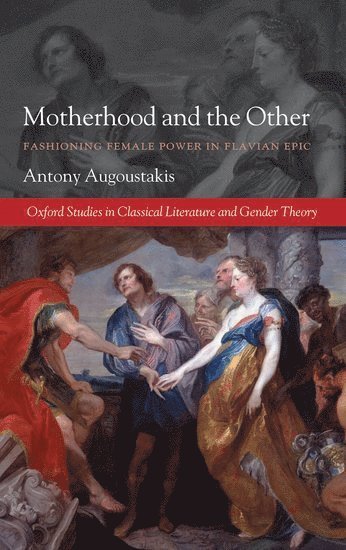
This is the first book-length study to reconstruct the role of women in the epic poems of the Flavian period of Latin literature. Antony Augoustakis examines the role of female characters from the perspective of Julia Kristeva's theories on foreign otherness and motherhood to underscore the on-going negotiation between same and other in the Roman literary imagination as a telling reflection on the construction of Roman identity and of gender and cultural hierarchies.
1 996 kr
Skickas inom 7-10 vardagar
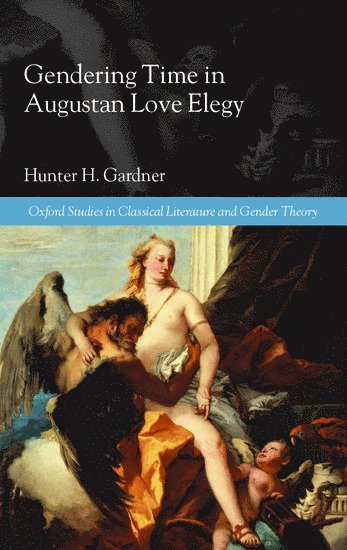
Gendering Time in Augustan Love Elegy examines how and why time appears to affect men and women differently in Latin love elegy. Considering the genre's brief flowering during the Augustan Principate, it aims to situate the elegies of Propertius, Tibullus, and Ovid in their social and political milieu. The volume argues that the imperatives of the new regime, which encouraged a younger generation of loyalists to participate in the machinery of government, placed temporal pressures on the elite male that shaped the amator's (poet-lover's) resistance to enter a course of civil service and prompted his withdrawal into the arms of a courtesan, and therefore unmarriageable, beloved.In the second part of the volume Gardner focuses on the divergent temporal experiences of the amator and his beloved courtesan-puella (girl) through the lens of 'women's time' (le temps des femmes) and the chora, as theorized by psycholinguist Julia Kristeva. Kristeva's model of feminine subjectivity, defined by repetition, cyclicality, and eternity, allows us to understand how the beloved's marginalization from the realm of historical time proves advantageous to her amator, wishing to defer his entrance into civic life. The antithesis between the properties of 'women's time' and the linear momentum that defines masculine subjectivity, moreover, demonstrates how 'women's time' ultimately thwarts the amator's often promised generic evolution.
2 409 kr
Skickas inom 3-6 vardagar
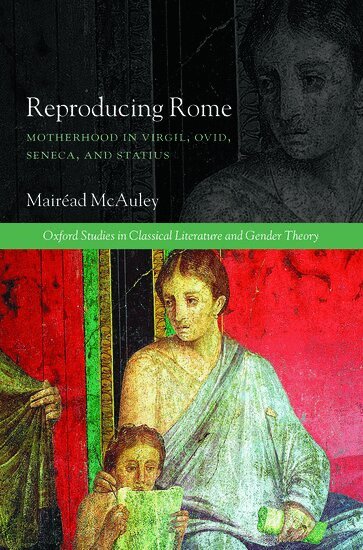
In the conservative and competitive society of ancient Rome, where the law of the father (patria potestas) was supposedly absolute, motherhood took on complex aesthetic, moral, and political meanings in elite literary discourse. Reproducing Rome is a study of the representation of maternity in the Roman literature of the first century CE, a period of intense social upheaval and reorganization as Rome was transformed from a Republic to a form of hereditary monarchy under the emperor Augustus. Through a series of close readings of works by Virgil, Ovid, Seneca, and Statius, the volume scrutinizes the gender dynamics that permeate these ancient authors' language, imagery, and narrative structures. Analysing these texts 'through and for the maternal', McAuley considers to what degree their representations of motherhood reflect, construct, or subvert Roman ideals of, and anxieties about, family, gender roles, and reproduction. The volume also explores the extent to which these representations distort or displace concerns about fatherhood or other relations of power in Augustan and post-Augustan Rome. Keeping the ancient literary and historical context in view, the volume conducts a dialogue between these ancient male authors and modern feminist theorists-from Klein to Irigaray, Kristeva to Cavarero-to consider the relationship between motherhood as symbol and how a maternal subjectivity is suggested, developed, or suppressed by the authors. Readers are encouraged to consider the problems and possibilities of reading the maternal in these ancient texts, and to explore the unique site the maternal occupies in pre-modern discourses underpinning Western culture.