Oxford Studies in Philosophy and Literature - Böcker
Visar alla böcker i serien . Handla med fri frakt och snabb leverans.
10 produkter
10 produkter
1 760 kr
Skickas inom 5-8 vardagar
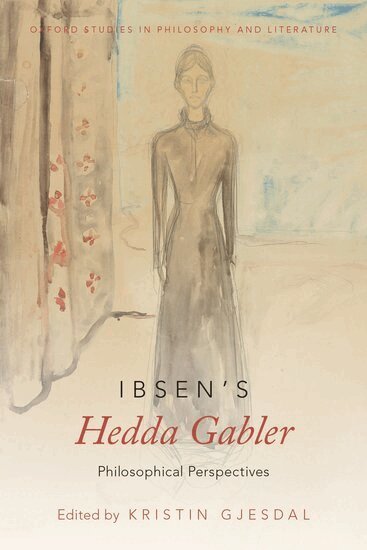
Since its publication in 1890, Ibsen's Hedda Gabler has been a recurring point of fascination for readers, theater audiences, and artists alike. Newly married, yet utterly bored, the character of Hedda Gabler evokes reflection on beauty, love, passion, death, nihilism, identity, and a host of other topics of an existential nature. It is no surprise that Ibsen's work has gained the attention of philosophically-minded readers from Nietzsche, Lou Andreas-Salomé, and Freud, to Adorno, Cavell, and beyond. Once staged at avant-garde theaters in Paris, London, and Berlin, Ibsen is now a global phenomenon. The enigmatic character of Hedda Gabler remains intriguing to ever-new generations of actors, audiences, and readers.Hedda Gabler occupies a privileged place in the history of European drama and as a work of literature, and, as this volume demonstrates, invites profound and worthwhile philosophical questions. Through ten newly commissioned chapters, written by leading voices in the fields of drama studies, European philosophy, Scandinavian studies, and comparative literature, this volume brings out the philosophical resonances of Hedda Gabler in particular and Ibsen's drama more broadly.
598 kr
Skickas inom 5-8 vardagar
Since its publication in 1890, Ibsen's Hedda Gabler has been a recurring point of fascination for readers, theater audiences, and artists alike. Newly married, yet utterly bored, the character of Hedda Gabler evokes reflection on beauty, love, passion, death, nihilism, identity, and a host of other topics of an existential nature. It is no surprise that Ibsen's work has gained the attention of philosophically-minded readers from Nietzsche, Lou Andreas-Salomé, and Freud, to Adorno, Cavell, and beyond. Once staged at avant-garde theaters in Paris, London, and Berlin, Ibsen is now a global phenomenon. The enigmatic character of Hedda Gabler remains intriguing to ever-new generations of actors, audiences, and readers.Hedda Gabler occupies a privileged place in the history of European drama and as a work of literature, and, as this volume demonstrates, invites profound and worthwhile philosophical questions. Through ten newly commissioned chapters, written by leading voices in the fields of drama studies, European philosophy, Scandinavian studies, and comparative literature, this volume brings out the philosophical resonances of Hedda Gabler in particular and Ibsen's drama more broadly.
1 299 kr
Skickas inom 5-8 vardagar
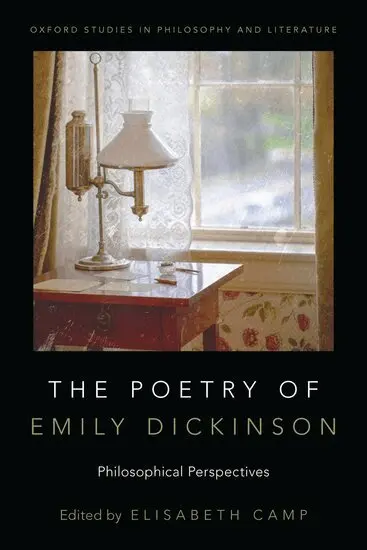
One of America's most celebrated poets, Emily Dickinson was virtually unpublished in her lifetime. When a slim volume of her poems emerged on the American scene in 1890, her work created shockwaves that have not subsided yet. Famously precise and sparse, Emily Dickinson's poetry is often described as philosophical, both because her poetry grapples with philosophical topics like death, spirituality, and the darkening operations of the mind, and because she approaches those topics in a characteristically philosophical manner: analyzing and extrapolating from close observation, exploring alternatives, and connecting thoughts into cumulative demonstrations. But unlike Lucretius or Pope, she cannot be accused of producing versified treatises. Many of her poems are unsettling in their lack of conclusion; their disparate insights often stand in conflict; and her logic turns crucially on imagery, juxtaposition, assonance, slant rhyme, and punctuation. The six chapters of this volume collectively argue that Dickinson is an epistemically ambitious poet, who explores fundamental questions by advancing arguments that are designed to convince. Dickinson exemplifies abstract ideas in tangible form and habituates readers into productive trains of thought--she doesn't just make philosophical claims, but demonstrates how poetry can make a distinct contribution to philosophy.All essays in this volume, drawn from both philosophers and literary theorists, serve as a counterpoint to recent critical work, which has emphasized Dickinson's anguished uncertainty, her nonconventional style, and the unsettled status of her manuscripts. On the view that emerges here, knowing is like cleaning, mending, and lacemakingL a form of hard, ongoing work, but one for which poetry is a powerful, perhaps indispensable, tool.
373 kr
Skickas inom 5-8 vardagar
One of America's most celebrated poets, Emily Dickinson was virtually unpublished in her lifetime. When a slim volume of her poems emerged on the American scene in 1890, her work created shockwaves that have not subsided yet. Famously precise and sparse, Emily Dickinson's poetry is often described as philosophical, both because her poetry grapples with philosophical topics like death, spirituality, and the darkening operations of the mind, and because she approaches those topics in a characteristically philosophical manner: analyzing and extrapolating from close observation, exploring alternatives, and connecting thoughts into cumulative demonstrations. But unlike Lucretius or Pope, she cannot be accused of producing versified treatises. Many of her poems are unsettling in their lack of conclusion; their disparate insights often stand in conflict; and her logic turns crucially on imagery, juxtaposition, assonance, slant rhyme, and punctuation. The six chapters of this volume collectively argue that Dickinson is an epistemically ambitious poet, who explores fundamental questions by advancing arguments that are designed to convince. Dickinson exemplifies abstract ideas in tangible form and habituates readers into productive trains of thought--she doesn't just make philosophical claims, but demonstrates how poetry can make a distinct contribution to philosophy.All essays in this volume, drawn from both philosophers and literary theorists, serve as a counterpoint to recent critical work, which has emphasized Dickinson's anguished uncertainty, her nonconventional style, and the unsettled status of her manuscripts. On the view that emerges here, knowing is like cleaning, mending, and lacemakingL a form of hard, ongoing work, but one for which poetry is a powerful, perhaps indispensable, tool.
1 760 kr
Skickas inom 5-8 vardagar
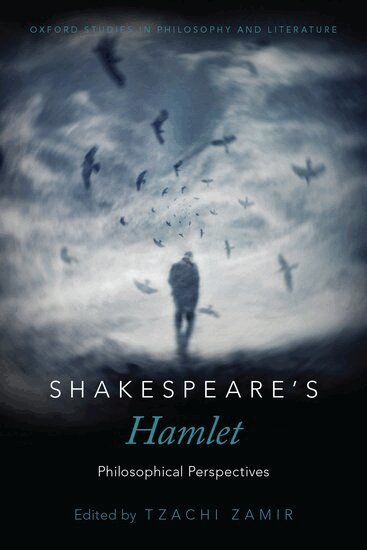
Does philosophy gain or lose when it is embedded within literature or embodied by drama? Does literary criticism gain or lose when it turns to literary works as occasions for abstract reflection? Leading literary scholars and philosophers interrogate philosophical dimensions of Shakespeare's Hamlet with these urgent questions in view.Scholars probe Hamlet's own insights, assess the significance of philosophy's literary-dramatic framing by this play, and trace the philosophically-relevant underpinnings revealed by historical transformations in Hamlet's reception. They focus on the play's thematizations of subjectivity, knowledge, sex, grief, self-theatricalization.Examining Shakespeare's play from a philosophical standpoint sharpens the questions the play itself so famously poses: What counts as a proper response to injustice upon realizing that whatever one does, there can be no undoing of the initial wrong? What do our commitments to the dead amount to? How to persist in infusing significance into action while grasping the degradation of death and our own replaceability? Scholars at the forefront of their fields tackle these and other questions from a wide range of viewpoints, illuminating the central concerns of one of Shakespeare's masterpieces.
480 kr
Skickas inom 5-8 vardagar
Does philosophy gain or lose when it is embedded within literature or embodied by drama? Does literary criticism gain or lose when it turns to literary works as occasions for abstract reflection? Leading literary scholars and philosophers interrogate philosophical dimensions of Shakespeare's Hamlet with these urgent questions in view.Scholars probe Hamlet's own insights, assess the significance of philosophy's literary-dramatic framing by this play, and trace the philosophically-relevant underpinnings revealed by historical transformations in Hamlet's reception. They focus on the play's thematizations of subjectivity, knowledge, sex, grief, self-theatricalization.Examining Shakespeare's play from a philosophical standpoint sharpens the questions the play itself so famously poses: What counts as a proper response to injustice upon realizing that whatever one does, there can be no undoing of the initial wrong? What do our commitments to the dead amount to? How to persist in infusing significance into action while grasping the degradation of death and our own replaceability? Scholars at the forefront of their fields tackle these and other questions from a wide range of viewpoints, illuminating the central concerns of one of Shakespeare's masterpieces.
320 kr
Skickas inom 5-8 vardagar
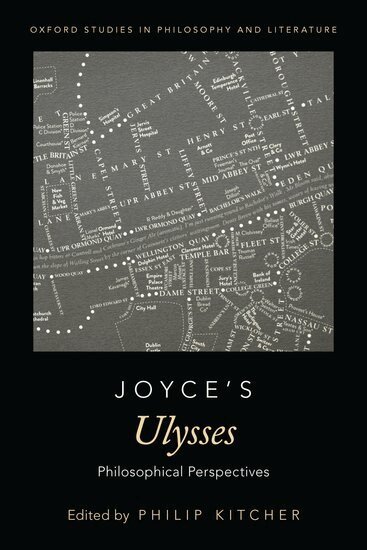
Though James Joyce was steeped in philosophy and humanism, he has received too little attention from contemporary philosophers in comparison to many of the other titans of modernist fiction. This book probes the possibilities for thinking philosophically about Joyce's masterpiece, Ulysses, presenting readings by renowned scholars such David Hills, Garry L. Hagberg, Vicki Mahaffey, Martha C. Nussbaum, Sam Slote, Wendy J. Truran, and Philip Kitcher, who also provides an introduction to the volume that considers broader themes and situates Ulysses as a work of philosophical interest. For the central characters of Ulysses--Leopold Bloom, Molly Bloom, and Stephen Dedalus, "How to live?" is an urgent question. Each must either start anew, or attempt to recover lost paths. Chapters plumb the depths of the philosophical quandaries that present themselves to these characters--reflections on death and overcoming disgust, Leopold Bloom's evocations of conscious thought, the dominance of vision in our thinking about the senses, identity, and the possibility of revising one's values are only a handful of the subjects covered in the volume. Ulysses is an intrinsically and deeply philosophical work, and these readings provide new inroads and firm orientation for Joyce's project. Readers will come away with renewed appreciation for one of our greatest works of literature in the English language, and deepened understanding of Joyce's attempt to offer alternative ways of structuring and enriching the world of our experience.
1 458 kr
Skickas inom 7-10 vardagar
Though James Joyce was steeped in philosophy and humanism, he has received too little attention from contemporary philosophers in comparison to many of the other titans of modernist fiction. This book probes the possibilities for thinking philosophically about Joyce's masterpiece, Ulysses, presenting readings by renowned scholars such David Hills, Garry L. Hagberg, Vicki Mahaffey, Martha C. Nussbaum, Sam Slote, Wendy J. Truran, and Philip Kitcher, who also provides an introduction to the volume that considers broader themes and situates Ulysses as a work of philosophical interest. For the central characters of Ulysses--Leopold Bloom, Molly Bloom, and Stephen Dedalus, "How to live?" is an urgent question. Each must either start anew, or attempt to recover lost paths. Chapters plumb the depths of the philosophical quandaries that present themselves to these characters--reflections on death and overcoming disgust, Leopold Bloom's evocations of conscious thought, the dominance of vision in our thinking about the senses, identity, and the possibility of revising one's values are only a handful of the subjects covered in the volume. Ulysses is an intrinsically and deeply philosophical work, and these readings provide new inroads and firm orientation for Joyce's project. Readers will come away with renewed appreciation for one of our greatest works of literature in the English language, and deepened understanding of Joyce's attempt to offer alternative ways of structuring and enriching the world of our experience.
1 271 kr
Skickas inom 7-10 vardagar
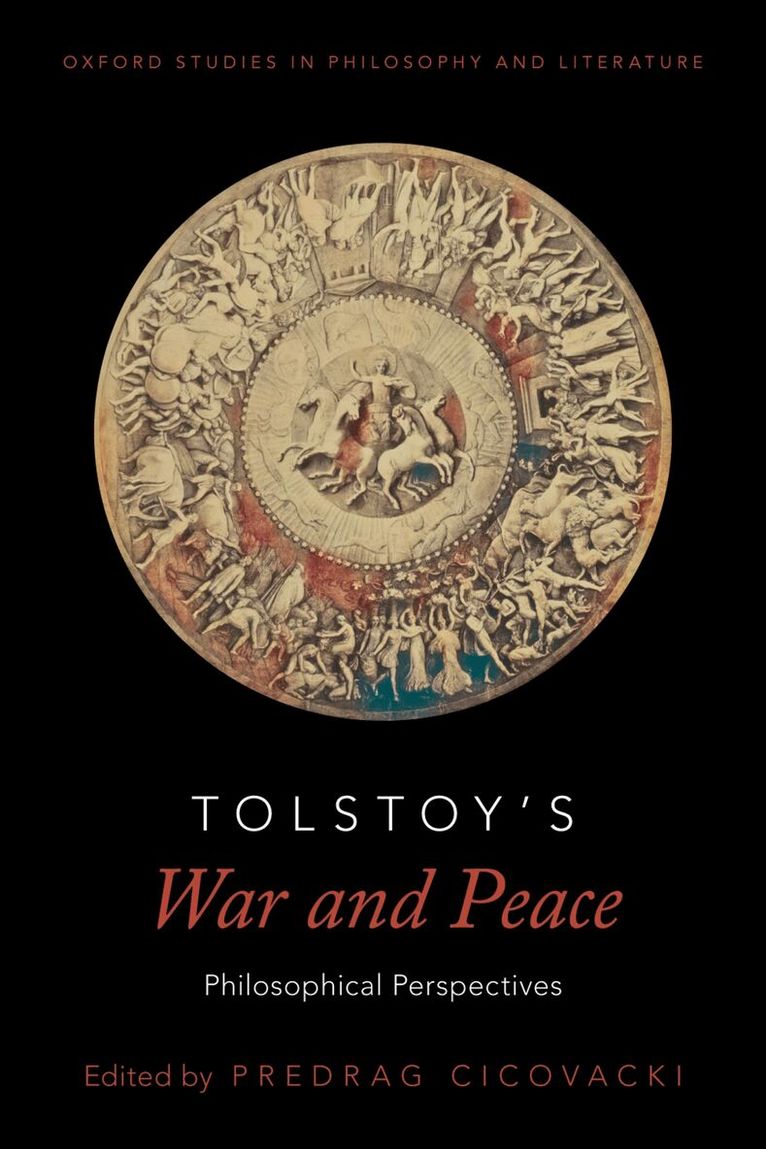
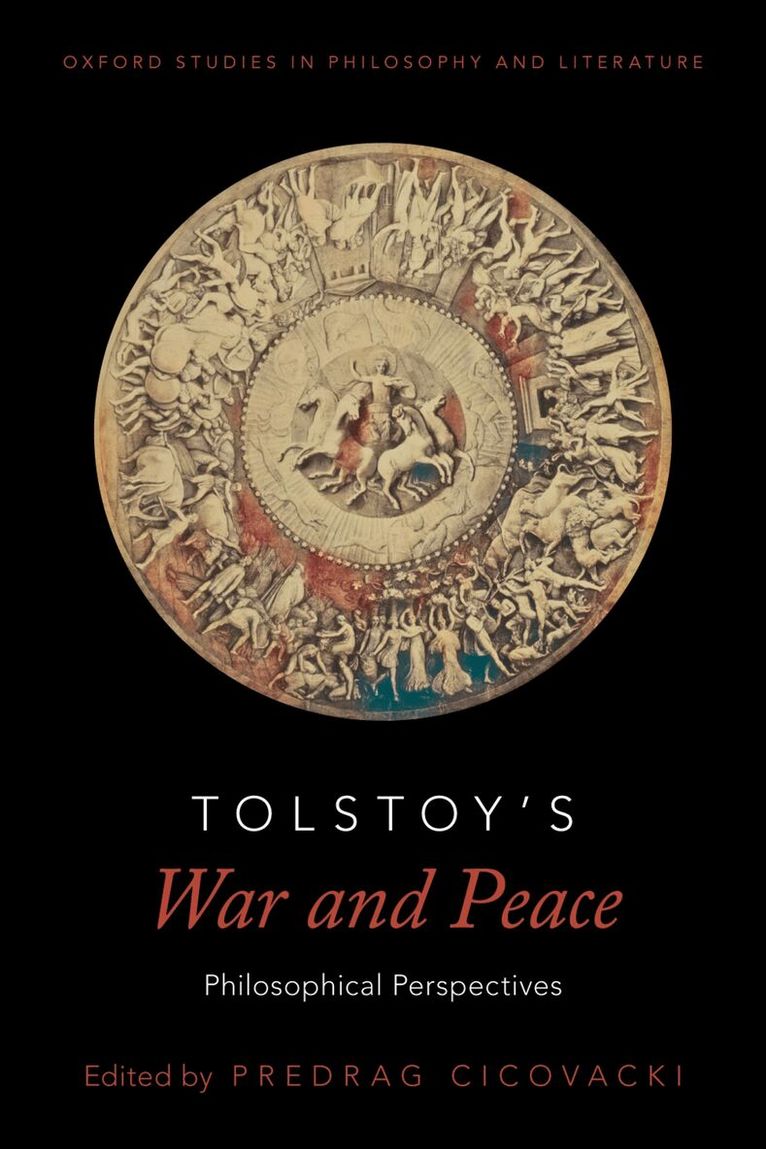
This collection of eight essays by world-renowned philosophers and literary critics thoroughly examines the philosophical perspectives of Leo Tolstoy's immortal novel War and Peace. By examining the narrative structure, as well as the struggles and destinies of the central characters, the authors offer in-- depth analyses of the multilayered topics of this work. These topics range from those of war and peace, of the possibility of historical truths, and of freedom and determination, to the issues about friendship, love, living, and dying. Underlying all these discussions is the examination of Tolstoy's preoccupation with the pursuits of truth, goodness, and beauty in a world replete with deceptions, destructions, and artificiality. Taken together, the essays suggest that Tolstoy's novel leaves open the door for the possibility of objective values and judgments, as well as for the possibility of discerning some fundamental truths regarding the value and meaning of human life. The novel's accounts of complex and multifaceted interactions among facts and values, as well as of the intrusion of the extraordinary into the ordinary, challenge readers to reflect on fundamental truths in the context of such interactions and intrusionsif they can only give full attention to what is present, rather than be carried away by constant anticipations of what may come next.
366 kr
Skickas inom 3-6 vardagar
This collection of eight essays by world-renowned philosophers and literary critics thoroughly examines the philosophical perspectives of Leo Tolstoy's immortal novel War and Peace. By examining the narrative structure, as well as the struggles and destinies of the central characters, the authors offer in-- depth analyses of the multilayered topics of this work. These topics range from those of war and peace, of the possibility of historical truths, and of freedom and determination, to the issues about friendship, love, living, and dying. Underlying all these discussions is the examination of Tolstoy's preoccupation with the pursuits of truth, goodness, and beauty in a world replete with deceptions, destructions, and artificiality. Taken together, the essays suggest that Tolstoy's novel leaves open the door for the possibility of objective values and judgments, as well as for the possibility of discerning some fundamental truths regarding the value and meaning of human life. The novel's accounts of complex and multifaceted interactions among facts and values, as well as of the intrusion of the extraordinary into the ordinary, challenge readers to reflect on fundamental truths in the context of such interactions and intrusionsif they can only give full attention to what is present, rather than be carried away by constant anticipations of what may come next.