Patristic Theology – Serie
Visar alla böcker i serien Patristic Theology. Handla med fri frakt och snabb leverans.
9 produkter
9 produkter
363 kr
Skickas inom 7-10 vardagar
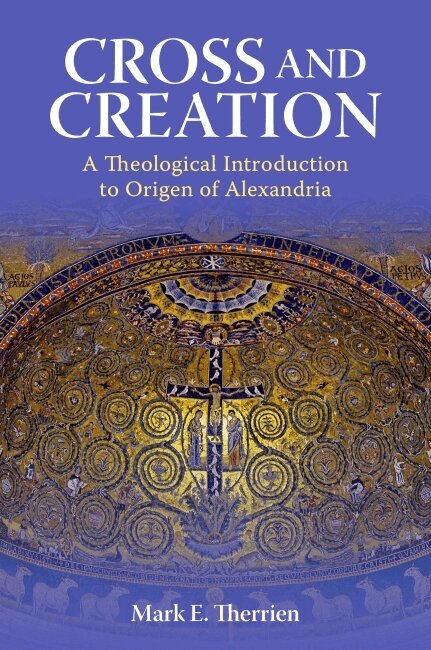
Even though the theology of Origen of Alexandria has shaped the Christian Tradition in almost every way, the controversies over his legacy have been seemingly endless. One major interpretative trend, for example, has suggested Origen's theology is really akin to the heterodox Gnostics against whom he wrote than the actual teaching of the Gospel, since he (supposedly) had a disdainful attitude towards Creation and ultimately saw little redemptive meaning in the Passion.In Cross and Creation: A Theological introduction to Origen of Alexandria, Mark Therrien offers an original interpretation of Origen's theology. Focusing on some of Origen's most important works (especially On First Principles and the Commentary on John, but ultimately making reference to his writings more broadly), this book retrieves and examines some of the foundational pillars of Origen's theology through close readings and re-examinations of those texts. It examines eight of these theological foundations: God, Christ, the Holy Spirit, the end, the soul, the world, the cross, and deification. Moreover, by showing the connections between Origen's understanding of these foundational pillars, it also shows the coherence of his theology as a whole. Taken collectively, what emerges from these eight chapters is that two doctrines specially shape Origen's theology: Cross and Creation. As Therrien shows, Origen did not hold contempt for Creation. Rather, Origen thinks that Creation emerges from the very life of God as eternally foreknown and provided for in the person of Christ, the Wisdom of God the Father. Moreover, he also holds that, though fallen, Creation will be restored according to its original, eternal intention in God precisely through the Passion of Jesus Christ on the Cross. The Cross is thus not minimalized in Origen's theology; it is rather its very center.
368 kr
Skickas inom 10-15 vardagar
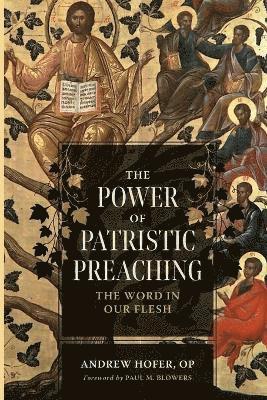
The Word made flesh is manifested in the lives of those dedicated to his proclamation. The Power of Patristic Preaching: The Word in Our Flesh presents seven early preachers who show, by life and speech, the divine Word's power at work in weak human life.The book is inspired by this question preached by Origen, "For what does it profit if I should say that Jesus has come in that flesh alone which he received from Mary and I should not show also that he has come in this flesh of mine?" In seven chapters, The Power of Patristic Preaching studies the exemplars of Origen for holiness, Ephrem for the humility of repentance, Gregory of Nazianzus for purification and faith, John Chrysostom for the hope of salvation, Augustine for love, Leo the Great for love of the poor and the weak, and Gregory the Great for accepting our own weakness.With an emphasis on the incarnation, deification through the virtues, and proclamation, The Power of Patristic Preaching serves as a resource for those dedicated to the ministry of the Word (clerical, religious, and lay), and as a text for students of early Christian theology and practices. A Catholic work for a broad ecumenical audience, the book gives a cry from the heart in a suffering Church traveling through a world that is passing away.
363 kr
Skickas inom 7-10 vardagar
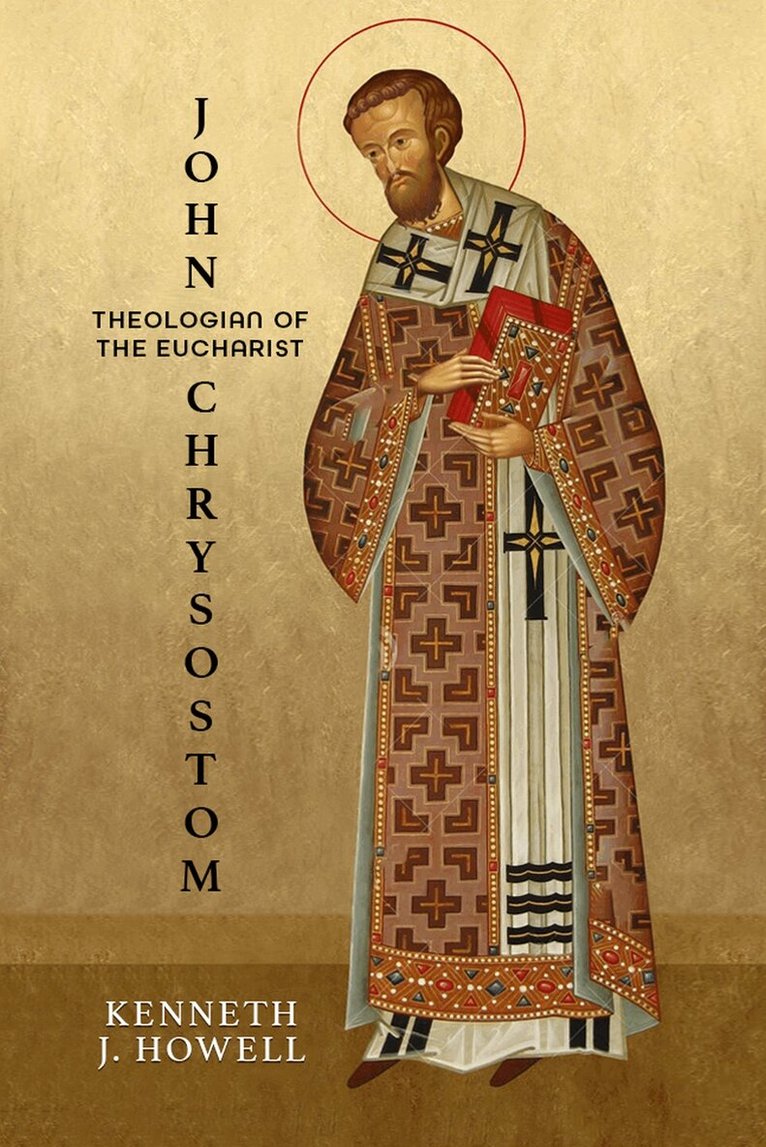
Despite the fact that John Chrysostom wrote more on the Eucharist than any other Greek Church Father, there has never been a full treatment of his doctrine in English. In this book, Kenneth Howell brings together a wide array of sources from which he develops a many-sided portrait of Chrysostom's eucharistic thought. While the Antiochene preacher assumed the real presence and the sacrificial nature of the Eucharist, he focused more on the moral and spiritual implications of communion. At the root of his theology lies the conviction that the Eucharist with its home in the liturgy is the extension of Christ's incarnate life through space and time. All that Christ accomplished in his life, death, and resurrection is present and available to the communing Christian who stands in union with the angelic hosts in the liturgy of the church. John's preaching at times reaches encomiastic proportions as he never tires of praising the benefits and power of the Eucharist and he deftly applies the sacrament to the struggle of virtue and vice as he explores both the invitation and the obstacles to communion. Among the moral implications of the Eucharist, John seems to distinguish well between sins arising from human weakness versus malicious dispositions freely chosen. He is especially keen to exhort his hearers to lay aside the remembrance of evil (mnesikakia) done to them in their past lives. Humility and forbearance are two essential virtues in arriving at forgiveness of past injuries. And lack of forgiveness is like greed in that both constitute a turn in on oneself. The Eucharist demands love of neighbor and active ministry to the less fortunate of the world. For John, God is interested in golden souls more than golden chalices.
416 kr
Skickas inom 7-10 vardagar
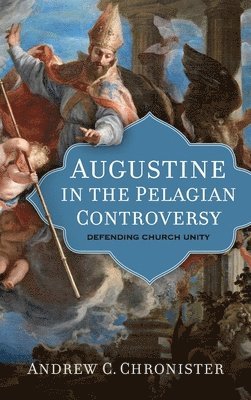
This book examines St. Augustine of Hippo's involvement in the Pelagian controversy and argues that this involvement was prompted not simply by his opposition to Pelagian doctrinal views but, to a significant degree, by his desire to defend Church unity. To prove this thesis, Andrew Chronister analyzes the historical context of the controversy as well as Augustine's argumentation in his anti-Pelagian works.Attending to the historical context reveals the fact that at various moments in the controversy, Augustine was faced with what he believed to be significant threats to Church unity. For example, the beginnings of the controversy coincided with a key attempt in June 411 to end the Donatist schism that had split the African Church for a century: at the very moment when one schism was being healed, another threat to unity appeared in Caelestius and Pelagius.At the same time, internal evidence in Augustine's anti-Pelagian works reveals his desire not only to refute Pelagian doctrinal views but also to undermine the Pelagians' claims that they were simply teaching what the Church had always and everywhere taught. This can be seen in a particular way in Augustine's frequent appeals to liturgical and sacramental praxis as well as in his rather novel practice of citing renowned Christian authors as evidence for the antiquity and universality of his views.Augustine in the Pelagian Controversy has two main contributions: (1) it offers a new perspective on Augustine's involvement in the controversy that makes his prolonged and polemical engagement with the Pelagians more intelligible and (2) it provides a detailed history of the controversy itself.
916 kr
Skickas inom 10-15 vardagar
This book examines St. Augustine of Hippo's involvement in the Pelagian controversy and argues that this involvement was prompted not simply by his opposition to Pelagian doctrinal views but, to a significant degree, by his desire to defend Church unity. To prove this thesis, Andrew Chronister analyzes the historical context of the controversy as well as Augustine's argumentation in his anti-Pelagian works.Attending to the historical context reveals the fact that at various moments in the controversy, Augustine was faced with what he believed to be significant threats to Church unity. For example, the beginnings of the controversy coincided with a key attempt in June 411 to end the Donatist schism that had split the African Church for a century: at the very moment when one schism was being healed, another threat to unity appeared in Caelestius and Pelagius.At the same time, internal evidence in Augustine's anti-Pelagian works reveals his desire not only to refute Pelagian doctrinal views but also to undermine the Pelagians' claims that they were simply teaching what the Church had always and everywhere taught. This can be seen in a particular way in Augustine's frequent appeals to liturgical and sacramental praxis as well as in his rather novel practice of citing renowned Christian authors as evidence for the antiquity and universality of his views.Augustine in the Pelagian Controversy has two main contributions: (1) it offers a new perspective on Augustine's involvement in the controversy that makes his prolonged and polemical engagement with the Pelagians more intelligible and (2) it provides a detailed history of the controversy itself.
314 kr
Skickas inom 10-15 vardagar
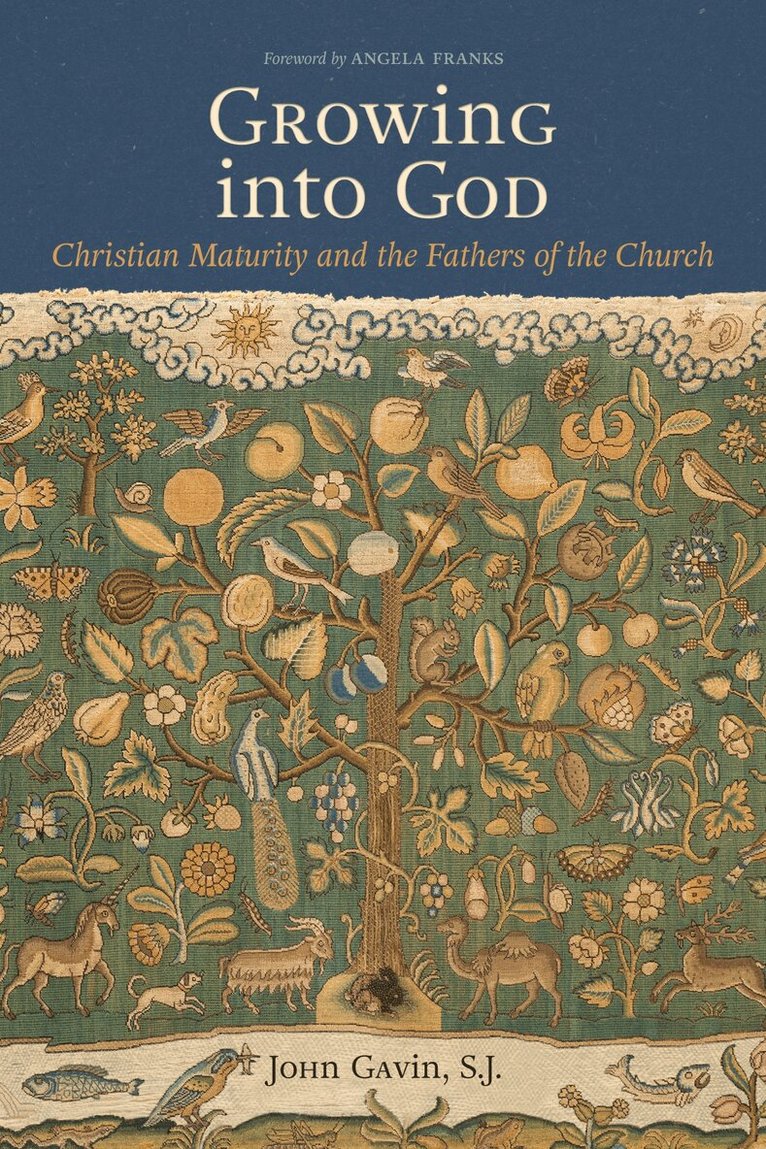
Many studies of spiritual development exist under the heading of "Christian Perfection." However, John Gavin revisits such topics as asceticism, prayer, sacraments, virtues, and spiritual combat through scriptural and patristic texts that present the Christian life as one of growth from spiritual infancy to a particular fulfillment or end (telos): divinized humanity as formed and revealed in Jesus Christ. Thus, though Christian maturity does incorporate such things as physical and cognitive development, its true distinction lies in its gifted, supernatural end that does not exclude human freedom.Part One establishes the pillars of Christian maturity – form and finality; virtue and character; vocation and mission – and explores the opposition to maturation in the form of demonic infantilism. Part Two examines the means of maturity given to us in the life of the Church: the Scriptures, the Mysteries (Sacraments), and asceticism. Finally, Part Three reviews four figures of Christian adulthood: the Witness, the Teacher, the Servant, and the Fool. A concluding chapter applies the insights from the previous chapters to our modern world to see in what ways our times need to "grow up."Growing into God includes a variety of early Christian voices: Irenaeus of Lyons, Origen of Alexandria, Gregory of Nazianzus, Gregory of Nyssa, Basil of Caesarea, Augustine of Hippo, Ambrose of Milan, John Cassian, Dionysius the Areopagite, Mark the Monk, John Moschos, Maximus the Confessor, Symeon the Holy Fool, and others. Their collective insights, all the fruits of great learning and the contemplation of God's Word, describe a wondrous figure: the mature saint transformed by union with the Father, Son, and Spirit.
347 kr
Kommande
The experience of the pastoral leaders of the Early Church is wide and deep. In loving obedience to Christ’s command to make disciples, they expand into geographical locations both urban and rural, across linguistic and social boundaries. Their views are refined by the fires of martyrdom, purified by asceticism, and perfected by the pressures that the care of souls lays upon them. Their preaching, teaching, and witness is hard won by these experiences. To fail to engage with them impoverishes the Christian imagination that aims to answer the "how" and "why" of pastoral care. The Pastoral Theology of the Early Church proposes a selection of these early guides in pastoral theology for Christian leaders, both present and future. The selection of Greek, Latin, and Syriac authors from the first millennium treats themes as broad as Christian Initiation, the Church’s relationship to public officials, and the care owed to the families of infants who have died.The Pastoral Theology of the Early Church will aid students preparing for ministry and as well as seasoned pastors and pastoral ministers by offering a close look at the early Church’s perennial wisdom in action across differing pastoral contexts. Scholars and interested readers of the early Church will benefit from the surprising, varied situations and themes these leaders tackled head on for the sake of the Gospel.
246 kr
Skickas inom 5-8 vardagar
379 kr
Skickas inom 5-8 vardagar