Penn State Series in Lived Religious Experience - Böcker
Visar alla böcker i serien Penn State Series in Lived Religious Experience. Handla med fri frakt och snabb leverans.
5 produkter
5 produkter
Charlotte von Kirschbaum and Karl Barth
A Study in Biography and the History of Theology
Inbunden, Engelska, 1998
1 072 kr
Skickas inom 11-20 vardagar
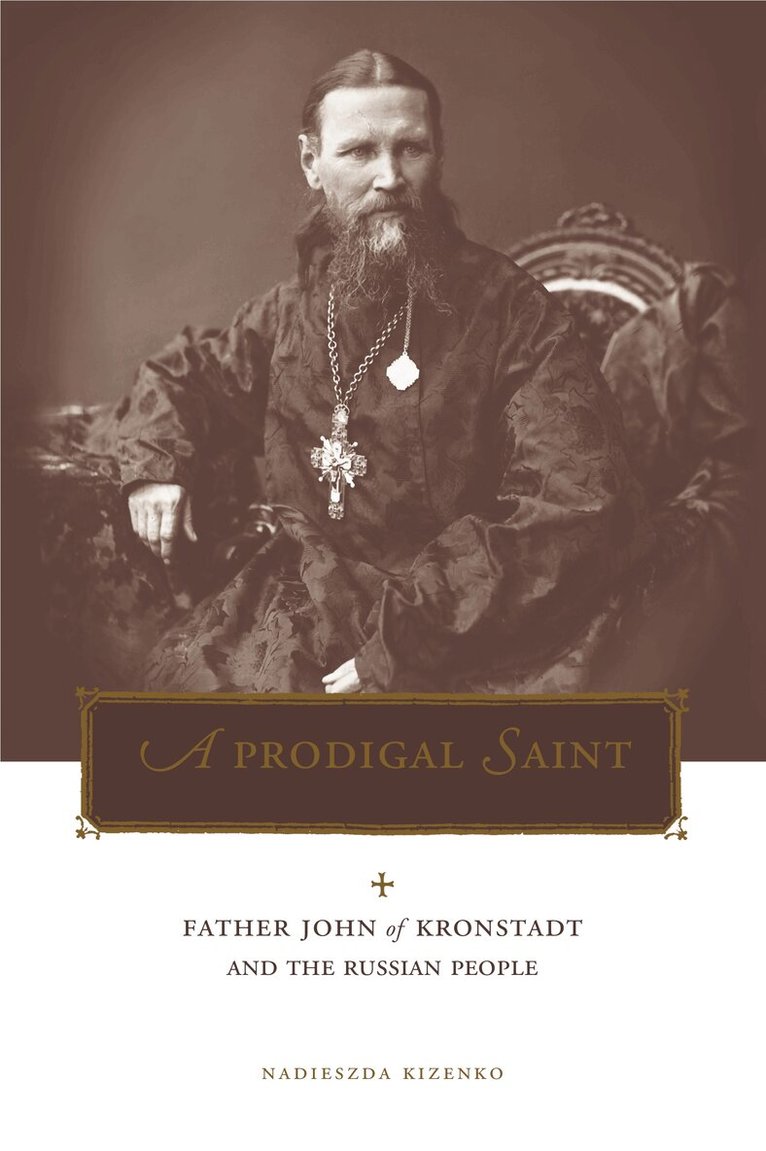
Charlotte von Kirschbaum and Karl Barth is the first concentrated study of the collaboration of the towering theologian Karl Barth and his secretary and theological assistant for more than three decades, Charlotte von Kirschbaum. Barth always maintained that he could not have produced his theological oeuvre without her. Von Kirschbaum was also his constant companion. Discussion of the two has long been aswirl in rumor and speculation, with regard both to their personal relationship and to von Kirschbaum’s part in Barth's theological achievement.Drawing upon published and unpublished sources that include their own writings, the observations of contemporaries, and correspondence with people who knew them, Suzanne Selinger seeks to describe the collaboration in a multidimensional way. Von Kirschbaum gave a series of lectures in 1949, published in the same year, on women in the perspective of Scripture, theology, and the church. In the three volumes of Barth's Church Dogmatics that deal with humankind, including the male-female relationship as the locus of the image of God, Barth cites von Kirschbaum's scholarship. The subject inevitably reflects upon their own relationship. Moreover, it is just this subject—the anthropology of gender—that has been the source of the categorical rejection of Barth by many feminists.The author—a Barthian, a feminist, and a trained historian—addresses the concerns of Barth's critics by agreeing deeply with them in part but also by insisting upon understanding Barth and von Kirschbaum contextually. This means biographically and in relation to early German feminism (a phenomenon little known in the English-speaking world), the intellectual movement known as dialogical personalism, and the background of everything Barth and von Kirschbaum wrote or thought in their work together: the steady, threatening growth of the Nazi state, World War II, and the postwar German situation.
Charlotte von Kirschbaum and Karl Barth
A Study in Biography and the History of Theology
Häftad, Engelska, 1998
718 kr
Skickas inom 5-8 vardagar
Charlotte von Kirschbaum and Karl Barth is the first concentrated study of the collaboration of the towering theologian Karl Barth and his secretary and theological assistant for more than three decades, Charlotte von Kirschbaum. Barth always maintained that he could not have produced his theological oeuvre without her. Von Kirschbaum was also his constant companion. Discussion of the two has long been aswirl in rumor and speculation, with regard both to their personal relationship and to von Kirschbaum’s part in Barth's theological achievement.Drawing upon published and unpublished sources that include their own writings, the observations of contemporaries, and correspondence with people who knew them, Suzanne Selinger seeks to describe the collaboration in a multidimensional way. Von Kirschbaum gave a series of lectures in 1949, published in the same year, on women in the perspective of Scripture, theology, and the church. In the three volumes of Barth's Church Dogmatics that deal with humankind, including the male-female relationship as the locus of the image of God, Barth cites von Kirschbaum's scholarship. The subject inevitably reflects upon their own relationship. Moreover, it is just this subject—the anthropology of gender—that has been the source of the categorical rejection of Barth by many feminists.The author—a Barthian, a feminist, and a trained historian—addresses the concerns of Barth's critics by agreeing deeply with them in part but also by insisting upon understanding Barth and von Kirschbaum contextually. This means biographically and in relation to early German feminism (a phenomenon little known in the English-speaking world), the intellectual movement known as dialogical personalism, and the background of everything Barth and von Kirschbaum wrote or thought in their work together: the steady, threatening growth of the Nazi state, World War II, and the postwar German situation.
396 kr
Skickas
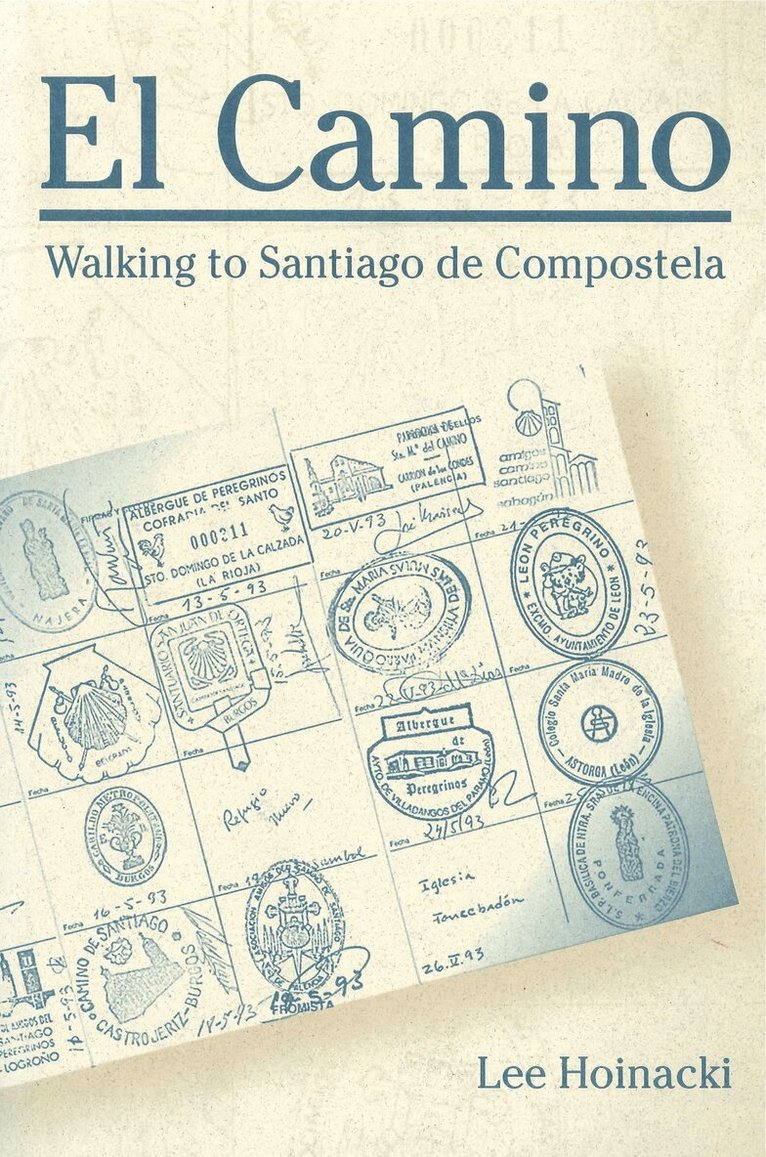
Rarely are we privileged to see the making of a saint, but it is just what this book gives us for John of Kronstadt (1829–1908), a major figure in the religious life of Late Imperial Russia. So popular was Father John during his years of ministry that Kronstadt became a pilgrimage site replete with peddlers selling souvenir photographs, postcards, and commemorative mugs. A Prodigal Saint follows Father John’s development from activist priest to venerated spiritual leader and, after his death, to his elevation to sainthood in 1990. We see both the inner life of an aspiring saint and the symbiotic relationship between a living icon and his followers. Father John represented a fundamentally new type of religious behavior and a new standard of sanctity in Late Imperial Russia. He ministered to the poor of Kronstadt, creating shelters and employment programs and participating in the temperance movement. In the process he acquired a reputation for prayerful intercession that soon spread beyond Kronstadt. When he was asked to minister to the dying Alexander III in 1894, his fame became international as he attracted correspondents from the United States and Europe. In his later years he allied himself increasingly with the radical right, which has had momentous implications for the Russian Orthodox Church in the twentieth century.Kizenko draws upon rich and virtually unknown documents from the Russian archives, including Father John’s diaries, thousands of letters he received from his followers, and the police reports on the sect that formed around him. John’s diaries are a truly unique source, for they document the making of a modern saint: his struggles with doubt, his ascetic practices, and his growing realization that others saw him as a saint. Kizenko explores the extent to which Father John collaborated in the formation of his own cult and how he himself was influenced by the expectations and desires of his audience. In the final chapter she follows Father John’s posthumous reputation (and the struggles over how to use that reputation) in Russia, the Soviet Union, and throughout the world. A Prodigal Saint is published in collaboration with the Harriman Institute at Columbia University as part of its Studies of the Harriman Institute series. It is a pioneering study that contributes to our understanding of lived religion, saints’ cults, and modern Russian history.
502 kr
Skickas inom 5-8 vardagar
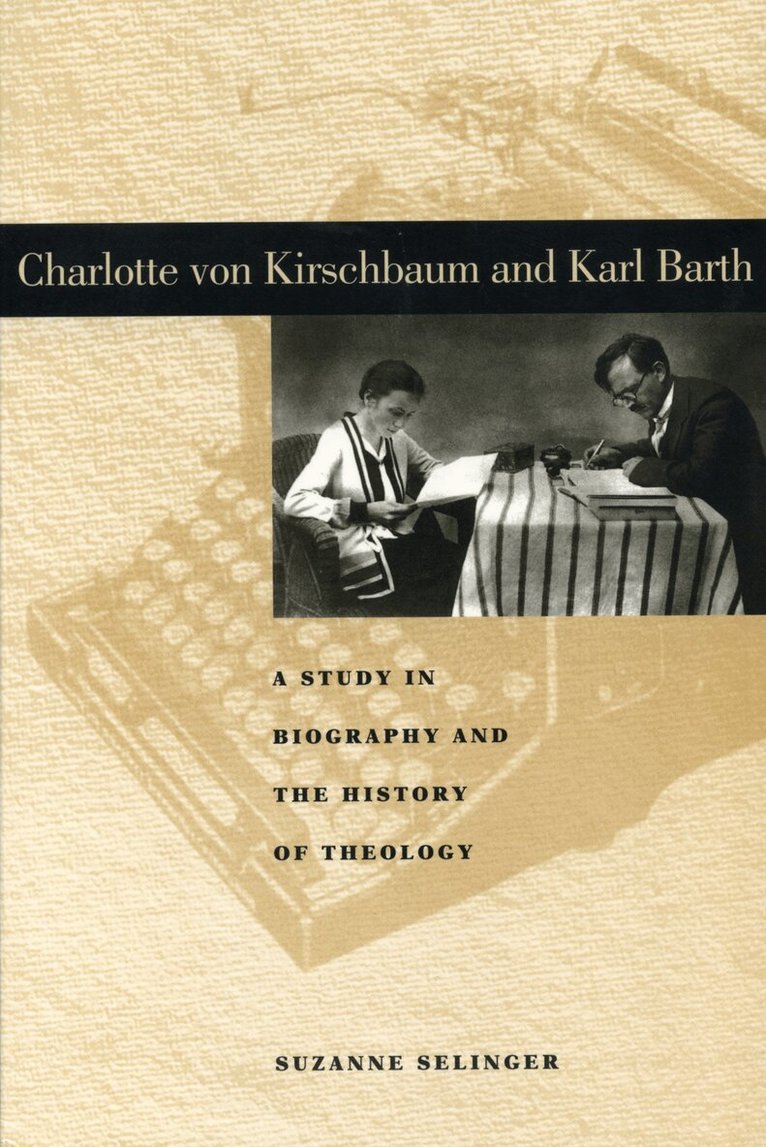
El Camino (Spanish for "the way") is a day-by-day account of a modern American pilgrim's solitary walk from St. Jean Pied de Port in France, across the Pyrenees and northern Spain, to Santiago de Compostela, believed since medieval times to be the burial place of Saint James. During thirty-two days in 1993, Lee Hoinacki trod the 500-mile route followed by Europeans for over a thousand years, stopping each evening at pilgrim hospices, some centuries-old, to write in his diary. His reflections range from the historical examination of religious sensibility to analyses of modern developments in architecture and technology, from the theological understanding of place to the mentality of mountain bike riders. Readers share in the personal religious growth of a traditional Roman Catholic who, toward the end of his life, finds himself in the welcome company of those who walked the same camino during the past centuries. The constant interplay between pertinent anecdotes from well-chosen fellow pilgrims, both ancient and modern, and Hoinacki's experiences of contemporary Spanish customs and behavior gives the book a captivating timelessness and spiritual insight rarely found in other modern chronicles of the pilgrimage to Santiago.
502 kr
Skickas inom 5-8 vardagar
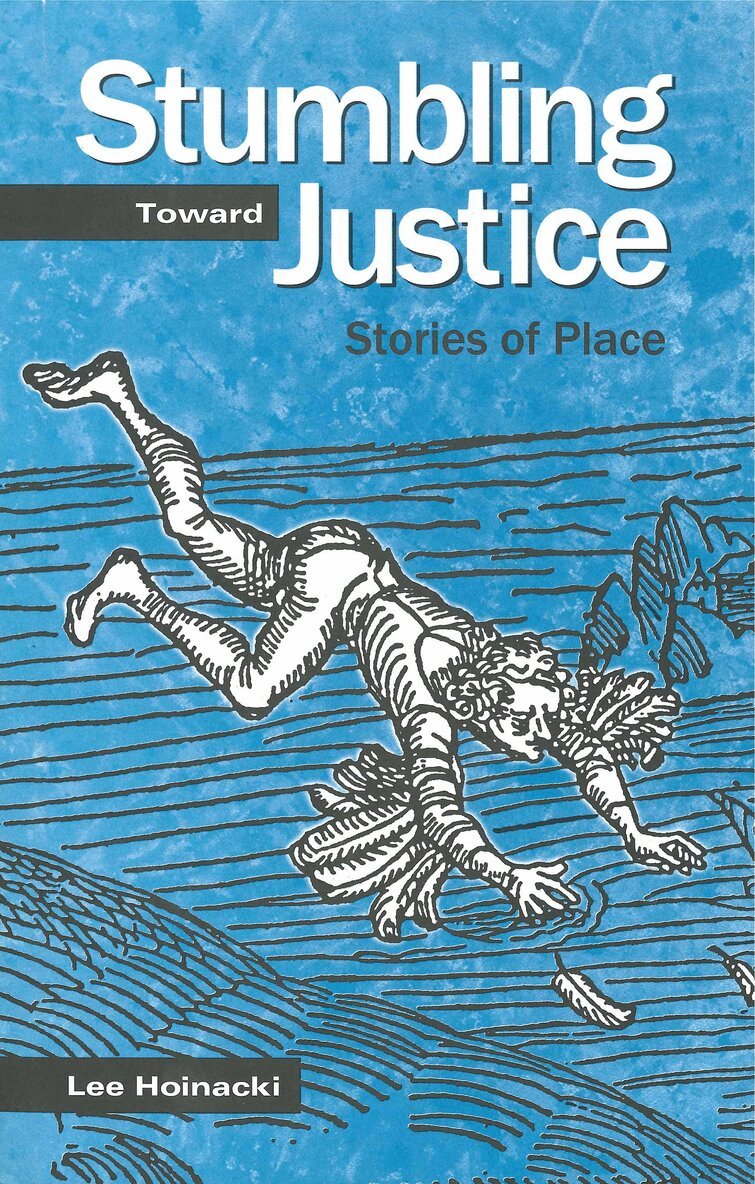
"I have been privileged to live in a queer time; I have witnessed the possibilities of both transcendence and horror. Beneath the mélange of comely and loathsome, I found a hope hidden in contemporary existence: one can set out on a quest, a search for the truth of the whole, the good of one's life. In spite of the stumbling, the errors, the moral lapses, indeed, because of the disarray, I came to see that only a teleological odyssey makes sense, quiets the need for meaning. The end not only illumines the journey, it also permits one to live with the shame of failure."—from the Preface Stumbling Toward Justice is a collection of stories of one man's odyssey through the darkness of the modern world. His journey takes him through the United States, Venezuela, Mexico, Spain, Germany, and India. In each place he stumbles for ground on which he can stand, on which he can seek an honorable life and practice.Lee Hoinacki's goal, he tells us, is to illustrate a fundamental insight: "The promise of progress is a lie, a terrible and cruel trap. My words can have only one justification: they sow doubt." He questions contemporary belief in the goods offered by mainstream or conventional practices of child rearing, education, health care, industrial farming, and offers a critique of economic growth and technological advances. Each chapter relates a story in one of these areas from Hoinacki's experience, an experience that inspires him to critical reflection.Hoinacki's underlying assumption is that a narrative relating one's personal experience may introduce the reader to a wider and more incisive understanding than that provided by the investigative and reporting methods of the social and natural sciences. He suggests that one comes to see the physical world, the self, and others better through the language of poetry than through that of science. Stumbling Toward Justice is a fitting sequel to his earlier book, El Camino: Walking to Santiago de Compostela. In this account, Hoinacki is writing not about a single pilgrimage but about a series of journeys over the course of his life. He speaks with the greatest possible directness and authenticity, and the truths he draws are powerful because his right to speak them has been earned along the way. "I must discover and improvise my own story as I go along," he writes.