Personal Narratives of the West – Serie
Visar alla böcker i serien Personal Narratives of the West. Handla med fri frakt och snabb leverans.
9 produkter
9 produkter
296 kr
Skickas inom 10-15 vardagar
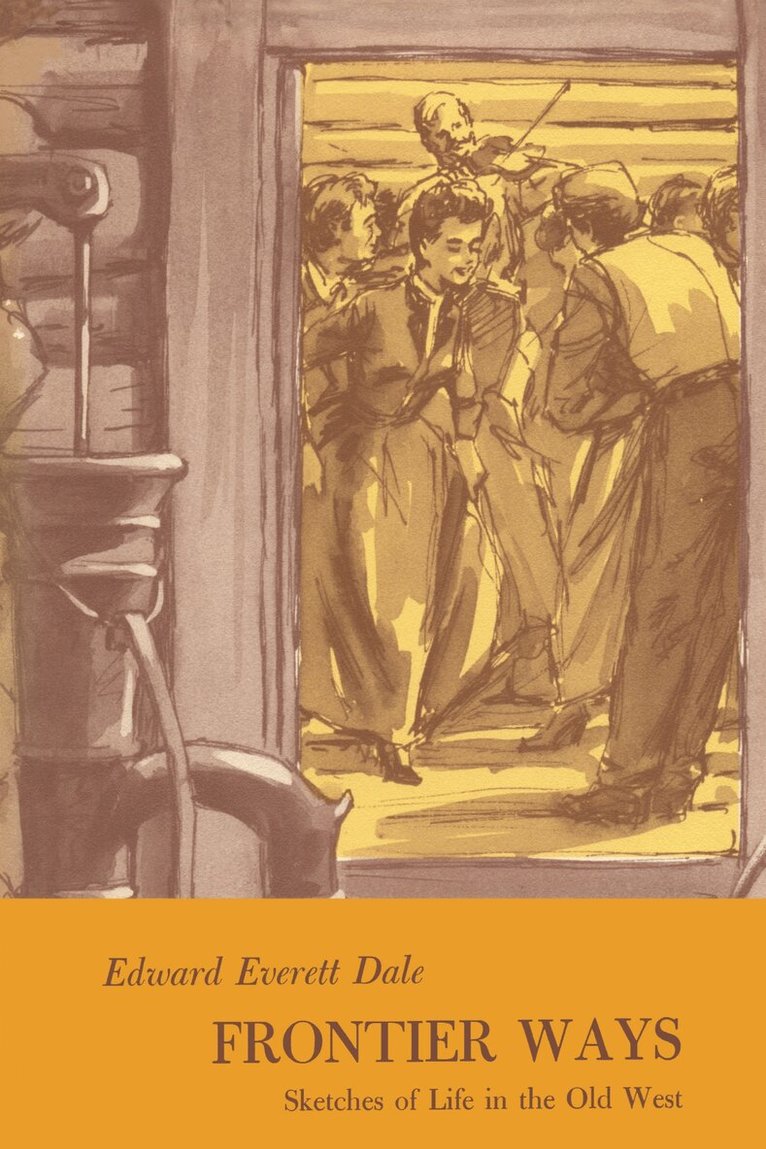
Edward Everett Dale gives a first-hand account of the way pioneer families and cowboys of the frontier lived. Dr. Dale has lived in a sod house, and he once rode the range as cook to a group of cowboys. In this book he draws on his varied experiences to describe all aspects of frontier life-the building of a home, the problems of finding wood and water, the procuring and cooking of food, medical practices, and the cultural, social, and religious life of pioneer families. This edition is a digital facsimile of the 1959 edition.
220 kr
Skickas inom 10-15 vardagar
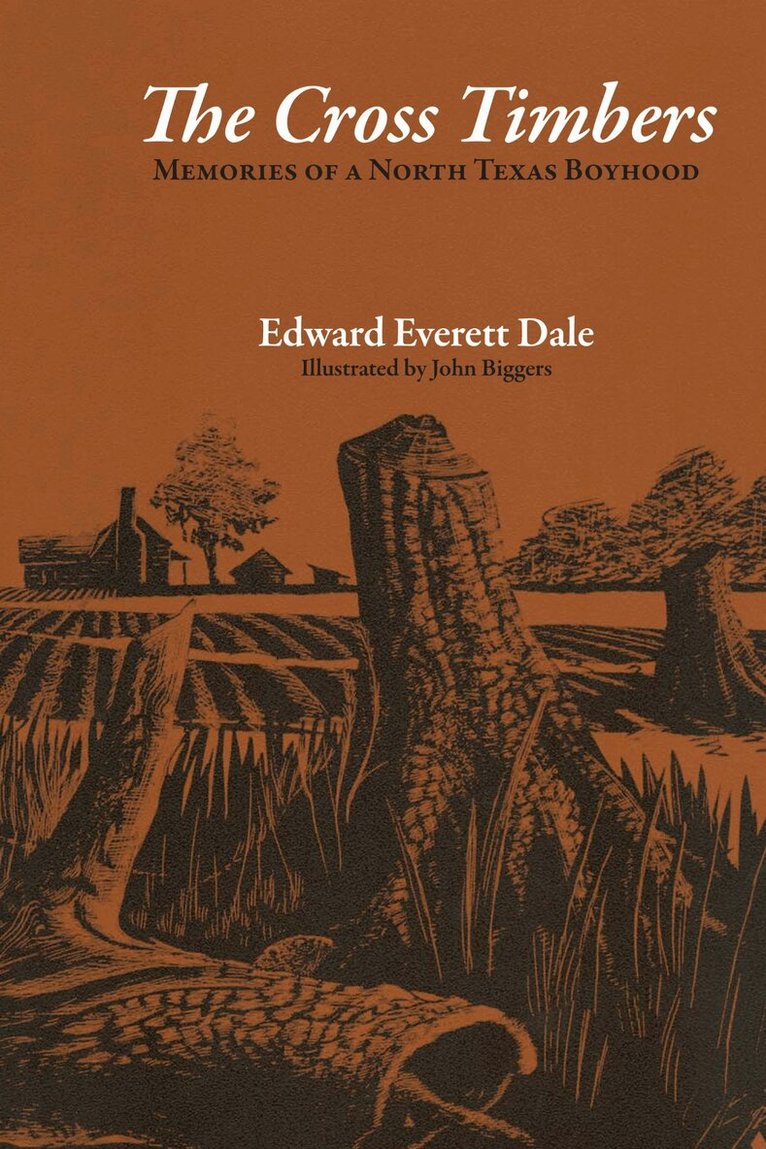
The activities of a young boy on a small farm in the Texas Cross Timbers during the 1880s seem especially distant today. No one can remember the adventure of a sixteen-and-a-half-mile journey, which consumed the greater part of a day; or hurried predawn dressing in a frosty cold loft while the fragrance of a hearty breakfast wafted upward through the floor cracks; or a two-room schoolhouse, where the last half of Friday afternoon was given over to “speaking pieces” or to spelling and ciphering matches. Through the recollections of Edward Everett Dale we are able to view a pattern of life in rural America now gone forever. For The Cross Timbers is a story which, with but a few minor variations, could have been told about a vast number of small boys on farms cleared from the virgin forests in the timbered regions of many states. After presenting a brief introduction to the members of the Dale family and the plant, animal, and bird life of the Lower Cross Timbers countryside, the author describes his boyhood of a past century. He tells of his home, its furnishings, and the food served there, as well as the neighbors and relatives who come to visit. We learn of the superstitions, the humorous homespun expressions, the mores of early rural Texans. We hunt and fish with young Master Dale in the thick woods and along the clear creeks. Pioneer life demanded much hard work, but not to the exclusion of a diverting social life-both of which included the youngsters, as the author so graphically relates. Dale tells us also of the religious and secular education of the era, showing the significance of the home in supplementing these two influences. Anyone reading this volume must be impressed by the great differences in the lifeways of rural children today and of those of the end of the nineteenth century.
220 kr
Skickas inom 10-15 vardagar
Ellen Bowie Holland grew up in a house at Weatherford, Texas, that had the "motherly look of a large and gallant hen hovering over too many chicks" and that was inhabited by a "lively, warm-hearted family." This book is her record of the "whole world of little things which enriched young lives" in her small town.Blessed with a discerning and sympathetic eye, she had much happiness to remember and record, and she employs a charming combination of nostalgia and comedy as she brings to life again these bygone days. Her childhood experiences are illuminated by the wisdom of maturity, and the whole is infused with a deft humor, developed through her skilled use of fantasy and through her ability to laugh at the pretensions of the Victorian life she saw.Holland's book also is memorable as a record of her unforgettable parents:"Mother was born on Columbus Day, and she and Columbus had a lot in common. She liked to discover things for herself and nothing pleased her more than to nicely finish off a job that she had been told could not be done" . . . "She wasn't geared for solitary musing. Like a salmon at spawning time she liked to swim upstream against rushing waters and bash into boulders" . . . "Mother's pattern of neatness reached out in all directions" . . . "Mother, sheathed like an armadillo" . . ."Father, silk-hatted, or swallow-tailed, distinguished almost beyond belief" . . . "I never heard him raise his voice or laugh aloud" . . . "Father was not witty but he had an absolutely delightful sense of nonsense. His humor came smoothly upon the scene" . . .Throughout the book the reader shares the author's consciousness of the vast distance between her own childhood and that of the grandchildren to whom the book is dedicated-a distance created by rapid technological change."From my window I look over an air-conditioned city and I see jets streaking across the sky and occasionally I hear one of them breaking the sound barrier" . . . "When I really want to awe myself I think about the fact that only one generation ago Mother saw friendly or marauding Indians roaming these same acres" . . . "Those of my age have come into a span of years where living conditions of all kinds have changed so abruptly, where obsolescence sets in so rapidly, that there is little in common between our infancy and our present."
379 kr
Skickas inom 10-15 vardagar
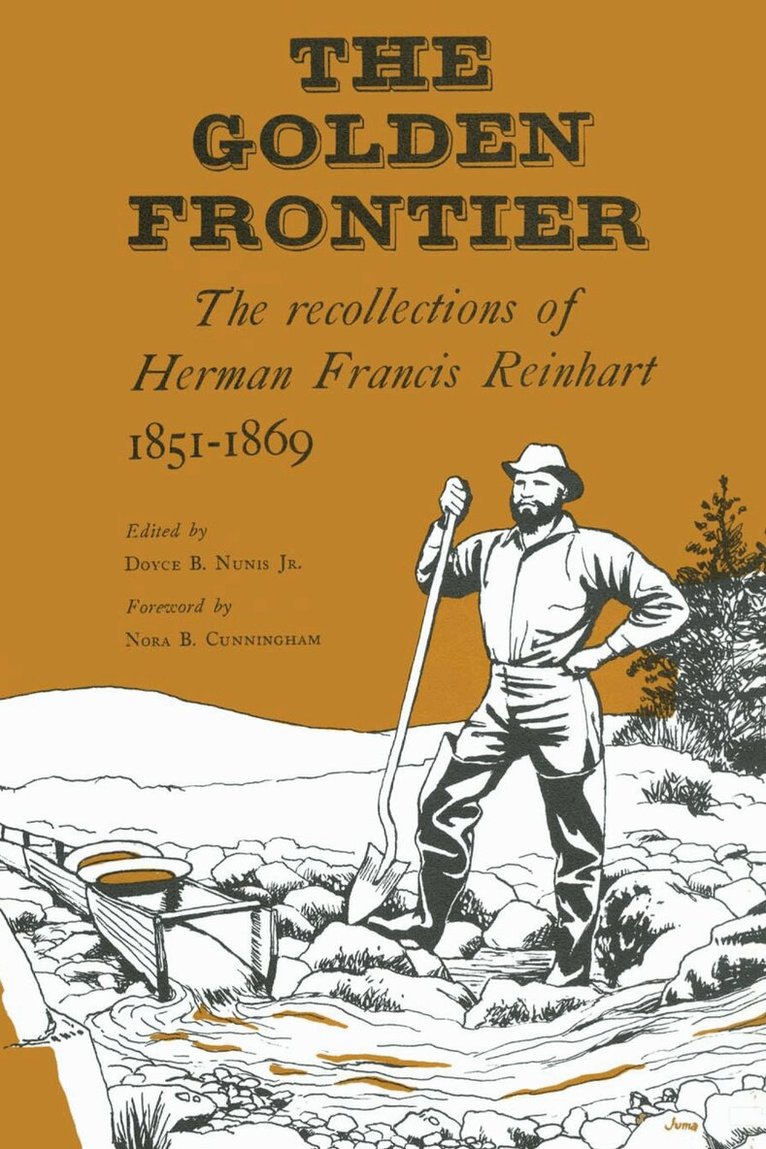
The gold rush was Herman Francis Reinhart's life for almost twenty years. From the summer of 1851 when, as a boy in his late teens, he traveled the Oregon trail to California, until a January day in 1869 when he climbed aboard an eastbound train at Evanston, Wyoming, he was a part of every gold discovery that stirred the West.Reinhart dipped his pan in the streams of northern California and western Oregon-in Humbug Creek, Indian Creek, Rogue River, and Sucker Creek. He made the arduous and dangerous overland journey through Indian-occupied western Washington and British Columbia to find the Fraser River gold even more elusive than that farther south. With his teams and wagons he traversed all of the inland mine areas from Walla Walla to Fort Benton, from Boise Basin to South Pass City.Reinhart's German common sense soon turned him from actual mining to other sources of income, but whatever his labor was, the mines were always the focal point of his activities. When he operated a bakery and saloon it was a business whose customers were miners, whose transactions were more likely to involve gold dust than legal tender, and whose gambling tables saw the exchange of mining fortunes. When he operated a whipsaw mill the timbers cut there were used by miners for sluices and cradles. For a while Reinhart farmed, but planting and harvesting suffered from interruption by frequent expeditions to the mines. And when he prospered as a teamster it was to and from the mining towns that he hauled passengers, supplies, and equipment.The men who, like Herman Francis Reinhart, hopefully followed the golden frontier were not an articulate group, and the written records of their lives are few and fragmentary. But Reinhart, in his later years, recorded his experiences in five long, narrow, hardback ledgers. Many years after he died his daughter gave the ledgers to a friend in Chanute, Kansas-Nora Cunningham-who read the narrative, became fascinated by it, and typed it for publication.Reinhart's account, written in a grammar and language all his own, is not a record of the historian's West, but of the West of the individual miner. The pages are filled with the details of day-to-day life of the miners-the subjects that interested them, the problems that plagued them, their fun and feuding, their frustrations and hopes. Edited by an authority of the history of the West, it is a book that will offer exciting reading to casual readers and scholars alike.
329 kr
Skickas inom 7-10 vardagar
Almost a century and a half went into the making of My Eighty Years in Texas. It began as a diary, kept by fifteen-year-old William Physick Zuber after he joined Sam Houston’s Texas army in 1836, hoping he could emulate the heroism of American Revolutionary patriots. Although his hopes were never realized, Zuber recorded the privations, victories, and defeats of armies on the move during the Texas Revolution, the Indian campaigns, and, as he styled it, the Confederate War. In 1910, at the age of ninety, Zuber began the enormous task of transcribing his diaries and his memories for publication. After his death in 1913, the handwritten manuscript, 1, was placed in the Texas State Archives, where it was used as a reference source by students and scholars of Texas history. Over a half century after Zuber’s death, Janis Boyle Mayfield finally brought his publication plans to fruition. Zuber details his early zest for learning and his laborious methods of self-education. He tells of the trials of organizing and teaching schools in the sparsely populated plains. He recalls the day-by-day happenings of a private soldier in the Texas army of 1836, the Texas Militia, and the Confederate army-including the mishaps of army life and the encounters with enemies from San Jacinto to Cape Girardeau. After the Civil War, his interest turns to the politics of Reconstruction, the veterans’ pension, and the founding of the Texas Veterans Association. This is the story of and by an outspoken Texian, complete with his attitudes, principles, and moralizings, and the nineteenth-century style and flavor of his writing. Included as an appendix is “An Escape from the Alamo,” the account of Moses Rose for which Zuber, who was a prolific writer, was best known. A historiography of the Rose story, a bibliography of Zuber’s published and unpublished writings, annotation, and an introduction are provided by Llerena Friend.
220 kr
Skickas inom 10-15 vardagar
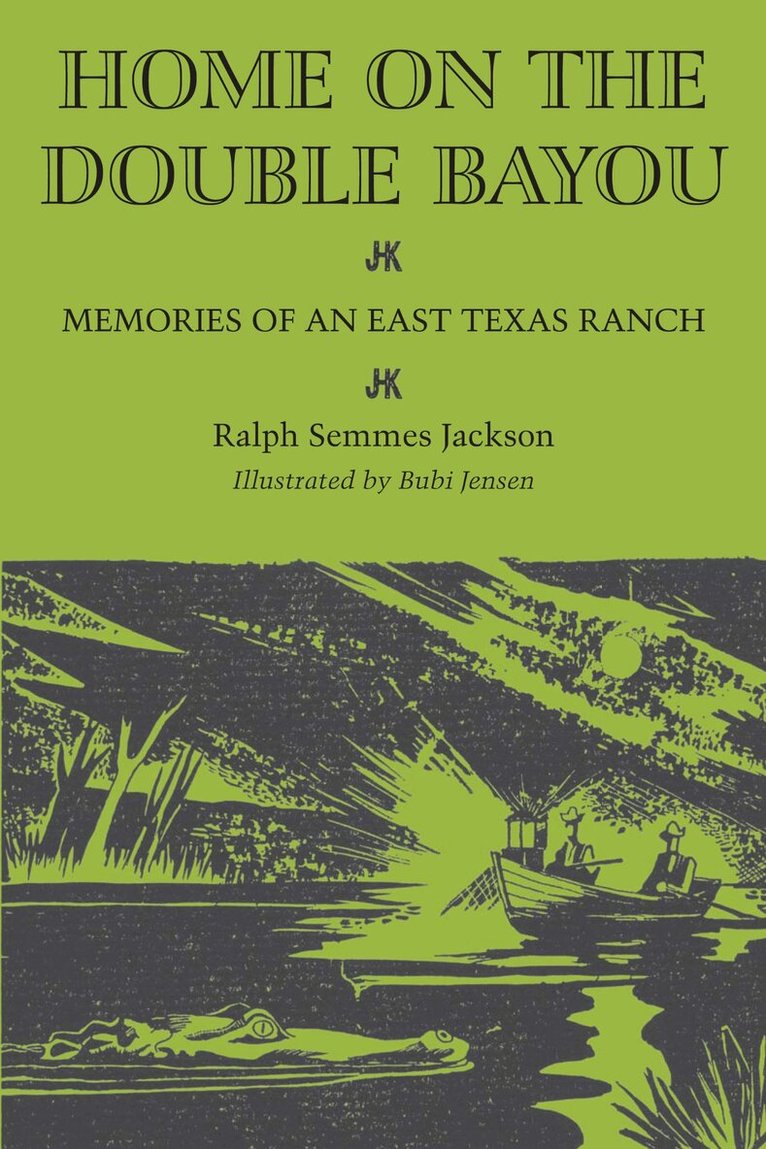
Once again, through a boy’s eyes, Ralph Jackson sees a winter sky darkened with geese and ducks, a kitchen stove glowing with cheerful warmth, Aunt May strolling in her flower garden, moonlight filtering through treetops to cast patches of white light on a sandy woodland road. Again he catches odors once so familiar: of a mysterious attic, of burning salt grass in late summer, of mountain streams with their fresh green smell, of dark-roast coffee and of slab bacon sizzling in the pan. He hears again a panther’s scream from the darkness surrounding a campfire, the scampering of mice across the barnloft floor, the sigh of a felled pine tree changing to a crashing roar as it meets the ground, the sounds of a meal in preparation, the hum of a mosquito swarm rising from the marshes. He remembers the taste of barbecued goat, the sweet sharpness of peppermint candy, the flavor of gumdrops from the country store-where, as showcase neighbors of cigars and chewing tobacco, they acquired a faint tobacco taste. And he feels again the welcome shock of frigid spring water on a hot perspiring body, the pleasant sensation of sand between his toes, the breathtaking exhilaration of swinging on a sapling top. The joy of childhood on an East Texas ranch is the subject of this book: exciting events like the arrival of the first norther of the season, swimming with alligators, hogkilling, building tree houses, roundup, hunting and fishing, calf-riding, fording strange streams. Interspersed among these episodes are others of darker mood: a smallpox epidemic, the burning of the ranch house, wolves attacking the cattle. Jackson’s characters come alive. Scenes are vivid; moods are various and enveloping. The author has told the delightful story of his boyhood from a highly personal yet universal perspective, and in doing so he has presented a picture of a region of the state previously largely neglected in Texas literature.
586 kr
Skickas inom 10-15 vardagar
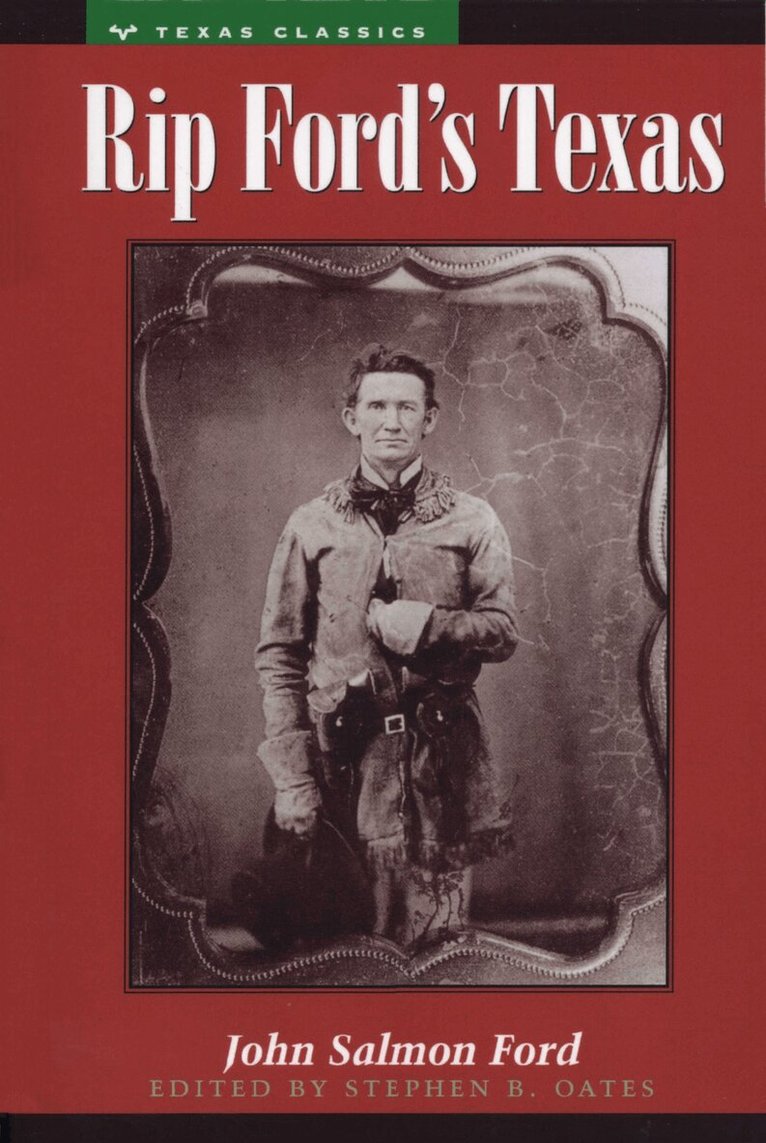
The Republic of Texas was still in its first exultation over independence when John Salmon "Rip" Ford arrived from South Carolina in June of 1836. Ford stayed to participate in virtually every major event in Texas history during the next sixty years. Doctor, lawyer, surveyor, newspaper reporter, elected representative, and above all, soldier and Indian fighter, Ford sat down in his old age to record the events of the turbulent years through which he had lived. Stephen Oates has edited Ford's memoirs to produce a clear and vigorous personal history of Texas.
269 kr
Skickas inom 10-15 vardagar
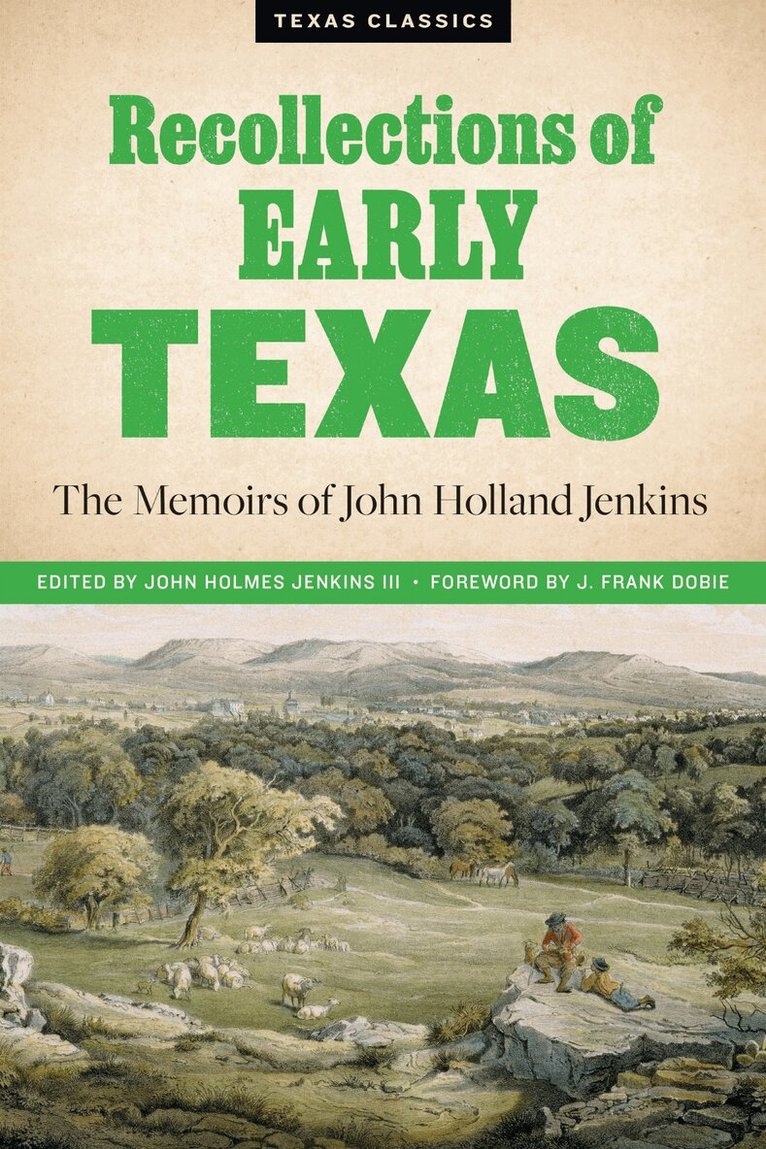
“[These reminiscences] light up for whoever will read the earliest days of early English-speaking Texas.” -J. Frank Dobie, from the forewordA firsthand account of pioneer life in east Texas.
319 kr
Skickas inom 7-10 vardagar
Oil, the black gold of Texas, has given rise to many a myth. Oil could turn a man overnight into a millionaire-and did, for some. But these myths have obscured what life was really like in the oil patch, a place that was neither the El Dorado of legend nor quite the unredeemed den of sin and iniquity that some feared.In Roughnecks, Drillers, and Tool Pushers, Gerald Lynch provides a much-needed insider's view of the oil industry, describing life in various oil fields in and around Texas. He also chronicles changes in drilling methods and oil-field technology and how these changes affected him and his fellow oil-field workers. No one else has written a working-class history of the oil fields as colorful and articulate as this one.