Perspectives in Vision Research - Böcker
Visar alla böcker i serien Perspectives in Vision Research. Handla med fri frakt och snabb leverans.
8 produkter
8 produkter
2 101 kr
Skickas inom 10-15 vardagar
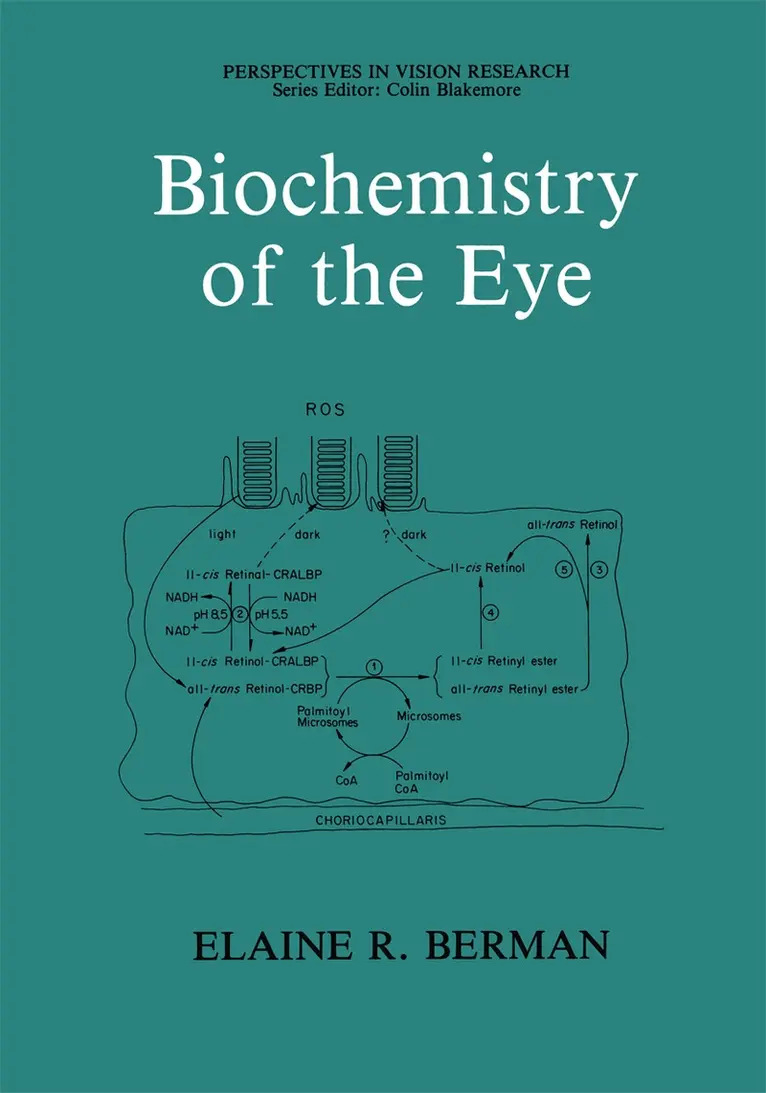
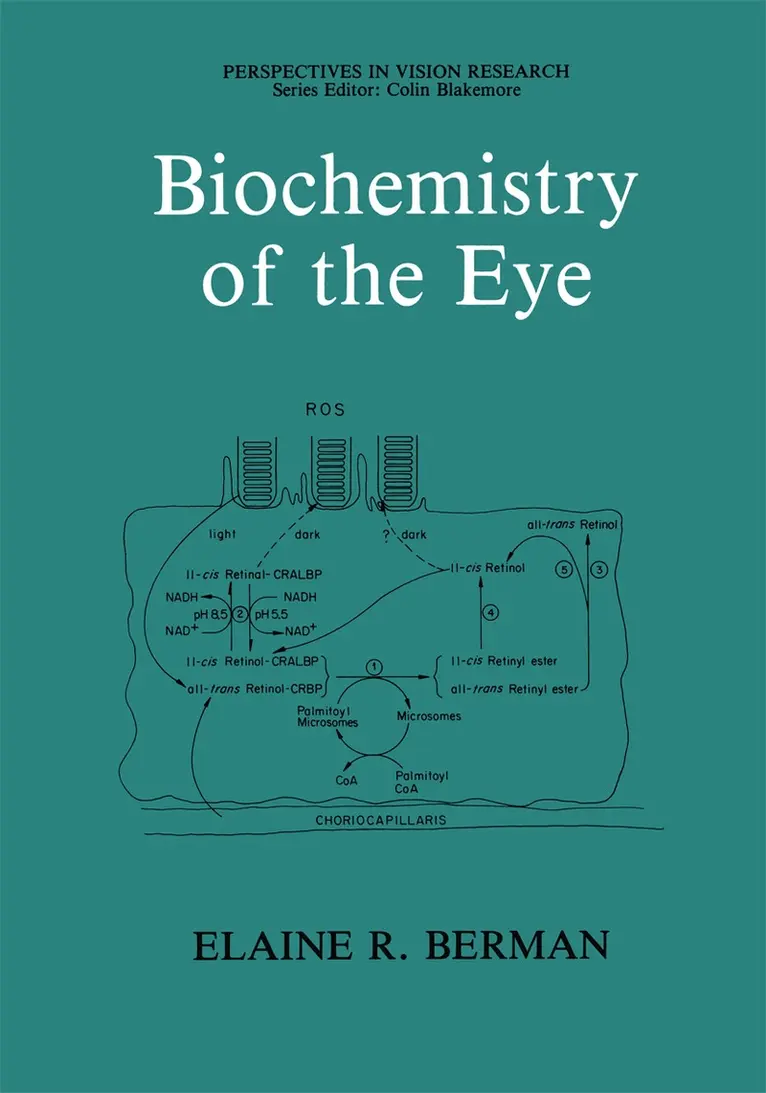
My first introduction to the eye came more than three decades ago when my close friend and mentor, the late Professor Isaac C. Michaelson, convinced me that studying the biochemistry of ocular tissues would be a rewarding pursuit. I hastened to explain that I knew nothing about the subject, since relatively few basic biochemical studies on ocular tissues had appeared in the world literature. Professor Michaelson assured me, however, that two books on eye biochemistry had already been written. One of them, a beautiful monograph by Arlington Krause ( 1934) of Johns Hopkins Hospital, is we II worth reading even today for its historical perspective. The other, published 22 years later, was written by Antoinette Pirie and Ruth van Heyningen ( 1956), whose pioneering achievements in eye biochemistry at the Nuffield Laboratory of Ophthalmology in Oxford, England are known throughout the eye research community and beyond. To their credit are classical investigations on retinal, corneal, and lens biochemistry, beginning in the 1940s and continuing for many decades thereafter. Their important book written in 1956 on the Biochemistry of the Eye is a volume that stood out as a landmark in this field for many years. In recent years, however, a spectacular amount of new information has been gener ated in ocular biochemistry. Moreover, there is increasing specialization among investiga tors in either a specific field of biochemistry or a particular ocular tissue.
1 625 kr
Skickas inom 10-15 vardagar
Seeing is life. Seeing is transfonning luminous col We wish to extend our academic and theoretical ored stimulations and shapes into amental represen knowledge and also to complete and exchange our tation, structured in space and in time. But seeing is technical and professional experience to prepare also opening onto the world that surrounds us: it is corrective means for the future. thus a means for communicating and learning. Numerous questions have yet to be answered, Jean-Jacques Rousseau, a philosopher worth such as: quoting during the bicentennial of the French Revo lution of which he was an instigator, stated, "of all • Will it one day be possible to defer or stop the the senses, vision is that wh ich can be the least aging of the accommodative apparatus? readily separated from judgments of the mind. " • Is further improvement of the current corrective Sight is increasingly called on in our modern means possible, whether spectacles or contact world. Maturity is affected at about 40-45 years by lenses? the on set of presbyopia. Atthat age, which demands • How are behavioral and psychological presbyope all our intellectual and physical means, our sight typologies to be integrated in the course of exam should be irreproachable. Our efficiency must not be ination, prescription, and fitting with corrective diminished.
2 164 kr
Skickas inom 10-15 vardagar
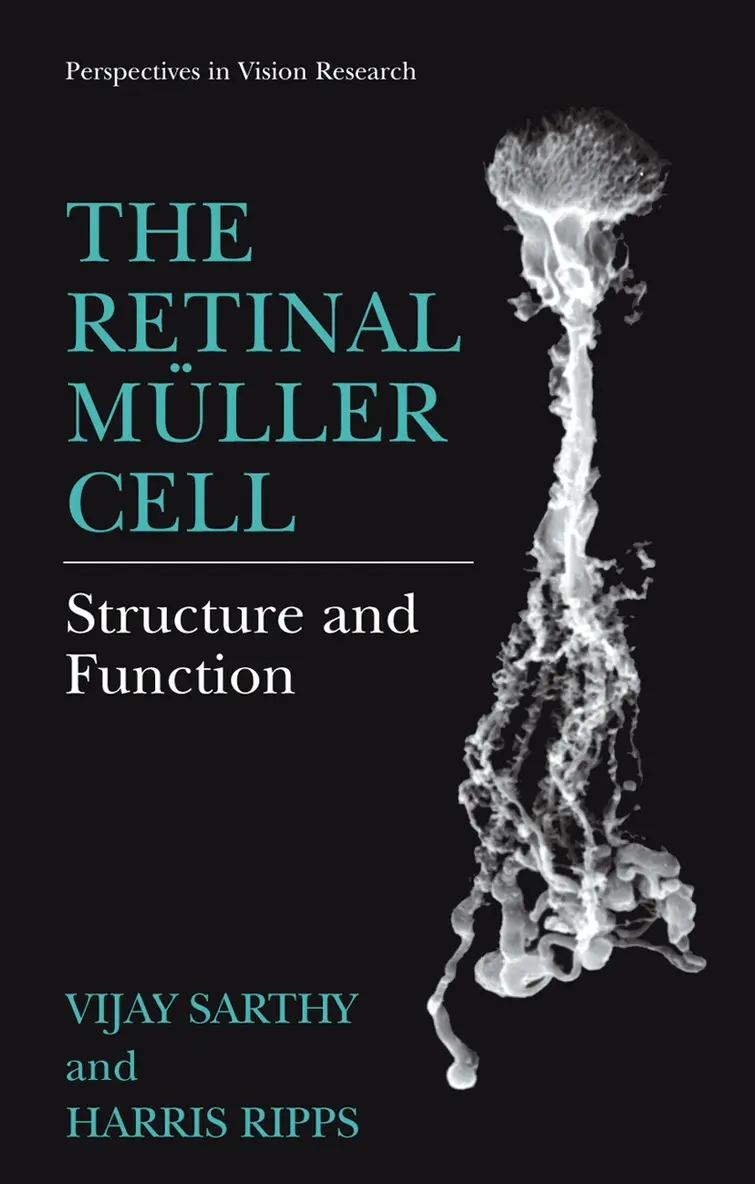
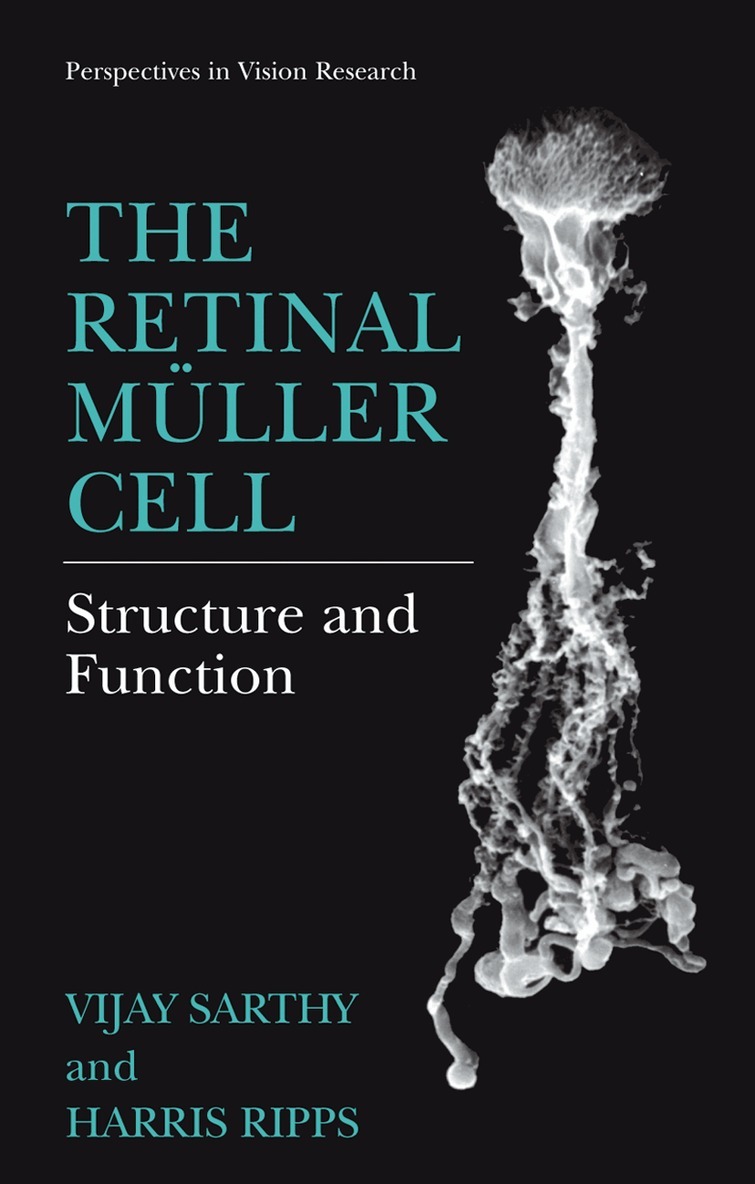
This monograph examines the role of the Muller cell, the main glial element of the retina, in the development, organization, and function of the vertebrate retina. These cells may also play a role in the control of eye growth and in determining the processing of information by surrounding neurons.
1 625 kr
Skickas inom 10-15 vardagar
Seeing is life. Seeing is transfonning luminous col We wish to extend our academic and theoretical ored stimulations and shapes into amental represen knowledge and also to complete and exchange our tation, structured in space and in time. But seeing is technical and professional experience to prepare also opening onto the world that surrounds us: it is corrective means for the future. thus a means for communicating and learning. Numerous questions have yet to be answered, Jean-Jacques Rousseau, a philosopher worth such as: quoting during the bicentennial of the French Revo lution of which he was an instigator, stated, "of all • Will it one day be possible to defer or stop the the senses, vision is that wh ich can be the least aging of the accommodative apparatus? readily separated from judgments of the mind. " • Is further improvement of the current corrective Sight is increasingly called on in our modern means possible, whether spectacles or contact world. Maturity is affected at about 40-45 years by lenses? the on set of presbyopia. Atthat age, which demands • How are behavioral and psychological presbyope all our intellectual and physical means, our sight typologies to be integrated in the course of exam should be irreproachable. Our efficiency must not be ination, prescription, and fitting with corrective diminished.
Parallel Processing in the Visual System
The Classification of Retinal Ganglion Cells and its Impact on the Neurobiology of Vision
Häftad, Engelska, 2012
1 064 kr
Skickas inom 10-15 vardagar
In the mid-sixties, John Robson and Christina Enroth-Cugell, without realizing what they were doing, set off a virtual revolution in the study of the visual system. They were trying to apply the methods of linear systems analysis (which were already being used to describe the optics of the eye and the psychophysical performance of the human visual system) to the properties of retinal ganglion cells in the cat. Their idea was to stimulate the retina with patterns of stripes and to look at the way that the signals from the center and the antagonistic surround of the respective field of each ganglion cell (first described by Stephen Kuffier) interact to generate the cell's responses. Many of the ganglion cells behaved themselves very nicely and John and Christina got into the habit (they now say) of calling them I (interesting) cells. However. to their annoyance, the majority of neurons they recorded had nasty, nonlinear properties that couldn't be predicted on the basis of simple summ4tion of light within the center and the surround. These uncoop erative ganglion cells, which Enroth-Cugell and Robson at first called D (dull) cells, produced transient bursts of impulses every time the distribution of light falling on the receptive field was changed, even if the total light flux was unaltered.
1 064 kr
Skickas inom 10-15 vardagar
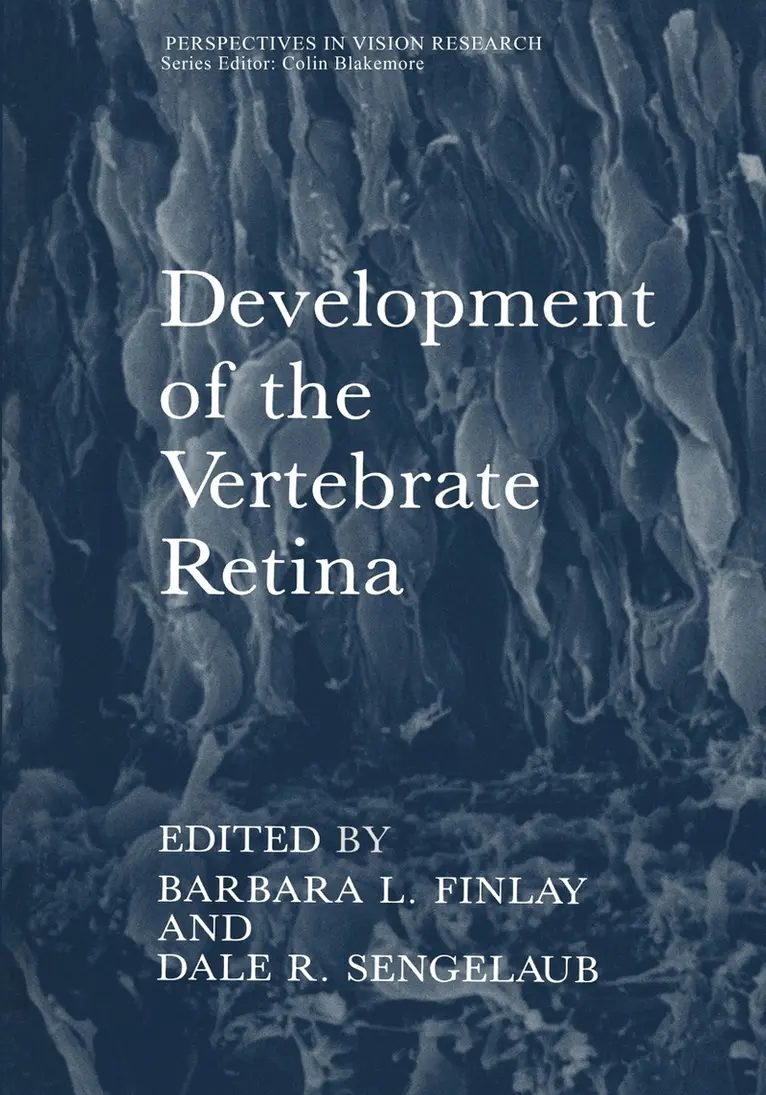
The vertebrate retina has a form that is closely and clearly linked to its func tion. Though its fundamental cellular architecture is conserved across verte brates, the retinas of individual species show variations that are also of clear and direct functional utility. Its accessibility, readily identifiable neuronal types, and specialized neuronal connectivity and morphology have made it a model system for researchers interested in the general questions of the genet ic, molecular, and developmental control of cell type and shape. Thus, the questions asked of the retina span virtually every domain of neuroscientific inquiry-molecular, genetic, developmental, behavioral, and evolutionary. Nowhere have the interactions of these levels of analysis been more apparent and borne more fruit than in the last several years of study of the develop ment of the vertebrate retina. Fields of investigation have a natural evolution, rdoving through periods of initial excitement, of framing of questions and controversy, to periods of synthesis and restatement of questions. The study of the development of the vertebrate retina appeared to us to have reached such a point of synthesis. Descriptive questions of how neurons are generated and deployed, and ques tions of mechanism about the factors that control the retinal neuron's type and distribution and the conformation of its processes have been posed, and in good part answered. Moreover, the integration of cellular accounts of development with genetic, molecular, and whole-eye and behavioral accounts has begun.
2 164 kr
Skickas inom 10-15 vardagar
The human brain contains more than a billion neurons which interconnect to form networks that process, store, and recall sensory information. These neuronal activities are supported by a group of accessory brain cells coll- tively known as neuroglia. Surprisingly, glial cells are ten times more - merous than neurons, and occupy more than half the brain volume (Hydén, 1961). Although long considered a passive, albeit necessary, component of the nervous system, many interesting and unusual functional properties of glial cells are only now being brought to light. As a result, the status of these cellular elements is approaching parity with nerve cells as a subject for experimental study. The term glia (or glue) seems today to be a misnomer in view of the diverse functions attributed to glial cells. Experimental studies in the last three decades have clearly established that the behavior of glial cells is far from passive, and that they are at least as complex as neurons with regard to their membrane properties. In addition, glial cells are of importance in signal processing, cellular metabolism, nervous system development, and the pathophysiology of neurological diseases. The Müller cell of the ver- brate retina provides a splendid example of an accessory cell that exhibits features illustrating every aspect of the complex behavior now associated with glial cells.
2 311 kr
Skickas inom 10-15 vardagar
My first introduction to the eye came more than three decades ago when my close friend and mentor, the late Professor Isaac C. Michaelson, convinced me that studying the biochemistry of ocular tissues would be a rewarding pursuit. I hastened to explain that I knew nothing about the subject, since relatively few basic biochemical studies on ocular tissues had appeared in the world literature. Professor Michaelson assured me, however, that two books on eye biochemistry had already been written. One of them, a beautiful monograph by Arlington Krause ( 1934) of Johns Hopkins Hospital, is we II worth reading even today for its historical perspective. The other, published 22 years later, was written by Antoinette Pirie and Ruth van Heyningen ( 1956), whose pioneering achievements in eye biochemistry at the Nuffield Laboratory of Ophthalmology in Oxford, England are known throughout the eye research community and beyond. To their credit are classical investigations on retinal, corneal, and lens biochemistry, beginning in the 1940s and continuing for many decades thereafter. Their important book written in 1956 on the Biochemistry of the Eye is a volume that stood out as a landmark in this field for many years. In recent years, however, a spectacular amount of new information has been gener ated in ocular biochemistry. Moreover, there is increasing specialization among investiga tors in either a specific field of biochemistry or a particular ocular tissue.