Phillimore Editions - Böcker
Visar alla böcker i serien Phillimore Editions. Handla med fri frakt och snabb leverans.
13 produkter
13 produkter
200 kr
Skickas
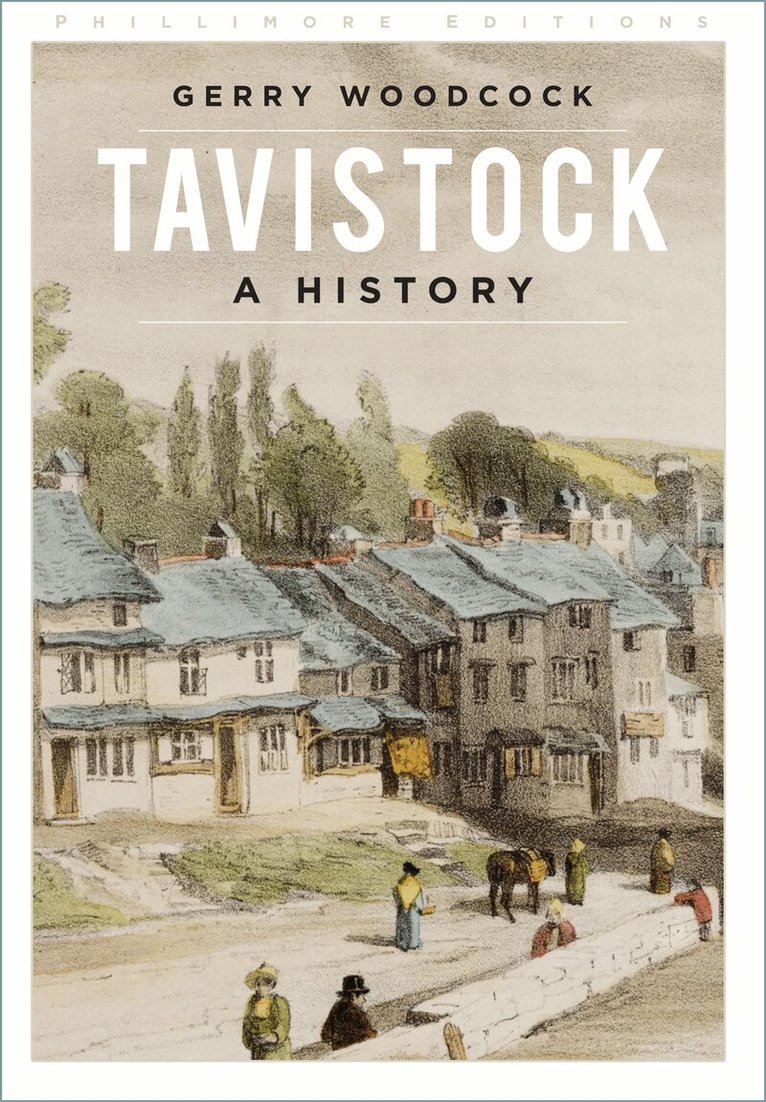
Tavistock has cast its spell over generations of visitors. Attractively set between two significant natural barriers, the River Tamar to the west and Dartmoor to the east, residents and visitors today would still recognise the truth of what one impressed tourist wrote in 1892: 'The town has a leisurely and beautiful appearance, and the people do not seem to need to kill themselves and slay each other in the mad rush of life which spoils so many other towns.'However, being relaxed is not the same as being sleepy. The economic and social life of the town has, at each stage of its development, been dynamic. The designation 'Ancient Stannary Town' on the welcoming road signs, for example, is a reminder of the long association with the tin industry, and the oft-quoted description 'The Gothic town of the West' brings to mind the great age of copper mining and the changes to the town centre that accompanied it. This fully illustrated account brings the modern resident and visitor face to face with the factors that have influenced the development of this unique and fascinating corner of Devon.
221 kr
Skickas inom 11-20 vardagar
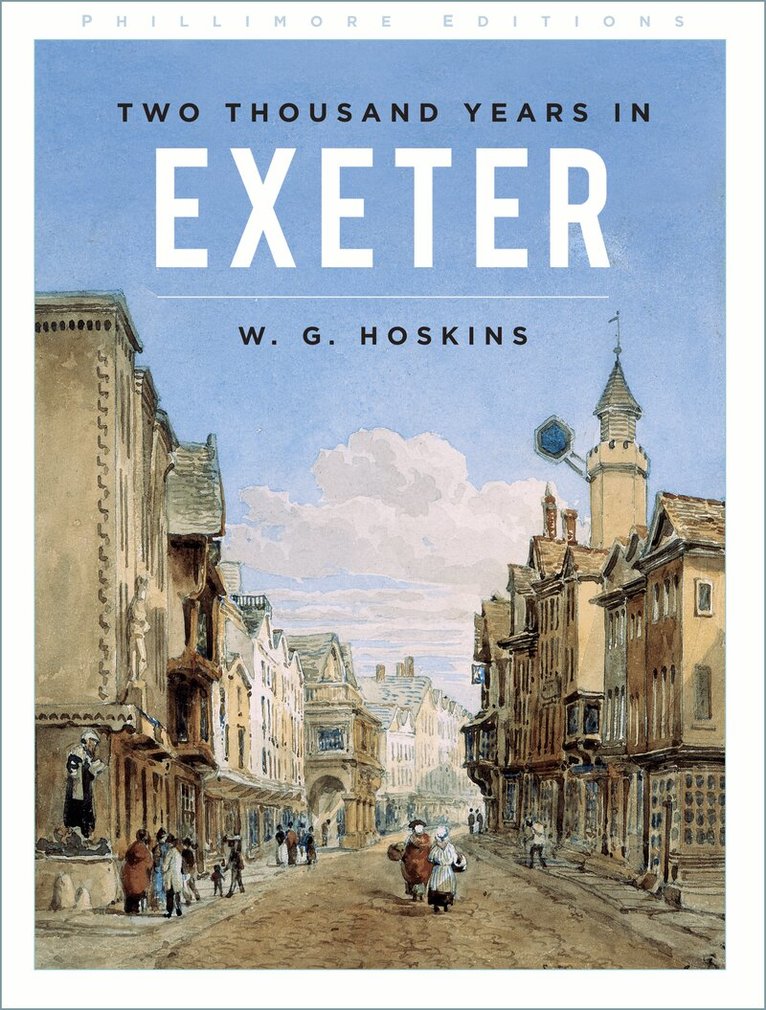
Exeter is one of the oldest cities in Britain: people have lived here without a break for more than two thousand years. The High Street has been in continuous use as a thoroughfare throughout that long period. For centuries Exeter was one of the largest and wealthiest cities in the kingdom and has always been the mother city of the South West.In this book, first published in 1960 and acclaimed as a ‘small masterpiece’, the author traces the essential historic development and character of a leading provincial centre. He describes its adventure from a Roman camp to a modern city, with particular reference to its social history, to the lives and surroundings of ordinary people, to the buildings and landscapes of the past. Above all, he is concerned with the recent past and devotes three thorough chapters to the 19th and 20th centuries.W. G. Hoskins died in 1992. The task of bringing the work up to date and preparing text and illustrations for this new edition of a classic work has been undertaken by Hazel Harvey, a distinguished local historian of Exeter. Much of Exeter has been destroyed, but much of the historic past of this entrancing city still remains. Hoskins’ incomparable text is supported by a new selection of illustrations and maps, with an appendix on the street names of the city and place names in the neighbourhood.This book will be as valuable to the visitor as to the citizen of Exeter, for it tells where to look for the memorials of the past and for the history that lies behind them.
200 kr
Skickas
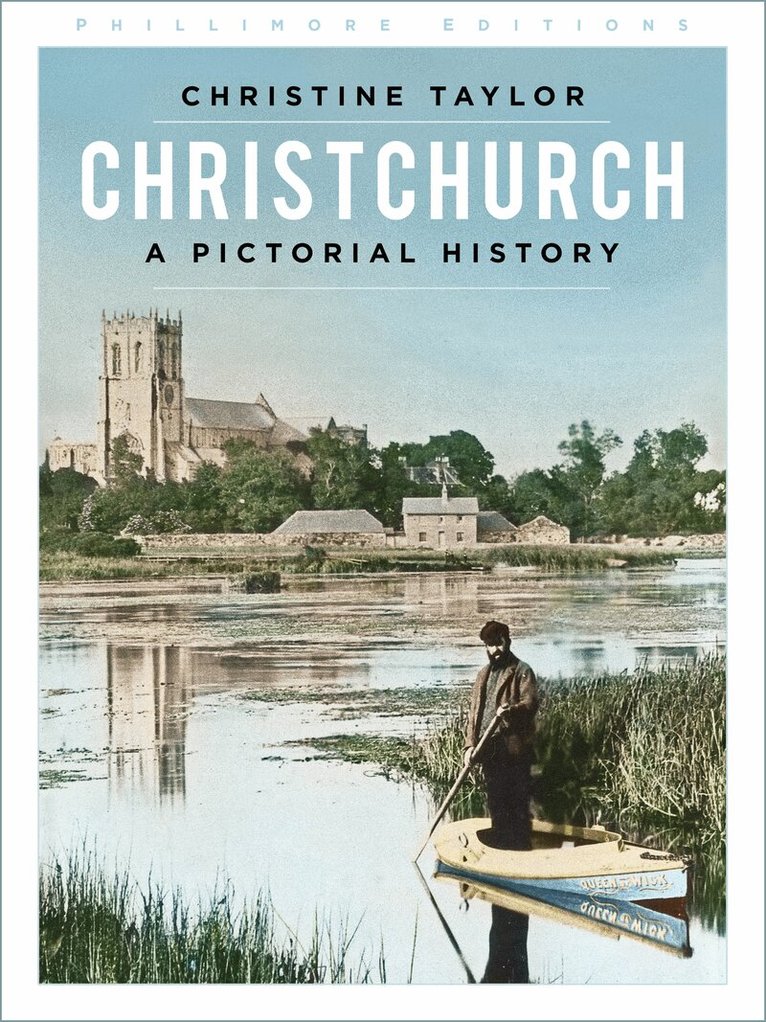
Christchurch owes its existence to its natural features. The town is surrounded by large wide marshes at the confluence of its two rivers, the Stour and the Avon. This strategic position gave Christchurch its former name Tweoxneam, ‘the town between the rivers’. Its harbour was sheltered by nearby Hengistbury Head, an easily defensible site in more turbulent days, as well as an excellent look-out point. Its skyline is dominated by the Priory, founded in AD 994, which was famous in the Middle Ages for its relics and attracted many pilgrims. The importance of the Priory gave the prospering town its new name, ‘Crischurche de Twenham’.After the Reformation and, a century later, the Civil War, Christchurch fell into decline and became a small fishing town. A 17th-century scheme to make the Avon navigable up to Salisbury was drawn up, but never materialised. The close proximity of the New Forest led to smuggling activities and several buildings in the town boast their smuggling tales. A more legitimate industry that brough some fame to the town was the manufacture of fusee watch chains, but it was not until the 19th century that significant growth in size began, triggered by the advent of the railway and road improvements. Fortunately, the camera had been invented in time to record the Victorian development of the ancient town’s past and to give vivid insight into life in Christchurch up to the outbreak of the Second World War.Christine Taylor’s book is as entertaining as it is informative and this new edition will be as popular with the many visitors to the area as it will be fascinating for all who live in the modern town.
275 kr
Skickas inom 7-10 vardagar
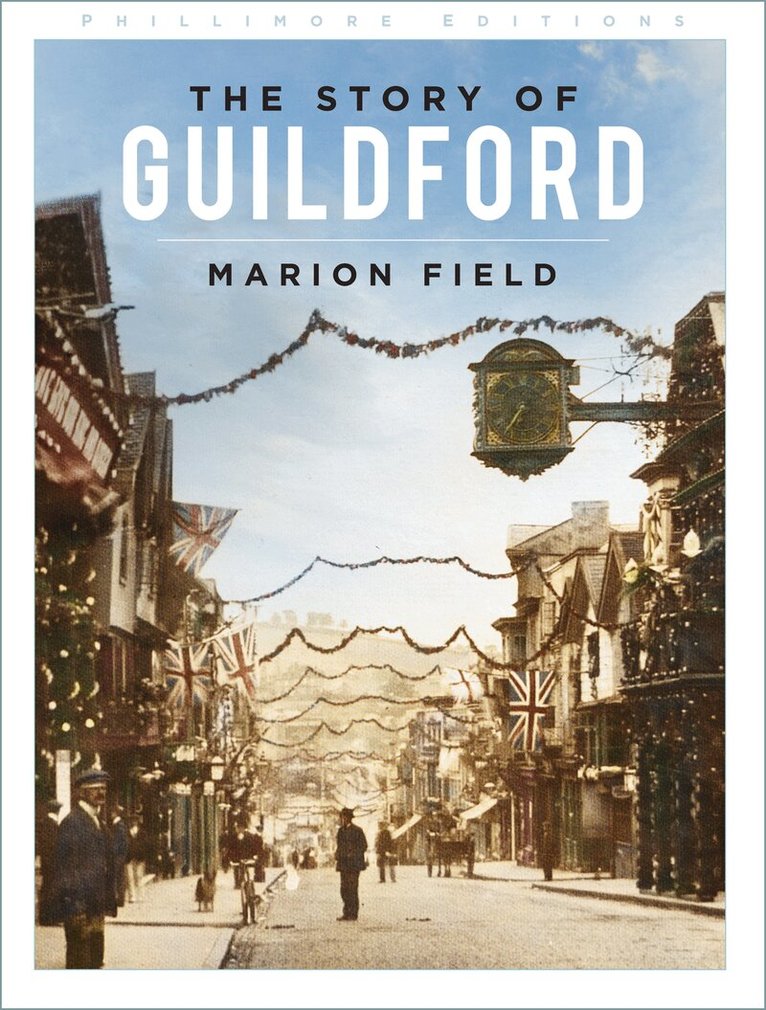
Guildford’s history dates from Saxon times, and the town has been the residence of kings and many famous men and women, particularly since Henry II turned the Norman castle into a luxurious palace in the twelfth century. Also amongst the town’s famous and influential faces was George Abbot, who became Archbishop of Canterbury in 1611 and was one of the translators of the King James Bible and founded Abbot’s Hospital in 1619 – an early example of ‘sheltered housing’, which still fulfils that role to this day. High above the town is the Cathedral of the Holy Spirit. Consecrated in 1961, it was the first cathedral to be built in the South of England since the Reformation. Below it is the University of Surrey, which received its Royal Charter just a few years later.Guildford’s people and visitors throughout history come to life in this well-researched account, which also examines the town’s architectural development and heritage, from the castle and medieval guildhall to the modern cathedral and beyond, portraying Guildford’s significance on a national and sometimes international scale.
200 kr
Skickas
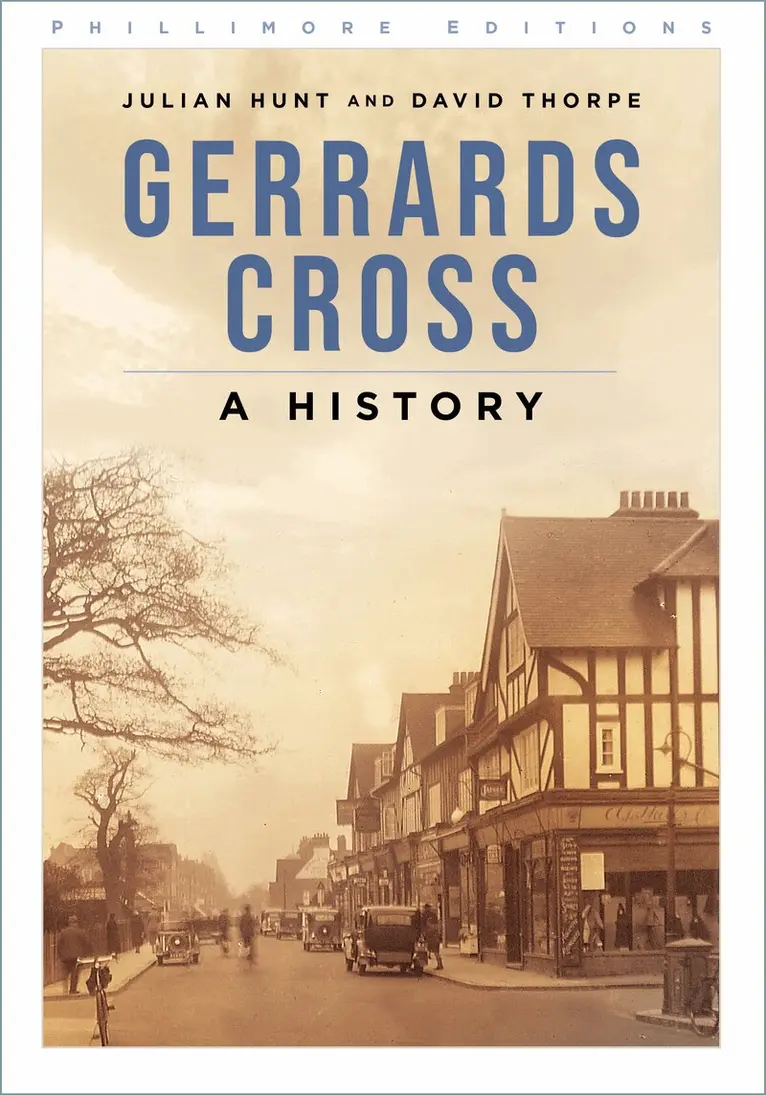
Gerrards Cross, known for its open common and picturesque Latchmore Pond, had been a place of resort ever since the 1790s. Genteel houses sprang up, attracting enough wealthy visitors that it began to be known as the ‘Brighton of Bucks.’ The opening of the Great Western and Great Central Joint Railway in 1906, with a station at Gerrards Cross, gave hundreds of Londoners the opportunity to live in ‘Beechy Bucks.’Gerrards Cross: A History celebrates the energy and imagination of the pioneer architects, builders and estate agents who ensured that Gerrards Cross became a high-class residential area, both socially and architecturally. It also applauds the entrepreneurs who opened their new shops and services when the commuter houses were still on the drawing board, and the brave newcomers who brought their families to live in the country, but depended utterly on their reliable train service to London.
189 kr
Tillfälligt slut
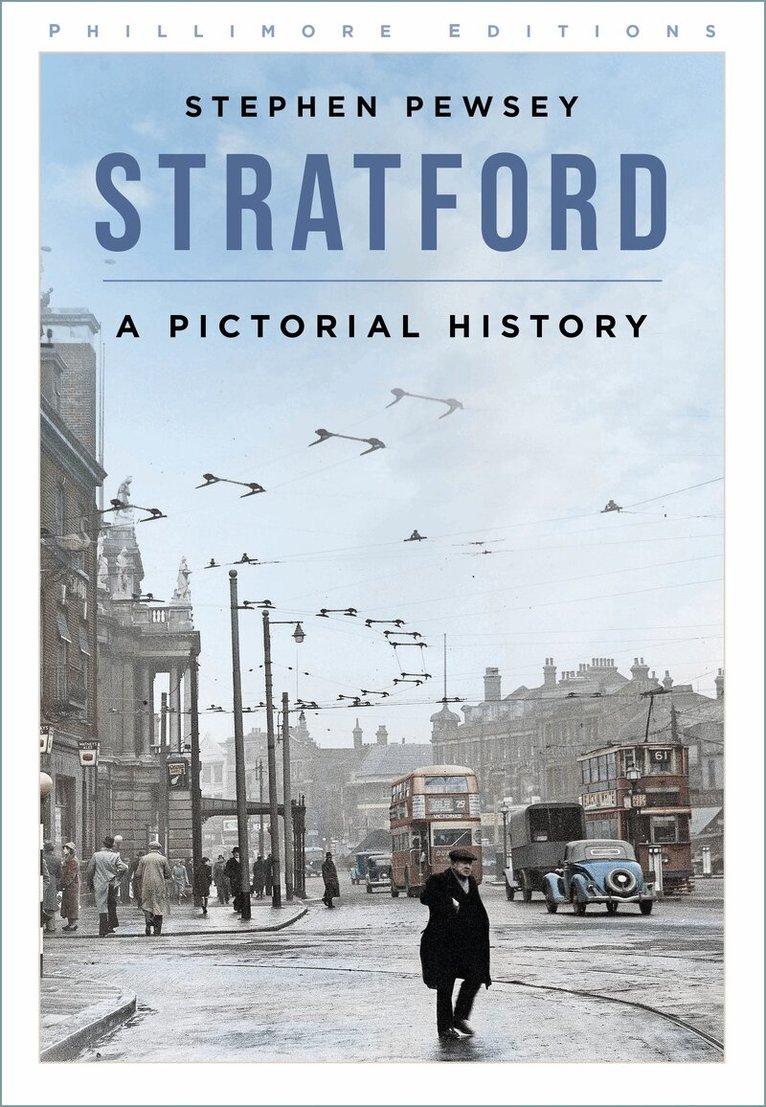
Stratford developed at the lowest crossing point of the River Lea and was a strategic gateway to London. Part of the Essex parish of West Ham, its name, which derives from the Roman road to Colchester, was first mentioned shortly after the Norman Conquest. Domesday Book recorded nine water-mills and, more recently, the largest tithe-mill in Britain was built here in 1776, which happily survives to this day. The Abbey of Stratford Langthorne was founded in 1135, soon after the new Bow Bridge had been built, and it remained a wealthy institution until its dissolution in 1538.Throughout the Middle Ages, Stratford’s situation made it a trading place and a rural retreat for City merchants. Silk weaving and calico printing were the first industries to develop, together with the famous Bow porcelain works, but after the railway arrived in 1839, Hudson, ‘The Railway King’, turned Stratford into a major railway town. Meanwhile, on the marshy southern fringe fronting the Thames, ship-building and chemical works developed and the greatest industrial venture – the Royal Docks – were built, the largest in the country for many years. Stratford’s growth in the Victorian age was phenomenal; the population soared and social pressures mounted. The area became a cradle of the socialist and trade union movement.This splendidly illustrated book explores both the medieval background and the rich industrial and social heritage of Stratford in a fascinating narrative account, illuminated with a superb selection of carefully captioned old pictures. It will appeal to all who live or shop in the town and to everyone with an interest in the past of East London and the making of its present environment.
192 kr
Skickas
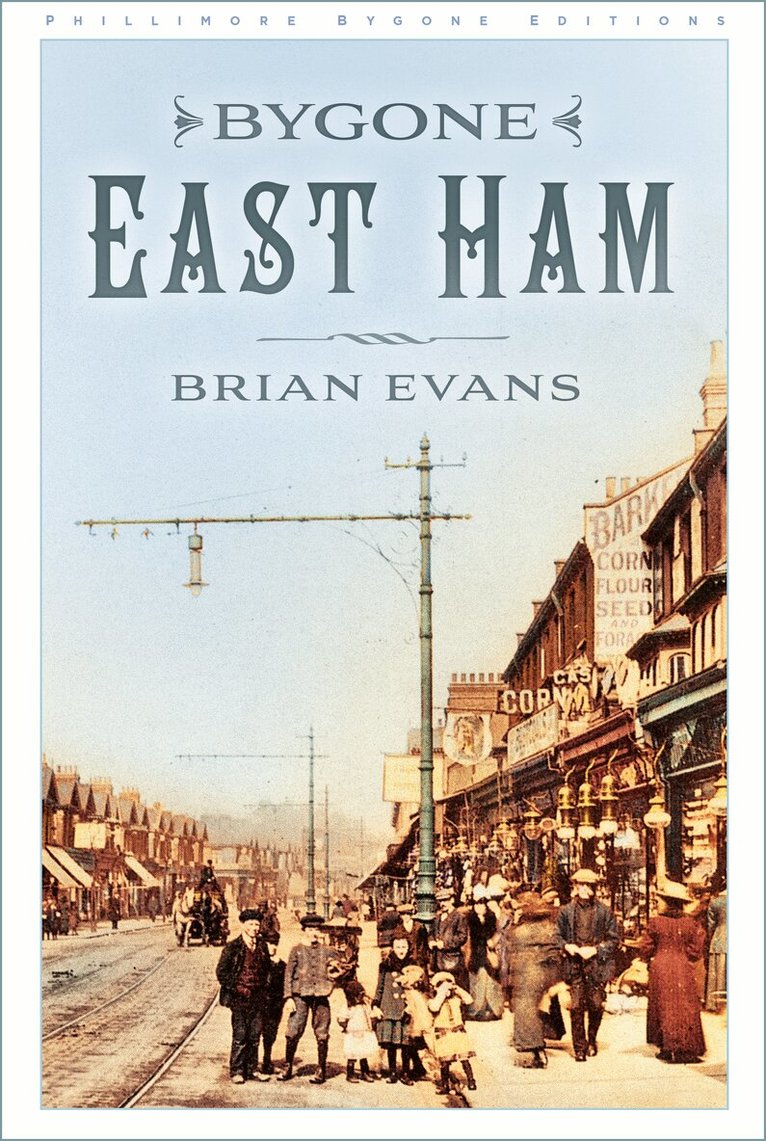
East Ham was sparsely inhabited in the fourteenth century and had not changed much with the advent of the railway in the 1850s. Farmers and market gardeners grew crops for the ‘distant’ London market, their houses scattered thinly from Wanstead flats in the north to just south of the turnpike road.A phenomenal transformation came in the second half of the nineteenth century as the demands of Britain’s growing industries and population led to the use of land for factories and, eventually, to a house-building boom. Fortunately, photos of these amazingly rapid changes have survived to add great impact to this narrative of East Ham’s past.Brian Evans captures the rise of East Ham from an area of fields and marshes to a county borough by 1914. Bygone East Ham will fascinate all who know the place whilst adding greatly to our understanding of the making of the present district.
200 kr
Skickas
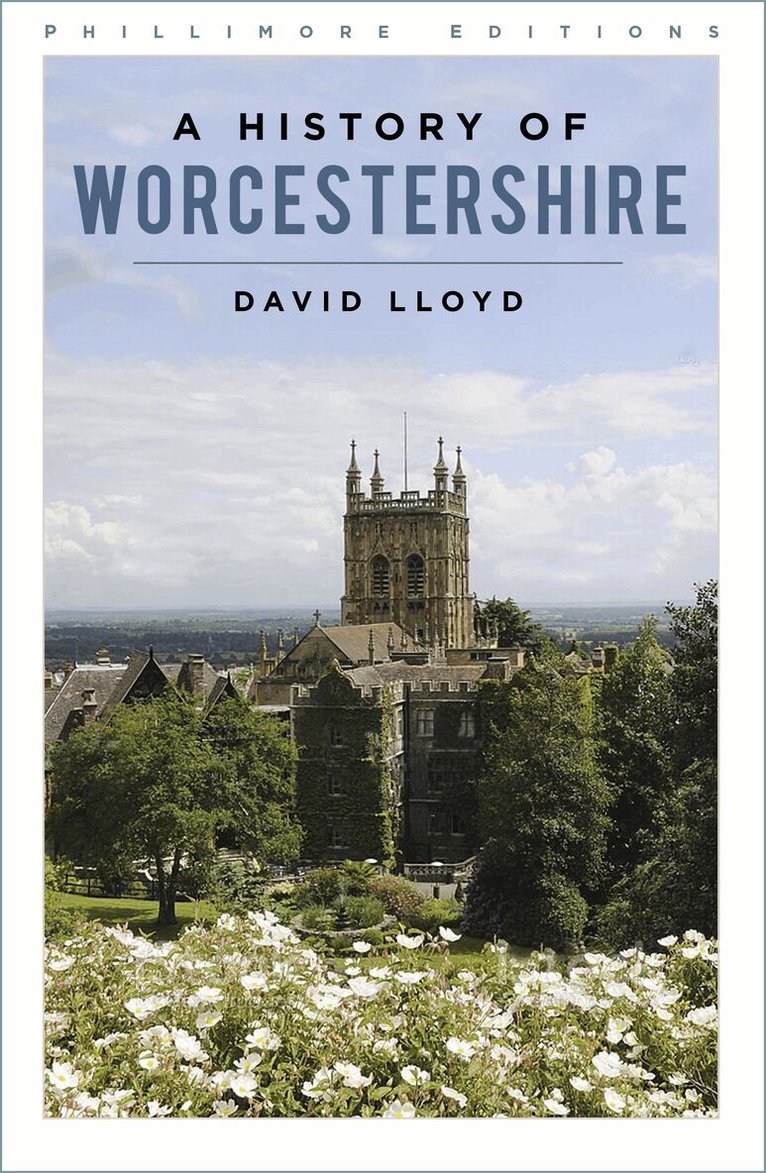
Worcestershire is a county of wide, fertile valleys, drained by the Severn, the Avon, the Teme and the Stour and ringed by some of England’s best-known hills, including the Malverns and the Cotswolds.This concise but comprehensive account is based on a wealth of published and unpublished research. It is both highly readable and well illustrated, and will interest the general reader, students and local groups seeking to put their own work within a wider perspective. Particular attention is given to the settlement of the county, especially to its colonisation by the Hwicce in the sixth and seventh centuries. There are fascinating insights into the lives of ordinary people through the ages, based on records such as medieval monastic estate records and later probate inventories. Throughout, local happenings are related to national trends, and dramatic events such as the Battle of Evesham of 1265 and the Gunpowder Plot of 1605 are highlighted.Contrasts between rural and urban areas are explored, and products such as the carpets of Kidderminster, the salt of Droitwich and the glass of Stourbridge are seen within a wider economic context. Information on important individuals is also examined, some of whom, such as Edward Elgar and the poet Piers Plowman, are already well known, while others emerge from local records for the first time. This book reaches right up to the 1990s, including the triumphs of Worcestershire County Cricket Club and the day-to-day concerns of the Archers in the final chapter.
221 kr
Skickas
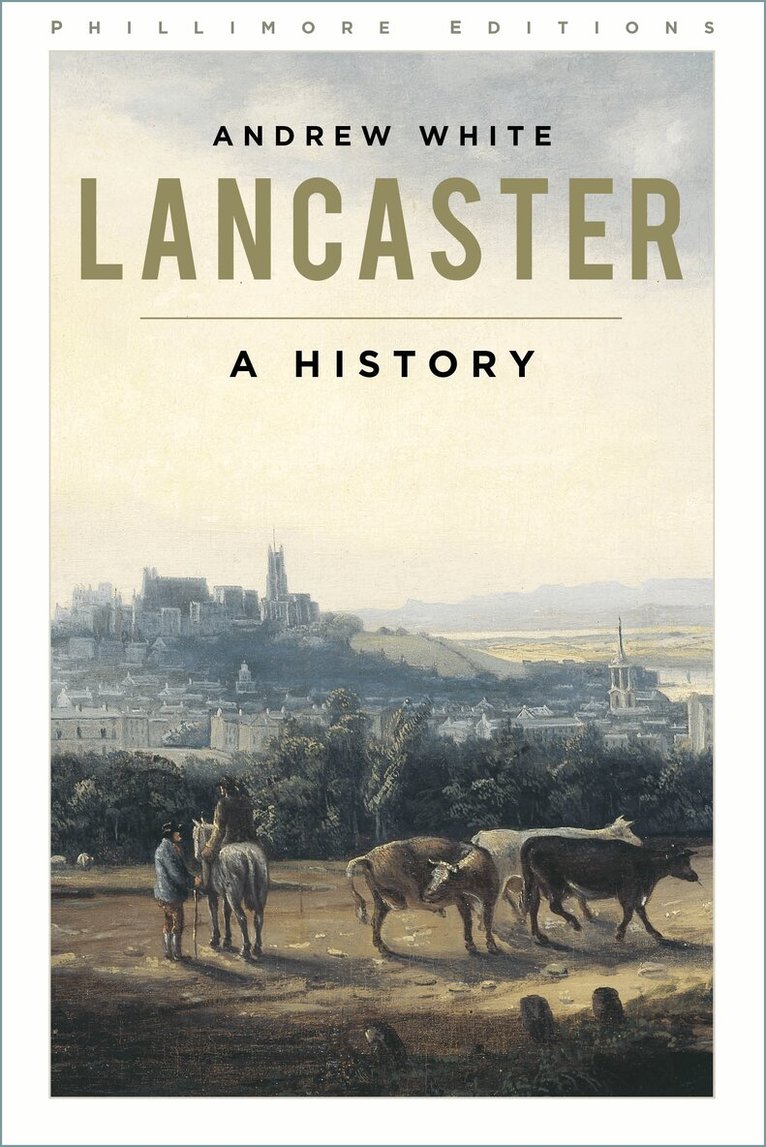
Lancaster, the county town of Lancashire, stands at the lowest bridging point of the River Lune. A chartered borough since 1193 and a city since 1937, it has had a long and turbulent history. Since the Roman army first saw the strategic possibilities of a low hill by the river it has housed garrisons and acted as a fortress. Its position on the main west-coast road to and from Scotland has on numerous occasions led to the passage of hostile armies.As county town and seat of the Assizes it has seen all the principal criminal cases for Lancashire tried in its magnificent Castle over the last eight centuries. Next to the Castle in a typical juxtaposition of Church and State stands the Priory church with its own history running back some twelve or thirteen centuries.In this book, based wherever possible on original sources, such as the rich resources of the borough records or the local newspapers, the author takes a thematic approach. In ten chapters he examines themes such as ‘House and Home’, ‘Working for a Living’ and ‘Where do you come from?’, the last of which is a study of all the people who over the centuries have come from other countries to live in Lancaster.
200 kr
Skickas
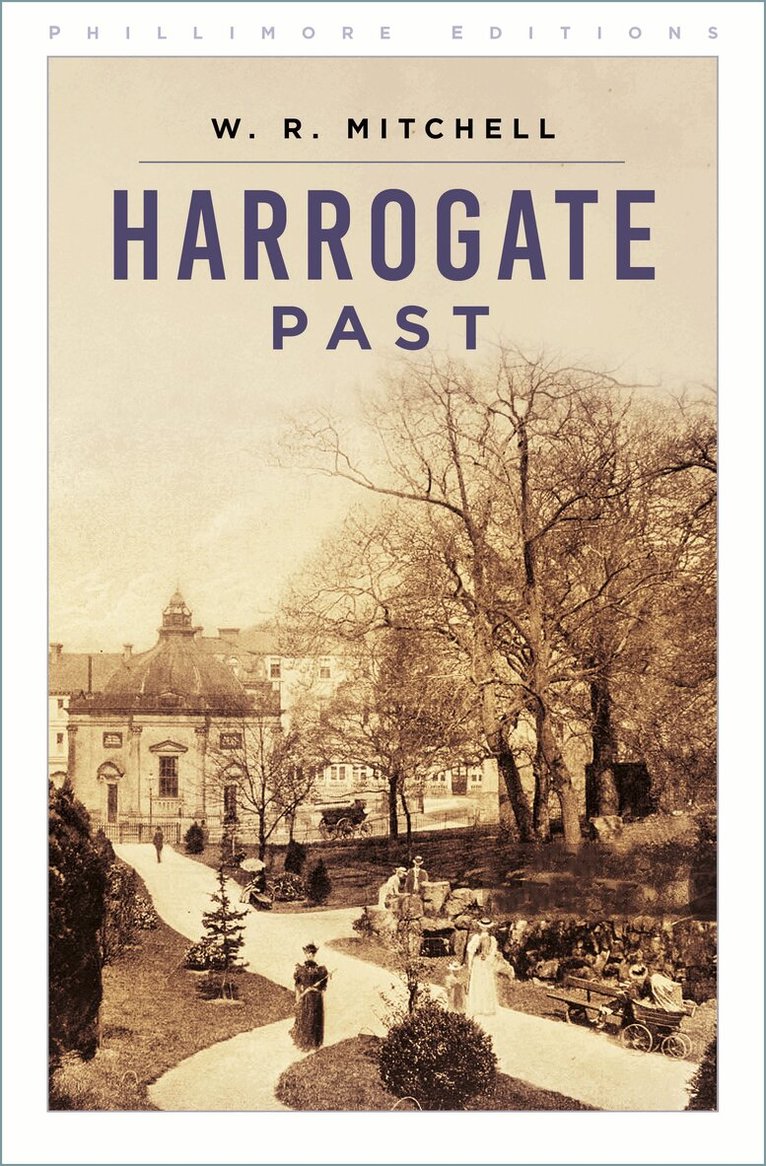
Harrogate began as a tiny hamlet in the Royal Forest of Knaresborough and owes its rise to prominence almost entirely to the exploitation of its mineral springs. Doctors recommended their patients to drink the sulphur-laden water and the first English ‘watering place’ distinguished by the name ‘spa’ became a fashionable retreat for the nobility and gentry. In the Season, in addition to the many private carriages of the well-to-do, no less than 19 coaches ran daily from all parts of the land. The numbers arriving to ‘take the cure’ rose from 20,000 in 1848, when the railway came, to 60,000 a year by the end of the century.The enclosure of the Royal Forest in the 18th century and the gain of 200 acres of open ground, known as the Stray, gave perpetual access to the famous springs and ensured that Harrogate would have space as well as style. The Victorians added many fine buildings to impress their visitors, including the Royal Baths Assembly Room, Opera House and the Kursaal – the name of which was hastily changed to Royal Hall at the outbreak of the First World War. The town enjoyed its social heyday in Edwardian times but, with changes in medical practice, the spa declined.However, the trains that had boosted visitor numbers in the 19th century also brought better-off commuters from the industrial West Riding, to enjoy its strong cultural life and up-market image. Harrogate re-invented itself as a floral resort and conference centre. The publicity manager in 1953 had the bright idea of twinning the town with Luchon in the French Pyrenees, which was the start of the now widespread town-twinning scheme, and Harrogate became the permanent home of the Great Yorkshire Show.In this well-researched and very readable book, a well-known local historian provides a chronological account of Harrogate’s past.
248 kr
Skickas inom 7-10 vardagar
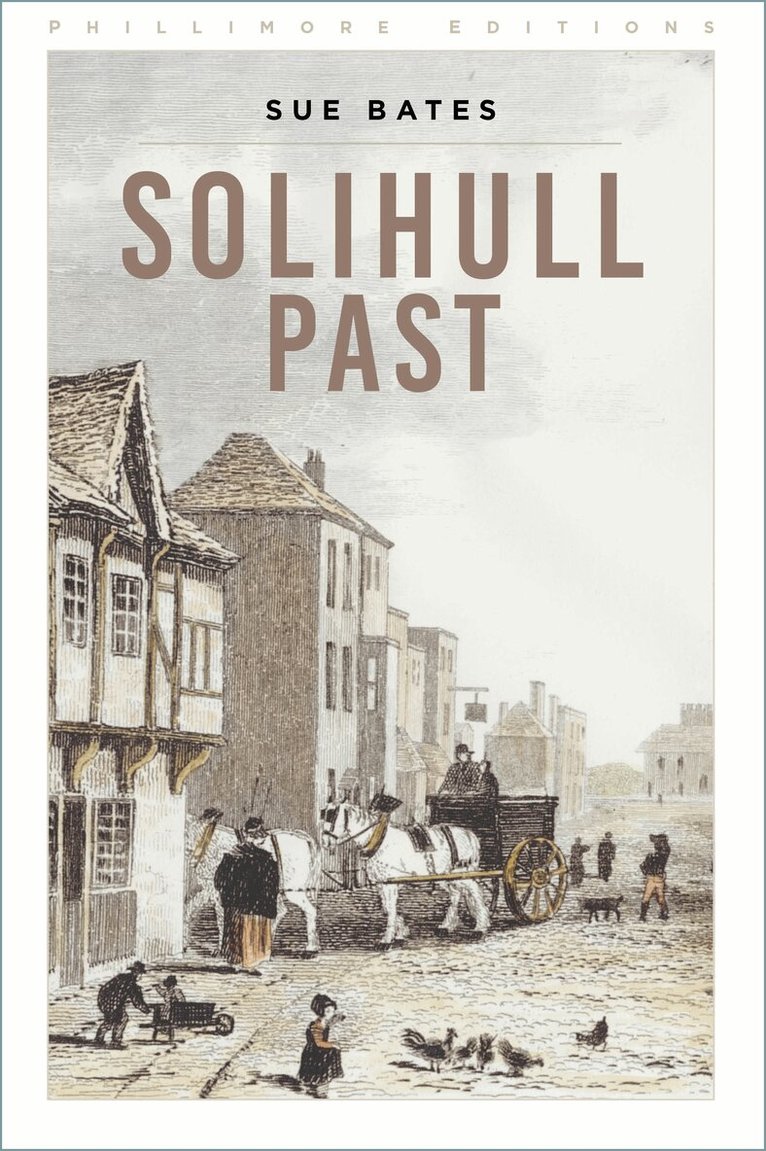
'Many of you will already be familiar with Sue’s excellent books ... Solihull Past is no exception.' - Solihull NewsSolihull was founded as a new town in the 12th century, in the Forest of Arden. It flourished in the early Middle Ages, but eventually declined into a quiet village in north-west Warwickshire. Turnpike roads brought some custom to its coaching inns in the 18th century, but it was not until the railway came in 1850 that its suburbanisation began…Easy commuter transport from Birmingham induced wealthy professionals and businessmen to move their families to Solihull’s ‘salubrious’ surroundings. Growth was slow but steady as more houses were built to attract new residents, and by 1894 Solihull was created a Rural District Council, at a time when schools and churches were extending their premises to accommodate continued growth in population. The second half of the 20th century saw the village disappear under the developing town as offices, hotels and shops were built, including Mell Square, and by 1974 Solihull had progressed to Metropolitan Borough status, the highest tier of local government at the time.This well-researched and quite fascinating account records the town’s growth from medieval market town to modern commercial centre, with its roots proudly remembered in its motto, Urbs in Rure (‘The Town in the Country’). The text is illuminated by a splendid selection of photographs, providing a welcome companion volume to the author’s earlier and very popular book, Solihull: A Pictorial History.
189 kr
Skickas
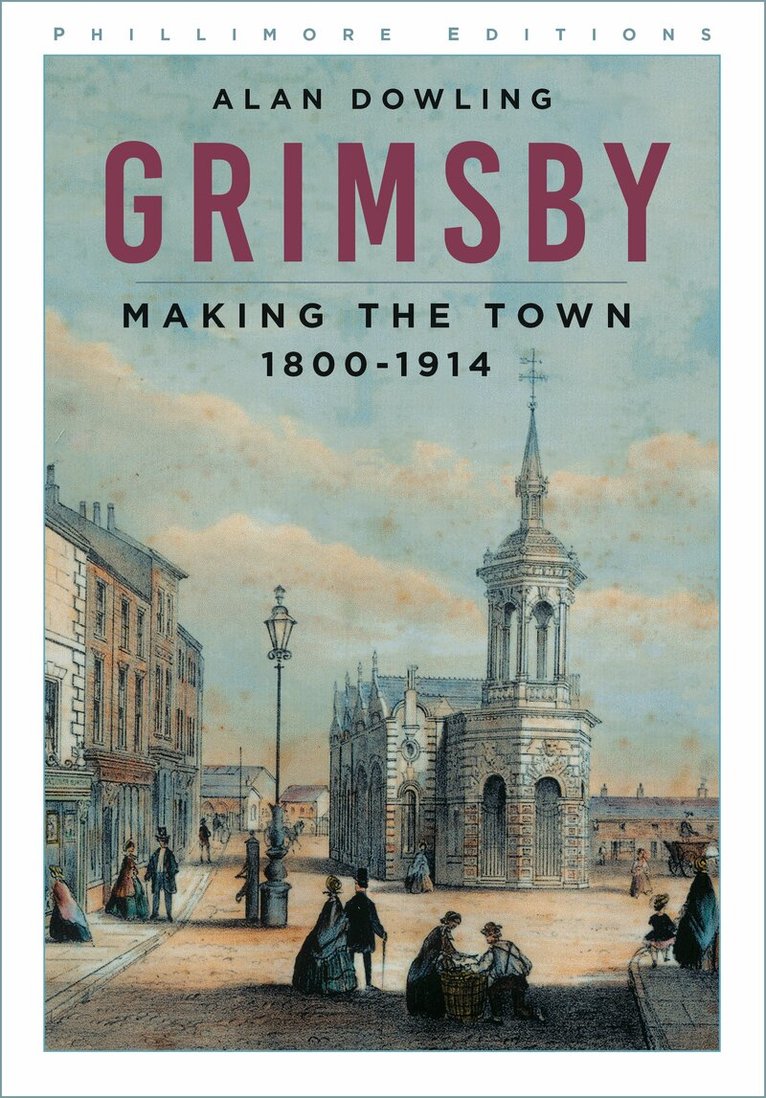
This book tells the story of the making of Grimsby. It describes how the town grew ‘on the ground’ and so helps to explain Grimsby’s present-day physical character. The story is an intriguing one and includes colourful controversies and conflicts that influenced the town’s development.The story begins with the Viking foundation of Grimsby. Then, in the years after the Norman Conquest the town became a successful trading community and port. This was followed by a long period of decline. The town’s fortunes were revived with the coming of the railway in 1848 and the constructions of an extensive dock system. There then followed a massive increase in trade, and the foundation of the port’s modern fishing industry. In the process, it attracted immigration. This new population needed somewhere to live. Consequently, land was quickly covered with houses.The long-term effect of this period of extensive and intensive building – which is described in this book – was to determine to a large extent the shape and character of the modern town.
189 kr
Skickas
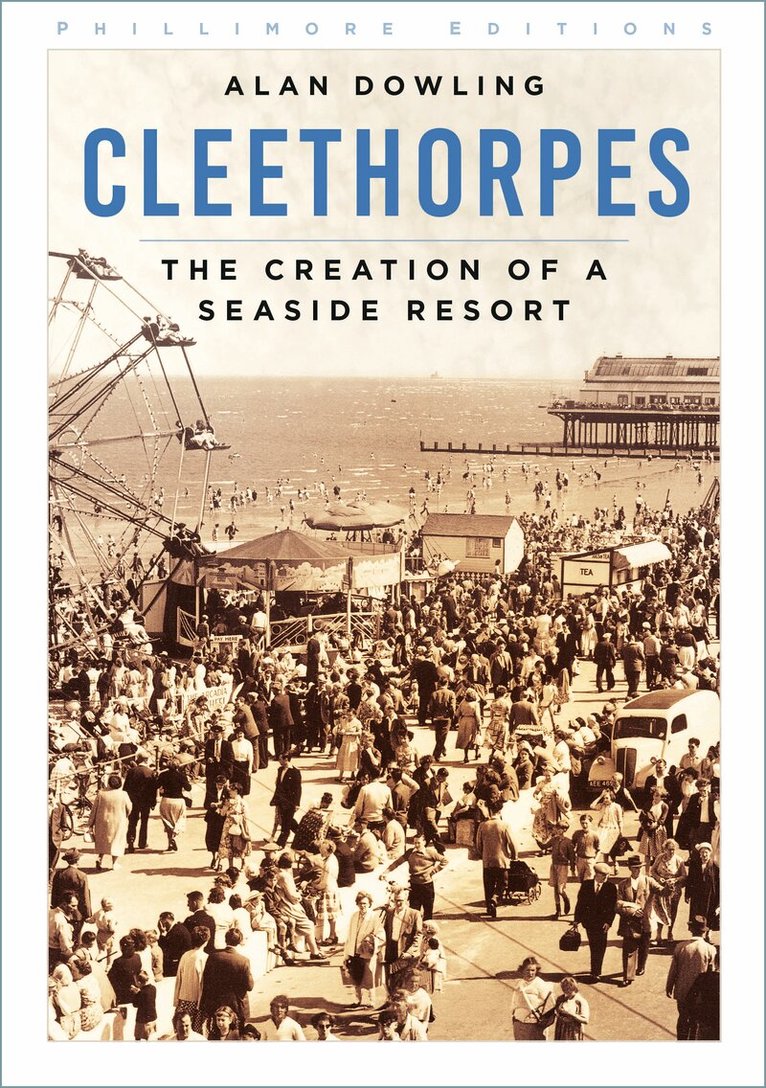
Cleethorpes was originally three small farming and fishing hamlets on the Lincolnshire coast, which later combined and eventually developed into a thriving seaside resort. This book examines the early history of the hamlets, and the reader is taken on a journey through their years as a quiet bathing place, when transport posed difficulties to potential holidaymakers.The railway revolutionised Cleethorpes, making it a favourite venue for the inhabitants of nearby manufacturing districts. The railway company became Cleethorpes' leading developer, creating a bustling Victorian resort. In the 20th century the Cleethorpes municipal authority superseded the railway company as resort developer, carrying out an enterprising programme of resort expansion.The author describes the resort's attractions, which in its heyday lured multitudes of visitors. In later decades, Cleethorpes' trade fluctuated dramatically, but there are promising signs of an up-turn in the resort's prospects as it enters the 21st century. Thoroughly researched and beautifully illustrated, Cleethorpes: The Creation of a Seaside Resort is essential reading for residents and visitors alike.