Philosophical Problems Today - Böcker
Visar alla böcker i serien Philosophical Problems Today. Handla med fri frakt och snabb leverans.
6 produkter
6 produkter
Del 1 - Philosophical Problems Today
Philosophical Problems Today / Problèmes Philosophiques d’Aujourd’hui
Inbunden, Engelska, 1994
534 kr
Skickas inom 10-15 vardagar
"Philosophical Problems Today" is a series of publications from the Institut International de Philosophie. Each volume consists of a set of five articles, which are extensive discussions of topical philosophical problems. Volume 1 in the series contains articles on standard problems in European and American philosophy. Quine writes on truth and discusses various difficulties connected with the clear definition of the correspondence theory of truth. Strawson, in his articles on individuals, disputes the empiricist test for the status of entity of object. Sufficient identity-conditions are satisfied by a much wider range of objects. The concept of meaning is further extended and differentiated in the article by Habermas on speech acts and actions. The notion of communicative action is central to his argument. The study of formalism, by Agazzi, is in an important sense also a study of meaning. Although for the most part developed within mathematics, formal ways of thinking have been a basic tenet within philosophy and science ever since Aristotle.In his article Ricoeur observes, that the present philosophy of history no longer engages in the speculative system building as presented in the philosophy of Hegel, Marx and Toynbee. Our philosophy of history is rather a critical reflection of various issues connected with the transmission of historical meaning.
1 094 kr
Skickas inom 10-15 vardagar
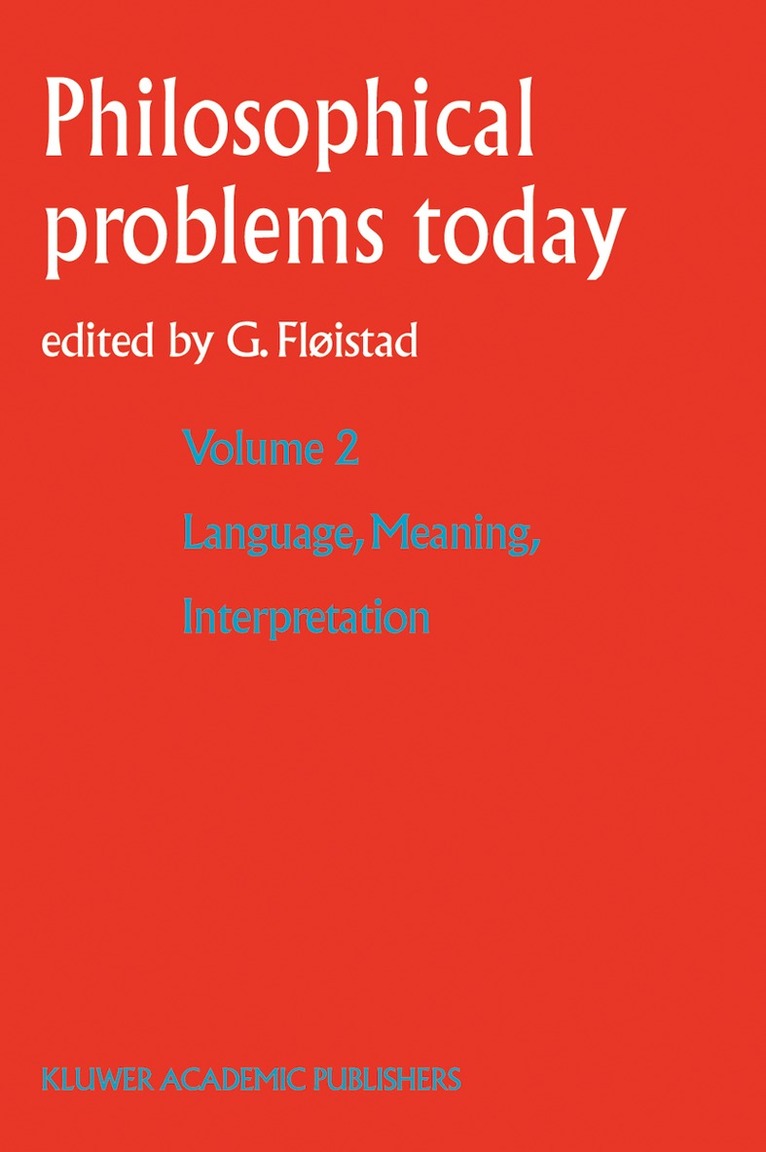
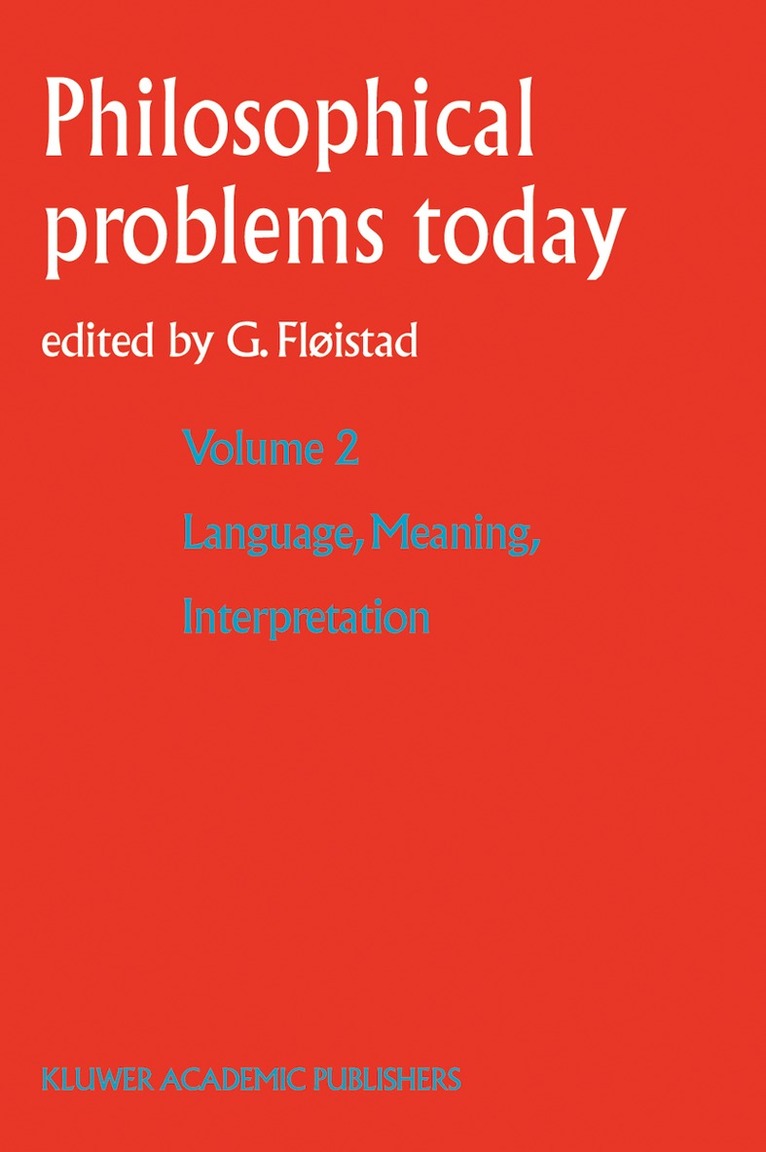
The articles in this volume deal with problems pervading most philosophical traditions, as well as with the future of philosophy. Some philosophers are quite pessimistic, thinking that philosophy - especially professional philosophy in academic institutions - doesn't seem to make much progress and has isolated itself from society at large. Thoughts of a possible end of philosophy among some philosophers appear to have at least three sources: the disillusionment about the present outcome of analytical philosophy, the impossibility of fulfilling the dream of finding an unquestionable foundation for knowledge, and connected with this, the end of the philosophy of Being. Most philosophers however, think that the future of their subject has never been richer or more promising, and that it is definitely too early to introduce "funeral rites". We are reminded that philosophy should not forget one of its traditional tasks: to contribute to the education of the public by providing values according to which people can live. Philosophy of logic and language, and of meaning and communication are central to this volume.The discussion of these issues involves analytical approaches, including semantics and semiotics, philosophy of science, mathematical logic, phenomenology, hermeneutics and some aspects of philosophical anthropology and aesthetics. Philosophy of the Absolute also belongs to this broad repertoire of philosophical problems and disciplines. A number of problems and viewpoints derive from the metaphysical system; any relativistic view on ethical values, for instance, makes sense in relation to some absolute. Metaphysical system building may have come to an end, but after all it belongs to philosophy to remind us of our past.
1 062 kr
Skickas inom 10-15 vardagar
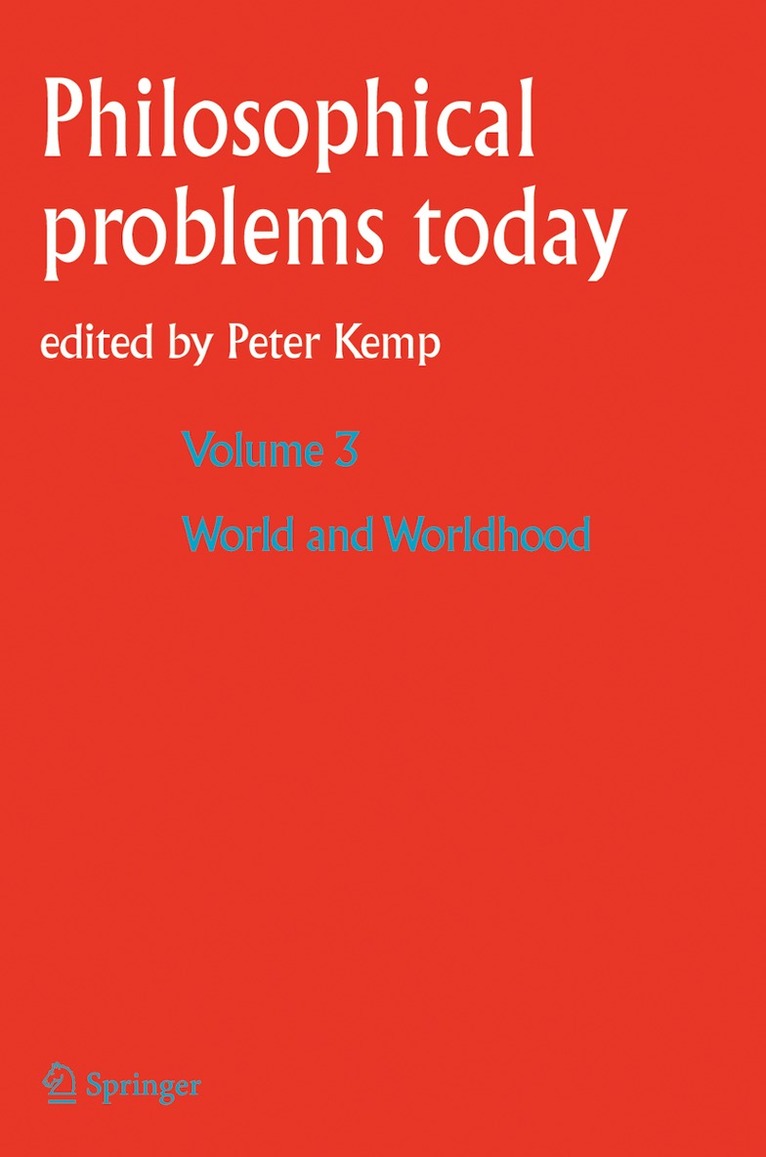
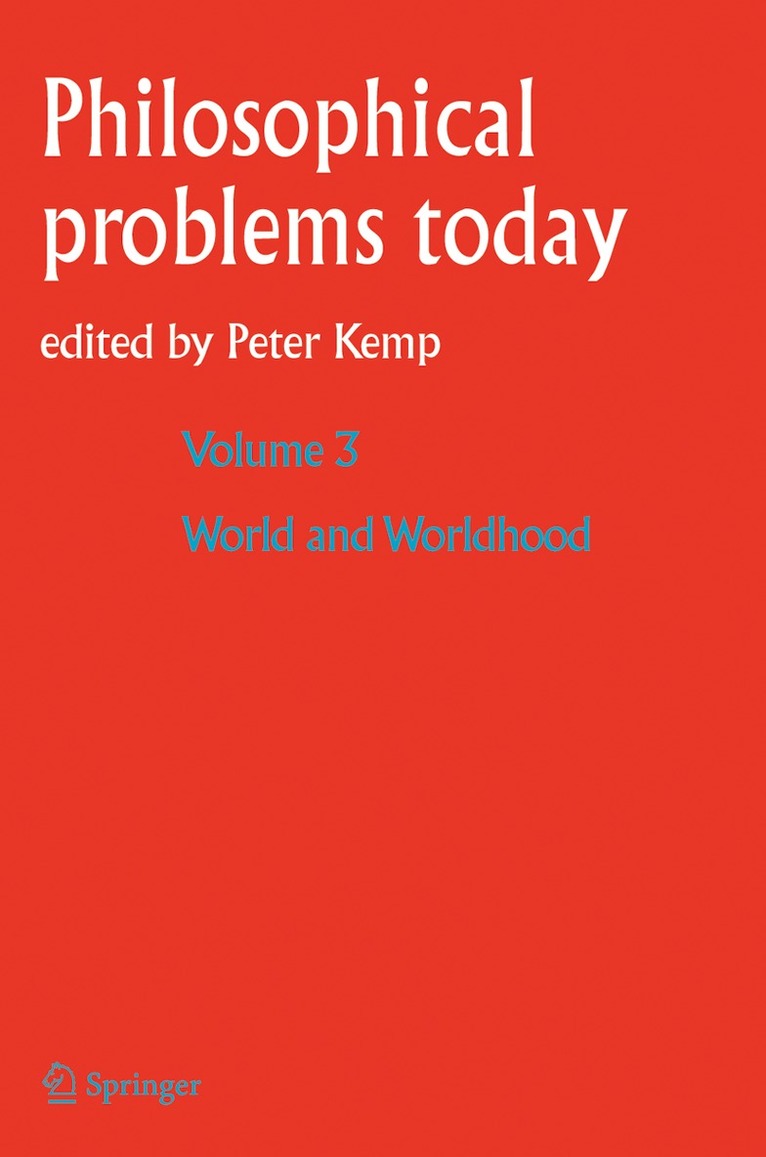
In this book philosophers try to answer the following question: What is globalization and what does "globe" or "world" (monde) signify? Rémi Brague returns to the Greek idea of the cosmos in order to track the worldhood (mondanéité) of the world, that is, the process by which the idea of the world is formed. Don Ihde shows how a world has developed, in which technologies are no longer considered neutral means serving the ends of human action, but become the very means by which people exist in the world. Vittorio Mathieu describes the economical world at two levels – that of the individual and that of society. Tomonobu Imamichi analyses the capacity of aesthetic experience to disclose a world other than the world of technological efficiency. Francisco Miró Quesada C. emphasises that the great political questions are not solvable without worldviews that express value systems. David Rasmussen describes sensus communis as a cosmopolitan concept, which founds a political globalization of the world. And Peter Kemp attempts to grasp the meaning of that globalization upon which the destiny of our planet depends.
Del 1 - Philosophical Problems Today
Philosophical Problems Today / Problèmes Philosophiques d’Aujourd’hui
Häftad, Engelska, 2010
534 kr
Skickas inom 10-15 vardagar
Volume 1 in the new series, Philosophical Problems Today, contains articles on standard problems in European and American philosophy. Quine writes on truth and discusses various difficulties connected with the clear definition of the correspondence theory of truth. Strawson, in his articles on individuals, disputes the empiricist test for the status of entity of object. Sufficient identity-conditions are satisfied by a much wider range of objects. The concept of meaning is further extended and differentiated in the article by Habermas on speech acts and actions. The notion of communicative action is central to his argument. The study of formalism, by Agazzi, is in an important sense also a study of meaning. Although for the most part developed within mathematics, formal ways of thinking have been a basic tenet within philosophy and science ever since Aristotle. In his article, Ricoeur observes that the present philosophy of history no longer engages in the speculative system building as presented in the philosophy of Hegel, Marx and Toynbee.Our philosophy of history is rather a critical reflection of various issues connected with the transmission of historical meaning.
1 062 kr
Skickas inom 10-15 vardagar
Philosophy of logic and language, and of meaning and communication are central to this volume. The discussion of these issues involves analytical approaches, including semantics and semiotics, philosophy of science, mathematical logic, phenomenology, hermeneutics and some aspects of philosophical anthropology and aesthetics. Philosophy of the Absolute also belongs to this broad repertoire of philosophical problems and disciplines. A number of problems and viewpoints derive from the metaphysical system; any relativistic view on ethical values, for instance, makes sense in relation to some absolute. Metaphysical system building may have come to an end, but after all it belongs to philosophy to remind us of our past.
1 062 kr
Skickas inom 10-15 vardagar
In this book philosophers try to answer the following question: What is globalization and what does "globe" or "world" (monde) signify? Remi Brague returns to the Greek idea of the cosmos in order to track the worldhood (mondaneite) of the world, that is, the process by which the idea of the world is formed. Don Ihde shows how a world has developed, in which technologies are no longer considered neutral means serving the ends of human action, but become the very means by which people exist in the world. Vittorio Mathieu describes the economical world at two levels -- that of the individual and that of society. Tomonobu Imamichi analyses the capacity of aesthetic experience to disclose a world other than the world of technological efficiency. Francisco Miro Quesada C. emphasises that the great political questions are not solvable without worldviews that express value systems. David Rasmussen describes sensus communis as a cosmopolitan concept, which founds a political globalization of the world. And Peter Kemp attempts to grasp the meaning of that globalization upon which the destiny of our planet depends.