Philosophy of Mind - Böcker
Visar alla böcker i serien Philosophy of Mind. Handla med fri frakt och snabb leverans.
20 produkter
20 produkter
270 kr
Skickas
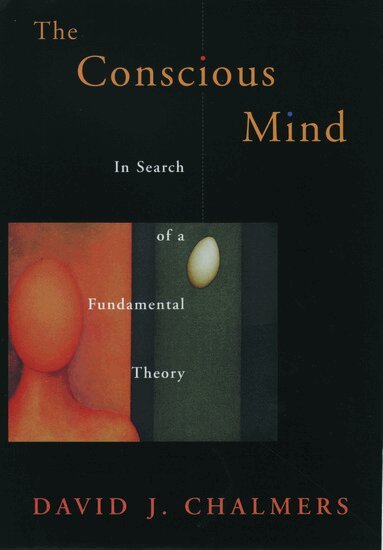
What is consciousness? How do physical processes in the brain give rise to the self-aware mind and to feelings as profoundly varied as love or hate, aesthetic pleasure or spiritual yearning?David J. Chalmers unveils a major new theory of consciousness, one that rejects the prevailing reductionist trend of science, while offering provocative insights into the relationship between mind and brain. Writing in a thought-provoking style, Chalmers proposes that conscious experience must be understood as an irreducible entity similar to such physical properties as time, mass, and space that exists at a fundamental level and cannot be understood as the sum of its parts. Engaging and penetrating, this book adds a fresh new perspective to the subject that is sure to spark debate about our understanding of the mind for years to come.
290 kr
Skickas inom 3-6 vardagar
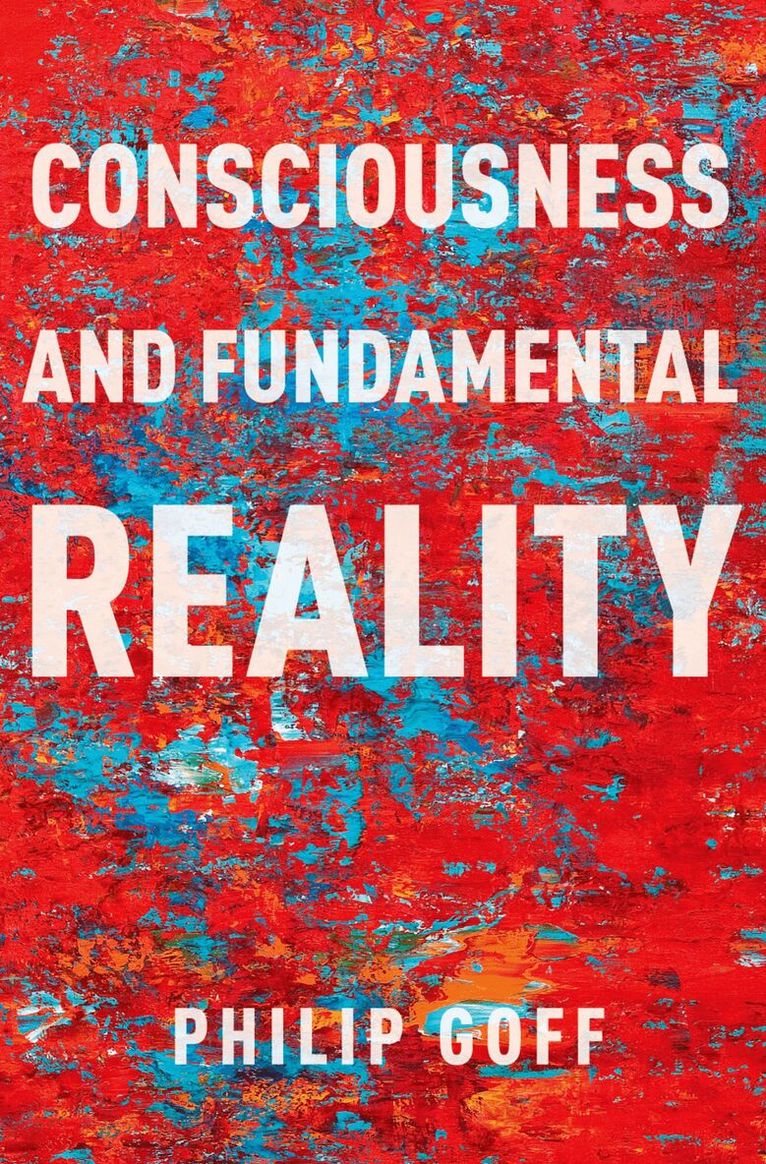
A core philosophical project is the attempt to uncover the fundamental nature of reality, the limited set of facts upon which all other facts depend. Perhaps the most popular theory of fundamental reality in contemporary analytic philosophy is physicalism, the view that the world is fundamentally physical in nature. The first half of this book argues that physicalist views cannot account for the evident reality of conscious experience, and hence that physicalism cannot be true. Unusually for an opponent of physicalism, Goff argues that there are big problems with the most well-known arguments against physicalism—Chalmers' zombie conceivability argument and Jackson's knowledge argument—and proposes significant modifications. The second half of the book explores and defends a recently rediscovered theory of fundamental reality—or perhaps rather a grouping of such theories—known as 'Russellian monism.' Russellian monists draw inspiration from a couple of theses defended by Bertrand Russell in The Analysis of Matter in 1927. Russell argued that physics, for all its virtues, gives us a radically incomplete picture of the world. It tells us only about the extrinsic, mathematical features of material entities, and leaves us in the dark about their intrinsic nature, about how they are in and of themselves. Following Russell, Russellian monists suppose that it is this 'hidden' intrinsic nature of matter that explains human and animal consciousness. Some Russellian monists adopt panpsychism, the view that the intrinsic natures of basic material entities involve consciousness; others hold that basic material entities are proto-conscious rather than conscious. Throughout the second half of the book various forms of Russellian monism are surveyed, and the key challenges facing it are discussed. The penultimate chapter defends a cosmopsychist form of Russellian monism, according to which all facts are grounded in facts about the conscious universe.
712 kr
Skickas inom 5-8 vardagar
In this book, Derk Pereboom explores how physicalism might best be formulated and defended against the best anti-physicalist arguments. Two responses to the knowledge and conceivability arguments are set out and developed. The first exploits the open possibility that introspective representations fail to represent mental properties as they are in themselves; specifically, that introspection represents phenomenal properties as having certain characteristic qualitative natures, which these properties might actually lack. The second response draws on the proposal that currently unknown fundamental intrinsic properties provide categorical bases for known physical properties and would also yield an account of consciousness. While there are non-physicalist versions of this position, some are amenable to physicalism. The book's third theme is a defense of a nonreductive account of physicalism. The type of nonreductivism endorsed departs from others in that it rejects all token identity claims for psychological and microphysical entities. The deepest relation between the mental and the microphysical is constitution, where this relation is not to be explicated by the notion of identity.
1 252 kr
Skickas inom 5-8 vardagar
The topic of this book is mental representation, a theoretical concept that lies at the core of cognitive science. Together with the idea that thinking is analogous to computational processing, this concept is responsible for the "cognitive turn" in the sciences of the mind and brain since the 1950s. Conceiving of cognitive processes (such as perception, reasoning, and motor control) as consisting of the manipulation of contentful vehicles that represent the world has led to tremendous empirical advancements in our explanations of behaviour. Perhaps the most famous discovery that explains behavior by appealing to the notion of mental representations was the discovery of 'place' cells that underlie spatial navigation and positioning, which earned researchers John O'Keefe, May-Britt Moser, and Edvard I. Moser a joint Nobel Prize in 2014. And yet, despite the empirical importance of the concept, there is no agreed definition or theoretical understanding of mental representation. This book constitutes a state-of-the-art overview on the topic of mental representation, assembling some of the leading experts in the field and allowing them to engage in meaningful exchanges over some of the most contentious questions. The collection gathers both proponents and critics of the notion, making room for debates dealing with the theoretical and ontological status of representations, the possibility of formulating a general account of mental representation which would fit our best explanatory practices, and the possibility of delivering such an account in fully naturalistic terms. Some contributors explore the relation between mutually incompatible notions of mental representation, stemming from the different disciplines composing the cognitive sciences (such as neuroscience, psychology, and computer science). Others question the ontological status and explanatory usefulness of the notion. And finally, some try to sketch a general theory of mental representations that could face the challenges outlined in the more critical chapters of the volume.
1 095 kr
Skickas inom 5-8 vardagar
Continuing the old philosophical project of reconciling a scientific view of ourselves with the view of ourselves as agents of free will and meaning, but bringing to this project the latest insights of neuroscience, cognitive science, and psychiatry, Flanagan's collection of essays explores topics such as a scientific explanation of consciousness, the moral socialization of children, and the nature and issues of psychological phenomena such as multiple personality disorder and false memory syndrome.
781 kr
Skickas inom 5-8 vardagar
Over the last two decades, debates over the viability of commonsense psychology have been centre stage in both cognitive science and the philosophy of mind. Eliminativists have argued that advances in cognitive science and neuroscience will ultimately justify a rejection of our "folk" theory of the mind, and of its ontology. In the first half of this book Stich, who was at one time a leading advocate of eliminativism, maintains that even if the sciences develop in the ways that eliminativists foresee, none of the arguments for ontological elimination are tenable. Rather than being resolved by science, he contends, these ontological disputes will be settled by a pragmatic process in which social and political considerations have a major role to play. In later chapters, Stich argues that the widespread worry about "naturalizing" psychological properties is deeply confused, since there is no plausible account of what naturalizing requires on which the failure of the naturalization project would lead to eliminativism. He also offers a detailed analysis of the many different notions of folk psychology to be found in philosophy and psychology, and argues that simulation theory, which purports to be an alternative to folk psychology, is not supported by recent experimental findings.
1 975 kr
Skickas inom 5-8 vardagar
In Minds and Bodies, one of philosophy's most dynamic and versatile thinkers gathers nearly forty review essays written over the past twenty years for non-specialized publications. They cover biography, particularly of Russell and Wittgenstein; philosophy of mind, especially consciousness; and ethics, with an emphasis on applied ethics. Taken together these essays form a vivid picture of contemporary philosophy for the general reader, and will be welcomed by those within the philosophical community for their crisp critical insights and rigorous assessments.
1 008 kr
Skickas inom 5-8 vardagar
This powerfully iconoclastic book reconsiders the influential nativist position toward the mind. Nativists assert that some concepts, beliefs, or capacities are innate or inborn: native to the mind rather than acquired. Fiona Cowie argues that this view is mistaken, demonstrating that nativism is an unstable amalgam of two quite different--and probably inconsistent--theses about the mind. Unlike empiricists, who postulate domain-neutral learning strategies, nativists insist that some learning tasks require special kinds of skills, and that these skills are hard-wired into our brains at birth. This "faculties hypothesis" finds its modern expression in the views of Noam Chomsky. Cowie, marshaling recent empirical evidence from developmental psychology, psycholinguistics, computer science, and linguistics, provides a crisp and timely critique of Chomsky's nativism and in its place defends a moderately nativist approach to language acquisition. She also takes on the view articulated by nativists such as philosopher Jerry Fodor that learning, particularly concept acquisition, is a mysterious process. Cowie challenges this explanatory pessimism, and argues convincingly that concept acquisition is psychologically explicable. What's Within? is a clear and provocative milestone in the study of the human mind.
929 kr
Skickas inom 5-8 vardagar
Continuing the old philosophical project of reconciling a scientific view of ourselves with the view of ourselves as agents of free will and meaning, but bringing to this project the latest insights of neuroscience, cognitive science, and psychiatry, Flanagan's collection of essays explores topics such as a scientific explanation of consciousness, the moral socialization of children, and the nature and issues of psychological phenomena such as multiple personality disorder and false memory syndrome.
464 kr
Skickas inom 5-8 vardagar
In this book, Stich unravels - or deconstructs - the doctrine called "eliminativism". Eliminativism claims that beliefs, desires, and many other mental states we use to describe the mind do not exist, but are fictional posits of a badly mistaken theory of "folk psychology". Stich makes a U-turn in his book, opening up new and controversial positions.
727 kr
Skickas inom 5-8 vardagar
Most philosophers writing about personal identity in recent years claim that what it takes for us to persist through time is a matter of psychology. In this groundbreaking new book, Eric Olson argues that such approaches face daunting problems, and he defends in their place a radically non-psychological account of personal identity. He defines human beings as biological organisms, and claims that no psychological relation is either sufficient or necessary for an organism to persist. Rejecting several famous thought experiments dealing with personal identity, he instead argues that one could survive the destruction of all of one's psychological contents and capabilities as long as the human organism remains alive.
869 kr
Skickas inom 5-8 vardagar
Thau maintains that our conception of consciousness begins with and depends upon a few fundamental errors. He elucidates these errors by discussing three important philosophical puzzles--Spectrum Inversion, Frege's Puzzle, and Black-and-White Mary -- each of which concerns some aspect of either consciousness or cognition. He argues that it has gone unnoticed that each of these puzzles presents the very same problem and, in bringing this commonality to light, the errors in our natural conception of consciousness and cognition are also revealed.
1 932 kr
Skickas inom 5-8 vardagar
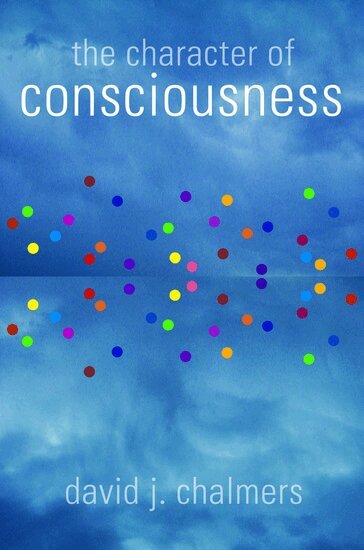
What is consciousness? How does the subjective character of consciousness fit into an objective world? How can there be a science of consciousness? In this sequel to his groundbreaking and controversial The Conscious Mind, David Chalmers develops a unified framework that addresses these questions and many others. Starting with a statement of the "hard problem" of consciousness, Chalmers builds a positive framework for the science of consciousness and a nonreductive vision of the metaphysics of consciousness. He replies to many critics of The Conscious Mind, and then develops a positive theory in new directions. The book includes original accounts of how we think and know about consciousness, of the unity of consciousness, and of how consciousness relates to the external world. Along the way, Chalmers develops many provocative ideas: the "consciousness meter", the Garden of Eden as a model of perceptual experience, and The Matrix as a guide to the deepest philosophical problems about consciousness and the external world. This book will be required reading for anyone interested in the problems of mind, brain, consciousness, and reality.
425 kr
Skickas inom 5-8 vardagar
What is consciousness? How does the subjective character of consciousness fit into an objective world? How can there be a science of consciousness? In this sequel to his groundbreaking and controversial The Conscious Mind, David Chalmers develops a unified framework that addresses these questions and many others. Starting with a statement of the "hard problem" of consciousness, Chalmers builds a positive framework for the science of consciousness and a nonreductive vision of the metaphysics of consciousness. He replies to many critics of The Conscious Mind, and then develops a positive theory in new directions. The book includes original accounts of how we think and know about consciousness, of the unity of consciousness, and of how consciousness relates to the external world. Along the way, Chalmers develops many provocative ideas: the "consciousness meter", the Garden of Eden as a model of perceptual experience, and The Matrix as a guide to the deepest philosophical problems about consciousness and the external world. This book will be required reading for anyone interested in the problems of mind, brain, consciousness, and reality.
991 kr
Skickas inom 5-8 vardagar
Cognitive Systems and the Extended Mind surveys philosophical issues raised by the situated movement in cognitive science, that is, the treatment of cognitive phenomena as the joint product of brain, body, and environment. The book focuses primarily on the hypothesis of extended cognition, which asserts that human cognitive processes literally comprise elements beyond the boundary of the human organism. Rupert argues that the only plausible way in which to demarcate cognitions is systems-based: cognitive states or processes are the states of the integrated set of mechanisms and capacities that contribute casually and distinctively to the production of cognitive phenomena--for example, language-use, memory, decision-making, theory construction, and, more importantly, the associated forms of behavior. Rupert argues that this integrated systems is most likely to appear within the boundaries of the human organism. He argues that the systems-based view explains the existing successes of cognitive psychology and cognate fields in a way that extended conceptions of cognition do not, and that once the systems-based view has been adopted, it is especially clear how extant arguments in support of the extended view go wrong. Cognitive Systems also examines further aspects of the situated program in cognitive science, including the embedded and embodied approaches to cognition. Rupert asks to what extent the plausible incarnations of these situated views depart from orthodox, computational cognitive science. Here, Rupert focuses on the notions of representation and computation, arguing that the embedded and embodied views do not constitute the radical shifts in perspective they are often claimed to be. Rupert also argues that, properly understood, the embodied view does not offer a new role for the body, different in principle from the one presupposed by orthodox cognitive science.
410 kr
Skickas inom 5-8 vardagar
Ignorance and Imagination advances a novel way to resolve the central philosophical problem about the mind: how it is that consciousness or experience fits into a larger naturalistic picture of the world. The correct response to the problem, Stoljar argues, is not to posit a realm of experience distinct from the physical, nor to deny the reality of phenomenal experience, nor even to rethink our understanding of consciousness and the language we use to talk about it. Instead, we should view the problem itself as a consequence of our ignorance of the relevant physical facts, Stoljar shows that this change of orientation is well motivated historically, empirically, and philosophically, and that it has none of the side effects it is sometimes thought to have. The result is a philosophical perspective on the mind that has a number of far-reaching consequences: for consciousness studies, for our place in nature, and for the way we think about the relationship between philosophy and science.
1 146 kr
Skickas inom 5-8 vardagar
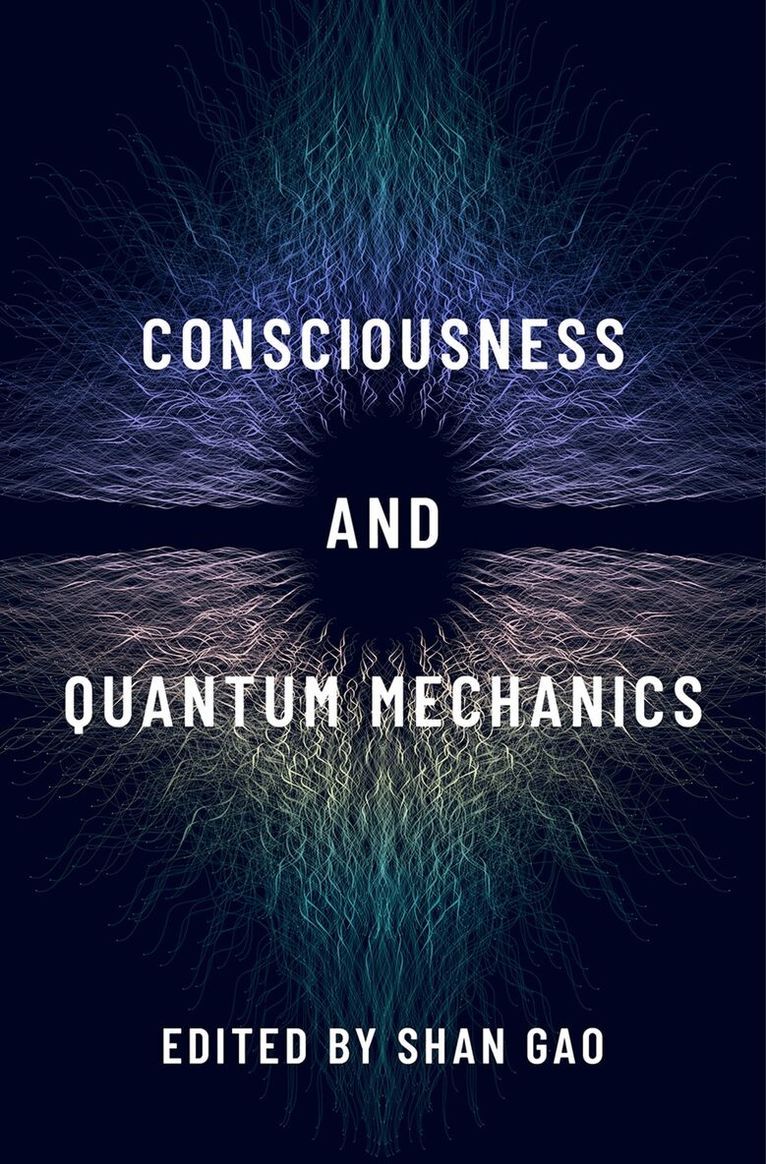
Consciousness and quantum mechanics are two great mysteries of our time--and recently scholars have postulated a deeper connection between them. Exploring this possible connection can be fruitful: an analysis of the conscious mind and psychophysical connection can be indispensable in understanding quantum mechanics and solving the notorious measurement problem, and there is also likely some kind of intimate connection between quantum mechanics--the most fundamental theory of the physical world--and our efforts to explain, naturalistically, the phenomenon of consciousness.The seventeen newly written chapters in this volume are divided into three sections: Consciousness and the Wave Function Collapse, Consciousness in Quantum Theories, and Quantum Approaches to Consciousness. This is the first volume to provide a comprehensive review and thorough analysis of intriguing conjectures about the connection between consciousness and quantum mechanics. Written by leading experts in physics, philosophy, and cognitive science, Consciousness and Quantum Mechanics will be of value to students and researchers working on the foundations of quantum mechanics and the philosophy of mind.
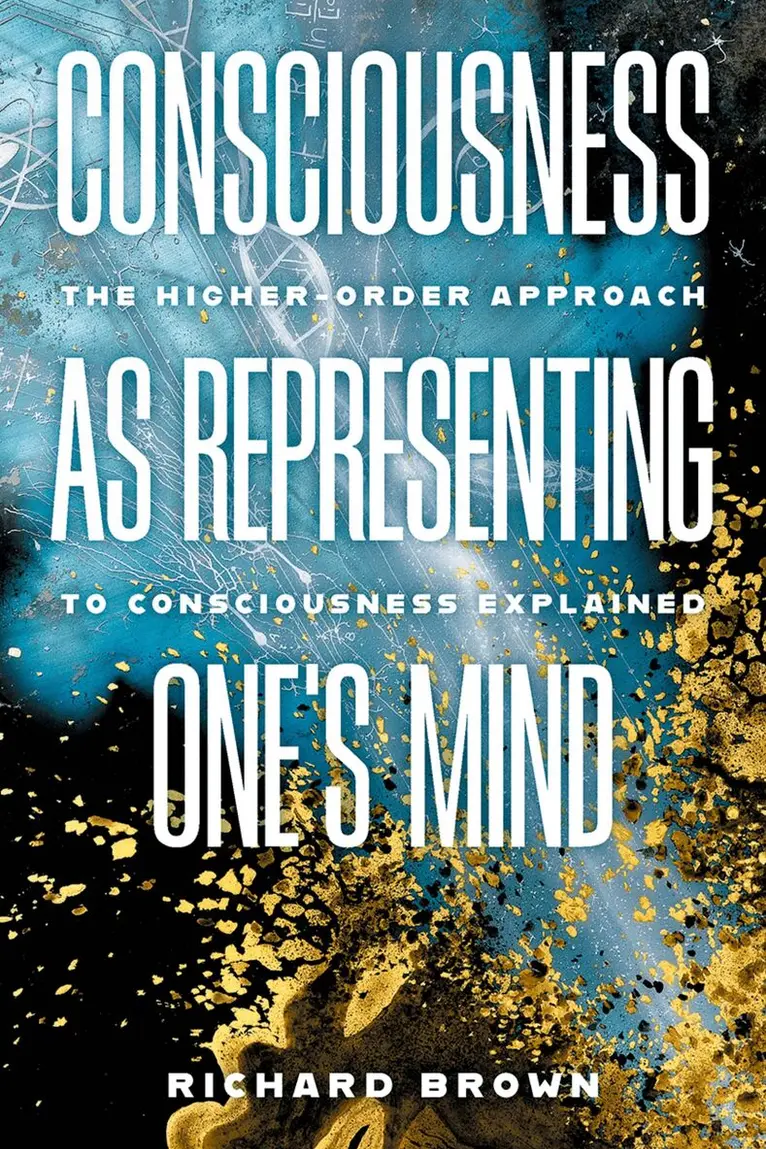
Consciousness as Representing One's Mind
The Higher-Order Approach to Consciousness Explained
Inbunden, Engelska, 2025
875 kr
Skickas inom 5-8 vardagar
The science of consciousness is now at the point where we need to evaluate the theories of consciousness currently on offer. Higher-order theories of consciousness, having originated in philosophy rather than science, are at this point not well understood. Even worse, it is often not clear what would or would not count as an empirical test of these kinds of theories. Richard Brown here carefully presents and defends a novel higher-order theory of consciousness, and compares it to the existing theories with an emphasis on empirical falsification. Brown affectionately calls his novel theory the HOROR-Higher-Order Representation of a Representation-theory. After presenting and defending the HOROR theory, he turns to situating this theory in the contemporary landscape of higher-order theories. Throughout, he emphasizes the extent to which empirical results would constitute a challenge to higher-order theories. Along the way, he develops a new taxonomy for higher-order theories, and uses it to classify the existing varieties of higher-order theories.
875 kr
Skickas inom 5-8 vardagar
Few contemporary philosophers take idealism seriously. The View from Everywhere aims to change this, developing a new quasi-Berkeleyan realist idealism, which does not depend upon God to do the metaphysical heavy lifting. This non-theistic idealism requires a fresh approach to the persistence and stability of the physical world. The resulting theory offers unique accounts of the nature of perception and the relationship between our minds and our bodies.When we peel away all the attributes of God that aren't essential for ensuring the stability of the world, we're left with a simpler and more intelligible metaphysical picture. On the resulting view, reality is a vast unity of consciousness that binds together experiences as-of every object from every perspective: a "tapestry" woven out of experiential "threads."Helen Yetter-Chappell seeks to fully flesh out this idealist metaphysics in a way that lets us make sense of the structure of reality and the deliverances of scientific inquiry, to consider the relationship between our minds and reality within an idealist framework, and to show that there are distinctive benefits to embracing idealism - benefits that should lead us to reassess our commitment to the materialist orthodoxy.
842 kr
Skickas inom 5-8 vardagar
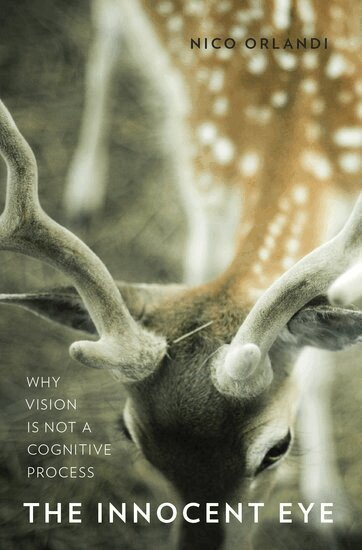
Why does the world look to us as it does? Generally speaking, this question has received two types of answers in the cognitive sciences in the past fifty or so years. According to the first, the world looks to us the way it does because we construct it to look as it does. According to the second, the world looks as it does primarily because of how the world is. In The Innocent Eye, Nico Orlandi defends a position that aligns with this second, world-centered tradition, but that also respects some of the insights of constructivism. Orlandi develops an embedded understanding of visual processing according to which, while visual percepts are representational states, the states and structures that precede the production of percepts are not representations.If we study the environmental contingencies in which vision occurs, and we properly distinguish functional states and features of the visual apparatus from representational states and features, we obtain an empirically more plausible, world-centered account. Orlandi shows that this account accords well with models of vision in perceptual psychology -- such as Natural Scene Statistics and Bayesian approaches to perception -- and outlines some of the ways in which it differs from recent 'enactive' approaches to vision. The main difference is that, although the embedded account recognizes the importance of movement for perception, it does not appeal to action to uncover the richness of visual stimulation.The upshot is that constructive models of vision ascribe mental representations too liberally, ultimately misunderstanding the notion. Orlandi offers a proposal for what mental representations are that, following insights from Brentano, James and a number of contemporary cognitive scientists, appeals to the notions of de-coupleability and absence to distinguish representations from mere tracking states.