Political Development: Comparative Perspectives - Böcker
Visar alla böcker i serien Political Development: Comparative Perspectives. Handla med fri frakt och snabb leverans.
9 produkter
9 produkter
702 kr
Skickas inom 7-10 vardagar
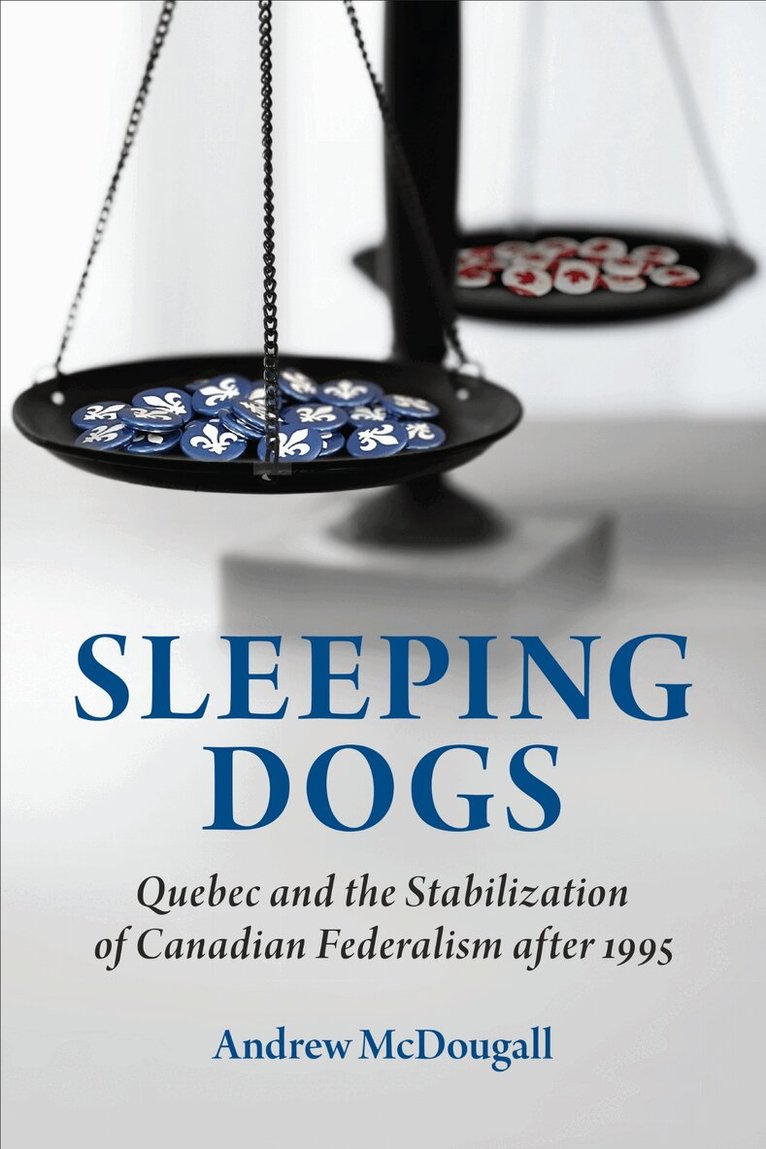
What happened to the Quebec sovereignty movement after 1995? In Sleeping Dogs, Andrew McDougall reveals how a change in federalist strategy, combined with an improving political context, helped Canada stabilize its federal system and bury the "Quebec question" for the foreseeable future. The book identifies five potential reasons the Quebec sovereignty movement lost momentum and argues that all contributed to a political environment that benefited federalists. McDougall explores topics of elite accommodation, generational change, changing identity politics, economic globalization, and constitutional fatigue. He argues that Canada’s federalist political elites have capitalized on these developments to stabilize the country by dropping the national question – even when they might still hold very different visions of the Constitution. Building on "constitutional abeyance" theory, the author conceives of this strategic change as the restoration of a constitutional abeyance among federalist actors. Considering recent history in light of subsequent developments, Sleeping Dogs is a timely and important attempt to understand the evolving situation in Quebec and Canadian federalism.
803 kr
Skickas inom 7-10 vardagar
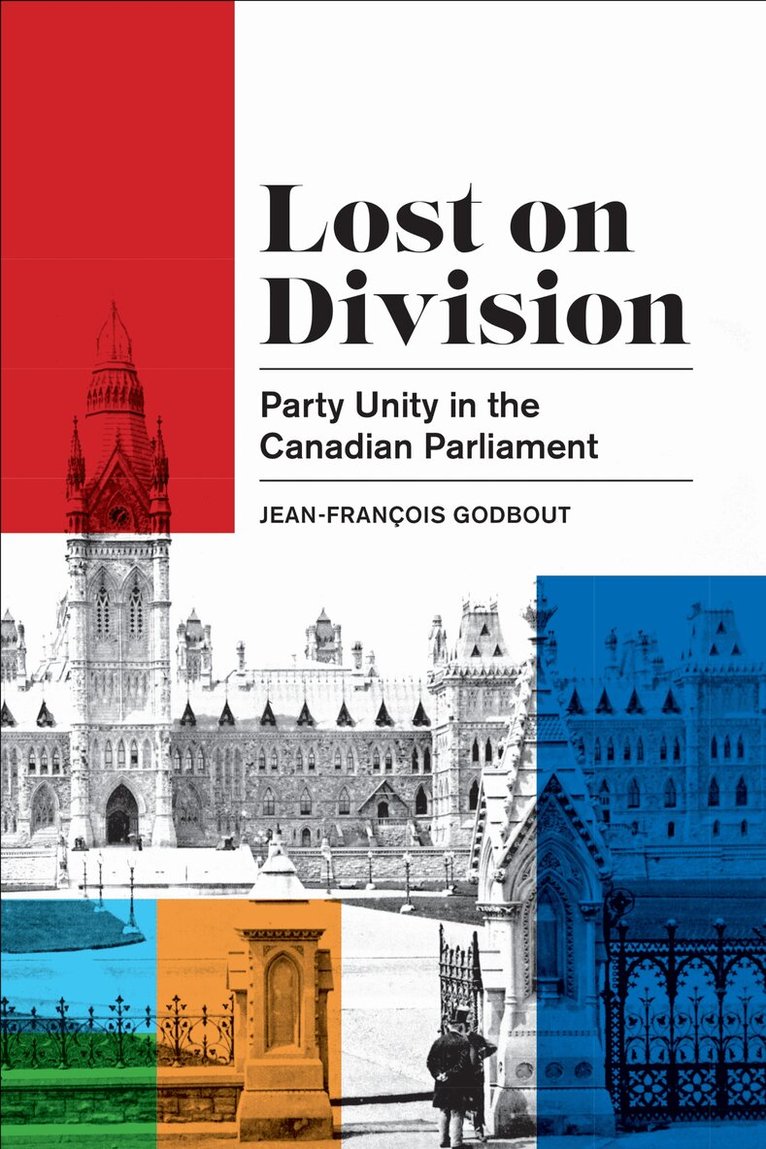
Compared to other countries, Canada’s Parliament shows a high level of party unity when it comes to legislative voting. This was not always the case, however. One hundred years ago, this sort of party discipline was not as evident, leading scholars to wonder what explains the growing influence of political parties in the Canadian Parliament.In Lost on Division, Jean-François Godbout analyses more than two million individual votes recorded in the House of Commons and the Senate since Confederation, demonstrating that the increase in partisanship is linked to changes in the content of the legislative agenda, itself a product of more restrictive parliamentary rules instituted after 1900. These rules reduced the independence of private members, polarized voting along partisan lines, and undermined Parliament’s ability to represent distinct regional interests, resulting in – among other things – the rise of third parties.Bridging the scholarship on party politics, legislatures, and elections, Lost on Division builds a powerful case for bringing institutions back into our understanding of how party systems change. It represents a significant contribution to legislative studies, the political development literature, and the comparative study of parliaments.
269 kr
Skickas inom 7-10 vardagar
What happened to the Quebec sovereignty movement after 1995? In Sleeping Dogs, Andrew McDougall reveals how a change in federalist strategy, combined with an improving political context, helped Canada stabilize its federal system and bury the "Quebec question" for the foreseeable future. The book identifies five potential reasons the Quebec sovereignty movement lost momentum and argues that all contributed to a political environment that benefited federalists. McDougall explores topics of elite accommodation, generational change, changing identity politics, economic globalization, and constitutional fatigue. He argues that Canada’s federalist political elites have capitalized on these developments to stabilize the country by dropping the national question – even when they might still hold very different visions of the Constitution. Building on "constitutional abeyance" theory, the author conceives of this strategic change as the restoration of a constitutional abeyance among federalist actors. Considering recent history in light of subsequent developments, Sleeping Dogs is a timely and important attempt to understand the evolving situation in Quebec and Canadian federalism.
332 kr
Skickas inom 7-10 vardagar
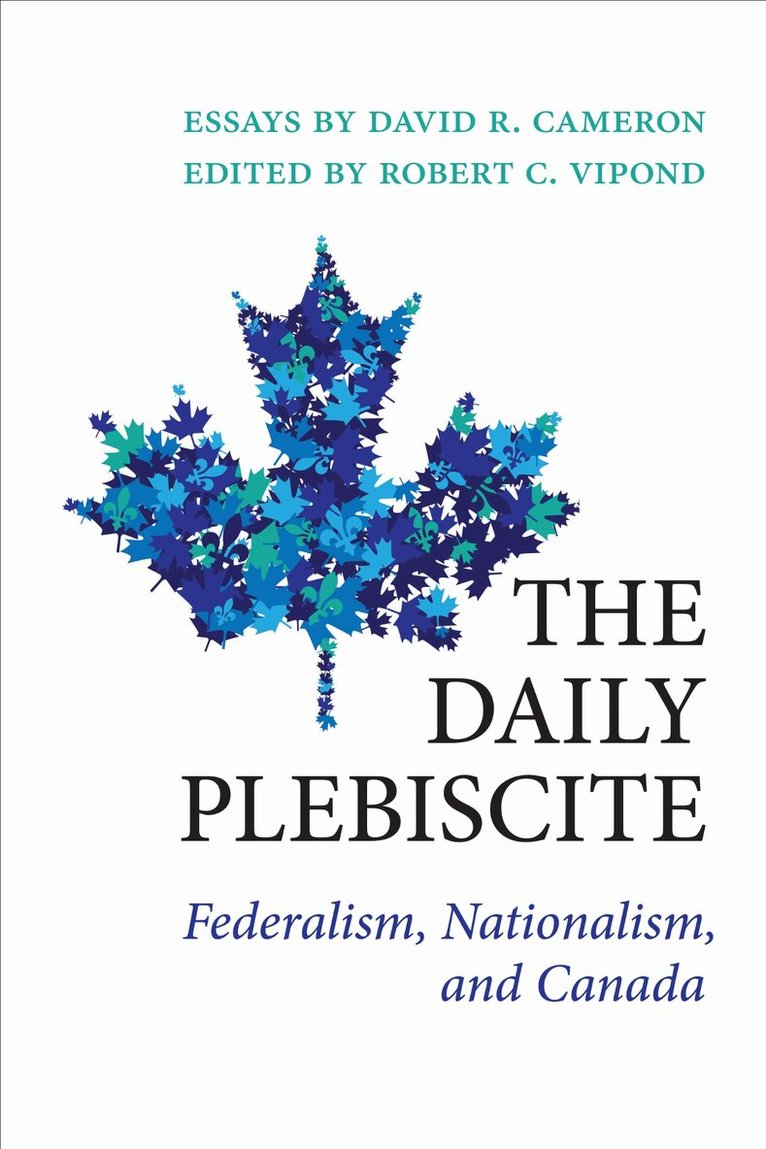
From the mid-1960s through the mid-1990s, Canada was in a state of ongoing political crisis. Within this thirty-year period, David R. Cameron was an active participant and observer of Canada’s crisis of national unity. As a political scientist and former senior public servant, Cameron remains one of the most astute and respected analysts of Canadian federalism. This volume assembles some of Cameron’s best works on federalism, nationalism, and the constitution, including journal articles, book chapters, speeches, newspaper op-eds, and unpublished opinion pieces spanning nearly fifty years of engagement. In addition, The Daily Plebiscite includes a conversation between Cameron and Robert C. Vipond on the "long decade" of the 1980s in Canadian constitutional politics, a brief history of the mega-constitutional era, and concluding reflections on the broader lessons that other divided societies might take from the Canadian experience.Providing rich fare for anyone interested in questions of federalism, nationalism, and constitutionalism, The Daily Plebiscite offers an informed, insider’s perspective on the national unity question and considers the challenges faced by a federal, multinational, and multicultural country like Canada.
356 kr
Skickas inom 7-10 vardagar
Compared to other countries, Canada’s Parliament shows a high level of party unity when it comes to legislative voting. This was not always the case, however. One hundred years ago, this sort of party discipline was not as evident, leading scholars to wonder what explains the growing influence of political parties in the Canadian Parliament.In Lost on Division, Jean-François Godbout analyses more than two million individual votes recorded in the House of Commons and the Senate since Confederation, demonstrating that the increase in partisanship is linked to changes in the content of the legislative agenda, itself a product of more restrictive parliamentary rules instituted after 1900. These rules reduced the independence of private members, polarized voting along partisan lines, and undermined Parliament’s ability to represent distinct regional interests, resulting in – among other things – the rise of third parties.Bridging the scholarship on party politics, legislatures, and elections, Lost on Division builds a powerful case for bringing institutions back into our understanding of how party systems change. It represents a significant contribution to legislative studies, the political development literature, and the comparative study of parliaments.
683 kr
Skickas inom 7-10 vardagar
The Canadian provinces have evolved quite different ways of responding to the policy problems posed by religious schools. Seeking to understand this peculiar reality, Faith, Rights, and Choice articulates the ways in which the provincial governance regimes developed for religious schools have changed over time.Covering nearly three centuries, the book begins with the founding of schooling systems in New France and continues into a variety of present-day conflicts that emerged over the question of religion in schools. James Farney and Clark Banack employ a method of process-tracing, drawing on 88 semi-structured interviews with key policy insiders. They also reference archival material documenting meetings, political speeches, and legislative debates related to government decisions around issues of religious education. Relying on the theoretical foundations of both historical institutionalism and Canadian political development, Faith, Rights, and Choice presents a new analytic framework to help make sense of the policy divergence witnessed across Canada.
287 kr
Skickas inom 7-10 vardagar
The Canadian provinces have evolved quite different ways of responding to the policy problems posed by religious schools. Seeking to understand this peculiar reality, Faith, Rights, and Choice articulates the ways in which the provincial governance regimes developed for religious schools have changed over time.Covering nearly three centuries, the book begins with the founding of schooling systems in New France and continues into a variety of present-day conflicts that emerged over the question of religion in schools. James Farney and Clark Banack employ a method of process-tracing, drawing on 88 semi-structured interviews with key policy insiders. They also reference archival material documenting meetings, political speeches, and legislative debates related to government decisions around issues of religious education. Relying on the theoretical foundations of both historical institutionalism and Canadian political development, Faith, Rights, and Choice presents a new analytic framework to help make sense of the policy divergence witnessed across Canada.
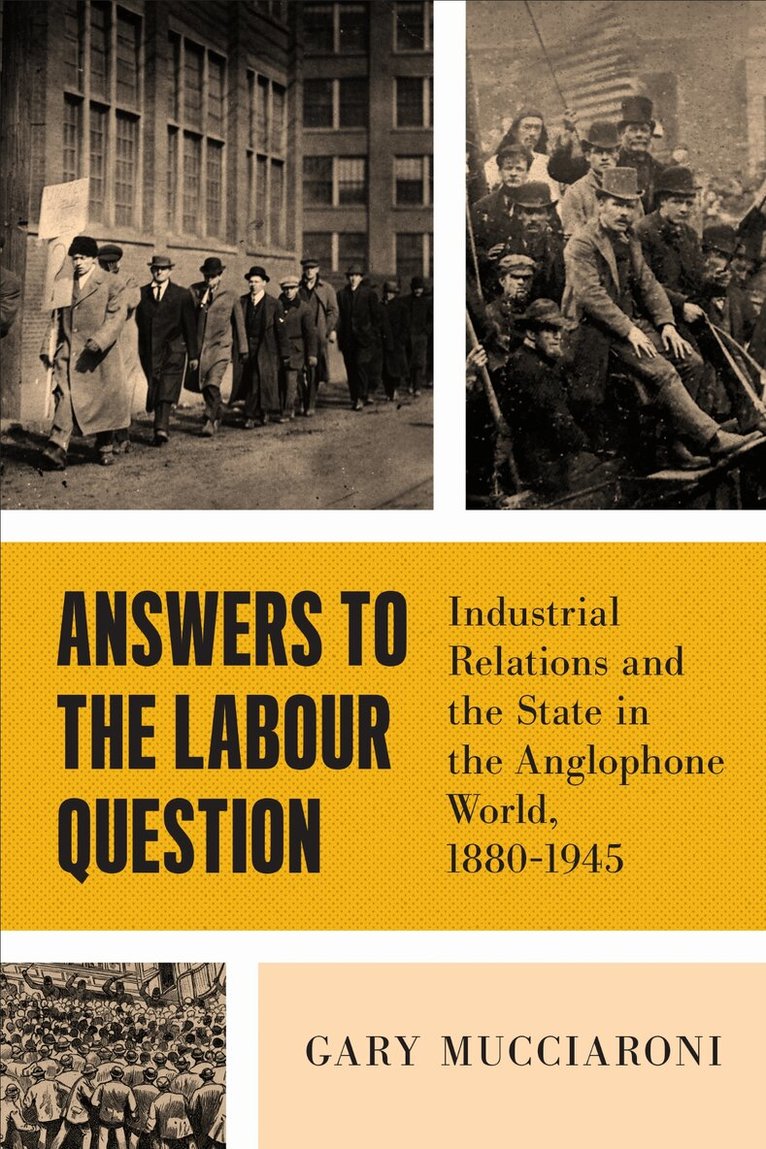
Answers to the Labour Question
Industrial Relations and the State in the Anglophone World, 1880-1945
Inbunden, Engelska, 2024
804 kr
Skickas inom 7-10 vardagar
Since the mid-nineteenth century, public officials, reformers, journalists, and other elites have referred to "the labour question." The labour question was rooted in the system of wage labour that spread throughout much of Europe and its colonies and produced contending classes as industrialization unfolded. Answers to the Labour Question explores how the liberal state responded to workers’ demands that employers recognize trade unions as their legitimate representatives in their struggle for compensation and control over the workplace.Gary Mucciaroni examines five Anglophone nations – Australia, Canada, Great Britain, New Zealand, and the United States – whose differences are often overlooked in the literature on political economy, which lumps them together as liberal, "market-led" economies. Despite their many shared characteristics and common historical origins, these nations’ responses to the labour question diverged dramatically. Mucciaroni identifies the factors that explain why these nations developed such different industrial relations regimes and how the paths each nation took to the adoption of its regime reflected a different logic of institutional change. Drawing on newspaper accounts, parliamentary debates, and personal memoirs, among other sources, Answers to the Labour Question aims to understand the variety of state responses to industrial unrest and institutional change beyond the domain of industrial relations.
Answers to the Labour Question
Industrial Relations and the State in the Anglophone World, 1880-1945
Häftad, Engelska, 2024
399 kr
Skickas inom 7-10 vardagar
Since the mid-nineteenth century, public officials, reformers, journalists, and other elites have referred to "the labour question." The labour question was rooted in the system of wage labour that spread throughout much of Europe and its colonies and produced contending classes as industrialization unfolded. Answers to the Labour Question explores how the liberal state responded to workers’ demands that employers recognize trade unions as their legitimate representatives in their struggle for compensation and control over the workplace.Gary Mucciaroni examines five Anglophone nations – Australia, Canada, Great Britain, New Zealand, and the United States – whose differences are often overlooked in the literature on political economy, which lumps them together as liberal, "market-led" economies. Despite their many shared characteristics and common historical origins, these nations’ responses to the labour question diverged dramatically. Mucciaroni identifies the factors that explain why these nations developed such different industrial relations regimes and how the paths each nation took to the adoption of its regime reflected a different logic of institutional change. Drawing on newspaper accounts, parliamentary debates, and personal memoirs, among other sources, Answers to the Labour Question aims to understand the variety of state responses to industrial unrest and institutional change beyond the domain of industrial relations.