Popular Fictions Series - Böcker
Visar alla böcker i serien Popular Fictions Series. Handla med fri frakt och snabb leverans.
14 produkter
14 produkter
2 045 kr
Skickas inom 10-15 vardagar
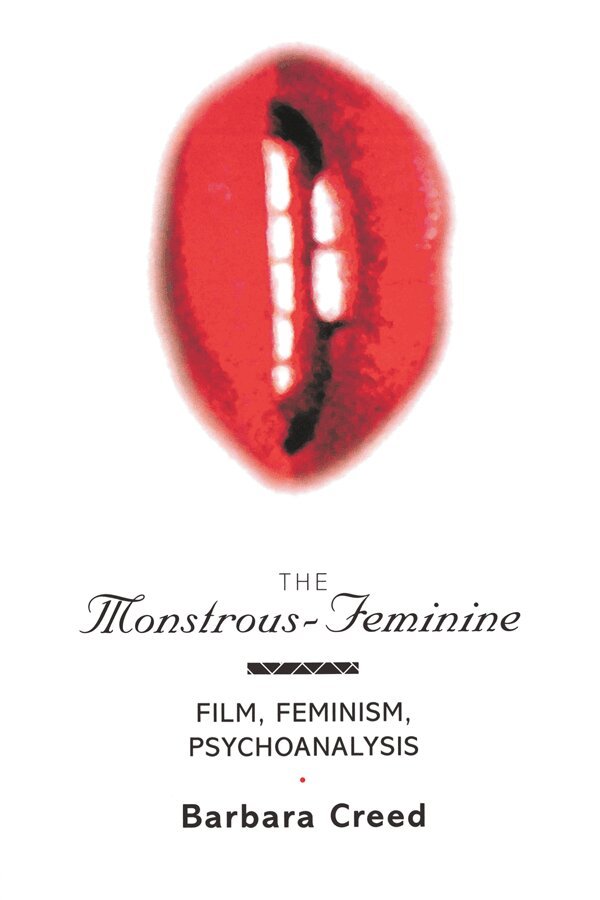
This is a timely update of a seminal text which re-interprets key films of the horror genre, including Carrie, The Exorcist, The Brood and Psycho.In the first edition, Creed draws on Julia Kristeva’s theory of abjection to challenge the popular view that women in horror are almost always victims, and argues that patriarchal ideology constructs women as monstrous in relation to her sexuality and reproductive body to justify her subjugation. Although a projection of male fears and paranoid fantasies, the monstrous-feminine is nonetheless a terrifying figure. Creed’s argument contests Freudian and Lacanian theories of sexual difference to offer a provocative rereading of classical and contemporary horror. This updated edition includes a new section examining contemporary feminist horror films in relation to nonhuman theory. Creed proposes a new concept of radical abjection to reinterpret the monstrous-feminine as a figure who embraces abjection by reclaiming her body and re-defining her otherness as nonhuman – while questioning patriarchy, anthropocentrism, misogyny and the meaning of the human. Films discussed include Ginger Snaps, Teeth, Atlantics, The Girl with All the Gifts, Border and Titane. Barbara Creed’s classic remains as relevant as ever and this edition will be of interest to academics and students of feminist theory, nonhuman theory, critical animal studies, race, and queer theory.
533 kr
Skickas inom 10-15 vardagar
This is a timely update of a seminal text which re-interprets key films of the horror genre, including Carrie, The Exorcist, The Brood and Psycho.In the first edition, Creed draws on Julia Kristeva’s theory of abjection to challenge the popular view that women in horror are almost always victims, and argues that patriarchal ideology constructs women as monstrous in relation to her sexuality and reproductive body to justify her subjugation. Although a projection of male fears and paranoid fantasies, the monstrous-feminine is nonetheless a terrifying figure. Creed’s argument contests Freudian and Lacanian theories of sexual difference to offer a provocative rereading of classical and contemporary horror. This updated edition includes a new section examining contemporary feminist horror films in relation to nonhuman theory. Creed proposes a new concept of radical abjection to reinterpret the monstrous-feminine as a figure who embraces abjection by reclaiming her body and re-defining her otherness as nonhuman – while questioning patriarchy, anthropocentrism, misogyny and the meaning of the human. Films discussed include Ginger Snaps, Teeth, Atlantics, The Girl with All the Gifts, Border and Titane. Barbara Creed’s classic remains as relevant as ever and this edition will be of interest to academics and students of feminist theory, nonhuman theory, critical animal studies, race, and queer theory.
565 kr
Skickas inom 10-15 vardagar
Steve Neale and Frank Krutnik take as their starting point the remarkable diversity of comedy's forms and modes - feature-length narratives, sketches and shorts, sit-com and variety, slapstick and romance. Relating this diversity to the variety of comedy's basic conventions - from happy endings to the presence of gags and the involvement of humour and laughter - they seek both to explain the nature of these forms and conventions and to relate them to their institutional contexts. They propose that all forms and modes of the comic involve deviations from aesthetic and cultural conventions and norms, and, to demonstrate this, they discuss a wide range of programmes and films, from Blackadder to Bringing up Baby, from City Limits to Blind Date, from the Roadrunner cartoons to Bless this House and The Two Ronnies. Comedies looked at in particular detail include: the classic slapstick films of Keaton, Lloyd, and Chaplin; Hollywood's 'screwball' comedies of the 1930s and 1940s; Monty Python, Hancock, and Steptoe and Son. The authors also relate their discussion to radio comedy.
376 kr
Tillfälligt slut
In almost all critical writings on the horror film, woman is conceptualised only as victim. In The Monstrous-Feminine Barbara Creed challenges this patriarchal view by arguing that the prototype of all definitions of the monstrous is the female reproductive body.With close reference to a number of classic horror films including the Alien trilogy, The Exorcist and Psycho, Creed analyses the seven `faces' of the monstrous-feminine: archaic mother, monstrous womb, vampire, witch, possessed body, monstrous mother and castrator. Her argument that man fears woman as castrator, rather than as castrated, questions not only Freudian theories of sexual difference but existing theories of spectatorship and fetishism, providing a provocative re-reading of classical and contemporary film and theoretical texts.
2 187 kr
Skickas inom 10-15 vardagar
The Historical Romance explores the ways in which romance authors seek to represent our fantasies of life in the past. Examining how the cut-and-thrust swashbucklers of the 1930s gave way to female-orientated romances, Helen Hughes takes a comprehensive look at how romance authors have dealt with the turbulent question of female independence, and how traditional attitudes towards love, marriage and women's sexuality have been approached in more recent texts. Hughes also charts the ways in which the marketing of romance has developed, with the eventual explosion of the mass market and the blockbusting family sagas of the eighties.The Historical Romance unravels the formulaic and mythical nature of historical romance to provide a fascinating study of this highly popular genre.
2 045 kr
Skickas inom 10-15 vardagar
Science Fiction Audiences examines the astounding popularity of two television "institutions" - the series Doctor Who and ^Star Trek. Both of these programmes have survived cancellation and acquired an following that continues to grow. The book is based on over ten years of research including interviews with fans and followers of the series. In that period, though the fans may have changed, and ways of studying them as "audiences" may have also changed, the programmes have endured intact, with Star Trek for example now in its fourth television incarnation.John Tulloch and Henry Jenkins dive into the rich fan culture surrounding the two series, exploring issues such as queer identity, fan meanings, teenage love of science fiction, and genre expectations. They encompass the perspectives of a vast population of fans and followers throughout Britain, Australia and the US, who will continue the debates contained in the book, along with those who will examine the historically changing range of audience theory it presents. and continue to attract a huge community of fans and followers. Doctor Who has appeared in nine different guises and Star Trek is now approaching its fourth television incarnation.Science Fiction Audiences examines the continuing popularity of two television 'institutions' of our time through their fans and followers.Through dialogue with fans and followers of Star Trek and Dr Who in the US, Britain and Australia, John Tulloch and Henry Jenkins ask what it is about the two series that elicits such strong and active responses from their audiences. Is it their particular intervention into the SF genre? Their expression of peculiarly 'American' and 'British' national cultures. Their ideologies and visions of the future, or their conceptions of science and technology?Science Fiction Audiences responds to a rich fan culture which encompasses debates about fan aesthetics, teenage attitudes to science fiction, queers and Star Trek, and ideology and pleasure in Doctor Who. It is a book written both for fans of the two series, who will be able to continue their debates in its pages, and for students of media and cultural studies, offering a historical overview of audience theory in a fascinating synthesis of text, context and audience study.
546 kr
Skickas inom 10-15 vardagar
Science Fiction Audiences examines the astounding popularity of two television "institutions" - the series Doctor Who and ^Star Trek. Both of these programmes have survived cancellation and acquired an following that continues to grow. The book is based on over ten years of research including interviews with fans and followers of the series. In that period, though the fans may have changed, and ways of studying them as "audiences" may have also changed, the programmes have endured intact, with Star Trek for example now in its fourth television incarnation.John Tulloch and Henry Jenkins dive into the rich fan culture surrounding the two series, exploring issues such as queer identity, fan meanings, teenage love of science fiction, and genre expectations. They encompass the perspectives of a vast population of fans and followers throughout Britain, Australia and the US, who will continue the debates contained in the book, along with those who will examine the historically changing range of audience theory it presents. and continue to attract a huge community of fans and followers. Doctor Who has appeared in nine different guises and Star Trek is now approaching its fourth television incarnation.Science Fiction Audiences examines the continuing popularity of two television 'institutions' of our time through their fans and followers.Through dialogue with fans and followers of Star Trek and Dr Who in the US, Britain and Australia, John Tulloch and Henry Jenkins ask what it is about the two series that elicits such strong and active responses from their audiences. Is it their particular intervention into the SF genre? Their expression of peculiarly 'American' and 'British' national cultures. Their ideologies and visions of the future, or their conceptions of science and technology?Science Fiction Audiences responds to a rich fan culture which encompasses debates about fan aesthetics, teenage attitudes to science fiction, queers and Star Trek, and ideology and pleasure in Doctor Who. It is a book written both for fans of the two series, who will be able to continue their debates in its pages, and for students of media and cultural studies, offering a historical overview of audience theory in a fascinating synthesis of text, context and audience study.
2 420 kr
Skickas inom 10-15 vardagar
Insatiable bloodlust, dangerous sexualities, the horror of the undead, uncharted Trannsylvanian wildernesses, and a morbid fascination with the `other': the legend of the vampire continues to haunt popular imagination.Reading the Vampire examines the vampire in all its various manifestations and cultural meanings. Ken Gelder investigates vampire narratives in literature and in film, from early vampire stories like Sheridan Le Fanu's `lesbian vampire' tale Carmilla and Bram Stoker's Dracula, the most famous vampire narrative of all, to contemporary American vampire blockbusters by Stephen King and others, the vampire chronicles of Anne Rice, `post-Ceausescu' vampire narratives, and films such as FW Murnau's Nosferatu and Bram Stoker's Dracula.Reading the Vampire embeds vampires in their cultural contexts, showing vampire narratives feeding off the anxieties and fascinations of their times: from the nineteenth century perils of tourism, issues of colonialism and national identity, and obsessions with sex and death, to the `queer' identity of the vampire or current vampiric metaphors for dangerous exchanges of bodily fluids and AIDS.
646 kr
Skickas inom 10-15 vardagar
Insatiable bloodlust, dangerous sexualities, the horror of the undead, uncharted Trannsylvanian wildernesses, and a morbid fascination with the `other': the legend of the vampire continues to haunt popular imagination.Reading the Vampire examines the vampire in all its various manifestations and cultural meanings. Ken Gelder investigates vampire narratives in literature and in film, from early vampire stories like Sheridan Le Fanu's `lesbian vampire' tale Carmilla and Bram Stoker's Dracula, the most famous vampire narrative of all, to contemporary American vampire blockbusters by Stephen King and others, the vampire chronicles of Anne Rice, `post-Ceausescu' vampire narratives, and films such as FW Murnau's Nosferatu and Bram Stoker's Dracula.Reading the Vampire embeds vampires in their cultural contexts, showing vampire narratives feeding off the anxieties and fascinations of their times: from the nineteenth century perils of tourism, issues of colonialism and national identity, and obsessions with sex and death, to the `queer' identity of the vampire or current vampiric metaphors for dangerous exchanges of bodily fluids and AIDS.
2 420 kr
Skickas inom 10-15 vardagar
Reading by Starlight explores the characteristics in the writing, marketing and reception of science fiction which distinguish it as a genre.Damien Broderick explores the postmodern self-referentiality of the sci-fi narrative, its intricate coded language and discursive `encyclopaedia'. He shows how, for perfect understanding, sci-fi readers must learn the codes of these imaginary worlds and vocabularies, all the time picking up references to texts by other writers.Reading by Starlight includes close readings of paradigmatic cyberpunk texts and writings by SF novelists and theorists including Isaac Asimov, Arthur C. Clarke, Brian Aldiss, Patrick Parrinder, Kim Stanley Robinson, John Varley, Roger Zelazny, William Gibson, Fredric Jameson and Samuel R. Delaney.
661 kr
Skickas inom 10-15 vardagar
Reading by Starlight explores the characteristics in the writing, marketing and reception of science fiction which distinguish it as a genre.Damien Broderick explores the postmodern self-referentiality of the sci-fi narrative, its intricate coded language and discursive `encyclopaedia'. He shows how, for perfect understanding, sci-fi readers must learn the codes of these imaginary worlds and vocabularies, all the time picking up references to texts by other writers.Reading by Starlight includes close readings of paradigmatic cyberpunk texts and writings by SF novelists and theorists including Isaac Asimov, Arthur C. Clarke, Brian Aldiss, Patrick Parrinder, Kim Stanley Robinson, John Varley, Roger Zelazny, William Gibson, Fredric Jameson and Samuel R. Delaney.
755 kr
Skickas inom 10-15 vardagar
The Historical Romance explores the ways in which romance authors seek to represent our fantasies of life in the past. Examining how the cut-and-thrust swashbucklers of the 1930s gave way to female-orientated romances, Helen Hughes takes a comprehensive look at how romance authors have dealt with the turbulent question of female independence, and how traditional attitudes towards love, marriage and women's sexuality have been approached in more recent texts. Hughes also charts the ways in which the marketing of romance has developed, with the eventual explosion of the mass market and the blockbusting family sagas of the eighties.The Historical Romance unravels the formulaic and mythical nature of historical romance to provide a fascinating study of this highly popular genre.
1 502 kr
Tillfälligt slut
In almost all critical writings on the horror film, woman is conceptualised only as victim. In The Monstrous-Feminine Barbara Creed challenges this patriarchal view by arguing that the prototype of all definitions of the monstrous is the female reproductive body.With close reference to a number of classic horror films including the Alien trilogy, The Exorcist and Psycho, Creed analyses the seven `faces' of the monstrous-feminine: archaic mother, monstrous womb, vampire, witch, possessed body, monstrous mother and castrator. Her argument that man fears woman as castrator, rather than as castrated, questions not only Freudian theories of sexual difference but existing theories of spectatorship and fetishism, providing a provocative re-reading of classical and contemporary film and theoretical texts.
2 167 kr
Skickas inom 10-15 vardagar
Steve Neale and Frank Krutnik take as their starting point the remarkable diversity of comedy's forms and modes - feature-length narratives, sketches and shorts, sit-com and variety, slapstick and romance. Relating this diversity to the variety of comedy's basic conventions - from happy endings to the presence of gags and the involvement of humour and laughter - they seek both to explain the nature of these forms and conventions and to relate them to their institutional contexts. They propose that all forms and modes of the comic involve deviations from aesthetic and cultural conventions and norms, and, to demonstrate this, they discuss a wide range of programmes and films, from Blackadder to Bringing up Baby, from City Limits to Blind Date, from the Roadrunner cartoons to Bless this House and The Two Ronnies. Comedies looked at in particular detail include: the classic slapstick films of Keaton, Lloyd, and Chaplin; Hollywood's 'screwball' comedies of the 1930s and 1940s; Monty Python, Hancock, and Steptoe and Son. The authors also relate their discussion to radio comedy.