Popular Science - Böcker
Visar alla böcker i serien Popular Science. Handla med fri frakt och snabb leverans.
3 produkter
3 produkter
203 kr
Skickas inom 3-6 vardagar
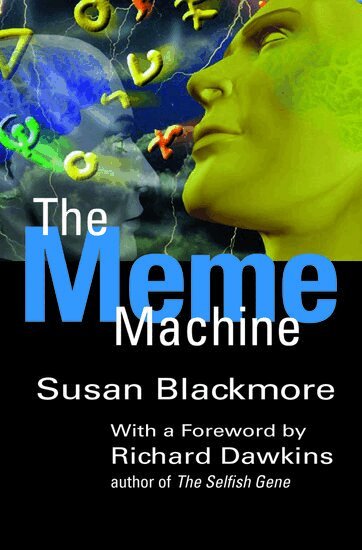
Humans are extraordinary creatures, with the unique ability among animals to imitate and so copy from one another ideas, habits, skills, behaviours, inventions, songs, and stories. These are all memes, a term first coined by Richard Dawkins in 1976 in his book The Selfish Gene. Memes, like genes, are replicators, and this enthralling book is an investigation of whether this link between genes and memes can lead to important discoveries about the nature of the inner self. Confronting the deepest questions about our inner selves, with all our emotions, memories, beliefs, and decisions, Susan Blackmore makes a compelling case for the theory that the inner self is merely an illusion created by the memes for the sake of replication.
412 kr
Skickas inom 7-10 vardagar
Are eugenics practices morally defensible? Who should have access to genetic information about particular individuals? What dangers for cultural and racial diversity do developments in genetics pose? And how should scientific research be regulated and by whom? These are some of the questions addressed in this book, which comprises the 1998 Oxford Amnesty Lectures. The lecturers are all respected in their specific field, including Hilary Putnam, Ian Wilmut (co-creator of 'Dolly' the sheep), and Jonathan Glover. Each lecture is proceeded by a discussion article written by prominent lawyers, scientists, and philosophers, and a foreword has been written by Richard Dawkins. Fascinating and thought-provoking, this book is essential reading for all those interested in the future of genetics and humankind.
386 kr
Skickas inom 5-8 vardagar
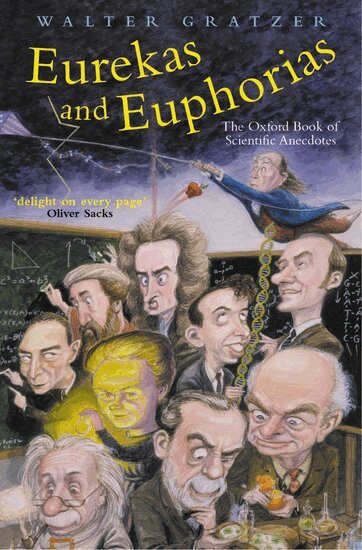
The march of science has never proceeded smoothly. It has been marked through the years by episodes of drama and comedy, of failure as well as triumph, by outrageous strokes of luck, deserved and undeserved, and sometimes by human tragedy. It has seen deep intellectual friendships, as well as ferocious animosities, and once in a while acts of theft and malice, deceit, and even a hoax or two. Scientists come in all shapes: the obsessive and the dilettantish, the genial, the envious, the preternaturally brilliant and the slow-witted who sometimes see further in the end, the open-minded and the intolerant, recluses and arrivistes. From the death of Archimedes at the hands of an irritated Roman soldier to the concoction of a superconducting witches' brew at the very close of the twentieth century, the stories in Eurekas and Euphorias pour out, told with wit and relish by Walter Gratzer. Open this book at random and you may chance on the clumsy chemist who breaks a thermometer in a reaction vat and finds mercury to be the catalyst that starts the modern dyestuff industry; or a famous physicist dissolving his gold Nobel Prize medal in acid to prevent it from falling into the hands of the Nazis, recovering it when the war ends; mathematicians and physicists diverting themselves in prison cells, and even in a madhouse, by creating startling advances in their subject. We witness the careers, sometimes tragic, sometimes carefree, of the great women mathematicians, from Hypatia of Alexandria to Sophie Germain in France and Sonia Kovalevskaya in Russia and Sweden, and then Marie Curie's relentless battle with the French Academy. Here, then, a glorious parade unfolds to delight the reader, with stories to astonish, to instruct, and most especially, to entertain.