Population-Level Bioethics - Böcker
Visar alla böcker i serien Population-Level Bioethics. Handla med fri frakt och snabb leverans.
6 produkter
6 produkter
973 kr
Skickas inom 5-8 vardagar
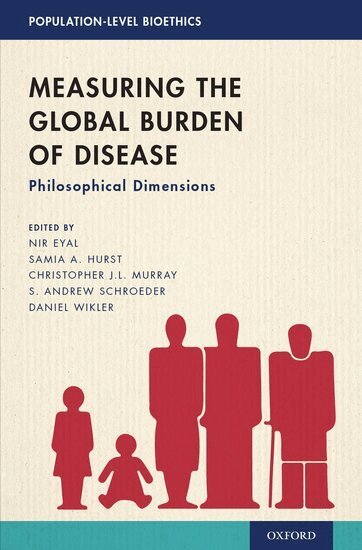
The Global Burden of Disease Study (GBD) is one of the largest-scale research collaborations in global health, distilling a wide range of health information to provide estimates and projections for more than 350 diseases, injuries, and risk factors in 195 countries. Its results are a critical tool informing researchers, policy-makers, and others working to promote health around the globe. A study like the GBD is, of course, extremely complex from an empirical perspective. But it also raises a large number of complex ethical and philosophical questions that have been explored in a series of collaborations over the past twenty years among epidemiologists, philosophers, economists, and policy scholars. The essays in this volume address issues of current and urgent concern to the GBD and other epidemiological studies, including rival understandings of causation, the aggregation of complex health data, temporal discounting, age-weighting, and the valuation of health states. The volume concludes with a set of chapters discussing how epidemiological data should and should not be used. Better appreciating the philosophical dimensions of a study like the GBD can make possible a more sophisticated interpretation of its results, and it can improve epidemiological studies in the future, so that they are better suited to produce results that can help us to improve global health.
876 kr
Skickas inom 5-8 vardagar
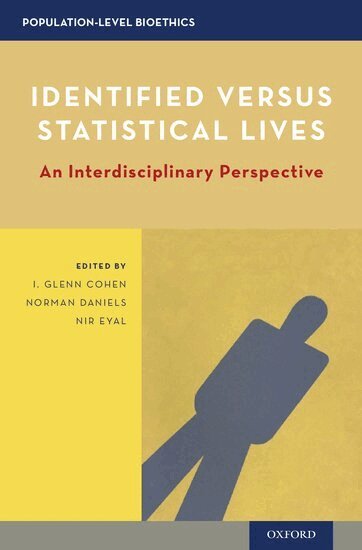
On August 5, 2010, a cave-in left thirty-three Chilean miners trapped underground. The Chilean government embarked on a massive rescue effort that is estimated to have cost between ten and twenty million dollars. There is a puzzle here. Many mine safety measures that would have been more cost effective had not been taken in Chile earlier, either by the mining companies, the Chilean government or by international donors. The Chilean story illustrates a persistent puzzle: the identified lives effect. Human beings show a greater inclination to assist persons and groups identified as those at high risk of great harm than to assist persons and groups who will suffer -- or already suffer -- similar harm but are not identified as yet. The problem touches almost every aspect of human life and politics: health, the environment, the law. What can social and cognitive sciences teach us about the origin and triggers of the effect? Philosophically and ethically, is the effect a "bias" to be eliminated or is it morally justified? What implications does the effect have for health care, law, the environment and other practice domains? This volume is the first book to tackle the effect from all necessary perspectives: psychology, public health, law, ethics, and public policy.
868 kr
Skickas inom 5-8 vardagar
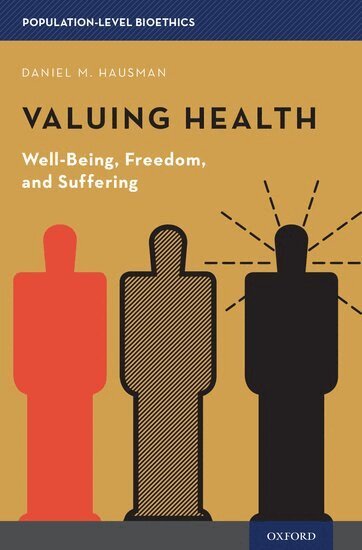
In Valuing Health Daniel M. Hausman provides a philosophically sophisticated overview of generic health measurement that suggests improvements in standard methods and proposes a radical alternative. He shows how to avoid relying on surveys and instead evaluate health states directly. Hausman goes on to tackle the deep problems of evaluation, offering an account of fundamental evaluation that does not presuppose the assignment of values to the properties and consequences of alternatives.After discussing the purposes of generic health measurement, Hausman defends a naturalistic concept of health and its relations to measures such as quality-adjusted life-years (QALYs) and disability-adjusted life years (DALYs). In examining current health-measurement systems, Valuing Health clarifies their value commitments and the objections to relying on preference surveys to assign values to health states. Relying on an interpretation of liberal political philosophy, Hausman argues that the public value of health states should be understood in terms of the activity limits and suffering that health states impose.Hausman also addresses the moral conundrums that arise when policy-makers attempt to employ the values of health states to estimate the health benefits of alternative policies and to adopt the most cost-effective. He concludes with a general discussion of the difficulties of combining consequentialist and non-consequentialist moral considerations in policy-making.
1 078 kr
Skickas inom 5-8 vardagar
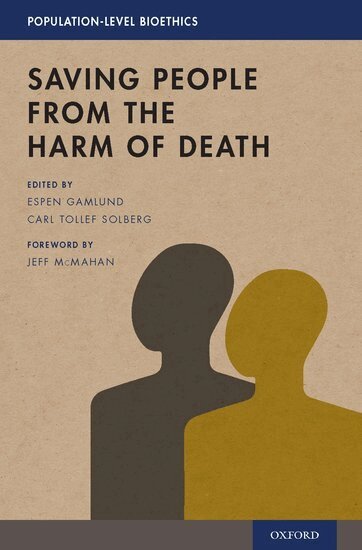
Death is something we mourn or fear as the worst thing that could happen--whether the deaths of close ones, the deaths of strangers in reported accidents or tragedies, or our own. And yet, being dead is something that no one can experience and live to describe. This simple truth raises a host of difficult philosophical questions about the negativity surrounding our sense of death, and how and for whom exactly it is harmful. The question of whether death is bad has occupied philosophers for centuries, and the debate emerging in philosophical literature is referred to as the "badness of death." Are deaths primarily negative for the survivors, or does death also affect the deceased? What are the differences between death in fetal life, just after birth, or in adolescence? In order to properly evaluate deaths in global health, we must find answers to these questions.In this volume, leading philosophers, medical doctors, and economists discuss different views on how to evaluate death and its relevance for health policy. This includes theories about the harm of death and its connections to population-level bioethics. For example, one of the standard views in global health is that newborn deaths are among the worst types of death, yet stillbirths are neglected. This raises difficult questions about why birth is so significant, and several of the book's authors challenge this standard view. This is the first volume to connect philosophical discussions on the harm of death with discussions on population health, adjusting the ways in which death is evaluated. Changing these evaluations has consequences for how we prioritize different health programs that affect individuals at different ages, as well as how we understand inequality in health.
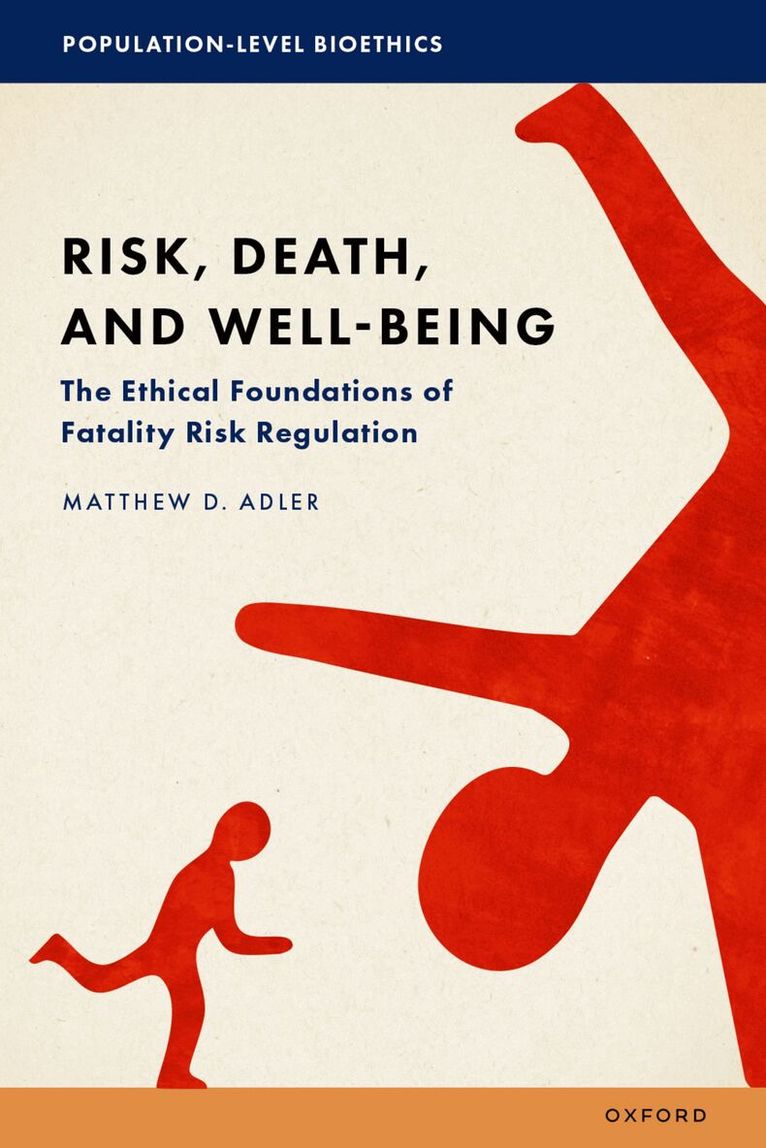
Risk, Death, and Well-Being
The Ethical Foundations of Fatality Risk Regulation
Inbunden, Engelska, 2025
875 kr
Skickas inom 5-8 vardagar
This is an open access title available under the terms of a CC BY-NC-ND 4.0 International license. It is free to read on the Oxford Academic platform and offered as a free PDF download from OUP and selected open access locations.A wide range of governmental policies characteristic of the modern state seek to reduce individuals' fatality risks--risks that arise from air and water pollution, pathogens, food ingredients and contaminants, motor vehicles, infrastructure, radiation, workplace accidents, alcohol and recreational drugs, firearms, consumer products, tobacco, natural disasters, and other sources. Risk, Death, and Well-Being provides a rigorous treatment of the ethics of fatality risk regulation. It does so through the lens of welfare-consequentialism--specifically, lifetime welfarism, with a particular focus on utilitarianism and prioritarianism. The ethical ranking of possible worlds depends on the patterns of lifetime well-being in the worlds. Premature death is ethically significant insofar as it changes the lifetime well-being of the person who dies and perhaps others. At the level of policy choice, the book deploys the social-welfare-function (SWF) framework--which is the most systematic decision--procedure for implementing lifetime welfarism. It shows, in detail, how the SWF methodology can be brought to bear in assessing risk-regulation policies. Every individual faces a policy-specific lottery over lifetime well-being, as determined by their risk profile (probability of surviving the current year and future years) and attribute profile (the attributes the individual will have in the current year and each future year if alive rather than dead). In short, a policy corresponds to an array of individual risk and attribute profiles, which can then be assigned a utilitarian or prioritarian value. The SWF methodology as thus applied to risk regulation differs quite substantially from cost-benefit analysis (CBA), which is currently the dominant policy-assessment procedure in governmental practice.
1 002 kr
Skickas inom 5-8 vardagar
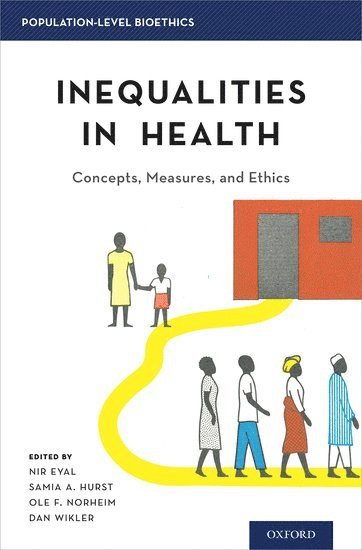
Of every thousand children born in Iceland, two will die before their first birthday, but in Mozambique the death rate is sixty times higher. Even within countries - including some of the wealthiest - inequalities in longevity and health can be substantial. In recent years, epidemiologists have documented the extent of these inequalities both between and within countries, stimulating in turn research both on their sources and on possible means for their alleviation. These extensive and influential efforts in research and in policy development have raised health inequalities to a prominent position among the central concerns of both national and global health. Less attention has been given to careful analysis and refinement of some key concepts and values that guide and motivate these studies of health inequalities. The essays in this book demonstrate the need to identify and debate alternative positions on the choice of measures of health inequality; the definitions of 'inequality' and 'inequity' in health, and their interrelationship; the ethical basis for attaching priority to narrowing gaps in longevity and health among individuals, groups, and societies; and the possible solutions to a series of puzzles involving uncertainty and variable population size.The authors of these essays are philosophers, economists, epidemiologists, and physicians contributing to our understanding of ethical issues in population health. Their contributions will be of interest to anyone interested in inequalities in health, including specialists in health policy, public health, epidemiology, moral philosophy, demography, and health economics.