Postclassical Interventions - Böcker
Visar alla böcker i serien Postclassical Interventions. Handla med fri frakt och snabb leverans.
3 produkter
3 produkter
1 380 kr
Skickas inom 5-8 vardagar
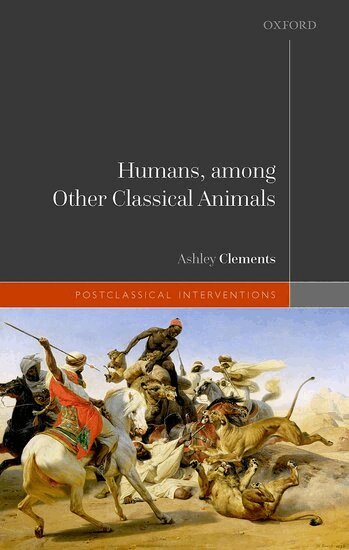
We are living in a moment of environmental and existential crisis that demands a response. Why then study Classics now? From the European assimilation and destruction of the New World to our present environmental destruction of our shared world, Humans, among Other Classical Animals explores in encounters an answer by demonstrating how the Classics have been implicated in the structures of thought that have ultimately led us to our present historical moment. Telling the story of anthropology's Classical entanglements from its inception to its growth to critical self-awareness, it demonstrates that Classical ideas have played a crucial -and often deleterious- role in the Western placing of the human and in the discipline that claimed the study of humanity as its own. Responses to our present crisis, it argues, should therefore include as a prerequisite, considering the origins and implications of these Classical foundations because only by so doing can we attain the full self-awareness necessary to think beyond them and consider the alternatives we now need.Postclassical Interventions aims to reorient the meaning of antiquity across and beyond the humanities. Building on the success of Classical Presences, this complementary series features shorter-length monographs designed to provoke debate about the current and future potential of Classical Reception through fresh, bold, and critical thinking.
1 193 kr
Skickas inom 5-8 vardagar
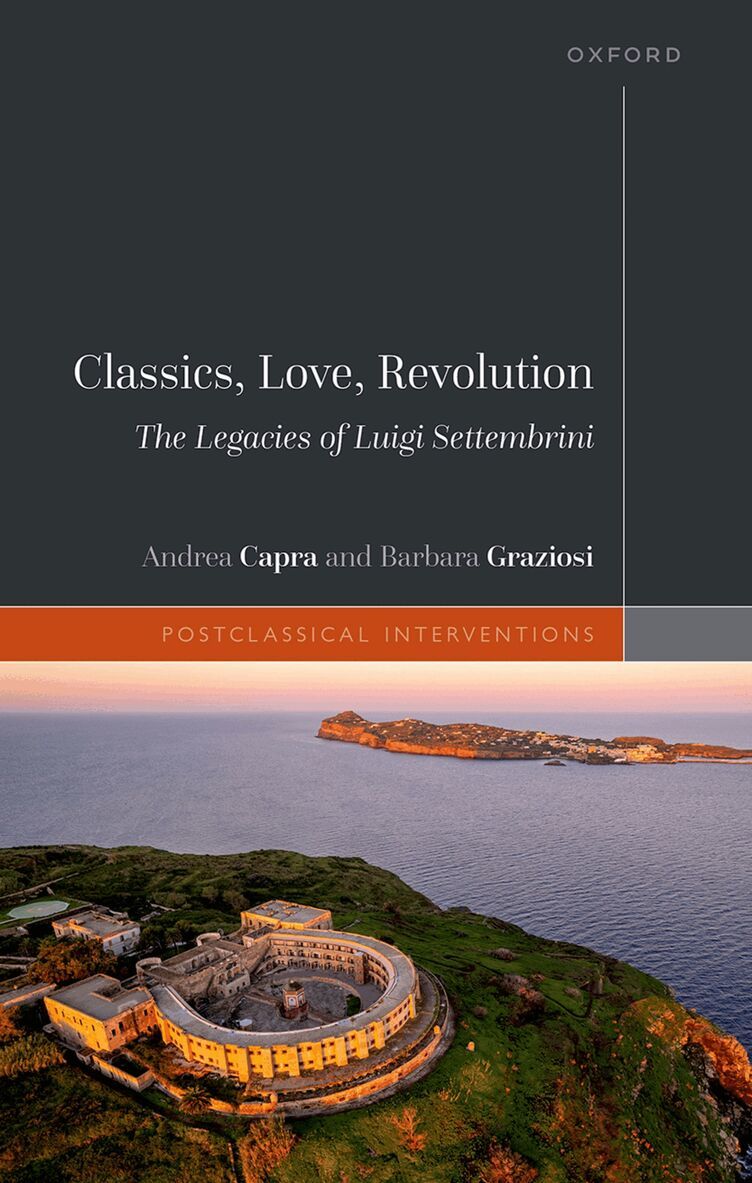
Capra and Graziosi intervene in current debates about classics and its relation to revolutionary ruptures, nationalist movements, and identity politics today. They begin with The Neoplatonists, an explicit love story posing as the work of an imaginary ancient Greek author, but actually written by the Neapolitan revolutionary and classical scholar Luigi Settembrini (1813-1876). Offering the first English translation of the tale—which, because of its celebration of homosexuality, long remained censored and unpublished—they read it in the context of Settembrini's life, scholarship, and revolutionary politics. Drawing strength from his legacies, Capra and Graziosi go on to tackle the nostalgias of post-truth politics today, demonstrating the queer, reparative potential of various strands of classical scholarship. On the basis of archival research, combined with literary and philosophical analysis, they argue that a commitment to social justice and an investment in the study of Greco-Roman antiquity can—and even should—be rooted in egalitarian, embodied, and joyous forms of love.Classics, Love, Revolution: The Legacies of Luigi Settembrini offers a reassessment of Italian homosexuality, insurgence, and scholarship, while telling a moving story of love and resilience along the way.Postclassical Interventions aims to reorient the meaning of antiquity across and beyond the humanities. Building on the success of Classical Presences, this complementary series features shorter-length monographs designed to provoke debate about the current and future potential of Classical Reception through fresh, bold, and critical thinking.
1 317 kr
Skickas inom 5-8 vardagar
Roman Comedy against the Subject provides an expansive interpretation of four Roman comedies named after objects--Plautus's Cistellaria, Aulularia, and Rudens, and Terence's Eunuchus. In this book, the titular object provides an opportunity not to reconceive the relational politics of Roman comedy, but to conceive a different politics of familial and social relations with Roman comedy. Employing object-oriented ontology, psychoanalysis, queer theory, and Black critical theory, the book radically recasts perennial problems of Roman comedy and literature in general: the author, in relation to "mothering" (alternative maternities); character, in relation to neurodiversity; genre, in relation to sibling-like parentality; and the title itself, in relation to gendering and ungendering. Roman Comedy against the Subject explores the aesthetic and political possibilities of becoming object, of embracing "itness." Rather than assimilating objects to subjects or vital agents, the book finds emancipatory potential in renouncing the normative and intrinsically exclusionary subjecthood of "he," "she," and "they," markers of privilege that are burdened by the violence of humanization and often dehumanizing of others. The introduction features nine brief but acute readings of object-oriented modern dramas: Tennessee Williams's Glass Menagerie, Yukio Mishima's The Damask Drum, Eugène Ionesco's Les Chaises, and Alice Childress's String, among others.